Uk politics

How Theresa May had a surprisingly strong PMQs

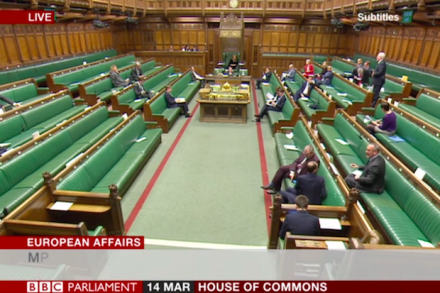
Theresa May should have had a rather difficult Prime Minister’s Questions today. Jeremy Corbyn chose to lead on the visit of Saudi Crown Prince Mohammad bin Salman, and then moved onto rough sleeping. Both matters are vulnerabilities for May, and ones Corbyn has consistently made a great deal of noise about. But there were two flaws in Corbyn’s approach which allowed May to have one of her strongest sessions as Prime Minister. The first was that of course she had guessed the Labour leader was most likely to lead on Saudi Arabia, and so she turned up well-prepared to offer a robust defence of Britain’s ties with the Kingdom. She

Guardian’s Saudi dilemma

The crown prince of Saudi Arabia, Mohammed bin Salman, is in town today for a three-day state visit with a charm offensive from the British government and royal family. Proving that he is a very modern prince, Mohammed bin Salman has also managed a media PR blitz with pro-Saudi Arabia adverts in a host of papers and media outlets. The Guardian is one of the many papers to do so today: https://twitter.com/Tweet_Dec/status/971309288223330304 Only Mr S can’t help but wonder how Grauniad columnist and Saudi critic Owen Jones will react? Jones has been heavily critical of any government, politician or company working with or taking money from the Saudi regime. Will

Britain should rise above Trump’s trade war

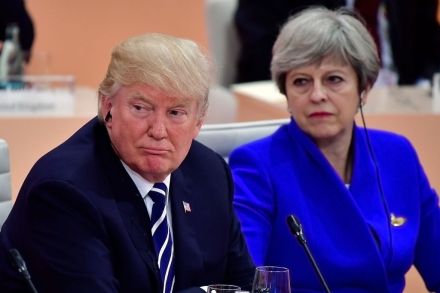
The stock market is reeling. The White House has already witnessed the resignation of the President’s most senior economic adviser. The EU is preparing retaliation, and other countries are checking the rule books to see what sort of tariffs and quotas they might be allowed to impose. In the wake of Donald Trump’s decision to whack hefty tariffs on steel imports into the United States a full-blown transatlantic trade war is brewing – and if China and Japan wade in, that may quickly turn global. That will, of course, be terrible for the global economy. But it might also be the perfect moment for a soon-to-be-out-of-the-EU Britain to reassert its

How the Conservatives plan to revive their youth wing

There are many things the Conservative party needs to do before it is election fit – whether local or national. There’s securing a good Brexit deal, building more homes and repairing the damage done in the snap election – to name a few. As I write in today’s i paper, one of the big things brains at CCHQ are currently working on is firing up the party’s campaign machine. While the Tories don’t have a problem attracting party donors, they do have a problem getting people out door-knocking. One of the many missteps Theresa May made last year was catching her own party’s campaign machine off guard with her decision to

Why opponents of the Thatcher statue are wasting their time

Why on earth would we want to put up a statue of Margaret Thatcher in Parliament Square? That’s the question that a number of politicians are asking after the possibility arose once again at the weekend. ‘Steady on,’ said Nicola Sturgeon. Labour’s Chris Bryant was (unsurprisingly, perhaps) rather more verbose. ‘What Mrs Thatcher did to communities like the Rhondda deserves recognition in the annals of callousness; not another statue.’ Down with the Tory fool behind the suggestion who just cannot stop reminiscing about the 1980s. Except the suggestion came not from a Conservative but a Liberal Democrat MP. Jo Swinson wrote a piece in the Mail on Sunday in which

Watch: Bercow bashes Boris

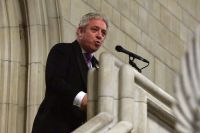
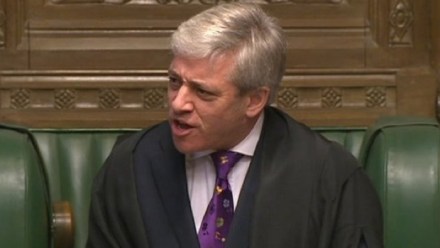
It’s safe to say that Boris Johnson is not having a good day. As well as finding himself in a row over whether or not he suggested England could withdraw from the World Cup in Russia, the Foreign Secretary has received a ticking off from John Bercow. The Speaker took issue with Johnson after he arrived late for an Urgent Question on the suspected poisoning of a Russian double agent. Johnson’s timekeeping led the Speaker to take a swipe at the Foreign Secretary for his comments last week comparing the Irish border to Islington and Camden – suggesting that just as there is no hard border between the two borough there could be

Did Munroe Bergdorf not expect the digital inquisition?

But for Toby Young, it is possible that few of us would have noticed the appointment of a transgender model called Munroe Bergdorf, who resigned this morning as a member of Labour’s LGBT advisory board. Her appointment might have gone unnoticed, along with her past comments on social media, which included attacking what she described as ‘the racial violence of white people’ – adding: ‘Yes ALL white people. Because most of ya’ll don’t even realise or refuse to acknowledge that your existence, privilege and success as a race is built on the backs, blood and death of people of colour. Your entire existence is drenched in racism.’ Bergdorf was quick

Bolton’s back

With one obvious exception, former Ukip leaders have a habit of disappearing into obscurity, but it seems Henry Bolton is determined not to go quietly. The party’s ousted leader has now set up his own political outfit: ‘OneNation’. Bolton says he decided to act because of the ‘urgent requirement for a 100% ‘leave’ party’. OneNation’s website promises that: ‘Policies are being drafted, a variety of campaigns and events are in the planning, membership will be open soon and more details will emerge over the coming days and weeks.’ Mr S can hardly wait…

Munroe Bergdorf and the left’s monopoly on morality

Munroe Bergdorf has resigned as Labour’s LGBT adviser after just one week in the job. Her appointment looked quite promising until it emerged she had deployed ‘butch lezza’ as an insult, joked that she’d like to ‘gay bash’ a TV character, and described gay Tory men as ‘a special kind of dickhead’. ‘Ever find that sometimes you’re just NOT in the mood for a gay and their flapping arms,’ she once mused on Twitter. I’m going to go out on a limb and suggest gay rights advocacy isn’t the career for her.  She has quit, citing ‘attacks on my character by the conservative right wing press’. Of course, there is no need to attack

How Theresa May’s reforming ministers are constrained

When Theresa May gave her big housing speech today, in front of a rather strange fake brick backdrop that made the Prime Minister appear to be emerging from a chimney, she was trying to speak to two audiences. The first was those who believe, as she says she does, that the housing crisis is one of the biggest barriers to social justice in this country. The second was those who may agree with the first sentiment in abstract, but who are very worried about inappropriate development and destruction of our green and pleasant land. It’s a tricky game, playing good-cop, bad-cop all by yourself, but that’s what the Prime Minister

Former Corbyn adviser: Don’t glorify Churchill

Here we go. Last night Gary Oldman came away victorious at the Oscars – picking up the best actor gong for his depiction of Winston Churchill in the Darkest Hour. The film follows the attempts within government in 1940 to make a peace treaty with Hitler and Churchill’s refusal to do so. Only not everyone was cheered by the news of Oldman’s success. Jeremy Corbyn’s former adviser Steve Howell complains that Churchill had many dark hours and so he will ‘pass on any film glorifying a man who British voters rejected at the first opportunity’. Setting aside the small issue of Churchill’s legacy (see what The Spectator said in 1965:

Michael Heseltine’s lone Brexit intervention highlights the Tories’ new-found unity

Was Theresa May’s big Brexit speech simply a string of ‘phrases, generalisations and platitudes’? That’s the claim from Michael Heseltine over the weekend. The Conservative peer made the Observer front page with an attack that’s said to break the Tories’ short-lived Brexit unity. He says May’s pitch on Friday fell flat as it only ‘set out the cherries that Britain wants to pick’ and complains that rightwing Tory MPs held ‘a knife to her throat’. But if anything, Heseltine’s lone criticism highlights the Tories’ newfound unity over Brexit. If you’d told Theresa May this time last week that the most prominent Tory to criticise her plans after her speech would be Heseltine

John McDonnell’s bad advice

John McDonnell’s business credentials took another hit on Friday when the shadow chancellor struggled to name a single one of his ‘business heroes’ in an interview with the Financial Times. The pause was so long that McDonnell’s press adviser eventually came up with a suggestion for him – ‘Vince Dale’, the renewable energy entrepreneur: Only there’s a problem. There’s no renewable energy entrepreneur by the name of Vince Dale. Instead, the person in question goes by the name of… Dale Vince. Mr S suggests the pair learn the entrepreneur’s name before going in for a business endorsement…

Sunday shows round-up: Simon Coveney – EU could reject Irish border proposals

Theresa May – We are committed to no hard border with Ireland On the Andrew Marr Show today, the Prime Minister gave her first major interview since delivering her keynote speech on Brexit on Friday, in which she outlined the government’s vision for the future in greater detail. Marr asked her about the negotiations involving the border between Northern Ireland and the Republic, referencing remarks made by the Foreign Secretary Boris Johnson that the situation was similar to the boundaries of the Congestion Charge zone between different London boroughs: AM: Do you think that the borderline between Islington and Camden is a very useful comparison for the Irish border? TM:

Church school critics ought to be consistent on selective education

This week my daughter, 11, got the equivalent of a whopping scratch card win in the lottery of life; she got into the secondary school of her choice, an outcome partly determined by her being a Catholic, partly by dint of her entirely fortuitous proximity to the school in question. Some of her classmates are also going around punching the air, others, also baptised, aren’t, presumably on the basis that they didn’t live close enough. They’re a bit subdued right now, poor mites; at the age of eleven, they’ve got the sense that things haven’t really worked out for them, unless quite a few of the lucky ones turn down

The key difference between the far right and the Islamists

Mark Rowley, who is just stepping down as the country’s chief counterterrorism officer, is a classic British policeman of the best sort — a low-key, quietly amusing, naturally moderate professional who does not play political games. He became something of a hero (not a word he would endorse) for his cool handling of last year’s atrocities. On Monday night, he delivered the Cramphorn Memorial Lecture at Policy Exchange, firmly entrenching the understanding which the British authorities were too long loth to recognise, that extremism — even when not itself violent — is a necessary condition for Islamist violence to develop. On one point, however, I felt Mr Rowley did not

Theresa May’s masterclass in mutual dissatisfaction

Theresa May’s speech today won’t have left any portion of her party ecstatic. As the Prime Minister promised ‘ups and downs in the months ahead’, she warned that ‘no-one will get everything they want’. With compromises coming down the track, May made sure to dish today’s disappointment out in an even-handed manner. For the Remain side of her party that meant their hopes for a customs union compromise – as Isabel reported earlier in the week – were dashed. She not only re-iterated her stated position that the UK would leave the customs union but said that the UK should be able to set its own tariffs. That suggests not even a partial

May tries to strike an optimistic tone on what Brexit can do for Britain

Despite the rather muted colours for the staging of her Road to Brexit speech, Theresa May tried to make her address as upbeat and cheerful as it was possible to be. She started by talking not about Brexit but about her agenda, restating a great deal of what she said on the steps of Downing Street when she became Prime Minister. Perhaps this was because May is worried that people have forgotten what her domestic mission is, or perhaps it was because she felt it would be best to suggest that Brexit could play a large part in making Britain a better, happier and less divided country. She said that