Turkey

Istanbul, the city of Ottoman opulence (and hair transplants)

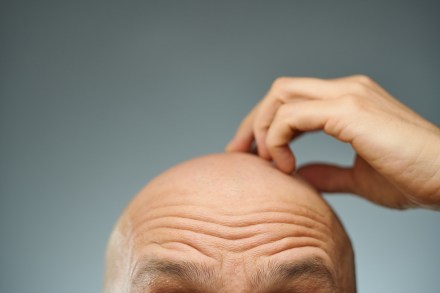
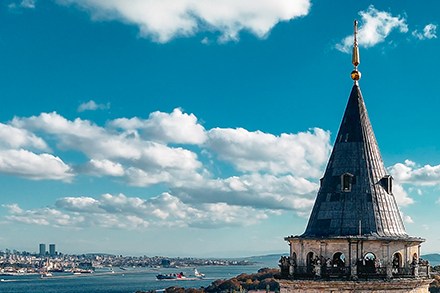
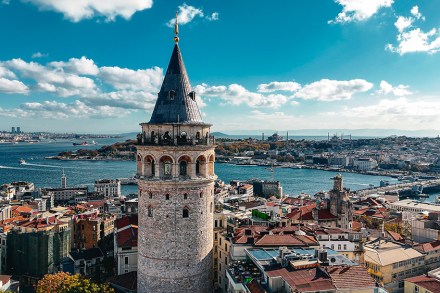
It’s the largest city in Europe, spans two continents, has been the capital of three mighty empires – Roman, Byzantine and Ottoman – and is visited each year by some 20 million tourists. These days – and I’m only guessing here based on the scores of battered, bloodied and bandaged scalps I spotted – it’s also the hair transplant capital of the world. Little wonder so many choose to come here for their cosmetic ‘enhancements’ (or ‘maimings’ depending on your view): if there’s one city that understands reinvention, it’s this one. I’m talking, of course, of Istanbul where continents and cultures, Christianity and Islam collide. To my shame, I’d never

The citizens of nowhere adrift in the West

We all know that an Englishman’s home is his castle, or at least it was. Looking back, it is easy to see how the castle walls were breached – first by mobile phones and wifi, then by the smart speakers and other gadgets that help and also harvest us. The idea that our homes are inviolate seems quaint nowadays. We know there are many other ways in which we are being uncastled, not least by government agents acting with impunity. And if you think that’s a problem, wait till you read the other home truths delivered by Ece Temelkuran in a book you’ll ignore at your peril. Temelkuran is a

Why Erdogan wants to help Iran

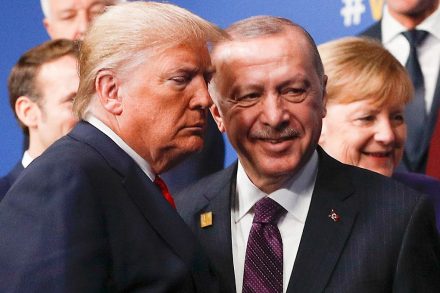
The Iranian regime remains firmly in the crosshairs of American bombers. As President Trump mulls whether to strike, Turkey is using every available channel to halt a military intervention. President Erdogan has personally offered to mediate between Tehran and Washington. At the same time, Turkish authorities have tightened their grip on exiled Iranian opposition figures. Turkey’s sudden support for Iran is not born of friendship. Over the past two decades, the two countries have repeatedly found themselves on opposing sides. In the Syrian civil war, Iran sent Shi’a proxies to prop up the dictator Bashar al-Assad, while Turkey armed and trained Sunni rebel groups. Ankara’s push for dialogue is driven

A new era of nuclear weapons is here

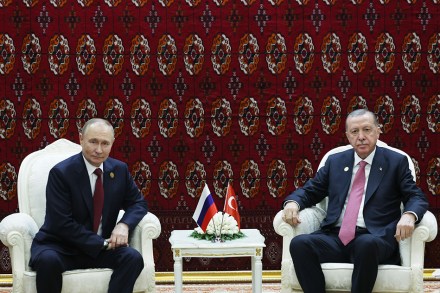
The world is moving into a more dangerous age. According to the Peace Research Institute Oslo, last year set a grim record, namely the highest number of state-based armed conflicts in more than seven decades. At the same time, we are seeing a fundamental realignment of global geopolitics – made clear from the recent meeting of the Shanghai Co-operation Organisation in Tianjin and the ‘Victory Day’ parade held in Beijing shortly afterwards. There, the leaders of what many in the West see as an emerging new world order stood shoulder to shoulder as Chinese military hardware was put on display to mark 80 years since the end of the second

There are glimmers of hope for Iraq’s Christians

It is 43˚C in Erbil, which a friend here describes as ‘cool’. Unlike my first visit in 2015, when Isis was just a few miles from the airport, the flight in was smooth. The plane this time was full of Iraqis and Kurds, mainly those who have emigrated, returning to visit their families. Ten years ago, the plane was empty apart from a few American contractors in fatigues and one lone priest. The descent then was rapid, to avoid Isis missiles. Erbil is the capital of the north-east Kurdish region of Iraq. After the 2003 invasion, the Kurds were given greater autonomy but since then they’ve found themselves fighting Isis,

The merchant as global reporter

Joad Raymond Wren’s ambitious history of early modern European news, capacious in structure, monumental in volume, is named for a witticism by John Earle (c.1601-65). The author of Microcosmography, a compilation of satirical ‘characters’ whose obvious modern heir is Victoria Mather’s ‘Social Stereotypes’, was arguably the funniest member of mid-17th century England’s most likeable clique, the Great Tew Circle. Wren more than once returns to Microcosmography’s comparison of the nave of St Paul’s, where London’s freshest newsletters were to be procured, with the commercial buzz of the Royal Exchange, with news replacing goods and hard cash as a potentially fruitful alternative currency. Wren is a recovering academic, expert in the

Why I burnt the Quran

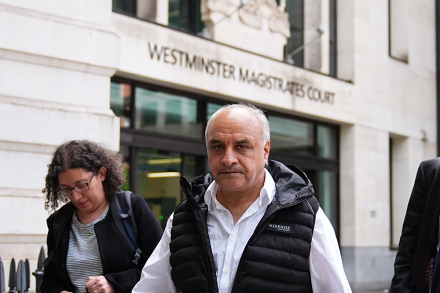
My name is Hamit Coskun and I’ve just been convicted of a religiously aggravated public order offence. My ‘crime’? Burning a copy of the Quran outside the Turkish consulate in London. Moments later, I was attacked in full view of the street by a man. I was hospitalised. Then I was arrested. Some may say that book-burning is a poor substitute for reasoned debate. I would counter that it was a symbolic, non-violent form of expression intended to draw attention to the ongoing move from the secularism of my country of birth to a regime which embraces hardline Islam. As I told Westminster Magistrates’ Court, what I did constituted political

The Kurds have finally given in to Erdogan

All wars end, one way or another. One of the longest wars in the Middle East, between Turkey and Kurdish separatists, may finally be over. After 40 years of bitter struggle, the Kurdistan Workers’ party, the PKK, has declared that it will disarm and disband. It’s an achievement, of a sort, for the PKK’s imprisoned founder, Abdullah Ocalan: he might become a free man. It’s a triumph for Turkey’s leader Recep Tayyip Erdogan: he might become President for life. The Kurds have adjusted to a new reality in the region. From Ankara to Riyadh, the chess pieces are shifting and the board might end up looking very different. This might

Erdogan’s latest power move could backfire

Turkey’s president, Recep Tayyip Erdogan, has never been so weak – nor so strong. At home, he is facing the most potent challenge to his power since an armed coup in 2016, in the form of a serious electoral challenger whom he has just jailed, causing massive protests and unsettling the money markets. Internationally, though, he has never been stronger. Every major power bloc in the world, it seems, needs Turkey’s help, with issues ranging from immigration to peacekeeping and energy supplies. Instead of sinking his main rival’s candidacy, the Turkish president has created a martyr For Europe, Erdogan remains a major gas supplier and an essential bulwark against immigrants

We need safeguarding from safeguarders

What does it mean, in practice, to say that reporting child abuse should be mandatory? It sounds appropriately severe, but it begs the question of what must be reported. It is rarely blindingly obvious that abuse has been committed or who has committed it: it is an iniquity that lives in the shadows. If the proposed law means that one must report every accusation or suspicion of child abuse, this would create an insane burden both on those who report and those – presumably chiefly the police – who must receive the report. Alexis Jay’s IICSA recommendations called for mandatory reporting of any child abuse ‘disclosure’; but surely personal judgment

Oblique and long but never boring: About Dry Grasses reviewed

About Dry Grasses is the latest film from Turkish auteur Nuri Bilge Ceylan and it had better – I thought to myself as the lights dimmed – have a great deal to say about dry grasses that is fascinating and insightful, given it has a formidable running time of 200 minutes. (That’s nearly three and a half hours in old money.) It is, needless to say – with a title like that, few will mistake it for a Marvel flick – one of those films where the story unfolds obliquely and meditatively and may say everything or nothing, it’s hard to know. All I can tell you for sure is

‘I glimpse her ahead of me’ – a solo female traveller follows her hero across Turkey

Green-eyed Gertrude Bell belongs in Charles Doughty’s Travels in Arabia Deserta, that slab of velvety antique that enthralled the English (they were not yet British) in the love-affair phase of their relationship with the Arabs. County Durham-born to a wealthy industrialist father, Bell (1868-1926) was a key player when the Powers tried ineptly to mould the Middle East, as the Ottoman Empire crumbled. She is well covered in the literature and appears in a large hat alongside Churchill in conference photographs. But as Pat Yale announces in this new book: ‘Her time in Turkey has been largely overlooked.’ Bell travelled extensively in that country before the first world war (starting

On the trail of Roman Turkey with Don McCullin

The genesis for our book Journeys across Roman Asia Minor was hatched in the autumn of 1973, when Sir Donald McCullin was a young man. He had been assigned by the Sunday Times to work with the writer Bruce Chatwin on a story that would take them from a murder in Marseille to the Aurès highlands of north-east Algeria. It was an emotionally gruelling journey and they rewarded themselves on the way back by stopping off to look at a solitary Roman ruin. No photographs were taken, but the memory of this place from all those years ago remained embedded in Don’s imagination. Three decades later, that seed bore fruit,

The ‘historic’ national dishes which turn out to be artful PR exercises

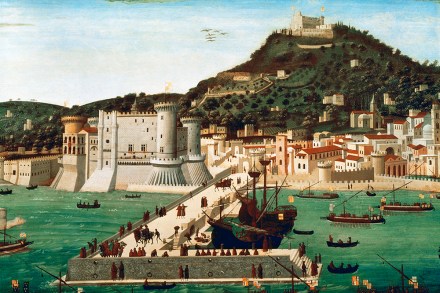
In 1889, Raffaele Esposito, the owner of a pizzeria on the edge of Naples’s Spanish Quarter, delivered three pizzas to Queen Margherita, including one of his own invention with tomatoes, mozzarella and basil, their colours taken together resembling the Tricolore. The Italian queen loved the pizza, and Esposito duly named it after her. In that restaurant today hangs a document from the royal household, dated 1889, declaring the pizzas made by Esposito to be found excellent by the queen. And so was born the Pizza Margherita, a dish now synonymous with Naples. The queen’s seal of approval in the wake of Italian unification, which had proved difficult for Naples, came

Portrait of the week: Rishi Sunak defends Kathleen Stock, food prices rise and AI extinction warning

Home Rishi Sunak, the Prime Minister, supported a visit to the Oxford Union by Professor Kathleen Stock, who believes that there are such things as women: ‘University should be an environment where debate is supported, not stifled,’ he said. He said in a separate announcement that he would ban companies from giving out free samples of vaping supplies to people under 18. He then packed his bags for a visit to Washington, DC, in the coming week for talks with President Joe Biden. Delaney Irving, aged 19, from Vancouver Island, won the women’s race at the Cooper’s Hill cheese-rolling event near Gloucester. Food prices continued to rise rapidly, according to the

Portrait of the week: Rise in sick leave, more rights for renters and moving mountains

Home The number of people not working due to long-term sickness rose to a record 2.5 million, many with mental sickness or back pain, according to the Office for National Statistics. Mel Stride, the Work and Pensions Secretary, said that income tax could be cut by 2p in the pound if Britons who had left the workforce during the pandemic returned to work. Pay growth in the public sector rose to 5.6 per cent, the highest rate since 2003. Pat Cullen, the general secretary of the Royal College of Nursing union, said that the Health Secretary should ‘start off in double figures’ in pay negotiations. The Bank of England expected

Turkey is at an existential crossroads

The wonderful Barbara Kingsolver wrote that hope is something you should not admire from a distance, but rather live inside of, ‘under its roof’. Last week I lived under the roof of hope as the campaigns for the first round of the Turkish presidential elections drew to a close. This is an existential crossroads for Turkey, my motherland. The AKP under Recep Tayyip Erdogan have been in power for two decades. Although they started off on their journey with promises of liberal reforms, a democratic constitution, and plenty of rhetoric about joining the EU, they have become increasingly nationalist, Islamist, patriarchal and authoritarian with each passing year. Women’s rights have

How to fake it till you make it

Not to sound too much like Kamala Harris during one of her peregrinations on the nature of time, but the thing about the future is that it catches up with you awfully fast. For a while we have been warned about the dangers of artificial intelligence and the special hazards of ‘deepfakes’. It seemed so futuristic when we saw a deepfake of Barack Obama some years ago, which demonstrated how easy it was to put words into someone’s mouth that they did not say. Well, now we have had an example in real time. Or at least the electorate in Turkey have. Personally I am not persuaded that Turkey’s election

The final countdown: Turkey is on a knife-edge

‘Kilicdaroglu’ is a pronunciation nightmare for the non-Turkish. Yet after this Sunday’s presidential elections, international news presenters, who have struggled for 20 years with President Erdogan’s soft ‘g’, might have to work harder to articulate the name of the social democrat leader of opposition. ‘You may call him Mr Kemal [his first name] until he wins,’ I’ve been saying to journalist friends. It’s the kind of simplification that people from complex, non-western countries are self-trained to give so our maddening realities can be better understood: ‘To feel Turkey, imagine the acute polarisation during the Brexit referendum continuing for 20 years. Add to that a far more ruthless Trump with political

Thousands may still be trapped under the rubble in Turkey

Five days after Monday’s massive earthquakes, the combined death toll in Turkey and Syria has passed 20,000. Local aid workers say around one-third of the casualties are in the Hatay province. The regional capital, Antakya, built on the ancient city of Antioch, is a popular tourist destination famous for its cuisine and cosmopolitan multi-ethnic atmosphere. Many of the mosques, churches, and synagogues in the city’s picturesque old town were also destroyed. On the third morning after the earthquake, a thick layer of smoke settled in the valley where Antakya lies – a residue from the fires the survivors built to keep warm during the freezing night. On the fourth day, many