Daniel Thorpe

Daniel Thorpe is an Istanbul-based journalist covering politics and economics in Turkey and Eastern Europe

Why the Kurds won’t move on Iran

From our UK edition

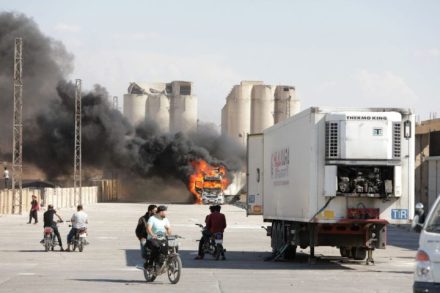
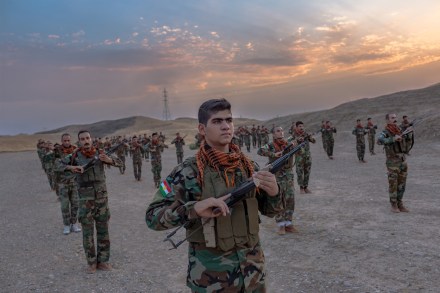
The war in Iran has entered its second week. Despite constant American and Israeli bombardment and heavy losses on the Iranian side, with much of the leadership killed, the regime in Tehran is shaken but still stands. It looks less and less likely that the Islamic Republic can be brought down by bombs alone. On Monday, the Assembly of Experts elected Mojtaba Khamenei as the new supreme leader. He is perhaps the last man to sue for peace, considering the Americans and Israelis killed his father, the former supreme leader, Ali Khamenei, just over a week ago. Amid all this, several reports came out suggesting the US is considering aiding Iranian Kurdish opposition groups to launch a ground offensive from Iraq.
Why Erdogan wants to help Iran

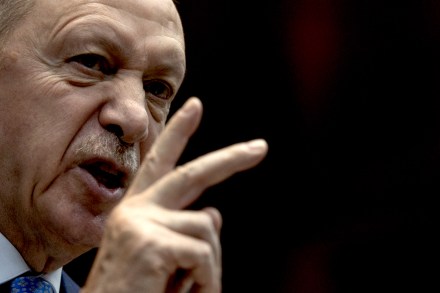
The Iranian regime remains firmly in the crosshairs of American bombers. As President Trump mulls whether to strike, Turkey is using every available channel to halt a military intervention. President Erdogan has personally offered to mediate between Tehran and Washington. At the same time, Turkish authorities have tightened their grip on exiled Iranian opposition figures. Turkey’s sudden support for Iran is not born of friendship. Over the past two decades, the two countries have repeatedly found themselves on opposing sides. In the Syrian civil war, Iran sent Shi’a proxies to prop up the dictator Bashar al-Assad, while Turkey armed and trained Sunni rebel groups. Ankara’s push for dialogue is driven by a fear of regional destabilisation.

Are Syria’s Christians safe?

From our UK edition

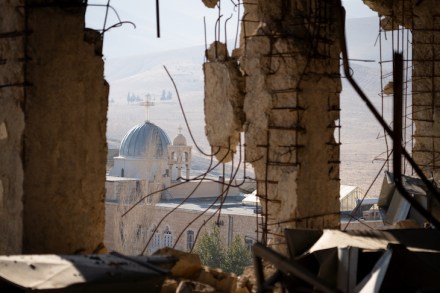
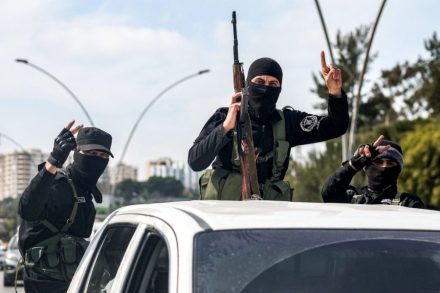
On a street corner in the old town of Damascus, rugged men with rifles stare sharply at passers-by. Despite their appearance, the long beards and scruffy improvised military fatigues, they are not the militiamen of the Hayat Tahrir al-Sham (HTS), but local Christian volunteers protecting the neighbourhood. When Bashar al-Assad fell and Islamist rebels took over, some of the Christians in the country feared the worst. Though atrocities have and do still happen, the bloodbath many feared never took place. “There was a feeling that the regime may protect us from fanatics,” explains Father Jihad, the head monk The police station nearby was ransacked by angry locals on the night Assad fled the country.

Is Viktor Orban about to lose power?

From our UK edition

Hungary is bracing for its next general election in April. It is the tightest race since Viktor Orban came to power almost 16 years ago. Challenging Orban is Peter Magyar. Once a member of the ruling Fidesz party, he defected to become its fiercest critic. Compared to the traditional Hungarian opposition, Magyar seems to be more successful. Only a couple of months after launching his own party, TISZA – an acronym that stands for the 'Respect and Freedom party' – in 2024, it came second in the European parliament elections. Now, Magyar is aiming for the main prize. He is confident that he can win it. Orban’s attacks on Magyar have been ruthless, as expected.

Pope Leo’s visit to Turkey comes at an uncertain time for the country’s Christians

From our UK edition

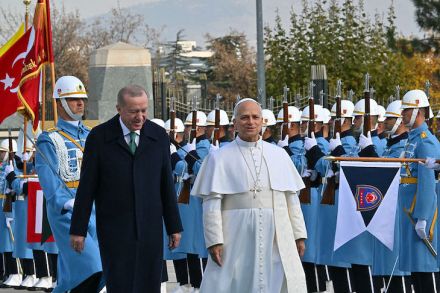
Pope Leo XIV is visiting Turkey and Lebanon on what is his first trip abroad since being elected in May. These are unusual destinations for a first papal visit. Turkey is an overwhelmingly Muslim country with very few Christians left. Lebanon has a much more significant Christian population, but the country is scarred by ongoing crisis and conflict. Just last week, Israel bombed Beirut and killed another high-ranking Hezbollah commander. Turkey is a country with an often uncomfortable and dark past with Christians Many expected the Pope to make his first visit to his hometown of Chicago, or perhaps to Peru, where he served as a missionary for two decades. Instead, he decided to follow the schedule made by his predecessor, Pope Francis, before he fell ill.

Turkey’s Prophet Muhammad cartoon row is an ugly sign of the times

From our UK edition

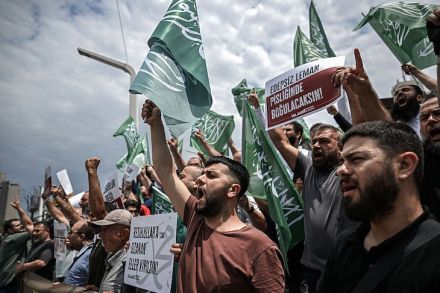
Hundreds of Turkish Islamists have attacked a satirical magazine after claiming that it published a cartoon depicting the Prophet Muhammad. Protestors chanted 'tooth for tooth, blood for blood, revenge, revenge' outside the office of LeMan, which denied that the image was of Muhammad. Police quickly intervened, erecting barricades and firing pepper spray. But instead of cracking down further on the Islamists, the Turkish authorities appear to now be targeting the journalists. Four employees of the magazine have been arrested and the chief public prosecutor's office has opened an investigation into claims that the cartoon 'publicly insult(ed) religious values'.

The Isis threat to Syria hasn’t gone away

From our UK edition

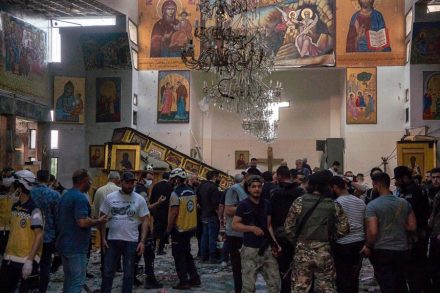
Just as things were starting to get better in Syria, an attack against the Christian community has shaken the country. In the suburbs of Damascus, a suspected Isis member entered the Mar Elias Church during Sunday mass, opened fire on the Greek Orthodox worshipers and then detonated a suicide vest. So far, the Syrian Health Ministry has confirmed at least 20 dead and 52 injured. As I arrived at the scene, armed members of the security forces were closing off the premises, trying to herd away the anxious locals who had gathered. Rubble and shattered glass on the streets, inside pools of blood. The Syrian White Helmets were picking through the broken furniture and looking for unexploded ordnance with a dog. A dazed priest was picking up scattered religious items from the floor.

Istanbul was disgracefully unprepared for the earthquake

From our UK edition

An earthquake of 6.2 magnitude hit Istanbul in the early afternoon. Lasting around 20 seconds, the city was sent into panic, with most of the residents rushing to the streets, looking for some of the rare open areas in the densely built quarters.  Although no deaths or major damage have been reported so far, the unpreparedness of the city was obvious from the first moment. I arrived at the closest designated assembly zone – the courtyard of a mosque – and found the gates locked. When the local imam finally turned up, he was not even aware that it was an assembly zone. His confidence that the Fatih quarter is a holy place in Islam, thus no harm would befall the residents here, was not too reassuring.

Will Turkey’s protests trouble Erdogan?

From our UK edition

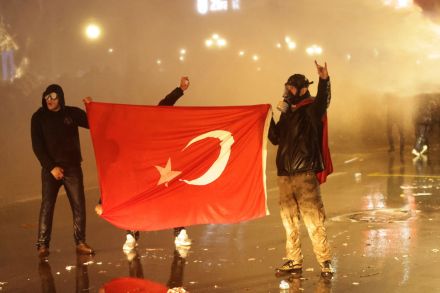
Hundreds of thousands of protestors have taken to the streets of Istanbul following the arrest of Ekrem İmamoğlu, Istanbul’s mayor and the most popular opposition leader. İmamoğlu and his Republican People’s Party (CHP) claim the arrest and prosecution are politically motivated: revenge for winning three local elections in Istanbul, and a measure to prevent him from running against president Erdoğan in the next election. Will the protests against İmamoğlu's arrest trouble Erdoğan? The authorities are certainly worried. Governors of major cities have banned all demonstrations and gatherings in the major cities, despite the constitution stating ‘the right to hold unarmed and peaceful meetings and demonstration marches without prior permission’.

The arrest of Istanbul’s mayor could backfire for Erdogan

From our UK edition

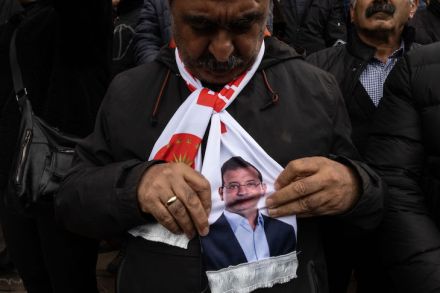
Ekrem Imamoglu, Turkish president Erdogan's main rival and the mayor of Istanbul, was arrested in the early hours on Wednesday. The warrant was issued on allegations of fraud, corruption, and aiding a terrorist group. Imamoglu recently announced his intentions to run against Erdogan, even though no election is scheduled for another three years. Most opinion polls show Imamoglu as the most popular politician in the country. He is generally regarded as the man with the highest chance of defeating Erdogan in the elections. His arrest comes as a major blow to his People’s Republican Party (CHP) and the opposition at large. In recent months, government pressure on opposition groups surged, with several politicians, activists, and journalists put on trial or arrested.

Is Syria heading for a fresh dictatorship?

From our UK edition

Syria’s new constitution quickly drew a lot of criticism. Signed by President Ahmed al-Sharaa last week, the document aims to help guide the country through the next five years following the ousting of the dictator Bashar al-Assad. Yet many in the country have already rejected it, claiming it gives the president too much power, promotes an Islamist agenda, and fails to address the concerns of religious and ethnic minorities. The new constitution claims it is ‘based on the principle of separation of powers’, but in practice, this does not appear to be the case. Al-Sharaa as interim president will wield the executive power. But he will also appoint a third of the parliament, while the other two-thirds will be selected by a committee.

Is the Kurdish PKK about to lay down its arms?

From our UK edition

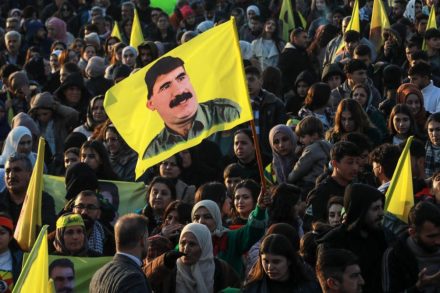
On Thursday, the jailed leader of the Kurdistan Workers’ party (PKK) called on his organisation to lay down their arms and dissolve themselves. If they comply, this would put an end to a decades-long conflict with the Turkish state that has claimed the lives of over 40,000 people. The statement was delivered in a crowded press conference in Istanbul by members of the pro-Kurdish Peoples' Equality and Democracy party (DEM). The call appeared to be more or less unconditional. One of the speakers at the end of the conference added that ‘in practice, of course, the laying down of arms and the PKK's self-dissolution require the recognition of democratic politics and the legal dimension.’ But it appeared more of an afterthought than a condition carved in stone.

Syria’s civil war is far from over

From our UK edition

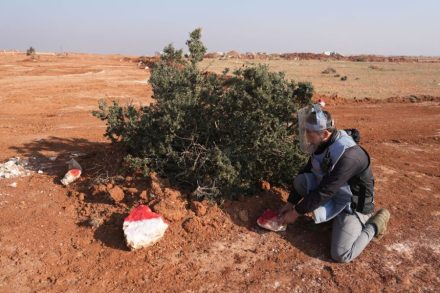
In recent years, the green plains of Idlib province have seen some of the heaviest fighting in Syria’s protracted civil war. Since the Assad regime collapsed in December, the fighting here has stopped – but the dangers of war are far from over. People in Syria are still dying. A 100-mm Soviet-made artillery shell lies on the ground at the side of a field being ploughed. If detonated, its shrapnel can travel up to half a kilometre. Workers from the British charity Halo Trust approach the shell carefully through a cleared ‘safe corridor’. They place large sandbags around it and plant a small TNT charge. Once at a safe distance and hidden behind a half-destroyed building, one of them presses a small detonation button. A deep thump follows.

‘Bashar was my friend’: the former Assad minister on why he didn’t flee Syria

From our UK edition

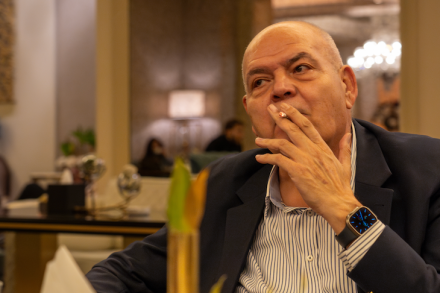
Amr Salem mingles cheerfully with foreign investors and members of Syria's interim government in a five-star hotel in Damascus, and why not? Salem's disposition, clothing, and manners fit the scene. Yet Salem was, in fact, a minister in Bashar al-Assad’s regime and the officials he warmly greets are members of Hayat Tahrir al-Sham (HTS), with whom the regime fought a brutal 14-year-long civil war. When Assad fled Syria last month, many of his officials escaped the country too. But not Salem. Salem chooses his words carefully, portraying himself as a patriot who loyally served his country from the inside ‘Bashar was my friend,’ Salem states firmly. ‘I think he really liked me. But he betrayed me, even though he didn't do anything to [physically] harm me. Only financially.

Will foreign fighters in Syria export their jihad? 

From our UK edition

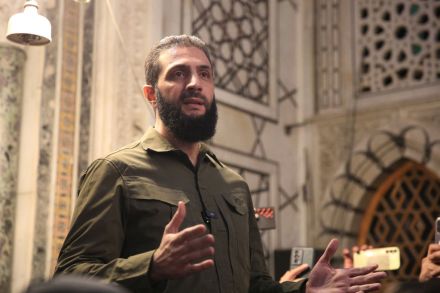
By the gates of the great 8th-century Umayyad Mosque in Damascus, a group of Central Asian-looking gunmen stand in the uniform of Hayat Tahrir al-Sham (HTS). It is unclear whether they are visiting or guarding. When I approach, they say they are from ‘East Turkistan’, referring to the Uyghur part of China. Their Arabic is hardly comprehensible, but when I ask in Turkish they speak more fluently. ‘We have been waging jihad in the north in Idlib for ten years,’ the eldest says in a low voice. He looks ten years younger than the age he gives. ‘With the permission of God, we prevailed over the Assad regime. They say we’ll get Syrian citizenship. But we do not want to stay here. God willing, we’ll go and wage jihad against China.

Turkey’s Syrians are rejoicing, for now

From our UK edition

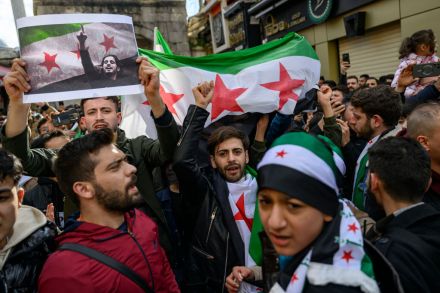
On Sunday, thousands of Syrians poured out onto the streets of Istanbul to celebrate the fall of Bashar al-Assad. The 3 million refugees living in Turkey were as surprised as anyone by the spectacular collapse of the regime. The celebrators were euphoric, waving flags and shooting fireworks. For years, many of them lived in fear, feeling a need to hide their Syrian identity, only whispering Arabic on public transport. Yesterday, they proudly chanted in their mother tongue: ‘Death to Assad’.  ‘I have never been this happy,’ said Omar Faruk Altavel, a young Syrian who fled Damascus nine years ago. ‘We will return now, rebuild the country, open our factories. It might take 30 years but it will start today.

The baby trafficking scandal that has horrified Turkey

From our UK edition

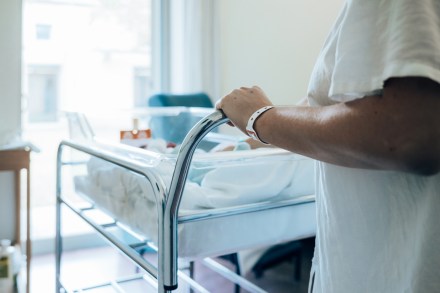
Turkey has been rocked by the disturbing news of the arrest of a so-called ‘newborn gang’ which is accused of being responsible for the death of multiple babies.  According to an Istanbul prosecutor’s indictment, healthcare workers in both state and private hospitals allegedly arranged the transfer of newborns to intensive care units in private hospitals, as a way to extort money from the state and distraught parents. These transfers were made when state hospitals still had capacity or the infants did not require intensive care.

Turkey’s döner kebab spat with Germany is turning nasty

From our UK edition

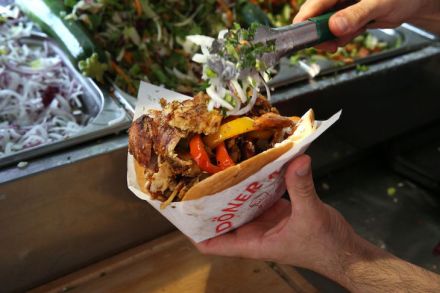
Germany and Turkey have had a fair share of differences and tensions over the years. But their latest row – over kebabs – is in danger of turning nasty. Last April, German president Frank-Walter Steinmeier decided to bring along a 60-kilogram döner kebab on his state visit to Turkey. It did not go down well. Turks found the stunt condescending; Germans were mortified. Ankara lodged an official request with the European Commission to make the dish a 'traditional speciality’, thereby regulating what can be sold under the name ‘döner’ in Europe. Turkey aims to dictate what can be sold as döner kebab This spat isn't, of course, the first time Germany and Turkey have failed to see eye to eye.

Will Erdogan go on and on?

From our UK edition

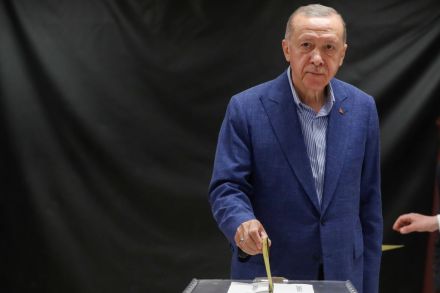
Today marks ten years since Recep Tayyip Erdoğan was elected president. There will be no celebrations, and Turkish media may make little mention of the anniversary. The date is an important milestone, nonetheless, in Erdoğan’s remarkable career as Turkey’s most successful modern leader since the father of the nation, Kemal Atatürk. In the past ten years, Erdoğan overcame illness, a coup, social unrest and the hostility of several world powers to consolidate his iron grip on the country. Before the 2014 election, the presidency was mostly a ceremonial role. Erdoğan came to power as prime minister in parliamentary elections in 2002 as head of the AK party. The shift did not happen overnight.

Violence surges against Syrian refugees in Turkey

From our UK edition

A wave of violence targeting Syrian refugees is spreading through Turkey, triggered by allegations of the sexual harassment of a child by a Syrian man in the city of Kayseri. The child, also Syrian, was related to him, according to the authorities. Since the start of the Syrian civil war in 2011, 3.1 million Syrians have been granted temporary protection in Turkey, according to official figures. But now there are growing public demands for them to return to Syria, fuelled by both the governing and opposition parties in Turkey. As reports of the incident in Kayseri snowballed on social media, mobs combed the streets, attacking and burning houses, businesses, and vehicles they thought belonged to Syrians.