Travel

The remaking of Margate

The faded splendour of 1980s Margate is the backdrop for Sam Mendes’s new film Empire of Light, starring Olivia Colman and Colin Firth. Coming to UK cinemas on 9 January, it’s about a romance in the north Kent seaside town and the revival of a striking 1930s cinema with a distinctive brick ‘fin’ tower. Renamed briefly as the Empire Cinema during filming in the spring, Margate's Grade II-listed Dreamland Cinema takes a starring role. In reality it's part of the Dreamland amusement park complex that’s had 102 years of rollercoaster fortunes.

You’re never too old to stay in a youth hostel

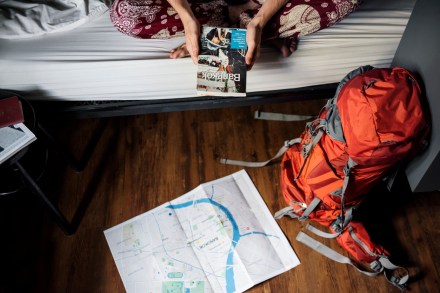
No disrespect to the hotel industry: staying in a hotel room, especially when there is someone nice with you, can be exciting and sexy. Staying in a hotel room on your own, though, can be exceedingly sad, boring and unsexy. Unfortunately, I’ve experienced more of the latter type of hotel stopover (a squalid hotel room in Addis Ababa as the occupants on the other side of the thin walls went at it like gangbusters being a particular abject experience that lingers in the mind). It makes paying a wad of cash for a lonely night even more galling.

A Christmas gift guide for travelers

From our US edition

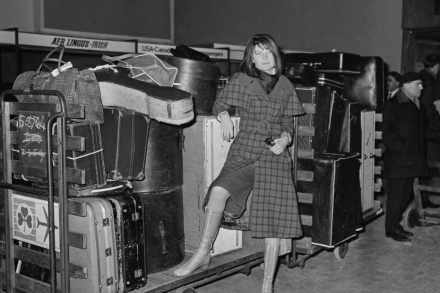
Being a travel journalist, I live out of a suitcase. Not in the anecdotal sense. I both love and hate that, but really, really good luggage has a huge hand in tipping the scale. The suitcase itself, well, it’s got to be excellent. I’m talking outside pockets to quickly stash liquid bags after security, charging ports built into the case itself, and wheels that actually wheel. Items worthy of a coveted spot on the packing list are distinctly above average. Life on the move has its inevitable snags, but investing in the right gear makes them a lot less painful. Say it with me: portable charger. Here are the things that inspire me to pack my suitcase in the first place, and the things I’m never without when I set off.

christmas gift ideas traveler

Why Munich is the ideal Advent destination

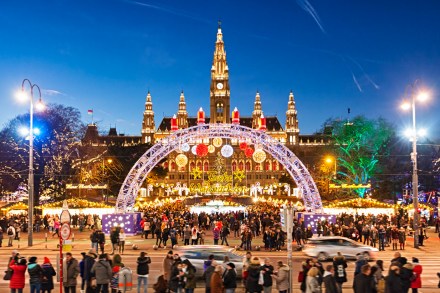
Ambling through the Christkindlmarkt, Munich’s biggest Christmas market, feeling distinctly tipsy after my third (or maybe my fourth?) mug of Glühwein, I experienced a strange sensation, something I hadn’t felt in ages. For the first time in a long while, I realised I was feeling rather festive. Back in Britain, I’m the archetypal Christmas grouch – but leave me in a German Christmas market for a few hours and I become a big kid again. This is the first year since Covid that Munich has been able to mount a proper Christmas market season. That might not sound like such a big deal to Brits, but it’s headline news in Bavaria.

How to eat frites the Belgian way

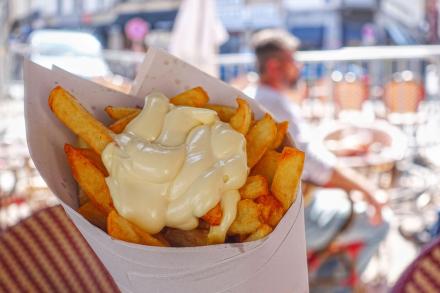
Many things about Belgium are impenetrably mysterious to the incoming foreigner: the commune system, which language to use, how to politely eat moules. But few are as cryptic as the menu of sauces that accompany Belgian frites. Ketchup, tartare, barbecue and mayonnaise seem fine. But what is Samourai? Andalouse? Mega?  Unlike many great Belgian things that have successfully been exported (Trappist beer, chocolate, Tintin, speculoos biscuits, Audrey Hepburn), frites can only be experienced on home turf. And my, aren’t they so Belgian. First, the friteries or fritkots in Dutch – chip shop kiosks found wedged on to street corners and in city squares – are totally egalitarian and the service is totally grumpy.

How to tour London like a royal

From our US edition

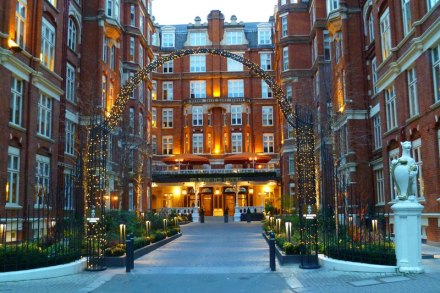
The next time you arrive at London’s Heathrow Airport, you might be forgiven for wanting a welcome fit for a king. Yet under the now nearly three-month-old reign of King Charles III, there is a persistent rumor that Buckingham Palace, that symbol of the British monarchy since its acquisition by America’s favorite monarch George III in 1763, is going to pass out of private hands and into public ones. There has been talk of its being turned into a giant permanent art gallery and museum, showing off treasures from the Royal Collection Trust. There's even chatter of — and I can hear the gasps from here — its being transformed into a five-star hotel. You, too, can pay an exorbitant amount of money to sleep where kings and queens have trod.

How to see Switzerland by train

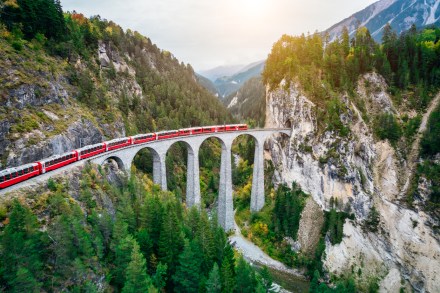
As we all know, the Swiss love their clocks, their cheese and their chocolate. They also adore their railway. The trains are clean, comfortable, convenient and you can set your (Swiss) watch by them.  The system is 175 years old this year, a fact recently celebrated by the running of the world’s longest train through the Swiss Alps. It was quite a feat and took years to plan. The 1.2 mile-long train comprised 100 carriages and passed over 48 bridges and through 22 tunnels during its 15-mile journey, setting a new Guinness World Record as it did so. If you’re exasperated by British trains with the constant strikes, delays, cancellations, melted rails, frozen points, leaves on the line or the ‘wrong type of sunlight’ (do you remember that one?

Wining and walking in Turin and Genoa

From our US edition

Turin at the end of August is pleasingly melancholic. The city has emptied after the feast of Ferragosto on August 15 and won’t fill up again till September. Solid bourgeois streets, with eighteenth- and nineteenth-century buildings now housing banks, are deserted save for the occasional confused tourist. What brings others to Turin in August I cannot say. For me, it was a wedding in Milan at the end of the week and the prospect of a little vacation ahead of it. Turin was a whim. I was meant to meet a college friend in Genoa on Monday, but my Sunday-night redeye from New York was canceled. Saturday was the only option, and so I was left at a loose end. Options abounded: I could stay overnight in Milan and head to Genoa with my friend the next day.

turin

The case for ‘premium economy’ train carriages

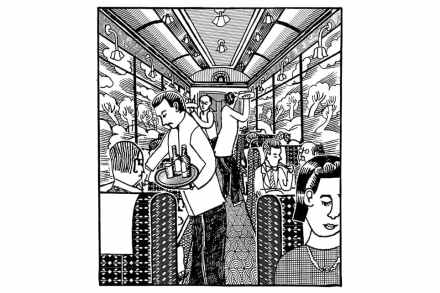
A few years ago I wrote here about the unexpected symbiosis between economy passengers and business travellers on commercial flights. Largely unnoticed by people in either cabin, those buying each class of air ticket are unintentionally helping out their fellow travellers at the other end of the plane. Precisely because the two classes of passenger have wildly different priorities (the people at the front are sensitive to time, productivity and comfort; the people at the back are more sensitive to price), it benefits both groups to share the same aircraft. Why? Well, put simply, leisure passengers do not much care whether a flight to Miami operates daily, weekly or even fortnightly, since they are most likely going away for one or two weeks.

How to see Costa Rica’s true colours

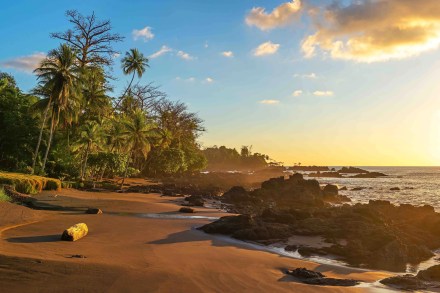
If you’re going to visit Costa Rica, my advice is to steer clear of all the stuff that looks most exciting in the brochure: the zip-wires, the thermal springs and the white-water rafting. I’m not saying you won’t enjoy it. Nor realistically – especially if you’ve kids in tow – are you likely to be able to avoid it. Just be aware, though, that the best bits, as always, are the ones most tourists don’t see. Corcovado National Park in the remote south-west, for example. Well, I say ‘remote’. But actually, oddly enough for a country swathed in rainforest, hardly anywhere is truly inaccessible because of the remarkably good roads and the even more impressive local airline.

The strange inspiration of the Gobi desert

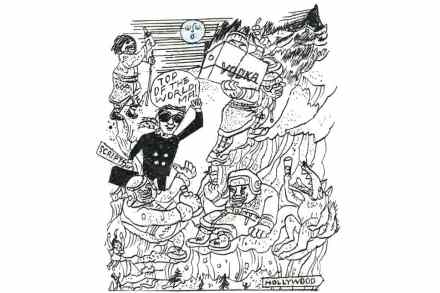
The first time I went to Mongolia was in 2014, when I travelled across the country with the actress Michelle Rodriguez and a group of her friends, courtesy of the Mongolian-American conservationist Jalsa Urubshurow. Driving out of Ulaanbaatar at dawn, we stopped at a market on the outskirts of the city to buy caviar, blinis and crates of Chinggis vodka for the 12-hour drive. Because I was not a follower of the Fast & Furious franchise, I had little idea who Michelle was, but every vendor in that tiny market knew her on sight. The place came to a standstill at 5 a.m. It was clear that the terrifyingly long reach of Hollywood extends even to the Gobi desert, where presumably pirated copies of the Fast & Furious movies light up a thousand gers on winter nights.

How to live like a Parisian

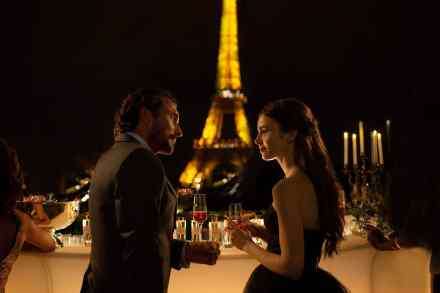
I wanted to hate it. In the weeks leading up to my trip to Paris, I was told incessantly about how much of a dump it was, about how I'd be faced with overflowing bins and skilled pickpockets. I was even warned against drinking the tap water.  According to some, to be properly British means hating the French. And there's plenty to take against: rude waiters, deliberate incompetence in maintaining their side of the Channel crossing, awkward double-cheek kissing, obsessiveness about cheese, astounding corruption in farming subsidies. My trip to France had one rule: do not enjoy it. Do not let them win. But I have a confession to make. It wasn’t long before I realised that perhaps not all elements of the French character are détestable.

Why Antwerp should be your next city break

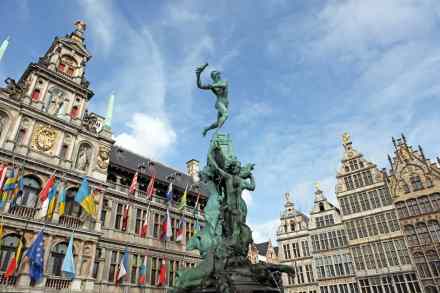
In a sleepy side street around the corner from Centraal Station, there’s a restaurant I return to whenever I’m in Antwerp. From the outside it doesn’t look like much – a perfunctory shopfront, more like a takeaway café – but inside it’s charming, like eating in someone’s home. Welcome to Hoffy’s, a cosy Yiddish enclave renowned for comforting, nourishing cuisine in the centre of this flamboyant, unruly city. For me, this kosher restaurant sums up the spirit of Antwerp, a cultural crossroads since the Middle Ages, a refuge for outsiders of every sort.

The best hotels for bookworms

It’s hard to beat escaping into a book – but for bookworms looking for an escape that jumps off the page, there are plenty of hotels that cater to a love of all things literary. From a Cornish coastal retreat that’s been immortalised in fiction to a book-strewn adults-only resort on a South Pacific island, here are eight of the best hotels in the world for book-lovers. The only question that remains is what holiday reading to take with you. Carbis Bay Hotel, Cornwall A luxury beachfront resort just outside St Ives, Carbis Bay Hotel appears as The Sands Hotel in two of Rosamunde Pilcher’s novels, The Shell Seekers and Winter Solstice.

Trains, planes and wheelchairs: why is this still a route to disaster?

Whenever I take a train journey, I am filled with dread. Despite always booking assistance, I am terrified there won’t be someone at my destination with a ramp to help me and my powered wheelchair on to the platform. Many a time has my travel companion – or a complete stranger – had to straddle the train and the platform to stop the train doors closing with me stuck inside. I have frequently arrived at my destination late and stressed, left with the impression that my time doesn’t matter. What on earth could I be late for – surely nothing important? So I have read with horror, but not surprise, the recent stories of disabled people being abandoned or mistreated when travelling on planes and trains.

Welcome to the Seychelles… of Scotland

When Thailand's tourist board mistakenly used a photo of West Beach on the Isle of Berneray in Scotland to promote the tropical paradise of Kai Bae Beach, it took a British expat with a keen eye to spot the error.  But perhaps the confusion shouldn't come as a surprise. With ivory dunes tumbling down to turquoise waters and the occasional chatter of a faraway pod of dolphins, the beaches of Uist, a collection of islands in the Outer Hebrides, could easily be mistaken for some of the most popular bays in the Seychelles or Caribbean. The only giveaways are the brisk breeze that nips your ears and the dearth of other visitors. The beaches here are regularly voted some of the most beautiful in the world.

How to holiday like James Bond in Sardinia

Posing as a marine biologist and with Soviet agent Anya Amasova posing as his wife, James Bond checked into Hotel Cala di Volpe in the The Spy Who Loved Me (1977). Their mission: to gather intelligence aboard super-villain Karl Stromberg’s secret underwater lair, somewhere in the Tyrrhenian Sea between Sardinia and the Italian mainland. In the meantime, they stay in a spacious suite with exposed wooden beams and open ocean views (where Amasova also vows to kill Bond when the mission is over). When I stayed at Cala di Volpe this year, I saw no villainous marine lair, just Tommy Hilfiger’s super yacht. The hotel has retained its Bond glamour through the years and offers the super-rich (and some super-famous) a more private experience than St Tropez or Monaco.

Why we pick the wrong holiday destinations

Having returned from a fortnight’s break, I wonder if we get holidays all wrong. In northern Europe, the custom is that you head south to spend time on the beach. But equally, there is such a thing as too damned hot, especially if, like me, you have a healthy dose of Celtic ancestry. To avoid this, you need to study what is called the ‘wet-bulb temperature’. This is a measure of temperature which accounts for the cooling effect of evaporation. At 100 per cent relative humidity, the wet-bulb temperature is equal to the dry-bulb temperature shown on weather forecasts. At lower humidity the wet-bulb temperature is lower, owing to evaporative cooling, a mechanism all humans other than Prince Andrew depend on to reduce their body temperature.

The pagan pleasures of Spain’s Finisterre

It was starting to feel rather spooky on the pathway to Finisterre. Only two days before I’d been in the celebratory environs of Santiago de Compostela with its endless arrivals of jubilant pilgrims. Now dark clouds were scudding across the Galician hills in the distance and the only sound I could hear was the wind blowing – in an accusatory manner, it seemed – through the trees beside me. While Santiago de Compostela marks the official end of the famous Camino de Santiago pilgrimage, with the purported remains of St James the apostle in the basement of its cathedral, a minority of hardy souls continue for another 86 kilometres to the Galician coast.

How to spend a weekend in Riga

In Ratslaukums, Riga’s central square, there is an ugly brutalist building which encapsulates the contested history of Latvia’s beautiful, battered capital. This modernist eyesore was erected in 1970, when Latvia was part of the Soviet Union. It was built as a museum dedicated to Lenin’s crack troops, the Red Latvian Riflemen, who helped him overthrow the Tsar and win the resultant civil war. Without them, the Russian Revolution might have been stillborn. Today the content of this museum is completely different. The only relic of the Latvian Riflemen is the Soviet statue in the street outside.