Tony blair

Super man of legend

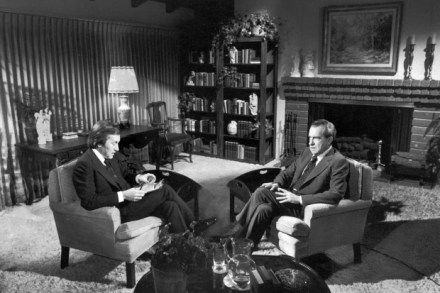
On 13 March 2014 a congregation of 2,000 people, including many of the great and the good, gathered in Westminster Abbey for a memorial service for David Frost, who had died suddenly six months previously while travelling on the Queen Mary to America. During the service a select band, led by the Dean of Westminster, John Hall, retired to Poets’ Corner, sacred to the memory of Keats, Shelley and others of the immortals, where the Prince of Wales laid flowers on a tablet in the floor bearing the illustrious name of Frost. Given that in only a few years’ time Frost’s name, along with many of today’s celebrities, was likely to be forgotten, it might have been better to dedicate the tablet ‘To the Unknown Television Personality’.

Tony Blair doesn’t need to apologise for the Iraq war

I was against the Iraq War. And I’ve been against Tony Blair ever since I first clapped eyes on his moisturised, illiberal countenance, all teeth and no soul. (In 1996 I was standing on street corners selling a magazine that said ‘Tony Blearghh!’ on its cover, while every other lefty was hailing him a messiah come to save us from Toryism.) Yet I don’t like the obsession with making Blair repent and weep and whip himself for what happened in Iraq. It’s ugly, and even worse it’s wrong: Blair doesn’t bear sole responsibility for that war.

‘Britain Stronger in Europe’ launches with celebrities and a dose of patriotism

The campaign for Britain to remain in the EU, now titled ‘Britain Stronger in Europe’, is launching today with a swish video and scary speech. Sir Stuart Rose, the former CEO of Marks and Spencer, will claim say that every Briton is £450 better off thanks to our EU membership — a claim the Leave camps will undoubtedly counter with their own figures. And just in case you weren't sure, Rose says 'the choice facing us in this referendum is the biggest in a generation'. But what is most notable is Rose’s patriotic language. He will say: 'To claim that the patriotic course for Britain is to retreat, withdraw and become inward looking is to misunderstand who we are as a nation.

Diary – 1 October 2015

Party conference season is the most pointless waste of money, time and liver quality ever devised. I attended these sweaty, drunken gatherings for ten years during my newspaper-editor days and achieved nothing constructive other than clarity over which is the best way to treat a monstrous hangover. (Answer: my late grandmother’s recipe of vine tomatoes on toast, laden with thick Marmite and gargantuan grinds from a pepper mill.) But they were fun, so long as I adhered to the golden rule: always leave the bar before 2 a.m., thus avoiding the moment when enough alcohol emboldens other delegates, and indeed one’s own staff, to tell you what they really think of you.

These days, compassion is for hacks and Lib Dems

There’s a hard, hard mood out there among the public and I don’t think our newspapers get it at all. Could it be that the general populace are now more cynical than their journalists? At Tim Farron’s closing speech to his Liberal Democrat conference in Bournemouth last week, I sat through nearly an hour of one of the biggest cartloads of sanctimonious tosh it’s been my fate to endure in decades. And who do you suppose was lapping this up as avidly as any misty-eyed Lib Dem conference-goer? The hardened hacks, the sketchwriters, analysts and reporters. The press are old-fashioned: they love this emotional stuff. But the 21st-century public have been immunised against it.

Can the Blairites rescue the Labour party?

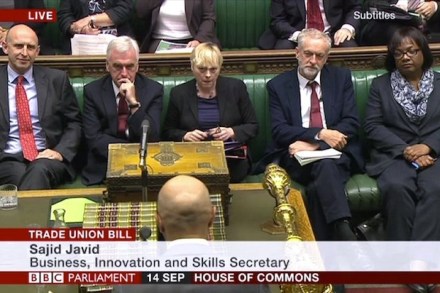
The first conference of the Corbyn era has got MPs and journalists scrambling around for a copy of the Labour party’s rule book. Everyone is trying to work out whether or not scrapping Trident will be debated or not. This is the first skirmish in what promises to be a series of procedural fights between Corbyn and his supporters and what is left of the old party establishment. It would be tempting for Labour moderates to end up expending all their energies in these fights, doing what they can to stop the Corbynites seizing control of the commanding heights of the Labour party. But, as I argue in the magazine this week, a better use of their time would be working out why Corbyn, a fairly mediocre candidate, beat them so easily.

Corbyn’s salvation

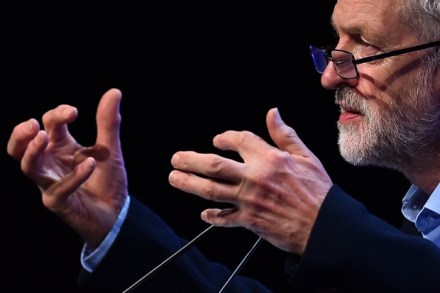
On religion, Jeremy Corbyn is interestingly moderate, circumspect — not the angry atheist you might expect. In a recent interview with the Christian magazine Third Way, he said his upbringing was quite religious: his mother was a ‘Bible-reading agnostic’ and his father a believer, and he went to a Christian school. ‘At what point did you decide that it wasn’t for you?’ he was asked. He replied very carefully, even challenging the premise of the question: ‘I’m not anti-religious at all. Not at all… I find religion very interesting. I find the power of faith very interesting. I have friends who are very strongly atheist and wouldn’t have anything to do with any faith, but I take a much more relaxed view of it.

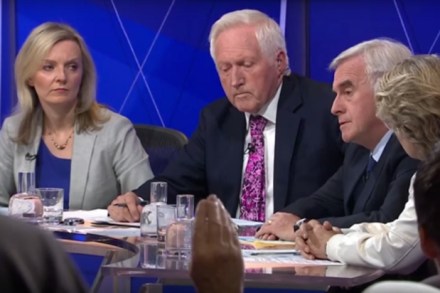
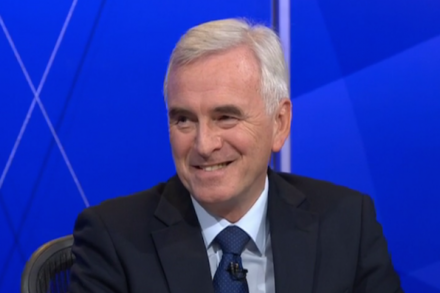
John McDonnell’s slick performance on Question Time was worthy of Tony Blair

Hats off to John McDonnell. We've all been fretting about how the Corbyn gang would cope against the media slick Tories. We all think that, despite the appeal of conviction politics, a shadow chancellor such as McDonnell will be eaten alive by the Tory front bench. John McDonnell's performance on BBC Question Time last night suggested otherwise. Question Time is a good test for politicians: they have to look and sound passionate while saying nothing much at all. McDonnell did exactly that, and with gusto. He masterfully shrugged off his 'joke' about killing Margaret Thatcher. When asked about his support for the IRA, he managed almost simultaneously to apologise and to take credit for bringing peace to Northern Ireland.

Why are people falling for John McDonnell’s Question Time ‘apology’?

John McDonnell's Question Time 'apology' was no such thing and I am amazed to see anybody for fall for it. It was obviously insisted upon by Labour party spin-doctors. But as the words themselves show, it was not an apology. Sure, he apologised for causing any offence or upset, but not for the fact that he was wholly and utterly wrong. And wrong not only to have praised people who spent three decades shooting people and planting bombs in public places but wrong on the facts too. I cannot think how he can get away with this, but it seems like he will, not least because his boss has done so by mounting the same defence. Because of course McDonnell has adopted the Jeremy Corbyn tactic I have written about previously here and here.

The left hate to admit it, but rugby is no longer a pastime for the privileged

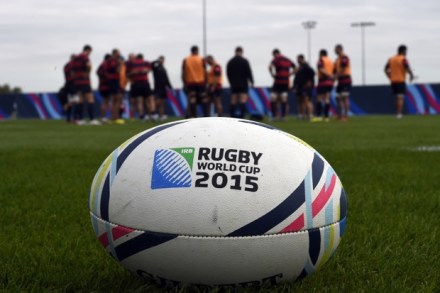
Why do lefties hate rugby union so much? Not all of them, of course. There are one or two who enjoy the sport, but the majority loathe it. Tomorrow marks the start of the rugby World Cup, which is being hosted by England. You can be sure there will be plenty of moaning about the supposedly 'elite' sport. In 2013, Ian Stewart, a Labour party member and blogger, wrote in an article that he was partial to rugby, an admission he conceded many of his comrades would find 'as outrageous as professing a liking for bullfighting'. People, perhaps, like David Bowden, associate director of the Institute of Ideas, who has described rugby union as 'the sport of posh boys and coppers…the way that the English ruling classes have lorded it over those uncouth, working-class games'.

Labour’s lost thinker

Shortly before the last election a group of Labour MPs approached Ed Miliband to ask him what he would do if he lost. They suggested he could provide stability by staying on as leader for a while, as Michael Howard had done, and that his last duty should be to oversee an inquiry into what went wrong at the general election. Miliband, still convinced he would win, did not entertain the idea, to the dismay of his policy chief, Jon Cruddas. After the election, Cruddas decided to go ahead and do an inquiry anyway. The results will infuriate the Labour left. The inquiry found that Labour’s anti-austerity message put voters off.

How will Cameron and the Tories deal with Corbyn at PMQs?

Today is the first real test of Jeremy Corbyn’s leadership. At midday, it’s assumed he will take his place on the front bench for his first session of Prime Minister’s Questions with David Cameron. PMQs is the central event of the political week and today’s session is even more anticipated than usual. For the first time, the Tories have the opportunity to put their ‘security’ concerns directly at the new opposition leader — will they stick? Will Corbyn brush them off or fail to effectively respond? There is also a challenge for the Prime Minister because he is dealing with such an unknown quantity. Will Cameron be serious and respectful, or punchy and loud? His ‘Flashman’ persona is unlikely to score any points against Corbyn.

Will Jeremy Corbyn boost his left-wing idealism with a religious message?

One major defect of Jeremy Corbyn has not yet been discussed. He's not a religious believer. Why is this a defect?  Because these days left-wing idealism is hugely boosted by an alliance with religion. Only so can it widen its appeal beyond a chippy clique. Maybe he’s half-aware of this. In a recent interview with the Christian magazine Third Way, he said that his upbringing was quite religious, and that he retains some sympathy with faith: ‘I'm not anti-religious at all. Not at all… I find religion very interesting. I find the power of faith very interesting. I have friends who are very strongly atheist and wouldn't have anything to do with any faith; but I take a much more relaxed view of it.

Long life | 10 September 2015

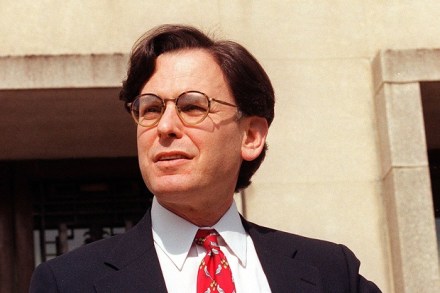
I remember Sidney Blumenthal from my time in Washington in the late 1980s when I was there as the first American editor of the Independent. He was a smartly dressed, agreeable political journalist, handsome in a donnish kind of way, who had a gracious, dignified manner that seemed to put him a cut above most of his fellow hacks. He was also a liberal of strong political conviction, whose purpose was to help rebuild American liberalism so that it could take on and beat the New Right after its long ascendancy under Ronald Reagan and restore the Democrats to power. It was at around this time, in 1987, that Blumenthal first met Bill Clinton whom he came to regard — rightly, as it turned out — as the Democrats’ best hope for achieving this aim.

The Spectator’s notes | 10 September 2015

Presumably Britain has some sort of policy on immigration, asylum and refugees, but instead of struggling to understand it, you can save time by following its media presentation, since that is what seems to concern the government most. Essentially, the line is that Labour lets them all in and the Tories don’t and won’t (‘No ifs, no buts’). When, as at the last election, it turns out that net immigration has been rising under David Cameron, he apologises shyly and sounds tough again. He was sounding very tough until last week, when the photograph of the dead boy on the Turkish beach suddenly turned him all soft.

The fog of law

Not even Jeremy Corbyn lamented the death of Reyaad Khan, who was killed by an RAF drone in Syria after joining the Islamic State. He was a straight-A student from Cardiff who had the freedom to do anything with his life, but chose to turn his back on Britain and join a band of Islamofascists. He had been working hand-in-glove with Junaid Hussain, a talented computer hacker from Birmingham who fled to Syria; the two of them had been making detailed plans for attacks on Britain. But the RAF’s involvement in the strike marks a new chapter in British warfare. The motive for the action was simple: Khan was planning to inflict great harm on British people, and in the absence of alternatives, the RAF struck when they had the chance.

Why Labour will lose in 2020

If Jeremy Corbyn is elected Labour leader on Saturday, does this mean the party will lose the next general election? Lord Ashcroft has produced a new report, Project Red Dawn, which examines why Labour lost the 2015 general election and what it needs to do to win again. His findings all point to another defeat under Corbyn's leadership. Ashcroft's research says the single biggest reason Labour lost was Ed Miliband, who defectors said was not up to the job of Prime Minister. The Tories will undoubtedly do their utmost to paint Corbyn — who has less experience in office than Miliband — in exactly the same light. Defectors to the Conservative party were put off by the threat of Labour overspending.

The Tories’ adoption of the Living Wage is entirely bogus

Was there ever a more unilluminating political idea — for voters rather than practitioners — than triangulation? For those readers so pure and high-minded that they have not followed politics for 20 years, I should explain that triangulation came from Bill Clinton, was imported by Tony Blair, and is now practised by David Cameron. Clinton’s adviser, Dick Morris, put it thus: ‘The President needed to take a position that not only blended the best of each party’s views but also transcended them to constitute a third force in the debate.’ The Tories’ adoption of the Living Wage is the latest example.

Forget Chilcot

[audioplayer src="http://rss.acast.com/viewfrom22/jeremycorbynsbritain/media.mp3" title="Peter Hitchens and Fraser Nelson debate whether the Chilcot report needs to be published" startat=1916] Listen [/audioplayer]It might actually be better if Sir John Chilcot’s report is never published. I for one can no longer be bothered to be annoyed (though I used to be) by the increasingly comical excuses for its non-appearance. We all know the real reason is that the Iraq war was the product of lies, vainglory and creeping to the Americans, but they don’t want to admit it. I suspect Sir John and his colleagues would be more hurt by a patronising acceptance that they are a hopeless embarrassment than by any more anger.

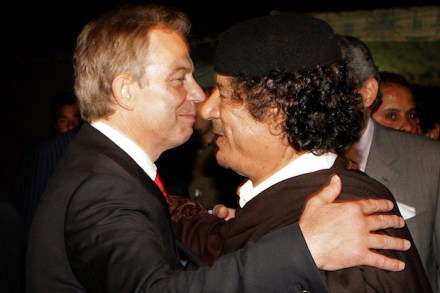
If Tony Blair thought that Gaddafi wanted to cut a deal, why did no one follow up?

Just a few months ago, almost everyone thought that David Cameron was a goner. That he was about to go down in history as a one-term Prime Minister who failed to win against a bad Labour leader in 2010 then lost to a worse one in 2015. During this period, Anthony Seldon spoke to a long line of well-placed people for his biography of David Cameron; people who would have imagined they could talk freely because his book would be an autopsy. As a result, the former Master of Wellington College seems to have drawn plenty information from people who perhaps regret their candour now. David Richards, the former head of the military, is candid about how he believed that the Libyan project was a disaster – embarked upon primarily to assuage the Prime Minister’s friends in Notting Hill.