Tony blair

Who can lead Labour?

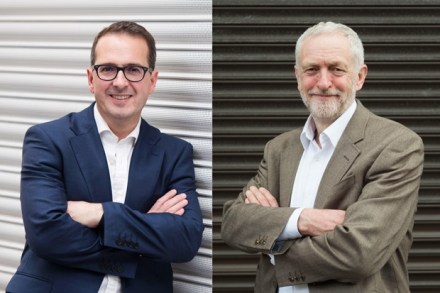
Westminster prefers to concentrate on one drama at a time. That is why the old rule of thumb was that only one party leader could be under pressure at any given moment. Recent events have upended that convention. The Brexit vote precipitated leadership crises for more than one party. But the spectacle of the Tory leadership election has rather overshadowed the fact that Labour is having its own leadership contest. The contest between Jeremy Corbyn and Owen Smith, the party’s former work and pensions spokesman, will run all summer. In Labour circles, Corbyn is regarded as the clear favourite. Once again, the hard left appears to have succeeded in getting far more people to sign up to Labour’s registered supporter scheme than the so-called moderates have.

Don’t knock ‘secret deals’. We’ll need one soon

As a founder member of the Guild of Blair-Bashers, someone who reacted strongly against him from our first encounter at dinner when he was only an opposition spokesman, as a commentator who railed against the invasion of Iraq the moment the idea was mooted and right through to the end, and as a journalist who throughout Tony Blair’s time at No. 10 beat my tiny fists against the imposter I always thought him to be, perhaps I may deserve your attention now, after Chilcot, that I have something to say in Mr Blair’s defence? I don’t believe that in any important way the former Prime Minister lied. And I don’t agree there would have been anything wrong with his giving secret undertakings to the President of the United States.

Themistocles vs Tony Blair

Tony Blair has excused himself for the Iraq war by saying that he did what he believed was right. But no one was suggesting that he had done what he believed was wrong. The charge was a matter of integrity: that he deceived Parliament and turned a blind eye to the evidence on weapons of mass destruction. The Athenians knew a sharpster when they saw one. The historian Diodorus described how in 477 BC Themistocles, a man admired by the Athenians but known to be something of a con man, conceived of a plan to turn Piraeus, at that time a rocky outcrop, into a full-blown commercial and military harbour.

Long life | 14 July 2016

When you are recovering from a stroke, you spend much of the time asleep. But when you are not sleeping, you are told that the most important thing you have to do is avoid stress. All doctors agree that stress is the main impediment to recovery. But how can you possibly protect yourself against it? The causes of stress can creep up on you from anywhere without warning, and there is nothing you can do about it; and lately I have been bombarded by shocks. I was one of the ignorant for whom the victory of Brexit in the referendum was itself a shock, but this also set in train a whole bunch of further assaults on the nervous system.

‘She doesn’t do likes’

As Tory MPs gathered at St Stephen’s entrance in Parliament to await their new leader on Monday afternoon, a choir in Westminster Hall began to sing. The hosannas spoke to the sense of relief among Tory MPs: they had been spared a long and divisive nine-week leadership contest. A period of political blood-letting brutal even by Tory standards was coming to an end. The United Kingdom would have a new Prime Minister. More than relief, there was hope for the bulk of MPs who had previously not been marked out for advancement. Theresa May’s accession shows that the narrow rules which were thought to govern modern British politics are not hard and fast. May is not one of the shiny people. She isn’t a member of a gilded political set.

The scapegoating of Blair is excessive

Blair’s great mistake was his desire to believe the best of America. It must know what it’s doing in invading Iraq, he thought. And in 2002, for once, this mighty superpower was hurt, needy – he felt needed by the leader of the free world. Which must be an intoxicating experience. Many of the rest of us shared in this basic mistake, this assumption that this generally benign superpower should be trusted. It’s an assumption bolstered by hundreds of films in which American power saves the day. And it’s an assumption largely backed up by history: Western Europe has been made safe by American power, for many decades. Yes, he was at fault, for presenting flawed, biased intelligence to parliament, for failing to demand assurances about the post-invasion plan.

The shame of Iraq

‘If it falls apart, everything falls apart in the region’ — Note from Tony Blair to George W. Bush, 2 June 2003.   Instead of asking why we fought the war, we should ask why we lost The extraordinary length of time that we have had to wait for Sir John Chilcot’s report into the 2003 invasion of Iraq has not made the end result any more satisfying. For some, nothing less than the indictment of Tony Blair on war crime charges would have sufficed. As for Blair himself, and many of those who surrounded him when the decision was made to remove Saddam Hussein from power, they will go on believing until their dying day that not only was the war just, but there was nothing much wrong with the way in which it was sold to the public and to Parliament.

MPs and DTs

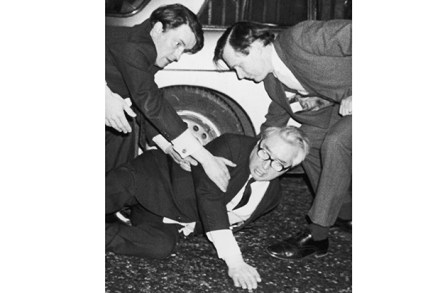
In 1964, a newly elected Labour MP was put in charge of the House of Commons kitchen committee. (An unpromising start to a review, I appreciate, but bear with me.) His idea of selling off the House’s rather splendid wine cellar duly appalled some MPs, but was accepted as a useful money-making scheme. Only later did it emerge that he’d bought/ripped off a collection of the best bottles for himself at a bargain price, and that this was not untypical behaviour — because the Labour MP was Robert Maxwell. Order, Order! is packed with memorable tales like this.

Tony Blair’s rumination over his own ‘good faith’

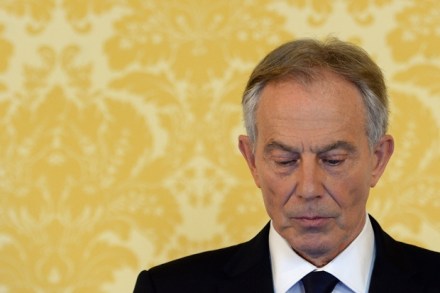
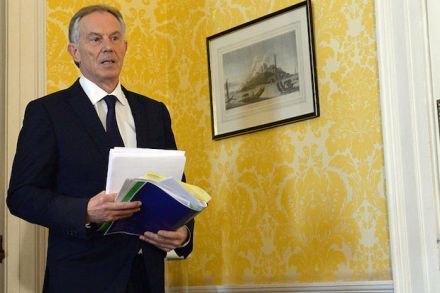
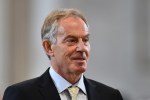
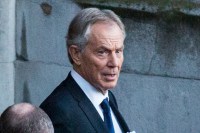
Tony Blair appeared emotional, sounded hoarse, and constantly fixated upon his belief that he acted in ‘good faith’ over Iraq when he responded to the Chilcot report this afternoon. The former Prime Minister spoke or took questions for two hours, and started by saying that he accepted ‘full responsibility, without exception and without excuse’. But he also made clear that he disagreed with Chilcot’s findings that the decision to invade Iraq could have been delayed. The key feature of the long press conference, though, was Blair ruminating constantly on whether he had acted in good faith when taking the decision to go to war.

Has Parliament learned the lessons of the Iraq war?

Normally whenever someone mentions Iraq in the House of Commons, the Chamber descends into a grouchy scrap. But today’s statement on the Chilcot report from David Cameron and the questions that followed it were surprisingly measured and thoughtful. As James notes, Jeremy Corbyn didn’t mention Tony Blair, and he didn’t give a furious response to the Prime Minister, either. Of course, his analysis of the report wasn’t comfortable for many Labour MPs - indeed, Ian Austin shouted from the backbenches that his party leader was a ‘disgrace’. But he did not call for Blair to stand trial, and neither did he rant at length about the failings of the West.

Blair isn’t a liar, he’s a genuine believer – which made him so dangerous

After a seven year wait, the Chilcot Report has come back with some quite damning conclusions about the build-up to the 2003 invasion, and the lack of planning for post-war Iraq. I think we've certainly learned our lesson about not changing a country's entire political set up without a credible alternative in place - that will never happen again, thank God. I'm particularly interested by one note Tony Blair sent to George Bush on March 26th, 2003, a week before the invasion, in which he said the 'fundamental goal' of the war should be to create a new 'world order'. 'This is the moment when you can define international priorities for the next generation – the true post-Cold War world order.

Was ‘the deadly Mail’ right after all on Iraq, Michael Gove?

Last week the Daily Mail endorsed Theresa May as the next Tory leader. The declaration took many by surprise as not only was it very early in the campaign to come out for a candidate, it had been thought that the paper might opt for Michael Gove -- after his wife Sarah Vine suggested Paul Dacre favoured him in a leaked email. So, why did Dacre snub Gove just a day after he announced his leadership ambitions? While some have taken it to be a sign that the Daily Mail editor was unimpressed by the manner in which the Justice Secretary had turned on Boris Johnson, could any ill-feeling run deeper than that? In 2004 when Gove was Saturday editor of the Times, he penned an article for The Spectator about Dacre and the Daily Mail.

‘I will be with you, whatever’: What Chilcot tells us about Tony Blair

The Iraq Inquiry report is utterly scathing about Tony Blair. It paints a critical picture of his sofa government, in particular the way in which that government approached planning and preparation for Iraq without Saddam Hussein, and his ‘certainty that was not justified’ in presenting the severity of the threat posed by Iraq’s weapons of mass destruction to Parliament. The Prime Minister also appeared more concerned about the politics of the military action than its detail, and failed repeatedly to ensure that the relevant ministerial oversight and Whitehall resources were directed to the conflict. And he seemed unable to challenge or disagree with the US when necessary.

How the UK messed up Iraq: what the Chilcot Inquiry says about post-conflict planning

The Iraq Inquiry dismisses claims that the aftermath of the invasion could not have been foreseen. It describes the planning and preparations for the country after the fall of Saddam Hussein were ‘wholly inadequate’. In his statement, Sir John said that ‘despite explicit warnings, the consequences of the invasion were underestimated’. The report details both an awareness of the inadequacy of plans and a marked lack of effort from Whitehall. It says: ‘The scale of the UK effort in post-conflict Iraq never matched the scale of the challenge. Whitehall departments an their ministers failed to put collective weight behind the task.

Chilcot slimmed down: what you need to know

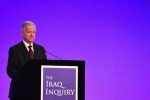
The long-awaited Chilcot report has finally been published today. It comes during a very tumultuous time in British politics - and while its publication was always going to be fractious, it remains to be seen how the Tories - and more interestingly, Labour, use it to their advantage. The 12-volume report, which is 2.6 million words long and can be found here, will be dissected over the coming days, but here's a quick summary of some of the key statements from it: Key points The report concludes that the UK chose to join the invasion of Iraq before the peaceful options for disarmament had been exhausted. Military action at that time was not a last resort.

So much for education, education, education

‘Your old man’s barking!’ I remember hissing indignantly at my then best friend Toby Young way back in the 1980s after his father, Michael, had spent the evening patiently explaining his famous 1958 essay, The Rise of the Meritocracy, over ‘supper’ at the somewhat grand family home in, of course, Islington. I’d obviously been thinking about something more pressing all those times we’d discussed the classic text in GCSE Sociology — probably about which order I’d ‘do’ Pan’s People in, should the opportunity arrive in suburban 1970s Bristol — but of course I’d presumed that ‘Lord’ Young (dead giveaway) would have favoured the rise of a meritocracy, being a man of humble origin himself.

The Spectator podcast: Brexit, and the return of political lying | 28 May 2016

To subscribe to The Spectator’s weekly podcast, for free, visit the iTunes store or click here for our RSS feed. Alternatively, you can follow us on SoundCloud. Are David Cameron and George Osborne using the same techniques of deceit deployed by New Labour in the run-up to the Iraq war? In his cover piece this week, Peter Oborne argues that's just what is happening. He says that in their EU campaign, the Chancellor and Prime Minister have put dirty tricks back at the heart of government. But Matthew Parris in his column says that in politics there’s no point complaining about being lied to. That’s the cry of the bad loser. Both Peter and Matthew join Fraser Nelson on the podcast.

The Spectator podcast: Brexit, and the return of political lying

To subscribe to The Spectator’s weekly podcast, for free, visit the iTunes store or click here for our RSS feed. Alternatively, you can follow us on SoundCloud. Are David Cameron and George Osborne using the same techniques of deceit deployed by New Labour in the run-up to the Iraq war? In his cover piece this week, Peter Oborne argues that's just what is happening. He says that in their EU campaign, the Chancellor and Prime Minister have put dirty tricks back at the heart of government. But Matthew Parris in his column says that in politics there’s no point complaining about being lied to. That’s the cry of the bad loser. Both Peter and Matthew join Fraser Nelson on the podcast.

Brexit, and the return of political lying

Sir John Chilcot’s report into the Iraq invasion, due to be published on 6 July, is expected to highlight the novel structure of government created by New Labour following its landslide victory of 1997. As Tony Blair started to make the case for war, he began to distort the shape and nature of British government in several ways — the most notable being the deliberate debasement of the traditional idea of a neutral, disinterested civil service. Under Blair, civil servants were told to concern themselves less with the substance than the presentation of policy. They were informed that their loyalty lay more with the government of the day, less with the British state. This had dramatic effects.