Technology

A lament for the landline

Two years ago my quality of life began to go downhill. It happened when BT Openreach gave our old copper landline a compulsory upgrade to ‘Digital Voice’, meaning all calls would be made over wifi. A succession of visiting engineers failed to resolve the crackling and the cutting out on the new digital line or the uninstructed diversion of incoming calls to voicemail. Worse, the new digital service wouldn’t extend to the bedroom: ‘It’s an old cottage, you see, with thick walls.’ Never mind that for decades I had spent many happy hours per day lying in bed (like Mrs Stitch, my role model) organising jobs and romantic partners for friends, jigsawing together the data – unearthed by longform chatting over the copper landline – to make the matches.

US special forces’ secret weapons

From our US edition

By using a sonic weapon in the mission to capture Nicolás Maduro, as Donald Trump appears to have confirmed, Delta Force commandos not only triggered a paradigm shift in warfare, but served poetic justice. When asked whether such a weapon had been used, the President replied: “It’s probably good not to talk about it.” But then added: “Nobody else has it, we have some amazing weapons that nobody knows about.” The following morning, at Davos, Trump said: “They weren’t able to fire a single shot at us. They said, ‘What happened?’ Everything was discombobulated.

sonic

Greenland and the new space race

From our US edition

Donald Trump’s desire for Greenland is not just about access to oil, minerals and control of the new strategic and commercial corridors opening in the region. It’s also about data. Specifically, the most important data in the world. For decades, Pituffik Space Base – formerly Thule – in Greenland has been central to US space defense and Arctic strategy. It’s the US military’s only base above the Arctic Circle and their most northerly deep-water port and airstrip. It’s home to the 12th Space Warning Squadron. Its massive AN/FPS-132 radar has 240 degrees of coverage surveying the Arctic Ocean and Russia’s northern coast, especially the Kola peninsula where it has concentrated its strategic nuclear weapons.

greenland

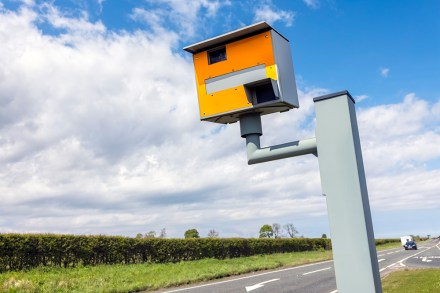
The speed-camera approach to government

I was recently shown an AI analysis of long-term trends in the public’s attitude to government. The AI had been designed to look at changing attitudes to brands, but its creator had been curious to see what it revealed if the brand in question was The State. It was remarkably insightful. ‘New behavioural data reveals a structural shift: The State has moved from episodic authority to ambient friction.’ And ‘modern governments are, on the whole, stable – but increasingly so for structural rather than relational reasons. Stability is maintained through procedure… and compulsion, not persuasion… Authority now operates in an environment that never turns off – and never waits’.

Hegseth’s vision is more Starship Troopers than Starfleet Academy

From our US edition

​“Welcome to Starbase, Texas,” Elon Musk said from the stage Monday night, as the crowd whooped. “This is a city. It’s actually legally a city that thanks to the hard work of the SpaceX team, we built out of nothing. And it’s now a gigantic rocket manufacturing system. For people out there who are curious to see it, we’re actually on a public highway, so you can come and visit. Drive down the road and see the epic hardware. I think this is the first time that a rocket development program has actually been on a public highway.

How ticks became bioweapons

From our US edition

On December 18 last year, Donald Trump signed into law an order to “review and report on biological weapons experiments on and in relation to ticks [and] tick-borne diseases.” The investigation is long overdue but even so, the facts it uncovers will come as a shock to many. A growing body of evidence shows that during the Cold War ticks were tinkered with and used as delivery mechanisms for biological warfare agents. And these weaponized ticks may have been released both intentionally and unintentionally on an unsuspecting public by the US military. Ticks and the diseases they transmit (such as Lyme) pose a growing threat to Americans, the military and to agriculture. Record numbers of tick bites have been reported in New York (in 2024), Maine (in 2024), and Wisconsin (in 2023).

Is this the end of the cold case?

From our US edition

On March 6, 1959, nine-year-old Candice "Candy" Rogers of Spokane, Washington, went out after school to sell campfire mints door-to-door. Sweet-natured with strawberry blonde curls and a button nose, she was small for her age. Her mother, Elaine, had one clear rule that Candy must be home before dark. But Candy never came home. Her disappearance triggered a 16-day manhunt involving thousands of people, the Marines and the US Air Force. In fact, three airmen lost their lives on the second day when their helicopter hit high tension cables and plummeted into the Spokane River.  After two weeks of searching for Candy, all detectives could find were her scattered mint boxes.

The weird and wacky world of Vinted

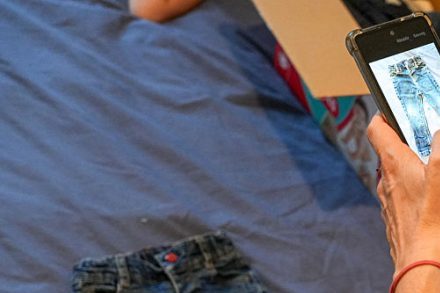
‘Do you have any more shoes? I need as many as you can find for my daughters.’ I had just made my first sale on the second-hand marketplace Vinted and, already, here was a message from a new customer wanting more. Delighted, I scrambled around and managed to locate more than a dozen pairs of no-longer-wanted, muddy old shoes. ‘Don’t worry about cleaning them,’ came the reply from ‘Mariella’ when I told her the good news. ‘They’re just for the garden.’ Slightly odd, I thought, but my customer seemed harmless enough: a part-time cleaner with young children who, she told me rather quaintly, was married to a cobbler.  It was only when I had to ship the huge black bin liner of shoes that I realised I had been duped.

‘I’ve been allergic to AI for a long time’: an interview with Peter Thiel

Peter Thiel has been described variously as ‘America’s leading public intellectual’, the ‘architect of Silicon Valley’s contemporary ethos’ or as an ‘incoherent and alarmingly super-nationalistic’ malevolent force. The PayPal and Palantir founder, a prominent early supporter of Donald Trump, is one of the world’s richest and most influential men. Throughout his career, his principal concern has always been the future, so when The Spectator asked to interview him, he wanted to talk to young people. To that effect, three young members of the editorial team were sent to Los Angeles to meet him. What follows is an edited transcript of their conversation.

The tyranny of parcel delivery companies

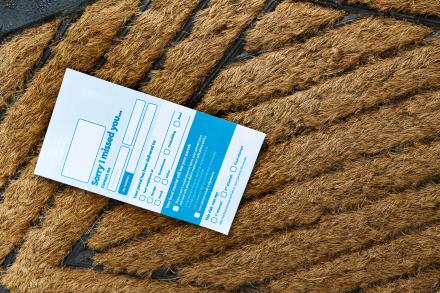
Once upon a time, post was delivered by a postman or postwoman. Over the past two centuries, this quaint initiative augmented a sense of community and invested early mornings with at least fleeting human contact. These days, decades after the slow demise of letter writing, a postman is now a rather recherché figure and, thanks to Royal Mail price hikes, a symbol of luxury, despite the downgrading of his once resplendent red and blue woollen frockcoat for a synthetic combo including all-weather shorts.

Snobbery is the best weapon against screen time

I can’t be the only neurotic mother to have rejoiced when the Princess of Wales revealed recently that she has a strict ‘no phones at the table’ rule. The Prince of Wales then later let slip that Prince George, who is 12, isn’t allowed a smartphone. When George eventually does get a phone, William added, it will be a brick without the internet – similar, one imagines, to the sort favoured by drug dealers. Hallelujah! Up until now, the best line for parents to trot out has been the old chestnut that ‘Silicon Valley guys send their children to schools where the tech use is unbelievably moderate because they know how addictive this stuff is’.

AI will take jobs – the wrong ones

As those of you familiar with this column will know, I am always eager to distinguish between an option and an obligation. For instance, a dinner party is usually more enjoyable than an indoor drinks party. Yet in one respect a drinks party wins out: the moment you accept an invitation to a dinner party, you are committed. By contrast, when you accept an invitation to a drinks party, you can bunk off at short notice and spend quality man-time watching YouTube documentaries about steam engines instead. A dinner party is an obligation, while ‘drinks’ is an option. This is also the principal distinction between a restaurant and a café. In a restaurant you are obliged to eat, in a café it’s an option. In some countries I confuse the two.

Bring back the album

Usually when my tweenage sons ask about relics from my 1990s adolescence – ‘What’s a landline?’ ‘What’s a phone book?’ – we’ll have a good laugh about these obsolete artefacts of the not-so-distant past. But last year when my ten-year-old asked about ‘Immigrant Song’, which he’d heard on the soundtrack to a Marvel movie, and I replied, ‘Oh, I think it’s on the third Led Zeppelin album’, his response left me winded: ‘What’s an album?’ What’s an album? The horror! How had this abject failure of parenting happened? I’ve raised my kids in as analogue a household as possible, with piles of books, newspapers and magazines on every surface. I’ve limited screen time and kept them away from smartphones.

Our brave new world

From our US edition

In 1961, just two years before he died in Los Angeles, the polymath, philosopher and novelist Aldous Huxley gave humanity a warning. Much of his prophecy about society in Brave New World had come to pass, he said, which made him even more certain that the standout problem of the future would be our inability to resist becoming enslaved to our own technology. Now, more than 60 years after his death – and with an entire generation of children frying their brains with smartphones and nobody able or willing to do anything to stop them – it is hard to deny that he was onto something. The man was destined to be a prophet for our gadget-addled age.

Technology
Punctuation

Down with exclamation points!

From our US edition

Punctuation is a gendered thing. I’ve been trying to stop myself overusing exclamation points and it’s been difficult. Exclamation points are girly because they’re a way of taking the sting out of what you say; they make any pronouncement seem more tentative, less serious. They’re the equivalent of a disarming smile, a marker that says: “No offense!” You add them to the end of a sentence to prevent anyone thinking you’re being bossy or critical. They’re an economical form of non-confrontation. Women use them far more than men. Almost 20 years ago, a study in the Journal of Computer-Mediated Communication found that women used nearly three-quarters of the exclamation marks in electronic messages, but it identified the tic as “markers of friendly interaction.

The march of the useless machines

In search of coffee on my way to work the other day, I stopped short mid-way into a branch of a popular coffee shop when I noticed the digital ordering screens. Nothing will lose my business faster than being asked to queue twice and do the work of someone else for something simple. But these ordering screens seem to be becoming ubiquitous in our towns and cities, forcing those of us who have actually come into the office, likely to sit in front of a screen, to spend our lunchtimes also staring at a screen scrolling through options, when there is an actual human being standing behind a counter a few feet away with nothing to do.

Say hello to your AI granny

Doing the rounds on social media is the most disturbing advert I’ve ever seen. And I’m telling you about it because you need to be forewarned, just in case this Christmas a child or a grandchild happens to mention that it might be an idea to record a video for posterity, and opens the 2wai app. 2wai is the company responsible for the ad, and the service it offers is the creation of AI versions of family members so that relatives can talk to them after they’re dead. Catch ’em while they’re still alive, says 2wai; film a three-minute interview and Bob’s your AI uncle. ‘Loved ones we’ve lost can be part of our future.’ That’s its catchphrase. The 2wai advert is about ‘Baby Charlie’, and it goes like this.

Among the lords of tech

“What’s missing?” the tech titan Peter Thiel asks me, over lunch on the hummingbird-infested patio of his house in the Hollywood Hills. He gestures at Los Angeles, laid out in the haze below us. “Cranes!” he explains. Thiel has argued for years that America has done most of its innovation in digital “bits” instead of physical “atoms” because bureaucracy, regulation and environmentalism have got in the way of the latter. While software has exploded, transport and infrastructure have stagnated. But over the next few days in Austin, Texas, and around San Francisco Bay, I see evidence this is changing.

tech
post-literate

Are we becoming post-literate?

From our US edition

Everybody is suddenly recognizing, almost in unison, that many major of the cultural shifts in recent years were accelerated, if not explicitly caused, by Covid lockdowns. In confinement we went online and when we spent more time in cyberspace than in meatspace, our brains began to change. The most significant shift is that we have turned away from books and reading, and as a result our attention spans are collapsing. The screen is eclipsing the page. In the US, reading for pleasure has crumbled; in Britain, a third of adults no longer read books at all. The “reading revolution” that expanded consciousness in the 18th century is in retreat. But what’s emerging is not illiteracy: it’s post-literacy. We are becoming post-literate.

amish

What the Amish can teach us about tech

From our US edition

As new technology, AI and the internet take over 21st-century life, I suggest looking to the Amish for guidance. Far from being the Luddites most folk assume, the Amish undertake a guided policy of technological discernment. When a new practice or device emerges into the world, the elders often gather to test it out over a set period of time. The entire process rests upon this deceptively simple inquiry – “What is this tool for and what does it make us become?” All potential effects on family unity, social cohesion and self-reliance are soon revealed by this one question. Diesel and solar generators pass the test and are often adopted, while social media is largely shunned.