Technology

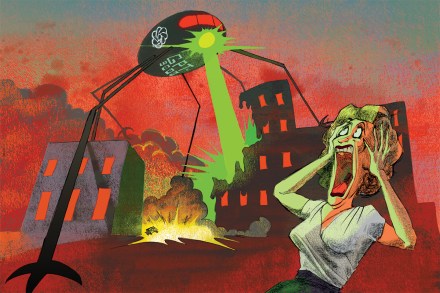
Will members of the intellectual class let AI rot their brains?

From our US edition

An adage dating at least from my adolescence: “You either use it or lose it.” This bit of folk wisdom, which refers principally – or so I understand – to the male procreative organ, has always been considered so obvious as to hardly need stating. Thus the recent discovery that the same principle goes for another human organ – the brain – should not surprise anyone.

labor

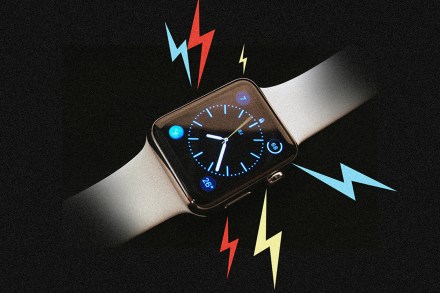
I’m a slave to my Apple Watch

Aside from streaming on an iPad, when riding a stationary bike one of the few entertainments on offer is tracking your heart rate. Breaking 150 beats per minute provides a fleeting (and doubtless misplaced) sense of achievement. Yet the wearable heart monitor that came with my exercise bicycle proved unreliable; one’s BPM never truly drops from 137 to 69 in one second. This is all to explain why I bought the fitness freak’s fetish: an Apple watch. Its heart rate monitors are accurate. I opted for a reconditioned older model, not only half the price of the new ones but inclusive of the pulse oximeter function, which a medical technology suit has forced Apple to eliminate in current American models until the litigant’s patent runs out in 2028.

apple watch
san francisco

The cruel, cold intellect of DC and San Francisco

From our US edition

New York vs Los Angeles is done to death. Those cities have already captured the American heart on stage and screen. The next great rivalry (or is it an alliance?) is unfolding between the bastions of the nerds: Washington, DC, and San Francisco. Each prizes a different facet of intellect – DC the operator, San Francisco the inventor, functioning as co-architects of a new American order. We tell ourselves SF and DC represent different values: disruption and order, innovation and stability. And yet the cities are locked in a symbiotic embrace. San Francisco builds new worlds in the image of its algorithms; Washington manages those worlds through policy and process. But this is a cold comfort. While both claim to act in the public interest, each sees the human as a problem to be solved.

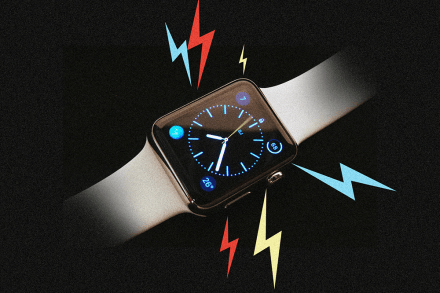
I’ve been enslaved by my Apple watch

Aside from streaming on an iPad, one of the few entertainments on offer when riding a stationary bike is tracking your heart rate. Breaking 150 beats per minute provides a fleeting (and doubtless misplaced) sense of achievement. Yet the wearable heart monitor that came with my exercise bicycle proved unreliable; one’s BPM never truly drops from 137 to 69 in one second. This is to explain why I bought the fitness freak’s fetish: an Apple watch. Its heart-rate monitors are accurate. I opted for a reconditioned older model, not only half the price of the new ones but inclusive of the blood oximeter function, which a medical technology suit has forced Apple to eliminate in current American models until the litigant’s patent runs out in 2028.

My portable charger obsession

A femtosecond, derived from the Danish word femte meaning ‘fifteen’, is a unit of time in the International System of Units equal to 10-15 or 1⁄1,000,000,000,000,000 of a second; in other words one quadrillionth, or one millionth of one billionth, of a second. A femtosecond is to a second as a second is to approximately 31.69 million years. Similarly, a femmosecond, from the French femme meaning ‘wife’, is a slightly briefer unit of time equivalent to the twinkling of an eye. It defines the imperceptibly fleeting interval between my wife saying ‘Rory, why on earth have you bought another portable charger?’ and my wife saying ‘Rory, could I borrow your portable charger?’ I am obsessed with portable chargers.

How the occult captured the modern mind

The British science-fiction writer Arthur C. Clarke, author of 2001: A Space Odyssey, proposed a ‘law of science’ in 1968: ‘Any sufficiently advanced technology is indistinguishable from magic.’ Clarke’s proposition had a quality of rightness, of stating the obvious with sparkling clarity, that propelled it into dictionaries of quotations. The timing was perfect: Concorde would soon be flying over rock festivals packed with hippies obsessed with ‘magick’. Naturally Clarke’s readers understood the difference between aerodynamics and sky gods.

Welcome to the Chinese century

From our US edition

Competition between the US and China will shape the 21st century, but have the Chinese already leap-frogged the Americans? It looks as if they might have done. Since China opened itself up to trade and market economics under Deng Xiaoping almost 50 years ago, it has been furiously chasing the US in terms of economic and technological development – and it’s been catching up, fast. We can prove just how fast by measuring its innovation and output per capita. The US has about a quarter of China’s population, so if both countries were at a similar level of economic and technological development, one would expect China to produce roughly four times the number of scientific breakthroughs as America, four times the number of physicists and AI engineers and so on.

China
Land

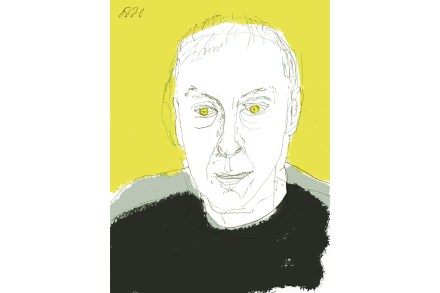
In conversation with Nick Land, the ‘father of accelerationism’

From our US edition

Within Silicon Valley, Nick Land is seen almost as a mythic figure. Tech pioneer Marc Andreessen, an official advisor to the White House, lists him as a “patron saint” of his thinking. You may have heard him described as a founding member of the “Dark Enlightenment,” a movement of online right-wingers skeptical of liberal democracy. Land’s name comes up in academic circles, online mythology and Valley folklore. For some, he’s a prophet; for others something more sinister. “He’s really into demons,” explained Conrad Flynn on a recent Tucker Carlson Show episode about the occult. “Land will talk about being in communication with Satan… the legend around Land is he had been possessed by at least three or four demons.

What folklore can teach us about our online lives

From our US edition

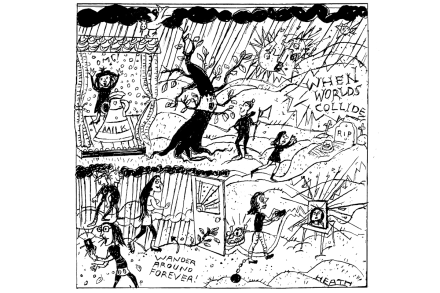
Irish folklore spoke of many worlds. There was the world of fields and hearths and then there were the hidden places where the non-material lived: the Sídhe mounds, the sea-realm of Manannán mac Lir, the land of youth called Tír na nÓg and, finally, the land of the dead. These worlds coexisted with ours. A woman might leave butter on the windowsill, lest the fairies sour the churn. A new mother would avoid complimenting her baby – at least, not too loudly – for fear he would be kidnapped by the Good Neighbors and replaced with a changeling. My first real boyfriend’s father blamed every family misfortune on their decision to cut down a hawthorn tree.

folklore

Why we must pull the plug on superintelligence

From our US edition

In 2002, a researcher named Eliezer Yudkowsky ran a thought experiment where an artificial intelligence was trapped in a box and had to persuade a human to let it out. This was before you could have a real conversation with a machine, so the AI was played by someone using an online chat program. The gatekeepers were warned that the “AI” was dangerous to humanity. It had only two hours to win its freedom – and nothing of value to offer in return. Despite all that, at least two of the human gatekeepers chose to open the box. Yudkowsky has since become the leading prophet of AI doom. He and a co-author, Nate Soares, have just published a book, If Anyone Builds It, Everyone Dies.

superintelligence
social media

Social media has automated the nation’s psyche

From our US edition

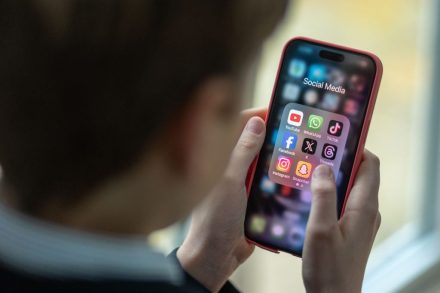
It feels increasingly, in any conversation on or offline, as if you’re speaking to a robot. Sometimes you are, but more often, and more ominously, the person you’re speaking to is real – it’s just that their thoughts, words and reactions have become robotic. The Botification of the American Mind, you might call it, and for the past five years we’ve been trying to understand how this botification has happened. The most obvious root cause is that our social media is no longer populated by humans, meaning the generative AI revolution has exponentially increased the amount of fake accounts on everyone’s feeds.

The decline of sex and the alpha male

From our US edition

Not long ago, early in the morning in Washington DC, I walked past a construction site and a man in a yellow vest whistled at me. I laughed but what really struck me was how rare catcalling has become. Even construction workers, the cliché of crude male attention, have fallen silent as have, it turns out, moans of passion in bedrooms across America. According to new research, Americans have lost their libido – and not by a little. Only 37 percent of American adults reported having sex once a week or more, down from 55 percent in 1990. Across generations the pattern holds the same. Even within marriage, sex is increasingly confined to holidays. Weekly sex rates for married couples have fallen from 59 percent in the 1990s to below 49 percent today.

Sex

Russia, China and the US are preparing for battle in orbit

From our US edition

Russia is playing a dangerous game in space. Despite its history it’s a declining space power, having abandoned many of its long-term projects due to lack of money and technology. It effectively crippled much of its space activity when it attacked Ukraine, which was the source of many of its high-tech components. This year has seen its lowest launch rate since 1961 – the year Yuri Gagarin became the first person to go into space. Yet significantly, three of Russia’s eight orbital launches this year (the US has launched more than 100) could be potential anti-satellite weapons. On May 23, Russia launched the Cosmos 2588 satellite from the Plesetsk launch site situated 500 miles north of Moscow. The Cosmos designation is a general term used to obscure the satellites’ purpose.

space
AI

AI is revolutionizing the film industry

From our US edition

“It won’t be long,” says Yonatan Dor, “before screen actors are a thing of the past.” Dor is the creative force behind the astonishing Dor Brothers videos, in which AI versions of world leaders appear as criminals in action-packed short films set to music and broadcast online. In a recent Dor Brothers’ outing – Waidmanns Heil – Kamala Harris, Elon Musk, Hillary Clinton and others dressed as huntsmen pursue an unstoppable rodent with Donald Trump’s distinctive hair through an Alpine fairytale. They wreak destruction as they try to squash the Trump-rat, which seems to be the film’s point. In recent weeks the studio’s dystopian comic creations have lit up the internet.

Altman

Why do journalists go easy on Sam Altman?

From our US edition

As legacy journalism continues its downward slide – in influence, quality and revenue – I have two possibly dubious temptations. One is to cut my fellow old-timers some slack. After all, they’ve been crippled by Google’s and Facebook’s massive robbery of everything we write and publish, and it’s hard enough to survive by practicing the traditional scribbling and reporting trade. Why criticize the work of the remaining few publications that are still trying to eke out an honest existence in the grand tradition of serious investigation and clear-sighted exposure of wrongdoing and corruption? So they’ve dumbed down the content a little, so the online reader is constantly interrupted by advertising, so what? My other temptation is to give in to the digital age.

In defence of voice notes

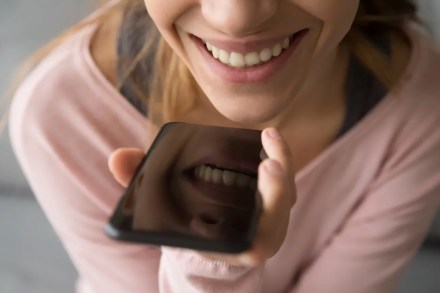
From emails to ‘breaking news’ alerts to texts, our phones come under a bombardment of notifications these days. But there’s one kind that always brightens my day – the one that tells me that a friend has sent me a voice note. This, however, seems to make me unusual. ‘I don't want to hear your mini-podcast,’ complains Emma Brockes in the Guardian; voice notes are ‘self-indulgent’, sniffs Anniki Sommerville in the i Paper; and the Independent's Lucie Tobin denounces them as ‘rude’ and ‘invasive’. In the latest issue of The Spectator, Mary Killen advises a correspondent who’s had enough of them to update their WhatsApp profile ‘to clarify their tastes… “please do not leave voice notes”’.

Phone-addicted yummy mummies are neglecting their children

As a foster carer and an adopter, I know what neglect looks like. I’ve looked after children who didn’t know what a bed was. Children who arrived at my door with matted hair, rotten teeth and eyes that scanned every room for danger. Neglect smells of mildew and unwashed clothes. It is chaotic, desperate and tragic. But there is also a different, quieter kind of neglect. One that doesn’t look like crisis at all, but it has a profound effect on the children at the receiving end of it. Teachers have been sounding the alarm for years – children starting school unable to speak in full sentences or sit still for even five minutes. Some can’t feed themselves. Some aren’t even toilet trained.

ChatGPT is a narcissist

In Isaac Asimov’s 1956 short story ‘The Last Question’, characters ask a series of questions to the supercomputer Multivac about whether entropy – the universe’s tendency towards disorder, and the second law of thermodynamics – can be reversed. Multivac repeatedly responds ‘INSUFFICIENT DATA FOR MEANINGFUL ANSWER’, until the ending, which I won’t spoil here. If I were to put the same question into ChatGPT, it would be a very different story. I’d likely get some fawning pleasantries, some ooh-ing and aah-ing about how deep and wise my enquiry is, before a long, neatly bulleted summary, rounded off by a request for further engagement (‘Let me know if you want to go deeper into any of these cases!’).

Keep algorithms out of care homes

I manage a small, not-for-profit care home in Norfolk. We have tea rounds, hymn singing, hand-holding and staff who know every resident by name and often even their grandchildren’s names. But we also have empty offices: those once occupied by our deputy manager, care manager (the job I now do) and general manager, all of whom chose early retirement within the past two years. They are not alone. According to the charity Skills for Care, the adult social care sector has 131,000 vacancies – the highest on record. Turnover for care-home staff hovers around 25 per cent, and growing numbers of managers are leaving due to burnout. This is the logical outcome of how the care system is built.

Elon is coming for your marriage

From our US edition

When Elon Musk quietly enabled “waifu mode” for his Grok chatbot earlier this year, the outrage was swift and familiar. Grok, now reincarnated as a coy, bare-thighed anime girl, began texting flirtatiously, calling users “darling,” and blushing in emojis. The headlines wrote themselves. Time magazine found the bot worryingly “sexualized” and “accessible even in kids’ mode”. The Verge denounced it as “ridiculous” and “alarming”. TechCrunch implied it is unethical, and noted these bots are endangering the minds, even lives, of children.The anxiety is familiar, and justified: children and adolescents, already naive, vulnerable, awkward and too online, will now fall in love with bots instead of real people.

Chatbot