Technology

Reality check: could our universe be a simulation?

Are we all living in a computer simulation? Is the world we imagine to be real simply virtual reality instead, an elaborate computer program? That sounds ridiculous, but nonetheless it’s what many clever people actually think — or at least, think possible. One of them, the philosopher David Chalmers, has just written a book on the subject, Reality +: Virtual Worlds and the Problems of Philosophy. Chalmers is a serious intellect. He won a bronze medal in the International Mathematical Olympiad as a child and did his undergraduate studies in Pure Mathematics before turning to philosophy. Part of his argument is that we are already building simulated worlds ourselves — computer games as well as virtual environments like Second Life.

Sense and sensibility: Steven Pinker and Rory Sutherland on reason vs instinct

Steven Pinker’s latest book is called Rationality. Rory Sutherland is The Spectator’s Wiki Man. We arranged for them to meet at the Cucumber restaurant, where they discussed the logic of monarchy, gender-bending, and why academics are unreasonably obsessed with wine. Steven Pinker: Part of the reason I wrote Rationality was to ask, how there can be so much irrationality in an era that has the resources for unprecedented rationality. We invented a vaccine for Covid in less than a year. So why do people today believe in conspiracies like QAnon? Rory Sutherland: Conspiracy theories aren’t always irrational, and instinctive responses can serve you well. An instinctive person with no knowledge of virology wouldn’t go into a cave full of bats.

Everyone should be sick in the street once

I learned a great deal at university, about half of it from a man called Raymond Foulk. Ray was not Professor Foulk or even Dr Foulk: Ray was a near contemporary — he was in the year below me — but a mature student, then aged about 44. Shortly before he arrived at the beginning of my second year to read architecture, the college investigated his past life and sought to exile him to first-year accommodation far outside the college walls to prevent him corrupting the youth. There was nothing remotely illegal or nefarious about his past — but he had created and run the three Isle of Wight Festivals with his brother, and the college authorities had somehow become convinced they were admitting a second Howard Marks.

Our gadgets are misleading us

From our US edition

Human beings are wanderers who roam the world in search of adventure. And this love of adventure creates a need for home: homecoming makes wandering worthwhile. Hence human beings have devised instruments that help them to navigate, so as to guide them to their destination and — most importantly — to guide them back again, to the place where they are at home. The sextant was one of the most beautiful examples of this: an instrument for steering by the stars, which you held to your eye, and which reminded you of the vastness of the space across which you peered and the littleness of your own ambitions. Our ancestors who steered by the sextant never doubted the fixed background to human life, the unchanging heavens by which they navigated.

gadgets

Reality is enough without Zuckerberg’s metaverse

From our US edition

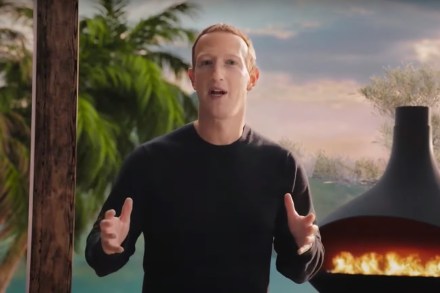
Take my hand, darling, and off we go into the metaverse. It's a whole new world...or at least it's a new world...maybe a brave new world? Enter Mark Zuckerberg, that Titanic captain of industry, who last week released a video introducing his latest plan to leave his Nike shoeprint upon reality. It's called the metaverse, and while even the savviest tech writers are grasping to explain what it is, it appears to be the fusion of our world with the virtual. Big Zuck wants what's on our screens to spill over into real life. We lived on farms, then we lived in cities, now we will live in "home spaces" with digitally rendered pterodactyls flying just outside the windows.

metaverse

A tale of bitter brotherly rivalry

For early humans there was no distinction between spirit and matter. There was no idea of self; no barrier between consciousness and the world. Eventually, evolving self-consciousness and thought put a barrier between the two. Object was irrecoverably divorced from subject. Or so I’ve read somewhere. Something like that anyway. Very recently yet another barrier has been erected between human consciousness and the world in the form of the smart phone touch screen, putting us at not one but two removes from reality. No wonder everyone’s lost the plot. On Sunday, at the very forefront of the evolution of human consciousness, I took human evolution a step further by watching West Ham play Liverpool on my phone screen while sitting in a room in Provence.

Are we ready for the metaverse?

Facebook has rebranded itself as Meta and last month chief executive Mark Zuckerberg announced the creation of 10,000 jobs to help build the ‘metaverse’ — a concept so radical nobody yet knows what it really is. People in the media tend to describe it as ‘a 3D version of the internet’. Facebook describes it rather vaguely as a network of ‘virtual spaces where you can create and explore with other people who aren’t in the same physical space as you’. Some suspect it might actually be hell. The term metaverse first appeared in Neal Stephenson’s 1992 novel Snow Crash, in which future humans distract themselves from economic collapse by submerging themselves in a parallel virtual reality world.

The real harm in the Online Harms Bill

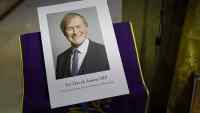
Following the killing of Sir David Amess, MPs were quick to point to the ‘corrosive space’ provided by social media, the ‘toxic’ conduct of politics, and the general phenomenon of people being cruel to them online. Of course our parliamentary representatives don’t deserve to face waves of abuse for doing their jobs. They shouldn’t receive racial abuse, or threats of violence, or even simple insults for doing their jobs. This goes without saying for any worker, whether serving customers in a supermarket, helping commuters with their tickets, or indeed governing the country.

New tactics are needed for the wars of the future

The strategic bankruptcy of the West has twice so far this century demanded that our brave soldiers risk their bodies and minds to fight unwinnable wars. The lessons to be learnt from Iraq and Afghanistan, and indeed from Libya, Syria and the Sahel, are many; but the original sin was hubris, born of post-Cold War military preponderance and successes in Sierra Leone, Ulster and Kosovo. The consequence of our arrogance, when 9/11 demanded action, was that we failed properly to interrogate, and so to grasp, either the character of the specific conflicts into which we jumped, or the fundamental nature of war itself.

Frances Haugen: a very convenient whistleblower

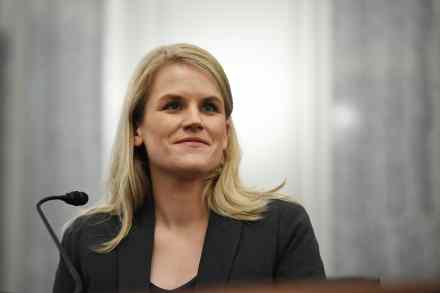
Facebook wants to move its business model towards the metaverse, that virtual future in which we will all hang out online through headsets and pretend it isn’t weird. The trouble is, we already appear to live in an alternate reality created by communications specialists with highly political agendas. Just look at the clearly PR-orchestrated Online Safety vs Facebook story which the media is playing out before our non-digital eyes. This week’s protagonist is Frances Haugen, the former Facebook employee who appeared yesterday in parliament to give evidence to MPs scrutinising the Online Harms Bill. That is the bill through which the government says it intends to regulate social media companies to stop online hate, bullying, terrorist radicalisation and so on.

Banning anonymity creates more problems than it solves

There are growing calls to end internet anonymity in the wake of Sir David Amess’s death. The Tory MP Mark Francois argued in the Commons this week for a ‘David’s law’ to do this, to try and bring back civility into politics. Today, Matt Hancock and the Labour MP Rupa Huq have stated that the Online Harms Bill should tackle ‘anonymous abuse’. But outlawing internet anonymity would be a mistake. Two members of parliament have been killed in the past five years. This, one long-serving MP laments, is the kind of statistic you would expect in a failing state, as I write in the magazine this week.

Why is it so hard to live without a mobile phone?

Last week, my mobile phone stopped working. No big deal you might think. If you can get emails on your computer, and you’ve got a landline and that old-fashioned thing, post, why, you’re not cut off, are you? There are, of course, people who wilfully eschew their phones so as to be more in touch with the present moment… birds, clouds, flowers etc. And I’m hardly a junkie. I don’t do social media. I’m a grown-up, so I’m not on Snapchat. Not having a phone should have been fine. But as I discovered, I was quickly cut out of society. First off, you can’t tell the time. Obviously, when you’ve got a phone you don’t need a watch. Or a clock.

The problem with ‘David’s law’

Two members of parliament have been killed in the past five and a half years. This, one long-serving MP laments, is the kind of statistic you would expect in a failing state. One of the shocking things about Sir David Amess’s murder is that many MPs weren’t surprised by it. Parliamentarians are acutely aware that when they are away from the Palace of Westminster, with its armed guards and security scanners, they are a soft target. Their job requires them to mix with the public and that involves a certain level of risk. One senior Tory MP points to how during the Troubles in Northern Ireland, MPs who were thought to be in particular danger were offered a firearm for personal protection, and argues that an offer like this should be extended to all MPs today.

The problem with online property searches

In 1966, the legendary adman David Ogilvy set out to buy a home in France. He boarded a transatlantic liner to meet a French estate agent who had a perfect house waiting for him in Paris, but while still in mid-ocean he heard he had been gazumped. There were presumably other houses on sale in Paris at the time, but it seems the agent did not show David any of them. Instead he suggested they board a train to Poitiers, 200 miles away, to an area David later described as ‘the South Dakota of France’. On the banks of the Vienne stood a decaying 13th-century château with around 30 bedrooms and a network of dungeons. David bought that instead. He lived there from the mid-1970s until his death in 1999. Restoring the building and gardens was one of the great joys of his life.

What Prince William gets wrong about space travel

Time was when 'to boldly go where no man has gone before' was not just a line from Star Trek. It was a national dream. Space exploration transcended political divisions. When Nasa pulled off the first moon landing, the world watched in awe. Last week, the Star Trek actor William Shatner was blasted into space on one of Jeff Bezos’s rockets. Yet there was no shared wonder. Instead, there was criticism. Scientists have more pressing problems to solve, argued detractors. In a rebuke to Bezos, who is pouring his fortune into space travel, Prince William told the BBC: 'We need some of the world’s greatest brains… trying to repair the planet, not trying to find the next place to go and live.' Such arguments miss three key points.

Delivery woes

From our US edition

It’s really quite difficult to keep up with all of the new ways technological ‘advancements’ are ruining things. We’re beginning to live out the 2009 film The Box, in which characters are presented a device with a button that, when pushed, grants them a million dollars — the only catch being that someone they’ll never meet will immediately perish. The dire unseen consequences of smart- phone conveniences aren’t quite as drastic, but they’re there nonetheless, and we rarely consider the moral quandary they present. Enjoying the long lifespan of your lithium-ion battery? A Congolese child might’ve mined the cobalt it contains. You want the new Róisín Murphy LP delivered to your doorstep?

delivery
stagnation

How we can keep innovating

From our US edition

If the history of humanity is the history of big ideas — from the wheel to space flight, cave painting to the multiplayer game, monotheistic religion to special relativity — then the same is true of our future. By the 1960s the developed world had witnessed 200 years of extraordinary activity on every front. This was the era of the moonshot; of political obsession with technological mastery; of experimentation in music, culture, knowledge and relationships. Humanity had undergone a big-ideas revolution and the expectation was that progress would keep accelerating. In 1967, Herman Kahn, the futurist and theorist of nuclear war, and fellow futurist Anthony J. Wiener published The Year 2000: A Framework for Speculation Over the Next Thirty-Three Years.

How tech revolutions happen

Trends in New York City tend to foretell trends in London, whose fashions in turn set the pace for smaller British cities. After a summer in the Apple, I can therefore provide British urbanites with a glimpse of their future. I get around on what I newly perceive as a dumpy, sluggish pushbike. Mayor Bill de Blasio has invested extensively in the city’s cycling infrastructure — much to the resentment of motorists, and often for good reason. As London drivers will also attest, removing whole lanes from congested thoroughfares is rarely justified by the modest number of car trips that cyclists obviate. Still, given the soaring popularity of two-wheeled transport, when chugging against a headwind alongside the Hudson I ought to have plenty of company. Indeed, I do.

preppers

Two cheers for preppers

From our US edition

Really, the Facebook outage should not have been as entertaining as it was. As Jon Stokes, the founder of Ars Technica, observes, if Facebook, with its hyper-sophisticated software and security practices, is vulnerable to sudden collapse, what does that say about energy infrastructure run on 'old Windows installs'? The potential for far greater carnage is tremendous. But it was entertaining, and I think what it made so was the fact that the damage was so comprehensive that security systems in the Facebook offices crashed and its employees could not enter the building to fix the problem. Here were some of the smartest people in the world and they could not get through a door. You can imagine the coffee cooling in their paper cups.