Technology

We must all become Doctor Dolittles and listen to the wisdom of animals

One day the writer and artist James Bridle rented a hatchback, taped a smartphone to the steering wheel and installed some webcams in order to make his own self-driving car. Armed with software cut-and-pasted from the internet, his aim was to collaborate with the AI he’d thus devised and travel to Mount Parnassus, sacred to Dionysus and home of the Muses, ‘to be elevated to the peak of knowledge, craft and skill’. Just try telling that to the traffic cops. This batty project had a serious point. Bridle wanted to subvert the idea that we cede control to our dismal robot overlords every time we plug co-ordinates into the GPS. To that end, he went about training the car, which he had rigged up with what amounted to a neural network that functioned like a simplified brain.

The Aesopian language of algospeak

To evade algorithms that hunt down forbidden words, users of platforms like TikTok employ cryptic synonyms. So dead becomes unalive, and the pandemic becomes panini or Panda Express. A technology journalist in her mid-thirties, Taylor Lorenz, drew attention to the trend last week in the Washington Post, calling the vocabulary ‘algospeak’. But why should anyone be banned for using the word dead? Because young people in chatrooms online discuss suicide, and since this is thought to encourage it, online proprietors try to weed out messages with giveaway words. Their algorithms penetrate chatrooms like those metal jellyfish in the Matrix films attacking the spaceship. (My husband, rather worryingly, knows that they are called Sentinels.

Will there ever be a reliable lie detector?

For as long as we have been human we have looked for some way of telling when we are being told the truth. We tried dunking witches, only to find that buoyancy is not connected to the supernatural. We tried torture, but discovered that people will eventually say just about anything to make it stop. We experimented with scopolamine and sodium pentathol, to learn that ‘truth serums’ do little more than make their targets susceptible to suggestion. And we’re still trying – with scientists pushing MRI scans and ECGs alongside AI as a ‘brain fingerprinting’ technique. The jury is out as to whether the latest ideas will prove any more reliable than those that went before.

How to watch YouTube on your TV – and why you should

According to Pliny the Elder, Scipio Aemilianus was the first man to shave daily. The origin of the name Boeing is Welsh. The family emigrated to the US from Germany, where they were called Böing, but this was a Germanisation of the Welsh patronymic ab Owen. In Pembrokeshire there is a Church of St Elvis. Helen Viola Jackson, the last recipient of a US Civil War widow’s pension, died in 2020. Nothing beats videos produced by the obsessive for the obsessive At the time of the Napoleonic wars, France was the fourth most populous country in the world, behind only China, India and Japan, with double the population of the UK. The origin of the word ‘zydeco’ – to describe the Cajun musical genre – is uncertain.

What’s the right way to pronounce ‘gif’?

The man who invented gifs, Stephen Wilhite, has died, aged 74. Controversy survives him – over how to pronounce the thing. A gif was a format that, from 1987, allowed graphics to be shared by otherwise incompatible computers. The name came from the initials of Graphics Interchange Format. That was not decisive, for the word could be pronounced as jif if it followed common words like gin, or as gif like gig. There’s no way of telling the pronunciation of an unfamiliar word beginning gi-. There are, it is true, six or seven words gig, all pronounced with a hard g.

How science fiction novels read the future

From our US edition

The pandemic is not quite over, but we are getting used to its inconveniences. What disaster will be next? An antibiotic-resistant strain of the bubonic plague? Climate collapse? Coronal mass ejection? Will the next catastrophe be natural — perhaps a massive volcanic eruption, the likes of which we have not seen for more than two centuries, since Tambora in 1815? Or will it be a manmade calamity — nuclear war or a cyberattack? And might we inadvertently descend into a new form of AI-enabled totalitarianism in our efforts to ward off such calamities? To all these potential disasters it is impossible to attach more than made-up probabilities. So what can we do about them? The best answer would be that we should strive to imagine them.

science fiction
cyberattack

How bad could a Russian cyberattack be?

From our US edition

When I have designed wargames around a NATO-Russia conflict, I often left out cyberattacks for a simple reason: it was just too complicated. Too many unknowns make an accurate simulation impossible. The number of targets, scale of the attack, damage done, how the attack could be carried out and its ramifications were beyond calculation for a mere simulation on the scale I was running using just consumer-based computer technology. Honestly, nuclear war seemed easier to think about, and that says a lot. But that should give us pause. Our world is basically a giant computer now, with cloud-based networks controlling virtually every aspect of our lives, from sewage and water treatment plants, to our electrical grid, to our smart homes, and on and on we go.

How to post a parcel without leaving your house

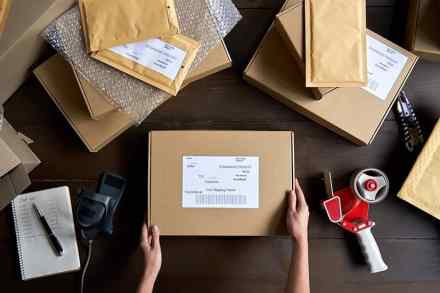
Here’s a useful tip. Go to the Royal Mail website and you can ask your postman to collect letters or parcels from your home at a cost of 60p per item. You pay for postage online, print a label and book a collection for the following day. Granted, it’s an extravagant way to merely avoid a walk to the postbox, but for special delivery items or parcels it’s a godsend. If you don’t have a printer at home, you can even get your postie to bring a label. Given that Royal Mail was founded in 1516, I’m not quite sure why it took 500 years to come up with this particular wheeze, but better late than never. In the US, where they have mailboxes rather than slots in the door, postmen have always collected mail.

The untimely death of the landline

I can count on the fingers of one hand the people I know who still have a landline telephone, and I am not among them. Getting one installed in my new home is feasible but why, my children ask, would I bother? I have a mobile phone, albeit a very basic one, and what more can a person need? To anyone under the age of 50, retaining a landline seems like a fogey-ish affectation. Indeed, one of my daughters has a rotary-dial handset, not as a back-up phone but as an ironic décor item. Because if you’re wearing a belt, why have braces? For mobile users there’s the back-up possibility of something called a cloud. Otherwise, nothing. You entrust your appointment diary, address book and photo collection to one device: your mobile phone.

The algorithm myth: why the bots won’t take over

Google once believed it could use algorithms to track pandemics. People with flu would search for flu-related information, it reasoned, giving the tech giant instant knowledge of the disease’s prevalence. Google Flu Trends (GFT) would merge this information with flu tracking data to create algorithms that could predict the disease’s trajectory weeks before governments’ own estimates. But after running the project for seven years, Google quietly abandoned it in 2015. It had failed spectacularly. In 2013, for instance, it miscalculated the peak of the flu season by 140 per cent. According to the German psychologist Gerd Gigerenzer, this is a good example of the limitations of using algorithms to surveil and study society.

The ghosts that could come back to haunt Blair

I’m picturing Sir Tony Blair enjoying a fitting of his Garter robes after watching Boris Johnson stagger through PMQs. ‘I’m in the clear these days,’ he’s thinking. ‘So much water under the bridge, what could possibly come back to haunt me?’ Well, here are two items he might like to consider: the application of the 2003 US-UK extradition treaty in the case of Dr Mike Lynch; and Foreign Secretary Liz Truss’s statement that new sanction rules will mean ‘nowhere to hide for Putin’s oligarchs’ and their fin-ancial assets.

My Orwellian battle with Vodafone

After launching an investigation into my missing phone, Vodafone informed me it could not deal with me any further until I went through a series of checks to prove that I was who I said I was. I then became locked in an Orwellian battle with an automated system that sent email after email demanding, for example, that I confirm my email, until I gave up on my lost phone, because no amount of confirming seemed to work. Maybe it was naive to try to tell Vodafone that one of their stores had sold me a Nokia that did not hold a charge, refused to refund or exchange it, then sent the phone away into the ether to be mended, where it apparently disappeared.

Downloading God in the App Store

From our US edition

Education at my Jewish private school was chock-full of religious instruction. Precisely half of our lessons were dedicated to Jewish studies. We had Bible classes (Chumash, we called it) every single day. As a child, I wasn’t particularly excited about most of the miracles. Sure, the staff turning into a snake was cool, but it felt like a parlor trick. The sea splitting felt too huge to even contemplate. The one miracle that seemed to get everyone in class thoroughly enamored with God’s power was the concept of manna from Heaven. The idea that you could just dream up what you wanted to eat — and for eight-year-old me that was infinite donuts, pizza and Dunkaroos — and it would just fall from the sky? Well, that was truly miraculous.

manna

Will our future lives be like a video game?

A few years ago, the software company Owlchemy Labs released a computer game called Job Simulator. Its premise was simple. Players find themselves in a future world, roughly 30 years from now, in which super-efficient robots have snaffled up all the jobs. No longer needed for work, humans entertain themselves instead by donning virtual reality headsets and reenacting 'the glory days' — simulating what it was once like to be an office clerk, chef, or shopkeeper. The gameplay, therefore, consists entirely of, well, yeah… carrying out endless mundane tasks: virtual photocopying, virtual cooking, virtual newspaper sales. Job Simulator is pretty tongue-in-cheek, crammed full of dry, self-referential jokes.

Why cash is still king to me

I recently set out on a simple mission: to break the £10 note in my purse so I’d have a five to put in the church collection plate on Sunday. My first attempt backfired. The café, where my order was delivered with an eye-roll of metro disdain, no longer accepted cash payments. I sat at one of their pavement tables, drinking the single macchiato I’d neither wanted nor needed, and considered my next move. I’m aware that cash is now regarded as a grubby anachronism. All those hands it passes through! Eww! Of the two churches I attend, one has stayed ahead of this trend and installed payment terminals in the nave: tap and give. I can offer no rational objection to this. I simply don’t like it.

The tyranny of the smart phone

‘Can I ask you why you don’t want a smart phone?’ said the chirpy manager, as I stood blinking in front of him in the intensely red Vodafone shop. I took my iPhone out of my bag and explained that I wanted a second phone with no brain whatsoever. A stupid, backward phone was what I wanted. Not a scheming, conniving monster like this one. And I said this quietly, so that my iPhone didn’t hear me, because that is how frightened I am of it. ‘Ah!’ said the pin-striped tech wizard, as if he had heard of this situation before, or perhaps increasingly. Reaching for the bottom shelf, he told me there was only one such phone in his shop. He put a tiny, plastic Nokia in my hands. It was so basic it was as light as a feather. I said that would do fine.

My strange encounter with foot fetishists

Around five years ago I started to receive requests online for photos of and details about my feet. I’ve been asked for foot pictures intermittently ever since. Most of the gentlemen are upfront about what they’re after (‘send foot pic plz’), but one man went above and beyond in his pursuits. Posing as an academic, he sent several emails to my work account claiming dozens of women in the British media had submitted their shoe size to help him with a research project. He was just waiting for my details to finish his ground-breaking study. Although I never responded, I commend his efforts. I was never able to work out what triggered this attention from foot fetishists, but now I think I’ve figured it out.

Marjorie Taylor Greene’s Twitter ban is nothing to celebrate

Marjorie Taylor Greene is nuttier than M&M World. Not your garden-variety conservative, or even a conservative at all, but a conspiracy theorist who rode these febrile times into a seat in Congress. She describes American Airlines Flight 77 as ‘the so-called plane that crashed into the Pentagon’ on 9/11, remarking that ‘it’s odd there's never any evidence shown for a plane in the Pentagon’. She suspects the 2018 California wildfires were started by a Rothschild-funded ‘laser beam or light beam coming down to Earth’ in order to help Democrats build a high-speed rail project. Her Facebook account has liked a post proposing ‘a bullet to the head’ for Nancy Pelosi.

Are electric cars a Columbus’s egg?

The explosion in remote and flexible working accelerated by the pandemic slightly supports my assertion that the most important limits to future innovation may be psychological and behavioural, not technological. I am among a number of people who believe that the newly widespread use of video-conferencing is of great economic significance. A few economists and commentators agree, but all of us suffer mild social embarrassment whenever we make our case: it feels faintly absurd to evangelise a technology which is more than 20 years old, rather than pontificating about the ‘metaverse’ or some other fashionable guff. Yet history bears us out.

The hypocrisy of Elon Musk

Tesla's sleek, if expensive, electric cars are leading the battle against climate change. Its batteries are moving renewable energy into the mainstream, while its founder Elon Musk, the world’s richest man, likes to present himself as a free-thinking radical. It is hard to think of a company more right on than Tesla — well, okay, perhaps Unilever — or one that depends more on its politically correct credentials. But hold on. There turns out to be one opposed minority that Tesla couldn’t care less about: China’s Uighurs. Most of the corporate world will sooner or later have to make a tough decision: do they care about human rights?