Technology

The Spectator Podcast: can we fight back against digital addiction?

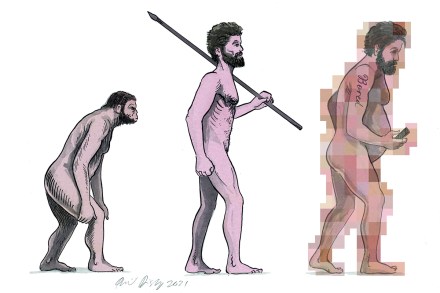
It seems that everyone, young or old, has a smartphone these days. But why are the brightest in Silicon Valley taking screen time away from their children? Have they realised that we’re addicted? Also on this podcast, Tory MEPs recently voted in favour of the Viktor Orbán government in European Parliament. Are British Tories flirting with the far right? If they are, it could be because the Conservative Party has no attractive policies. Should we return to One Nation Toryism? First, it’s time for a wake-up call. Smartphones now seem so attached to us that they may as well be organically grown. Both adults and children are addicted, and it’s having an impact on their mental health.

A wake-up call

Pupils are back in classrooms and parents can finally have a brief respite from worrying about their children’s excessive screen use — or, at least, worrying it is all their fault. This angst peaks each year in the summer holidays, those long, sunny weeks illuminated in large part by the blueish light from children’s smartphones, tablets and laptops. The beep and ping of devices triggers complicated emotions. In many homes, parents simultaneously castigate their offspring’s use of tech and are relieved by it: like some goblin babysitter, it squats in the corner of family life, whispering powerfully, turning children silent and glassy-eyed. The erratically applied adult phrases ‘That’s enough screen time!’ and ‘Give me that iPad!

The weird world of Silicon Valley

Which is more diverse: London or Devon? That’s not a trick question. London is much more diverse than Devon. But let’s tweak the question slightly. Which is more diverse: a pub in London or a pub in Devon? Here the answer is not so easy. Though low in ethnic diversity, a pub in Devon might contain a more representative mix of ages, educational backgrounds, earnings, wealth, sexual proclivities and political opinions than a pub in central London. London, for all its vaunted diversity, is a place where you can practise extreme homophily — spending your time exclusively with people nearly identical to you. People largely socialise with contemporaries from work. Social life is delineated by age and education more than in smaller cities or towns.

What data does not tell us

In late 1973 the graduate admissions department at UC Berkeley discovered that for the forthcoming year it had awarded places to 44 per cent of male applicants and only 35 per cent of women. Concerned about possible lawsuits or bad publicity, they approached Peter Bickel, a professor of statistics, to analyse the data in more detail. Looking for patterns of prejudice, Bickel broke down the data by university department. He was suddenly presented with a contradictory picture. Department data suggested Berkeley was mostly even-handed in admissions. Stranger still — though a minority of departments exhibited some gender bias, it was more likely to be a preference towards female candidates than the other way about. Eh? How so? I mean a 44:35 ratio seems clear-cut, no?

The joy of boredom

After an hour’s beach work I was just about done. I’d read some book, I’d skimmed the papers, I’d eaten some bits of cheese on some oat biscuits (the closest I’ll concede to picnics, which I hate), I’d drunk some water as per my instructions from the Fawn (‘Drink some water! You never drink enough water’), I’d dried off from the swim, I’d got a pair of very numb buttocks after sundry failed attempts to get comfy on the not very flat rock: surely I’d done enough now to earn my release? But I knew I’d never be allowed to get away with it. Not this soon. The Boy, maybe: he’d be OK with an early escape. Definitely not the Fawn, though. She’d see through my motives straight away.

Porn power

If ever you find yourself bored and with 15 minutes to spare, I recommend looking up Pornhub’s annual report, the closest thing you will get to a statistical breakdown of the planet’s libido. Here you will discover that the average visit to Pornhub lasts nine minutes 59 seconds; that the most popular time to watch porn is a Sunday evening; and that sexual tastes for the most part tend to follow cultural lines, with English-speakers prizing lesbian material most highly, and eastern Europeans on the whole preferring anal. There’s nothing new about porn, and humans have been trying to get their hands on it pretty much since they left the primordial soup. The novelty is in the rate of change.

We’re all Luddites at heart

When I saw my first jogger in Wales in the early 1970s, I assumed he was running away from the police. Presumably joggers were familiar in California by then, but not elsewhere. I can’t imagine any of the characters in Goodfellas going jogging, any more than I can imagine Rick in Casablanca going to a spinning class. Nothing was stopping you from running around the streets back then. It was simply that there is always a high social cost to doing things most people don’t do. Our brain’s two most powerful default settings are social copying and acquired habit. Hence our preferences are not independent of our past behaviour, nor of that of others.

Not so fast

I’m losing my patience. Not so long ago I’d happily wait ten minutes for a bus, or even whole days for the next instalment of my favourite television programme. It didn’t seem to bother me in the slightest that my holiday photos would not be seen until I’d picked them up from the chemist. I even went to the library to get information from an encyclopaedia. Life, in short, used to be a waiting game, and patience was not just a virtue but a habit. Now I wonder how I survived in a world without Google Maps, Uber or smartphones with in-built cameras. The whole direction and purpose of modern life, at least on the surface and for those well-off enough to benefit, is to make everything frictionless, personalised, easy. Click a button, a taxi turns up to your house.

The Spectator Podcast: 190th birthday

Happy birthday to the Spectator. This week, we’re celebrating our 190th birthday. Lara Prendergast takes a walk down memory lane with three editors of the Spectator, past and present. But before that, it’s the podcast as usual. This week, we’re asking - do anti-Trump protests achieve anything other than virtue signalling? And are driverless cars on a road to nowhere? Donald Trump is soon to visit the UK, and after two false alarms, this time, it will actually happen. Next Friday, Trump will be welcomed by May in London and greeted with major protests. There is a carnival of resistance organised, with special guests such as Lily Allen and a giant inflatable blimp of Trump in a nappy.

Approaching mild panic

For a brief moment in 2011, standing among thousands of people occupying Syntagma, the central square in Athens, it looked as though social media would change the world. A row of laptops set up next to the subway entrance became the beating heart of an anti-austerity movement that promised to go well beyond simple protest politics, up to perhaps reshaping the political culture of a stale Greek parliament. From Occupy Wall Street to the Arab Spring and the streets of Europe, a demand for such new politics and more democracy made itself known to the wider world through tweets and Facebook posts. Truly it appeared that if you gave people the tools to connect and actually meet each other in the digital commons, a demand for progress and change would arise almost naturally.

Why weather apps can’t be trusted

The Times reports this morning that Bournemouth business leaders are hugely annoyed with the BBC, whose weather app predicted thick cloud and thunderstorms for the recent bank holiday. In the event, it was sunny and warm, but the damage had already been done, and takings on the seafront were said to be down by nearly 40 percent as people decided to stay at home rather than risk a soaking. While weather forecasting is undoubtedly getting better, it seems fairly clear that ultra-local forecasts of the kind you find on weather apps can be very misleading: reducing the whole forecast to a single icon, as most apps do, removes all the nuance. The lesson seems to be that if you are going to make a decision based on a forecast, you should watch the TV weather and get it explained to you.

The joy of GDPR

Happy GDPR week everyone! This Friday, the General Data Protection Regulation comes into force, the most ambitious data privacy ruling since, well, ever. I’m not going to go through the specifics – there are plenty of vastly overpriced seminars for that – but it’s basically about giving EU citizens more rights and control over their personal information, info on how and why it’s being collected and used, and the chance to opt out if they want. Some of this was already in law – but now there are monster fines if companies don’t comply.  You will probably know it from those endless emails.

Could an owl make video conferencing finally take off?

When I was ten, the two things we all expected to enjoy by 2020 were flying cars and videotelephony. What never occurred to us was that we might successfully invent one of these things and then fail to use it. Yet that has largely been the case with video conferencing. Is its day still to come? Will there be some tipping point when we start to hold virtual meetings routinely? Or will video conferencing turn out to be one of those technologies whose promise is never fulfilled: something which ‘has a great future — and always will’. I don’t know. Certainly it suffered from being oversold too soon.

High life | 19 April 2018

New York Remember when the internet, Twitter, Facebook and other such useless gimmicks were supposed to usher in an era of transparency and knowledgable bliss? This technology makes George Orwell’s Nineteen Eighty-Four redundant: no longer science fiction; more Knights of the Round Table. Big Brother is more powerful and more all-knowing than ever before, and we have that Errol Flynn lookalike Mark Zuckerberg to thank. There is no such thing as privacy any longer, unless of course one writes letters by hand and does not possess a smart telephone. (Include me out — I own a mobile but use it only when on board a sailing boat.

Real life | 19 April 2018

‘If this madness goes on, I will not be able to leave my house without downloading the app,’ I told my friend, who had been exhorting me to download the app for something. In fact, I had been trying to book a fun ride. Every year, my horsey friends and I go on these cross country jollies during the summer months. And every year all we do is ring or email the secretary of the relevant riding club, say we are coming, send a cheque, get our start time and turn up in our trailer on the appointed day. Not any more. The riding clubs have discovered apps. And so now, when one tries to register to go on a fun ride, the antithesis of fun begins. You cannot ring or email anyone to book anything anymore, let’s face it.

Investing in zero-carbon shipping will only benefit the UK economy

The shipping industry contributes around 2% of all global carbon emissions – a figure comparable to the entire CO2 emissions of a country the size of Germany.  In many ways that isn’t surprising: shipping powers the world economy, and carries 90% of all international trade. But although people understand the link between trade and prosperity, they quite rightly demand it is done in a responsible and environmentally friendly way. Globalised trade has brought rapid growth and helped see a remarkable fall in extreme poverty around the world, but it is not without negative consequences. Scientists say that to stave off potentially dangerous levels of warming later in the century, global emissions need to decline quickly to near-zero.

We’re still waiting for the internet revolution

At the risk of sounding like Jean Baudrillard, I would like to suggest that the internet revolution has not yet taken place. So far, lots of very clever people have performed amazing feats of technical ingenuity. But for the most part our collective behaviour has so far failed to change enough to truly benefit us. Rather than making us freer, more relaxed and more efficient, in general everyone seems busier, more distracted and more tense. Unfortunately, technology is a bit like Hitler: it doesn’t know when to stop. No sooner has it annexed the Sudetenland than it starts invading Czechoslovakia. The world might be happier if Silicon Valley were put on a two-day week, to give us — and our social norms — time to catch up.

Mark Zuckerberg’s ‘team’ are the real losers of the Facebook hearing

Right now, in some tasteful open plan office in California, Mark Zuckerberg’s ‘team’ is hard at work. Or at least they should be, because they have a lot to do. When he wasn’t trying to explain the 101 basics of how the internet actually works, Zuck was telling senators that his team would look into the details, and would be in touch.  The reason he was there at all, subjecting himself to five gruelling hours of intensive and sometimes wildly misdirected questioning, was to reassure three groups of people: Facebook users, who need to know Zuck cares about privacy. Investors, who need to know the company is dealing with the crisis. And finally the politicians themselves, who are wondering if more rules and laws are needed to tame the giant.

Can technology make the NHS more efficient?

As the Spectator held its inaugural health summit last week, the fraught issue of NHS funding was once again on the front pages. Jeremy Hunt, the Health Secretary, proposed a 10-year funding deal for the NHS. Two days later Theresa May announced there would be a 'long-term funding plan'. However, while a multibillion pound cash injection may help, this isn’t going to fix the bigger problem: that is, a rapid rise in demand for healthcare, in part because of an ageing population. So what else can be done? Can technology make the NHS more efficient? The summit’s keynote speech, by health minister Lord O’Shaughnessy, made the case for data as the potential saviour of the NHS. Its patient dataset is unique, he said, as it encompasses all citizens across their lifetime.

The Cambridge Analytica row shows politics moving in a disturbing direction

From the outside it all looked haphazard and frenzied. A campaign that was -skidding from scandal to crisis on its way to total defeat. That’s not how it felt inside the ‘Project Alamo’ offices in San Antonio, Texas where Trump’s digital division — led by Brad Parscale, who’d worked previously with Trump’s estate division setting up websites — was running one of the most sophisticated data-led election campaigns ever. Once Trump’s nomination was secured, the Republican Party heavyweights moved in, and so did seconded staff from Facebook and Google, there to help their well-paying clients best use their platforms to reach voters.