Taxation

Tax the poor

A sanctimonious liberal like any other respectable 16-year-old, I made a seminal lurch to the right the first time I opened a pay slip. I was manning the register weekends for the Ice Capades Chalet in Atlanta and made about $40 a week. Or so I imagined. Then where the hell was it? The significantly lighter payment was my rude introduction to taxation at source. Indignation at being fleeced at a minimal income persisted into my adulthood. I lived on a wing and a prayer for decades, and having to pitch anything whatsoever into the communal pot was consternating. I fancied that I asked for nothing from government; in trade, they should ask for nothing from me. I wasn’t yet a grown-up.

tax

Time for Americans to give tea a second chance

From our US edition

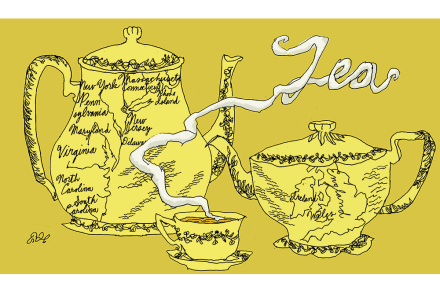
“Last night,” John Adams confided in his diary on December 17, 1773, just after the Boston Tea Party, “3 Cargoes of Bohea Tea were emptied into the Sea... This is the most magnificent Movement of all. There is a Dignity, a Majesty, a Sublimity, in this last Effort of the Patriots, that I greatly admire.” Some things – like hyperbole and random capitalization – never seem to go out of style in American politics. Tea has been less fortunate. Once the most beloved non-alcoholic beverage in the 13 colonies, it fell so low in America’s regard, as Emily Dickinson would say, we heard it hit the ground. Or the water, in the case of the Boston bunfight.

Adams

Portrait of the week: gambling politicians, gender rows and a free Julian Assange 

Home The Conservative party withdrew its support from two parliamentary candidates, Craig Williams (who was parliamentary private secretary to the Prime Minister) and Laura Saunders, both of whom the Gambling Commission had been investigating after allegations that bets had been placed on the date of the election. Two Conservative party workers and six policemen were also alleged to have been involved, one of the policemen being under criminal investigation. Others remained under investigation. Labour suspended a parliamentary candidate of its own, Kevin Craig, after being told the Gambling Commission was investigating him betting on failing to win the seat, which he now might. The candidates’ names would still appear on ballots as standing for their parties.

So now even Mitt Romney wants to tax the rich

From our US edition

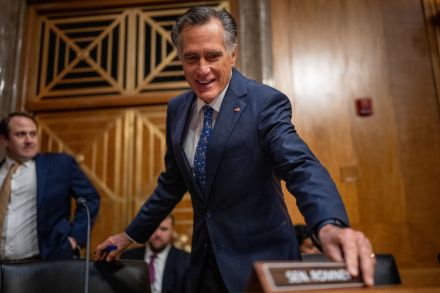
"On the tax front," says Mitt Romney, "it’s time for rich people like me to pay more."It’s always slightly annoying for regular Americans when squillionaires announce that people like them ought to be contributing more to the Treasury. (Nobody’s stopping you from writing a big cheque, Mitt!)But Romney’s intervention in today’s New York Times is noteworthy. It is the clearest sign yet that the pre-Trump Republican party, the party of Bain Capital, hyper-capitalism and asset-stripping, is adapting to a new political reality. And it’s now willing to go after the assets of the billionaires.Romney’s logic is hard to refute. Social security and entitlements are bankrupting America.

Mitt Romney

The insoluble link between government and crime

In the 18th century, the cash-strapped British crown imposed customs duties on tea imports that rose as high as 119 per cent. Unsurprisingly, such huge tariffs sparked a smuggling boom in coastal towns such as Deal, in Kent, where the cliffs were pockmarked with secret tunnels and half the inhabitants lived off profits from such illicit activities. When the government tried to crack down in 1781, it had to send in a 1,000-strong militia, headed by 100 men on horseback. Yet smuggling may have accounted for more than half of England’s trade at the time – and it often involved respected figures in communities who regularly bribed officials. This underlines how the imposition of taxes creates illegal markets that can eat into state revenues and corrupt society.

Sean Thomas, John Power, Susie Mesure, Olivia Potts and Rory Sutherland

22 min listen

On this week’s Spectator Out Loud: Sean Thomas reflects on the era of lads mags (1:07); John Power reveals those unfairly gaming the social housing system (6:15); Susie Moss reviews Ripeness by Sarah Moss (11:31); Olivia Potts explains the importance of sausage rolls (14:21); and, Rory Sutherland speaks in defence of the Trump playbook (18:09).  Produced and presented by Patrick Gibbons.

In defence of BA’s new loyalty scheme

One of my favourite cartoons shows a couple sitting in luxury at the front of a plane, the wife peeking through the curtains to the cabin behind. ‘I’m so glad we’re in business class, darling,’ she says to her husband. ‘There seems to be some sort of hijacking happening in economy.’ People who have learned to play a game by one set of rules are bitterly affronted when the rules change Because we must consort with strangers for several hours, planes and airports amplify the normal human sensitivity to status. And so the media furore created by British Airways in revising the status thresholds for its loyalty programme is valuable fodder for students of psychology.

The elite’s war on wealth

From our US edition

Wealth comes from ownership. Being involved in the financial industry for nearly thirty years, and spending the past dozen-plus years in the media helping people create economic freedom and wealth for themselves and their families, I know that wealth being derived from ownership is an indisputable truth. More concretely, wealth comes from the ownership of assets that increase in value over time. Ownership is a subject people tend to greatly misunderstand. We misconstrue where wealth comes from, and we misinterpret the benefits of hard work and taking risks. You can meet a poor construction worker putting in eighty hours a week for someone else. You can find professional athletes declaring bankruptcy as soon as their multimillion-dollar contracts end.

The deep roots of global inequality

Thomas Piketty, the French economist who shot to fame for writing a colossal work of economics that many people bought but few actually read, recently received some advice. ‘What you write is interesting,’ a friend told him, ‘but couldn’t you make it a little shorter?’ Piketty has answered the call for brevity with a book which by his standards is the equivalent of a Post-it note. It’s certainly ‘brief”– but is it a ‘history of equality’? Alas, no. What we have instead is an eye-wateringly left-wing manifesto for dismantling economic inequality, both domestically and internationally.

The confusion at the heart of social care

Boris Johnson’s majority plunged to just 26 last night, following a rebellion over controversial changes to social care plans. Means-tested, state-funded payments will no longer count towards the £86,000 limit on the amount people will have to pay for their care. Those with initial assets worth less than £186,000, and who have received such help, could be worse off as a consequence. Critics have pointed out that this is likely to disproportionately affect residents in the North or the Midlands because of differential house prices. Johnson’s government isn’t the first to tie itself in knots over the issue of social care funding. Successive administrations have failed to bring about reform over the past 25 years, with most proposals swiftly abandoned.

Director’s cut | 11 October 2018

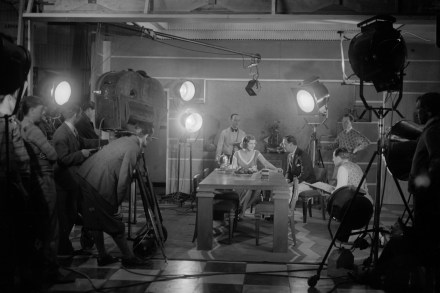
‘The role of government is not to pick favourites and subsidise them or protect them.’ So says the government’s industrial strategy, published last year — a document which was supposed to distinguish between a free-market approach and the interventionism favoured by Jeremy Corbyn. Yet in one industry, at least, the government is doing exactly what it says it should not: it is showering firms with subsidies in the hope of generating growth. This week the British Film Institute (BFI) published a report making grand claims for the government’s ‘tax reliefs’ for the film industry.

‘We need to get creative’

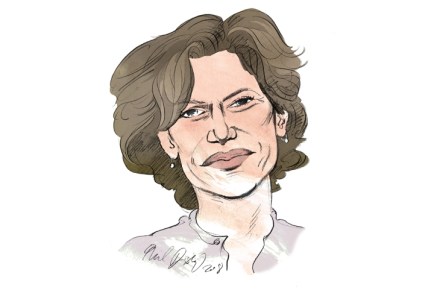
‘It was Plato who said storytellers rule the world,’ observes Mariana Mazzucato, her powerful voice tempered with a beaming smile, ‘But the stories we’re constantly told about how value is created are largely myths. We must rethink where wealth really comes from.’ An economics professor at University College London, Mazzucato is fast emerging as one of the world’s leading public intellectuals. From her high-ceilinged office in Bloomsbury, a host of grant-making bodies on speed dial, this 49-year-old Italian-American is determined to ‘replace our current parasitic system with a more sustainable, symbiotic type of capitalism’. Mazzucato emerged from the academic shadows five years ago, when she wrote The Entrepreneurial State.

Morality seems to have evolved as much in taxation as it has in flirtation

What would a perfect tax system look like? For companies, profit taxes should be competitively low, to encourage inward investment, with generous reliefs for start-ups, research and capital projects; the corporate tax code should be designed to generate rising productivity and prosperity rather than to maximise short-term tax revenues, and companies should acknowledge a duty to contribute wherever their profits arise. For individuals, income tax rates should rise only to the lowest level that maximises revenue collection and thresholds should be high enough to keep low earners out of the net, while pension savers and first-time home-buyers should be incentivised.

Progressive | 11 May 2017

I laughed, in a sympathetic way I hope, when I read a letter in the Daily Telegraph pointing out that Steve Hewlett, the media commentator who died this year, had admitted ruefully that when he had heard that his cancer was progressive he had thought for a moment this was a good thing. The progressive alliance is this election’s equivalent to the old ‘broad left’, which once inserted foaming revolutionaries into respectable politics. I complained about this label progressive before the 2015 election. Progressive politicians tend to favour progressive taxation, even though the term is merely technical, indicating that the higher the sum taxed (above £80,000 income, say), the greater the rate of tax on it.

The case for lowering taxes

There’s a saying that when you tax something, you get less of it. Sometimes, this is a good thing. The government taxes smoking, alcohol, and petrol partly because we think these things have costly side-effects—like pollution or burdening the NHS—that we want to discourage. But most of our taxes do not fall on activities with costly side-effects: they fall on things like working, travelling, and socialising. And because we have such a high tax burden—this year we'll work for the chancellor for 154 days before we start working for ourselves on Tax Freedom Day, today—we almost certainly have less of those things. With lower taxes we'd be happier, and our descendants would be richer.

Keynes’s big mistake

Some things are universally accepted as true. Water finds its own level; crumpets are best eaten in winter; and the England football team will not win the World Cup again, ever. On a par with these things, the most accepted part of economics is Keynesianism. Of course, John Maynard Keynes said lots of things about economics in between his many and varied sexual encounters. But, as is the way of the world, one of the things he said turned out to be particularly influential. It is so influential that it has gone around the world. It is repeated and relied upon by Japanese finance ministers, New York Times columnists, Nobel prize winners and anti-austerity demonstrators. It is in textbooks around the globe. It is on page 262 of the Edexcel Economics A-level text book.

John McDonnell’s true economic guru: the emperor Nero

John McDonnell, shadow chancellor in the Corbynite splinter-group, has announced that £120 billion is waiting to be reclaimed from tax avoidance, evasion and other schemes. Nero was equally detached from reality. The Roman historian Tacitus tells us that in ad 65 a fantasist from Carthage by name of Caesellius Bassus bribed his way into an interview with Nero and told him that on his estate there was hidden a vast quantity of gold, not in coin but in unworked bullion — great columns of it. It had been hidden there, he said, by Dido, the Phoenician queen who had founded Carthage. Nero was thrilled.

Cicero on Labour taxes

Heidi Alexander, Jeremy Corbyn’s shadow health secretary, has emphasised how important it is ‘to weave into [Labour’s] language, our narrative and our political mission a fundamental respect for taxpayers’ money, something that is clearly missing given our current reputation for profligacy’. Cicero would be cheering her on. Cicero’s de officiis (‘On Duties’) was composed in 44 bc, the year in which he was assassinated on Marc Antony’s orders. The work, the second to be printed in the Gutenberg revolution after the Bible, was immensely influential during the Renaissance and Enlightenment.

The clock that stopped: the victory of nuclear arms and defeat of nuclear power

‘I visited the black marble obelisk which marks the epicentre of the explosion, and I saw the plain domestic wall-clock retrieved intact from the rubble with its bent hands recording the precise time of day when the city was obliterated: 11.02 a.m. I was glad to be alone, because I could not have spoken.’ Published here 20 years ago, that was my memory of Nagasaki, the target on 9 August 1945 of the second and last nuclear weapon ever deployed. The subsequent seven decades of non-use of nuclear arms — deterred by that most chilling of threats, ‘mutually assured destruction’ — is one of the miracles of modern history, given the unsafe hands in which much of the materiel was held.

Should politicians leave the wealthy alone?

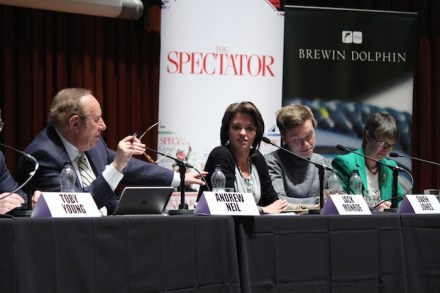
Bashing the rich has become trendy. Last night, the Spectator hosted a debate at the Guildhall School of Drama on whether the rich have contributed their fair share to society, or if we should ramp up wealth taxes. It’s a very emotive topic and each of the speakers made a solid case for and against the motion: politicians should leave the wealthy alone — they already contribute more than their fair share. Proposing the motion, Spectator editor Fraser Nelson described how London is a city ‘shaped by the super rich,’ pointing out the number of places that serve a £20 vodka martini. But Fraser argued that society needs these wealthy people and taxing them more isn’t the best way to get money out of them.