Style

Why gingers have more fun (genetically at least)

Contrary to what we redheads have been led to believe, we are not disappearing. Our numbers have increased in the past 10,000 years, according to a recent Harvard study. What’s more, researchers found, being ginger may actually be desirable as far as natural selection is concerned because ‘having red hair was beneficial 4,000 years ago’. The reason why has yet to be discovered. But it’s good news for the class bully, producers of sunscreen and those – like me – who’ve had a love-hate relationship with the variants in their MC1R gene which leads to red hair and pale skin. I was an extreme redhead as a child; not one of the beautiful ones with long, auburn curls and green eyes.

The decline of Oxford University’s sartorial traditions

The Black Death tore its way through Europe between the years of 1346 and 1353, believed to have killed half of the continent’s population. The Great Plague came in 1665, wiping out nearly a quarter of all Londoners. 1918 brought the Spanish Flu, infecting roughly one-third of the global population. And now, in the aftermath of Covid-19 — spreading through the streets of Oxford with a virulence that none of the above could rival — comes the latest instalment in highly infectious diseases: the college puffer jacket.  Historically, Oxford's sartorial traditions have been (Bullingdon Club attire aside) relatively understated. The college scarf was a go-to, and whose demise is worth mourning.

The sheer joy of nighties

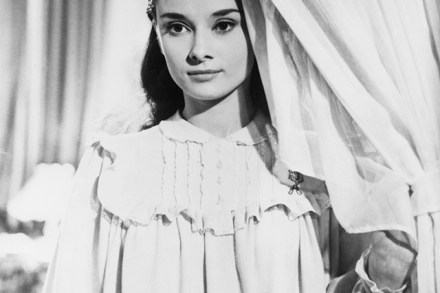
One of the many problems with the internet is that it’s increasingly difficult to know if something has become ubiquitous overnight, or if your algorithm is just serving you the sort of slop it thinks you’re stupid enough to buy. Case in point: nightdresses. Previously the preserve of pioneer women, convalescents and Victorian ghost children, nightdresses suddenly seem to be everywhere. I can’t open my phone without seeing a glamorous woman going about her morning wearing a beautiful and expensive nightgown. ‘Retailers have informed me that sales of nightdresses are higher than ever at present,’ Hannah Banks-Walker, a commissioning editor at Harper’s Bazaar, tells me. Delicious news. I am not alone.

The brutality of being a bridesmaid

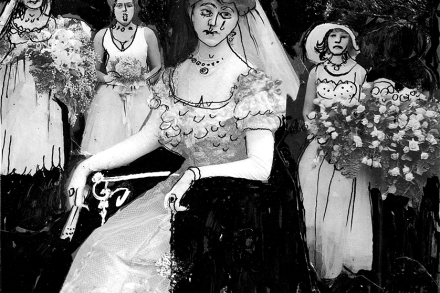
There stands the bride. Perfect hair, perfect nails, perfect fake tan. She may not have slept the previous night or eaten for six months but, still, she’s beaming. And there behind her stand the bridesmaids. All 95 of them. ‘My sister-in-law asked how much weight I could drop because the dresses only went up to a size 12’ When Kathryn McGowan got married in County Down this month, she couldn’t decide which of her pals should have the honour of holding her train and checking she didn’t have lipstick on her teeth. ‘It was quite stressful,’ she said of the dilemma, ‘and then one day the idea came to me.’ Instead of having the average number of bridesmaids (in the UK, this is three to five), she’d have 95 of them, aged between six and 40.

The return of the Young Fogey

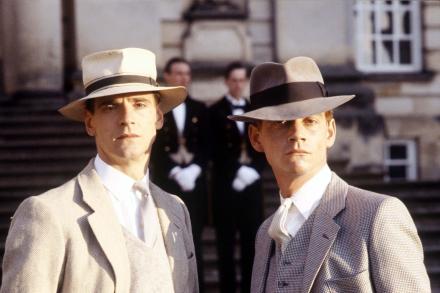
At a recent lunch where I was sitting next to A.N. Wilson I couldn’t help but take a good look at his suit. After all, this was the man often described as the original Young Fogey. He was dressed perfectly well in an austere two-piece, though while I (ever the try-hard) was sporting a pocket square, he was without one. On another occasion, chatting to Charles Moore in the colonial surrounds of the Foreign Office’s Durbar Court, the Lord was indistinguishable in dress from the other mandarins and journalistic bigwigs there. In bygone days, a Young Fogey such as he would have donned a seersucker suit and shantung silk tie for the occasion. The Young Fogeys’ flamboyance of dress evident in their heyday is gone.

The cult of the gilet

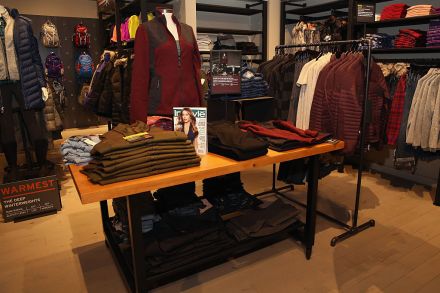
Last summer I attended a reunion at my prep school. The occasion was the leaving of a much-loved master. I thought that the appropriate thing to wear would be a tweed jacket in honour of prep-school masters everywhere. I found myself woefully overdressed. Pretty much all of my contemporaries were wearing gilets. It was a similar story this year at the Fortnum & Mason awards, the Oscars of the British food and drink scene. I wore a suit, but it seemed as if every other guest was casually sporting a gilet. When I was growing up the only people who wore gilets were fishermen, farmers and Michael J. Fox in Back to the Future. Furthermore, they weren’t called gilets, they were called body warmers or sleeveless coats.

The art of the pocket square

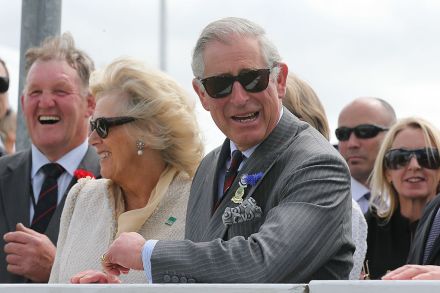
When imagining a monarch’s wardrobe, what comes to mind? With the late Queen, it was bold-coloured dresses (as she famously said, ‘I have to be seen to be believed’), elaborate hats, silk headscarves and those black Launer handbags. Our new King is no less a style icon. For him it’s well-tailored double-breasted suits from Anderson & Sheppard (probably well-worn, for His Majesty is a great advocate of make do and mend – the suit he wore to Harry and Meghan’s wedding was 34 years old), Turnbull & Asser shirts, hats from Lock & Co. and probably the odd tartan kilt. But it is his collection of pocket squares that I would be most interested to see if ever allowed a peek into the King’s cupboard.

The curious business of luxury watches

Ian Fleming once said that a gentleman’s choice of timepiece said as much about him as his Savile Row suit. The latter part of that evaluation seems anachronistic now – after all, who apart from Jacob Rees-Mogg wears Savile Row suits with any regularity these days? But the idea of the watch as indicator of taste, status, wealth and much else besides is, arguably, still valid – and perhaps increasingly so. Luxury watch sales are on the up and predicted to rise further – remarkable given the cost-of-living crisis, their inessential nature and an alarming rise in theft. Watches of Switzerland, who recently opened a multi-brand Canary Wharf showroom, saw revenue jump 17 per cent in the last quarter.

This old thing: the new fashion brag

The skirt I’ve worn most often recently is long, blue and as comfortable as it is flattering. ‘Why, thank you,’ I reply with a satisfied smile when I’m complimented on its delicate floral print and the way it swishes as I walk. ‘It’s Dorothy Perkins, 2011.’ I may not be able to distinguish Dolce & Gabbana from Dior or have set foot in a clothes shop fitting room since 2020, but when it comes to the newest form of fashion bragging, I excel. Nowadays, you see, it’s not the number on the price tag that counts, but the number of years you’ve owned the garment you’re wearing – and my wardrobe is stuffed with clothes that predate Megxit, Brexit, Instagram and half of Madonna’s children.

Dress like Macron to cut your energy bills

The French Finance Minister Bruno Le Maire has urged civil servants to trade shirts and ties for woollen polo necks under their suits. It’s part of a drive to heat ministries to no warmer than 19°C – a policy that is compulsory in all government buildings except hospitals and care homes. French petit fonctionnaires can take inspiration from President Emmanuel Macron, who has been leading by example in a classic black polo neck. Ca chauffe! Le Maire’s suggestion has been criticised right and left. The leader of the opposition, Marine Le Pen, tweeted ‘Don’t have enough heating? Let them wear cashmere’, and Gaspard Gantzer, a former adviser to the socialist president Francois Hollande, labelled the idea ‘grotesque and paternalistic’.

Why Charles is the King of Savile Row

No one who has watched the events of the past ten days could doubt the King’s commitment to his late mother – or to his people. But I think another of Charles III’s commitments is also becoming apparent: one to British tailoring. From his black-braided morning suit when he addressed the Houses of Parliament at Westminster Hall to the ceremonial Air Marshal’s uniform he wore to process the Queen’s coffin from Buckingham Palace to her lying-in-state, His Majesty has been nothing less than impeccably attired at every turn. Perhaps it shouldn’t be surprising that we’ve got probably the best-dressed head of state in the world. As Prince of Wales, Charles had long flown the flag for British style.

Neckerchiefs are a sartorial risk worth taking

Neckerchiefs are an oddity. Once the cowboys' sweat-wiping tool, they are now a key accessory in the glamour – or camp and borderline tack – of a flight attendant’s uniform. My approach to them tends to sit somewhere in the middle. Neckerchiefs are useful, stylish, rebellious, but comforting – a rare choice for men’s fashionwear. A neckerchief can spice up a dull-coloured shirt without imprisoning your neck in a collar choked by its distant relative, the tie. But before becoming the fabric embodiment of smart-casual, the neckerchief was wholly utilitarian. Sailors began wearing them in the 16th century to combat the discomfort caused by dripping sweat rubbing against their stiff-collared shirts.

The return of the cigar

Once mainly associated with portly, middle-aged men of a certain social standing, cigars - along with single malt whisky, fine wine, decent watches and interesting cars - have become part of the arsenal of interests that anyone who aspires to be a 21st century gentleman is almost required to hold dear.  But the current enthusiasm for cigar smoking is merely the latest stage in a slow burn of popularity that can be traced back to the so-called 'loadsamoney economy' of the late 1980s, when flash city boys saw a top quality Cuban as just another hedonist's accessory on which to splash a large amount of cash.

Could a classic car save you money?

It's often said that classic cars are one of the best investments around, with some models outstripping the profits to be had in property, art and even gold. The problem is, it's not really true. Yes, if you were smart enough to buy, for example, a McLaren F1 for £2m a decade ago then you could cash it in today for a tidy profit of at least £8m, and if you happened to snap-up a Ferrari 250GTO in the late 1990s for what might then seemed like an astronomical $7m, it could now be worth something approaching seven times as much.Other blue chip collectable classics have also performed exceptionally well, such as the Porsche 911 2.

Forget the Budget – who is Rishi Sunak’s tailor?

I was at a straight forward shooting weekend up in North Yorkshire in early January. During elevenses, passions around Brexit and the general election were fiery even before the sloe gin had kicked in. From the estate owner to the gamekeepers and beaters, they all said the same thing, “we saw it coming”. They poured scorn on some MPs who had returned their seat, from both sides of the political divide. Most fascinatingly, they all agreed on something one of them said, “well we have Rishi Sunak as our MP and he is terrific.” I’ll take their word for it.

Why will so few shops sell me at three-button suit

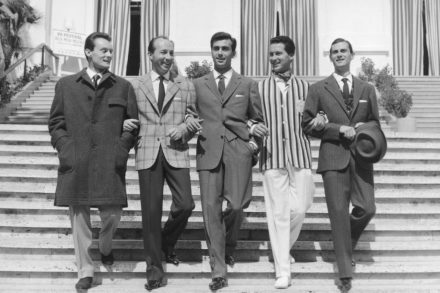
Last week I walked along Jermyn Street, spiritual home of the gentleman’s suit, and noticed something shocking. The jackets in the shop windows had lots of materials — tweed, cotton, wool — in all colours, shades and checks. But every single jacket had two buttons. When did tailors get so boringly uniform? Why has the three-button suit — the classic style that dominated the 20th century — been wiped off the map? As a diehard three-button man, am I a fogeyish dinosaur, a walking Bateman cartoon: ‘The Man Who Wore a Three-Button Suit in the 21st Century’? I seek solace (and a new three-button suit, in storm- grey, 13-ounce birdseye wool) from Tina Loder, a tailor for more than 30 years, and one of the few women tailors on Savile Row.