Social history

How have we allowed star ratings to take over our lives?

From our UK edition

Sometimes I like to imagine who I’d be without the internet. A better person, for sure. A person who has read more novels, possibly written one, and spent considerably less time bickering with strangers. But what if there are other, more profound, ways in which going online has changed me? That’s the question addressed by both Benji Wilson and Kathryn Jezer-Morton in these books, which look at how the commodifying grammar of the internet has insinuated itself deep into our personalities. One explores the way we behave as consumers, and the other examines the way we shape ourselves for consumption: together, they offer a depressing insight into the way we live now.

Do we really want to live in a world where we’re perpetually spied on?

From our UK edition

Some people think that the United Kingdom ranks as an unusually surveillance-heavy society, what with all the CCTV installations, doorbell cameras and automatic number plate recognition systems that have proliferated in the public sphere – but they would be wrong. In fact, according to Ruben Andersson’s Age of Security, the whole world is sliding towards a state of perpetual surveillance, where everybody is spied on all the time, by cameras and communications interceptions and data capture, without debate or accountability or even much public reflection on what is happening. Do we actually want to live in this state of heightened supervision, looked over by what we are told are ‘machines of loving grace’ (as the novelist Richard Brautigan once wrote)? Does it matter?

Finding happiness in simple tactile pleasures

From our UK edition

When I confess that this is the first self-help book I’ve read, I’m also confessing to a minor but pointed snobbism. Sadly, I’m self-satisfied (as many snobs are), which perhaps explains my conviction that self-help books don’t help. Worse, I believe Ian Bogost’s The Small Stuff is well-meaning, reasonable and fundamentally right about how to live one’s life. The author is laudably passionate about gratification – or ‘itty-bitty fulfilment’, to borrow his phrase. Unknowingly, I was already following his self-help prescriptions – so to me they’re of no use.

Good moaning: the subversive sitcoms of the 1980s revisited

From our UK edition

The foundations of all British situation comedy were laid by Charles Dickens. If you were to remove that tiresome fun-sponge Little Nell and her wholly meaningless death from The Old Curiosity Shop, for instance, you would have before you, in more pleasing proportions, a rich array of recurring comic characters in a variety of scenarios. There are Kit Nubbles and his oyster-adoring family; Abel Garland and his anarchy-prone pony; the preposterous boulevardier Dick Swiveller; and of course the monstrous Daniel Quilp, at war with his wife, his mother-in-law, and the boy who walks on his hands outside the wharf window. The point is that you look forward to seeing them all; it’s not so much about wit as about foibles.

Disability is becoming the new normal

From our UK edition

Before I became confined to a wheelchair two years ago after an operation for a spinal abscess, I’d never read a book about disability. More remarkably, considering the tiny amount of time it would have taken, I’d never read a newspaper article about it either. The only media stories about disabled people I’d bothered with concerned famous sufferers, such as Christopher Reeve and Robert Wyatt. I’d also followed with voyeuristic revulsion the 2021 story of Giles Coren celebrating the death of the young, working-class, disabled journalist Dawn Foster after she’d had the temerity to cross him. So there you go. My concern with disability was confined to where it overlapped with showbiz and media.

Do single women bother to cook for themselves?

From our UK edition

‘Let us begin with cookbooks. Or, rather, with a rejection of them. I cannot look at mine. They remind me of a person I no longer want to be.’ This is a bold start for a book whose title contains the word ‘cookbook’; but then much of The Spinster Cookbook is a subversion of the domestic and the expected. It is, for starters, not a cookbook (though it does contain a few recipes) but sits in several different realms: it is Eli Davies’s personal narrative, edging into memoir; it is a review of spinster literature from the interwar period onwards, taking in everything from Lolly Willowes to Sex and the City; it is a meditation on what it means to make a home; and it is a manifesto on different visions for co-existing. It is not a paean to cosy solo domesticity.

Are good people made by good surroundings, or the other way round?

From our UK edition

How can Britain cut its spiralling benefits budget and the number of alienated youths spending taxpayer-generated monies on frivolous consumer goods, facing off against the police and making life unpleasant for those of us not involved in creating poverty porn documentaries? Traditional answers – such as colonising Africa or declaring war on, let’s say, Russia – are off the table. Drones, AI and our defence budget mean that there is no prospect of a Crimean War II, led by the kind of martial Britons who so frightened the Duke of Wellington on the Peninsular campaign. What then? Britain’s current problem is one that the heroes of Joad Raymond Wren’s scintillating book never had: a complete want of thinking outside the box.

Who needs an Italian beach when we have our own lidos?

From our UK edition

With his 2012 book, The A303: Highway to the Sun, the author and psychogeographer Tom Fort pulled on his driving gloves, got behind the wheel and took us on a journey down the royal road to the West Country and to la Grande Bretagne profonde. Now, in this highly entertaining, informative new study – observant and lightly nostalgic in a similar way – he guides us round our lidos, the outdoor swimming pools which sprang up all over Britain in the 1920s and 1930s, designed and bankrolled by confident, imaginative local councils in the hardy fresh-air-and-fun enthusiasm of the time.

Will robots simply bore us to extinction?

A few years ago, when ChatGPT and Claude were beginning to take off, some tech leaders seemed to develop a curious interest in oceanography. Consider, for instance, the Microsoft CEO Satya Nadella’s suggestion in 2023 that AI ought to be compared to a ‘tidal wave’; or Mustafa Suleyman’s book on AI, The Coming Wave (2024), in which the DeepMind co-founder talks urgently about an ‘impending deluge’ (while repeatedly warning us that the ‘wave is coming’, and, even more alarmingly, ‘the coming wave really is coming’). It didn’t take long for the analogy to spread. The IMF’s Kristalina Georgieva would liken the technology to a ‘tsunami hitting the labour market’.

The humiliating truth about the way we think

From our UK edition

Over the long span of human existence, different cultures have held varying notions as to how responsible we are for our own thoughts and beliefs. Before the dawn of the Abrahamic religions, and in places untouched by these faiths, it tended to be the rule that individual members of the group could only be understood as parts of the whole, or in the grander cosmic scheme of things. The ascendence of Christianity in Europe, with its idea of the indivisible soul, tilted matters more towards a belief in individual agency and accountability. This concept, secularised by Descartes, who gave us the commanding rational ego, has proved resilient ever since, despite the best efforts of Freud, neuroscience and gene selection theory to dethrone it.

How the 18th-century Panopticon inspired today’s giant distribution hubs

From our UK edition

The future of work is increasingly on our minds. Now that AI is coming for our jobs, will we end up supervising or being supervised by it? One way of spending the time freed up by smart tech is to read Control Science, an economic history showing how work rules were established and have since come to dominate our lives. The book’s timeline covers the past 400 years, its settings ranging across the world from North America to Europe to Japan and back to the US. A historian of labour, Henry Snow dissects four entrenched ideas: that society is a mere collection of individuals; that they are solely driven by selfishness; that they are therefore incapable of self-administered planning; and that ‘everything is – and should be – a market’.

The nightmare of filming A Hard Day’s Night

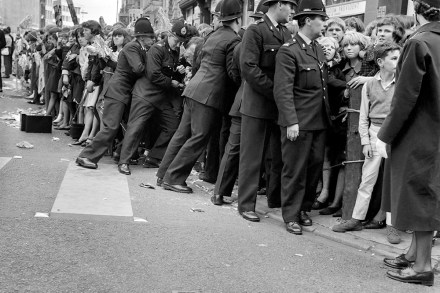
It would be easy to dismiss A Hard Day’s Night, the Beatles film made in 1964, as a throwaway period piece. The plot hurls the Fab Four into a meta narrative, playing themselves while a director – a seething Victor Spinetti – panics as the boys are delayed on their way to a televised variety performance by mishaps, distractions and stampeding fans. The film was thrown together to fit the group’s breakneck schedule – scripted over a few weeks in January by Alun Owen, shot by Richard Lester by May and out in cinemas in July. In her absorbing, concise book, Samira Ahmed sees the film not as a cursory promo but as a watershed in British culture – ‘a kind of cinematic big bang’.

Expect toddlers and parlour games at today’s dinner parties

From our UK edition

When I was in my twenties and giving dinner parties every week, I came up with a couple of money-saving devices. First, no snacks. This also ensures that, by the time dinner is served, your guests are so hungry they’ll mistake almost anything for a masterclass. Second, invite people on a Monday evening, so they won’t stay too late. As my millionaire cousin likes to say: ka-ching! I mention all this because one reason people don’t give more dinner parties is that they think they’re too expensive. Another is that they’re afraid of being judged. I remember being taken aback when a guest of mine said she would never dare to give a dinner party.

When did you last see your siblings?

From our UK edition

I recently arranged to have dinner with my brother and sister. No big occasion. Just a casual pub meal on a normal weeknight. As the eldest, my sister naturally chose the venue. As the youngest, my brother kept us entertained. Me, the middle child, I mostly sat and listened. It was fun. We caught up on news, reminisced, laughed and, true to form, studiously avoided any old hurts. As Catherine Carr reminds me in this lively and revealing book on the ins and outs of siblinghood, these two people have known me longer than almost anyone on the planet. When my parents pass, no one but them will understand what I mean by ‘guggy’ (a ragged baby blanket that never left my side) nor recall the giddy excitement of spending our sweetie money after Sunday morning swimming.

Will the ‘bunny boiler’ tag continue to haunt single women?

From our UK edition

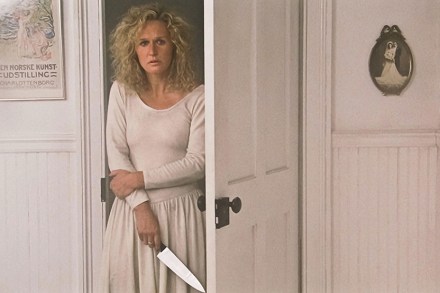
Even if you’ve never seen Adrian Lyne’s 1987 thriller Fatal Attraction, you’ll know what a ‘bunny boiler’ is. When Alex (Glenn Close) slaughters her lover Dan’s family pet and leaves it simmering on the stove, she invented a universal shorthand for the obsessive, unstable woman who can’t take romantic rejection. In the film, Alex is portrayed as the destroyer of domestic happiness: an embittered career woman on the wrong side of 35, who is made literally sick when she spies on the contentment shared by Dan (Michael Douglas), his wife and his daughter. Audiences loathed her. Susan Faludi, in her book Backlash, reported cries of ‘Kill the bitch!’ and ‘Punch the bitch’s face in!’ during the film’s violent climax.

The radical power of sentimentality

From our UK edition

When Samuel Richardson’s Pamela was published in 1740, it unleashed something unprecedented in literary history. This epistolary novel about a virtuous servant girl resisting her predatory master saw new depths of feeling on the printed page, reducing readers across Europe to tears. The revolutionary impact of emotion informs Ferdinand Mount’s ambitious cultural history, Soft. The former TLS editor and one-time head of Margaret Thatcher’s policy unit has crafted what reads like an elegant love letter to the human heart itself. Mount grasps an important truth: emotions do not mean the same thing across time, nor are they consistently valued in the same way. What one era celebrates as virtuous emoting, another dismisses as mawkish excess.

The gay rights movement threatens to implode

From our UK edition

In the UK and elsewhere in the West, lesbian and gay rights have largely been won. Over the past two decades, rights to adoption, marriage, military service and workplace protection from discrimination have become law. Social inequality is another matter, and acceptance of same-sex relationships is now less widespread than it was ten years ago. According to Ronan McCrea, the author of The End of the Gay Rights Revolution, this can be explained – at least in part – by the political overreach of the LGBTQ+ movement. Is McCrea self-hating, riddled with internalised homophobia? Could it be that the movement has demanded too much, over and above acceptance and tolerance? As the title suggests, the book is a critique of the overreach and demands of some of the more radical campaigns.

Dark secrets of the British housewife

From our UK edition

Women and their guilty secrets; women and their innocent secrets; women and men’s secrets; women and state secrets; DNA tests busting women’s secrets – in her enticingly titled The Book of Revelations: Women and their Secrets, Juliet Nicolson comes at her subject from all possible angles. There is also a strongly feminist emphasis on wronged women across generations (Nicolson’s family included) who have somehow been coerced into keeping dark secrets by abusive men – or sometimes by abusive women. One such abusive woman was Phyllis Eliot, the headmistress of West Heath School, near Sevenoaks in Kent, during the late 1950s and early 1960s. Known as ‘P’, she used to kiss every girl goodnight in bed.

Why would your dead daughter climb out of her grave to harm you?

From our UK edition

Yarnton, Oxfordshire. A teenage girl is dumped face down in a pit, her legs bent and tethered. Around her lie the crania, jawbones and ribs of several children. Taken alone, this scene of 9th-century carnage puzzles as much as it horrifies. When placed in the wider context of a seemingly universal need to ensure that the dead stay in their graves, it’s highly suggestive. The subtitle of the medieval historian John Blair’s Killing the Dead is a tease, since vampire fiction is almost an afterthought. Folklore and imaginative literature are carefully separated from archaeological evidence.

Progress is destroying the planet: the rants of a self-hating American

From our UK edition

In what may be the only joke in this book – it is hard to tell, because quite often reading it I started to believe the whole thing was an elaborate parody – Samuel Miller McDonald begins his acknowledgements by expressing his ‘infinite thanks’ to his editors (he merits six of them) on the grounds that ‘no work can be good without good editors’. Apparently some works can’t be good even with good editors – unless the author is trying to tell us that his, like his oeuvre, weren’t especially good at all. Progress is a prolix, tendentious book, radiating self-regard, arrogance and flannel.