Olivia Potts

Olivia Potts

Olivia Potts is the Guild of Food Writers’ Cookery Writer of the Year 2025. She hosts The Spectator’s Table Talk podcast and writes Spectator Life's The Vintage Chef column

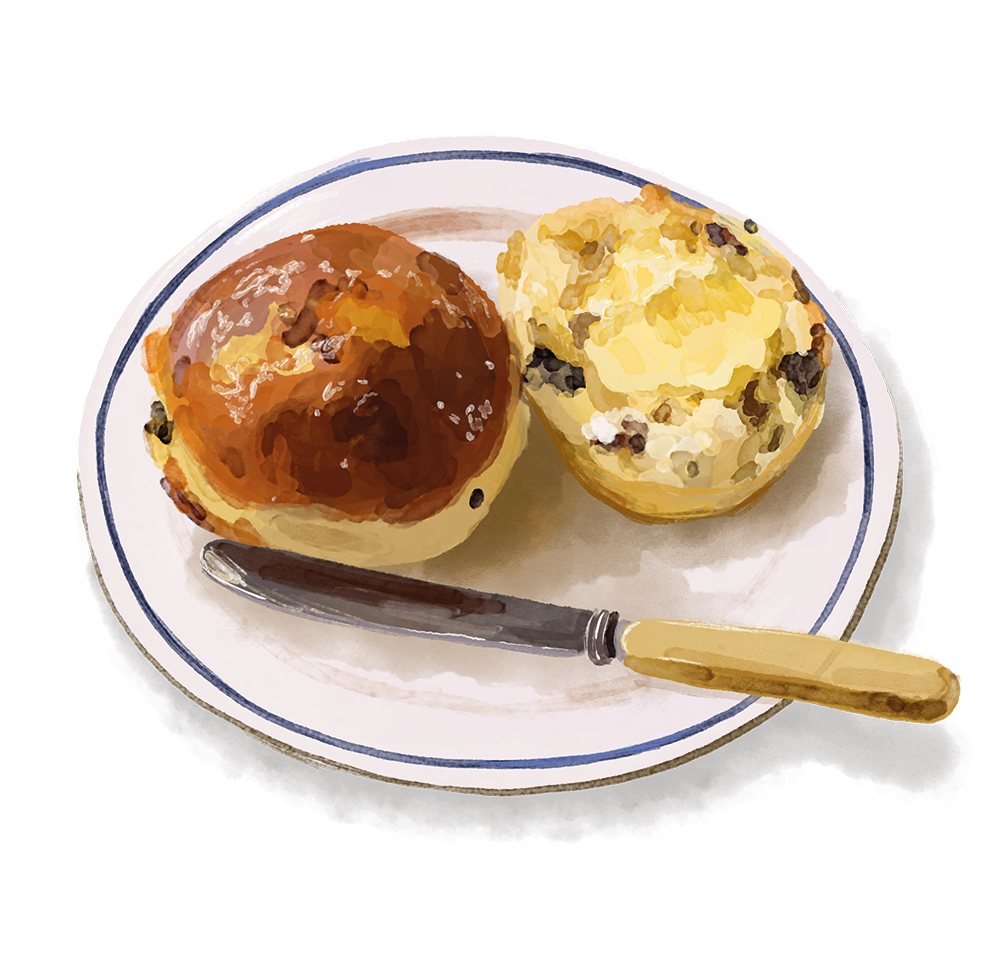
Cornish buns are still my no. 1

From our UK edition

I spend rather too much of my time mentally ranking foodstuffs, as if at any moment I might be called upon to deliver an ordered list of pizza toppings or commercially available chocolate bars, and that the task would have some sort of bearing on national security or the welfare of my family. Should a jambon beurre or a falafel wrap sit higher on the list of Lunches From Pret? (I’m pretty sure it’s the jambon beurre.) The rankings change according to the season, day of the week, and my mood. But when it comes to sweet baked goods, I feel like I’m being asked to choose between my children. How does one pick between an almond croissant and a yum-yum? Are brownies and cookies in the same category as one another? Do seasonal bakes count?
Anthony Horowitz, James Heale, Angus Colwell & Olivia Potts

From our UK edition

17 min listen

On this week’s Spectator Out Loud: Anthony Horowitz explains why he’s no longer excited to see his name in the newspapers; James Heale tells us what the mid-term fallout means for Farage; Angus Colwell looks into why the UK's AI hopes are falling apart; and Olivia Potts muses on all things pineapples.   Produced and presented by Abigail Brierley.

Anthony Horowitz, James Heale, Angus Colwell & Olivia Potts

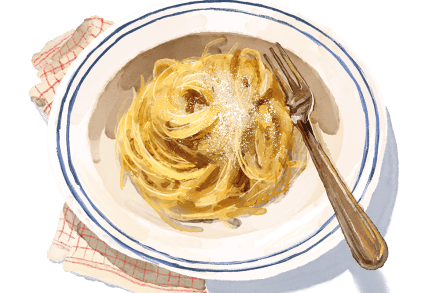
Cacio e pepe demands faith

From our UK edition

Ah, the esoteric joys of English cookery: parakeet-coloured mushy peas; the distinctive texture of a pork scratching; those little pellets of suet. Puddings which are in fact savoury. Other puddings made of blood. And the names: toad in the hole, spotted dick, bubble and squeak. Aren’t we a weird bunch? It’s time to stop beating around the bush: this recipe has nothing to do with British food. I’m going to give you a recipe for a true Roman classic recipe: cacio e pepe. But I confess I have committed a cooking heresy by introducing a rogue ingredient – butter. Cacio e pepe is simple in its conception: a pasta dish coated with a cheese (‘cacio’) and pepper (‘pepe’) sauce.

The polyamorous side to pineapples 

From our UK edition

The customer is always right, right? As one Italian chef, Davide Tamburella, found out to his detriment last week, they are when it comes to pizza toppings. Tamburella, head chef at a Brisbane restaurant, took his boss to Australia’s Fair Work Commission claiming unfair dismissal after he refused to put pineapple on a pizza, calling it an ‘insult to his culture’. He lost. It’s a hell of a hill to die on. It probably didn’t help that Queensland is rather fond of pineapples: it produces all of Australia’s, and a 52ft fibreglass model of one is a popular tourist attraction. But pineapple has always stood for more than just one of your five a day.

Noa Hoffman, John Power, Martin Vander Weyer & Olivia Potts

From our UK edition

29 min listen

On this week’s Spectator Out Loud: Noa Hoffman’s Tel Aviv dispatch explains the state of the Israeli elections; John Power looks at Miatta Fahnbulleh’s remarkable family history; Martin Vander Weyer wonders what the pedestrianisation of Oxford Street will mean for London; and Olivia Potts looks at beignets in New Orleans.   Produced and presented by Abigail Brierley.

Noa Hoffman, John Power, Martin Vander Weyer & Olivia Potts

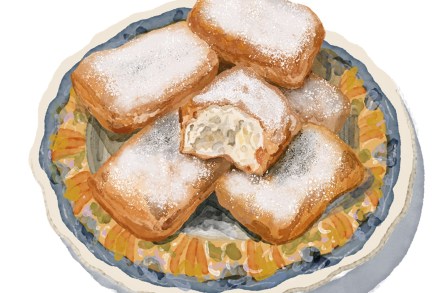
Beignets never quite made it out of New Orleans

From our UK edition

Beignets are one of those unusual foodstuffs that are on the one hand wildly popular in their birthplace, even going so far as being part of its sense of identity and tradition, but despite this having for some reason never quite made it beyond state or county lines. For at least the past 165 years they have been virtually synonymous with the city of New Orleans, a must-try on the tick-list of every visiting traveller, and a genuine punctuation in the day of many New Orleanians. But for whatever reason, beignets simply haven’t spread to other regions or countries. Of course, this also means that they haven’t been adopted and then bastardised, deconstructed and reconstructed, gone viral and then become passé and finally been rediscovered. None of that.

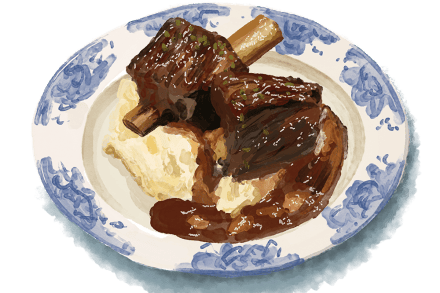
It’s the season of short ribs

I hereby officially declare autumn open! I am picturing myself bedecked with a wreath of perfect autumn leaves. The bright October sun beams down, warming the cool, crisp air. I am dressed in jewel tones – possibly a cloak – and I’m cradling a pumpkin in one arm and holding a leek in the other, my own autumnal orb and sceptre. There are conkers all around. The reality of autumn is probably more prosaic: an oversized sweatshirt, some gravy smeared up my forearm, and a grimly determined look as I gaze on the pumpkin and leek lying on my chopping board. It’s probably raining. But I am certainly surrounded by conkers, thanks to my small kids. Still, the feeling is the same: it’s exciting when it’s time to begin cold-weather cooking.

A literary romp: Our Noble Selves, by Kate Atkinson, reviewed

From our UK edition

It is hard to imagine a setting better suited to bureaucratic absurdity than the lead-up to the 1951 Festival of Britain. Conceived of as a tonic for the battered postwar nation, an exercise in rebuilding, hope and celebration, it captured British eccentricity. There was even an ‘Eccentrics’ Corner’, designed to show off the ‘fertile madness of the British character’, which featured among other things the Festival emblem made up of 604 gallstones – all belonging to one patient. When Kate Atkinson tells us at the beginning of Our Noble Selves that ‘the Festival was due to open in a handful of weeks and absolutely nothing looked as if it would be ready’, we can be in no doubt that we’re in for a good time.

Aunt Bessie did not need a ‘glow up’

From our UK edition

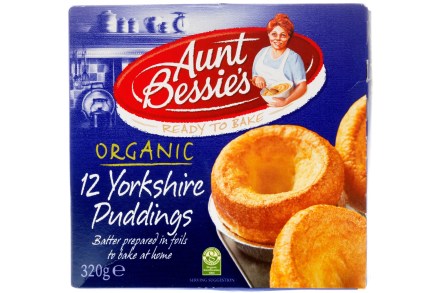
Society has always had an issue with women aging. As cosmetic surgery becomes cleverer, more subtle, and more widespread across women in the public eye, it can feel taboo to allow the smile lines to stay, the grey hairs to amass. To not seek to dye, to slim, to trim, to tighten, to pull, to tweak, to cover up – no, to defy! – the physical symptoms of the inexorable human process of getting older. Men mature like fine wine; women decay like compost. Or so we’re led to believe. But even in that context, the decision of a certain classic British brand to give their older, maternal (cartoon!) figure a ‘glow-up’ which, essentially, amounts to making her look considerably younger, feels like we may have entered the twilight zone.

There is no substitute for homemade cannoli

From our UK edition

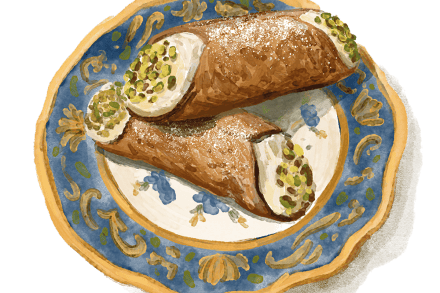
A criticism often levelled at cookery writers is: ‘I could just buy that at the supermarket’, which is an apparent slam-dunk counter to the time and effort needed to make the thing yourself, i.e. why would you bother? With such people, I find myself stutteringly defending cookbooks, recipes and the practice of cooking as a whole. My defence is both obvious and compelling: I can make it better, I can make it cheaper, I know exactly what’s going into it if I’ve made it and, crucially, cooking is one of life’s pleasures. I actively enjoy kneading and proving and waiting and peeking in the oven and stirring and whisking and slicing. Making the thing is often the whole point – the end result a delightful by-product.

The myth of authentic English food

From our UK edition

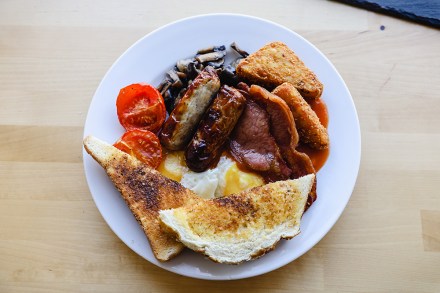
There were two butcher’s pork pies in my bag that also contained a copy of Lewis Bassett’s The Full English. As I began reading this investigation into the story of English food, having those pies on my person felt particularly in keeping with the English culinary tradition. By the time I’d finished the book, I was not so sure. Bassett sets out on well-trodden ground to ask: what is English food? He focuses on a clutch of dishes or products which have long been seen as important to, or turning points within, English food culture: bread, haute cuisine, curry, fish and chips, roast beef, sausage rolls, olive oil. So far so conventional – but that’s rather the point. His contention is that much of our received wisdom about English food is reductive or simply wrong.

For me, cornbread will always be romantic

From our UK edition

My early days of baking coincided with the early days of dating the man who became my husband. It is no coincidence that many of those dates revolved around cooking together, shoulder-to-shoulder in his too-small south London kitchen. He was a pretty competent and confident cook; I was an eager and naive idiot, but keen to learn. Slowly (very slowly) his knowledge and skill rubbed off on me. There were some unmitigated disasters (the less said about our Scotch egg attempts the better; did you know it is possible to cock them up in five separate ways?). Others were qualified successes (a coffee and walnut cake which slopes at a 45° angle is still a coffee and walnut cake). But the first ever cornbread I baked was glorious on our first attempt.

Blackberries wait for no woman – so make jam

From our UK edition

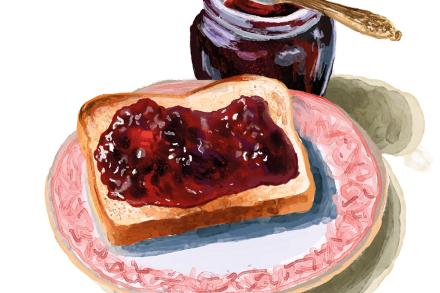
My kitchen is not ready for blackberry jam. I am not ready for blackberry jam. The heat of summer is still beating through my windows; the grass is still a brown dust; I haven’t corralled my jars or set aside preserving time. Nor have I turned my thoughts towards the fruit. I still think of blackberries as a back-to-school fruit: a signifier of autumn and all that goes with it. It just doesn’t feel like blackberry season. But it is, and the brambles wait for no woman. For several years now, the blackberries have been coming earlier and earlier. Right now, the ones near me are at perfect ripeness. A few days ago, they were tight, reluctant to let go of their star-like calyx. They may have looked dark and inky, having changed from their earlier pallid pink, but they weren’t ready.

How to do a salade Lyonnaise justice

From our UK edition

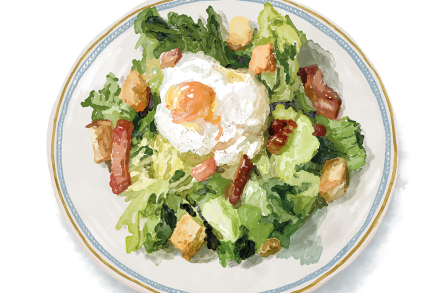
Salade Lyonnaise is often translated as ‘bacon and egg salad’ and I can’t stand it. Not because it’s inaccurate – beyond the salad leaves and the dressing, the only other non-negotiable elements of the dish are, indeed, bacon and eggs. But it feels like it misses the point. To the English ear, bacon and egg salad sounds like a lacklustre version of a full English – two items chucked into a bowl of leaves because we’re trying to cut carbs. It also – and I am aware this is just me – makes me picture the egg scrambled, and the thought of scrambled egg in a salad is horrible. ‘Bacon and egg salad’ doesn’t do the elegant, balanced and punchy salade Lyonnaise justice.

Grasshopper Pie is like a teenage fever dream

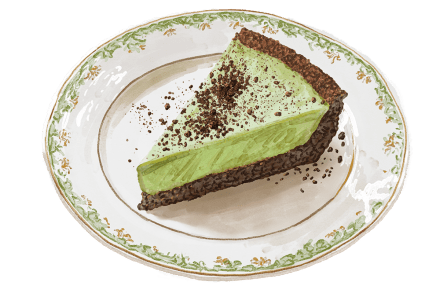
Grasshopper pie is an unlikely dish: bright green, mint-flavoured, combined with obscure liqueurs and set with marshmallows, all sitting in an Oreo crust. It feels like the fever dream of a sweet-toothed teenager who’s been let loose on their parents’ drinks cabinet, and will regret it tomorrow. The pie is based on the cocktail of the same name, which combines equal parts crème de menthe, crème de cacao blanc and cream. It’s a heady mix of mint, white chocolate, dairy and alcohol. The cocktail hails from New Orleans and its origin is claimed by Tujague’s in the French Quarter, where it was supposedly invented by the owner, Philip Guchet, in 1918. It tastes exactly as you’d imagine and is, forgive me, far better suited to a pie filling than it is to a drinks party.

All aboard for Paisley: a trip round unloved Britain

From our UK edition

‘Most people who have been to Crewe station have never been to Crewe.’ In a moment of serendipity, my train pulls into Crewe station at the exact moment I turn the page to begin the chapter ‘Changing Tracks’ in Chris Moss’s new travelogue Where Tourists Seldom Tread. In his Guardian column ‘Postcards from Britain’, Moss visits and reconsiders ‘improbable, bypassed and unloved’ destinations, such as Warrington, Gateshead, Paisley, Clacton-on-Sea – and Crewe, which my train from London has reached after no small delay. Moss is right, of course: I have travelled through Crewe more times than I have eaten disappointing Upper Crust baguettes, but I have never actually been into the town.

My quest for the perfect muffuletta

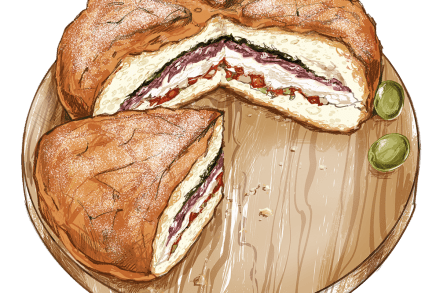
Everyone knows the story of the Earl of Sandwich: keen not to interrupt a late night card game at his club, he asked for roast beef to be sliced and put between two slices of bread, to allow him to eat it with his hands without stopping his game. And lo, the sandwich was born. But perhaps less familiar to us is that 140 years later, some 4,500 miles away from the Earl’s cribbage game, another problem was being observed, and was solved in a strikingly similar way. The turn of the 20th century saw an influx of Sicilian immigrants to New Orleans; almost 300,000 arrived in the city between the 1880s and 1920s, setting up shop (literally) in the French Quarter, in an area that became known as Little Palermo.

Drop the wacky wedding stunts 

Picture the scene: it’s midsummer, a bucolic wedding is mid-flow, the bride is radiant, the groom pristine. They stand above their guests in a doorway while caterers ascend the stone staircase carrying the ceremonial wedding cake. But wait! One of the caterers is wobbling! The cake is slipping! The caterer reaches for it but it falls from his hands and tumbles to the ground: splat. A dog appears from nowhere and begins to eat the crumbs. And all of it, every excruciating moment, is captured on camera. Is this one of my night terrors? Well, yes, but it was also the wedding of Anna Boden – the eldest daughter of Boden clothing founder Johnnie – to her now husband Oliver last week.

I keep being fooled by ‘ripen at home’ 

From our UK edition

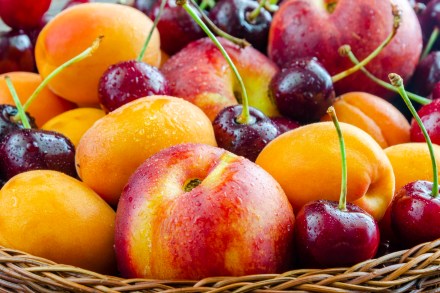
Is there a greater scam than the ‘ripen at home’ punnets of fruit that the supermarkets flog? Flimsy netted plastic of peaches, plums and apricots promise so much and deliver so little. When ripe, they need nothing doing to them at all; even cutting them with a knife feels like overkill. But, when they don’t, the result is miserable: their wooly flesh clings to the stone for dear life, and to call the flavour lacklustre would be giving it too much credit. In theory, these fruits should be a joy: representing the bounty of the season. All they should need is a day or two on the counter before they’re ripe for the taking.

Goat is tasty. But don’t force it on me

From our UK edition

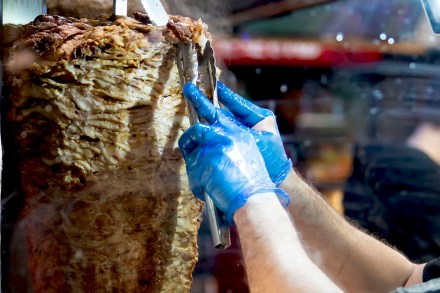
‘Laws, like sausages, cease to inspire respect in proportion as we know how they are made,’ John Godfrey Saxe warned way back in 1869. His jab was really at the ugly business of law-making rather than sausage production, but it was the sausage portion of the phrase that really stuck. The same could be said to go double for doner kebabs, which – in order to create their distinctive cone-like, shaveable structure – are often significantly more processed than the banger. And now the kebab and the law have collided.