
‘Let us begin with cookbooks. Or, rather, with a rejection of them. I cannot look at mine. They remind me of a person I no longer want to be.’ This is a bold start for a book whose title contains the word ‘cookbook’; but then much of The Spinster Cookbook is a subversion of the domestic and the expected.
It is, for starters, not a cookbook (though it does contain a few recipes) but sits in several different realms: it is Eli Davies’s personal narrative, edging into memoir; it is a review of spinster literature from the interwar period onwards, taking in everything from Lolly Willowes to Sex and the City; it is a meditation on what it means to make a home; and it is a manifesto on different visions for co-existing.
It is not a paean to cosy solo domesticity. After a seismic break-up in 2017, the author found herself living alone on the north coast of Ireland, writing a PhD thesis. But ‘this book’, Davies tells us up front, ‘isn’t really about how cooking saved me’. Instead, it is an unflinching reckoning with ‘the burden of having to feed myself in this period, to make a decision every single day’. It grapples with a push-pull longing for, and rejection of, conventional homemaking. It is more about behaviour and domestic identity than anything else. Often it is about the act of not cooking.
The spinster – a ‘childless, unmarried, celibate woman’ – presents a challenge to societal norms. And, as Davies quotes the author and lecturer Kate Bolick, the spinster is also a ‘lightning rod for attitudes towards women in general’. What, Davies asks, is left when we strip away the ‘care element’ of cooking? There is then something radical about the spinster – uncomfortable, even. What happens when we don’t sublimate our own appetites to those we share a domestic space with? A lot of toast, it turns out.
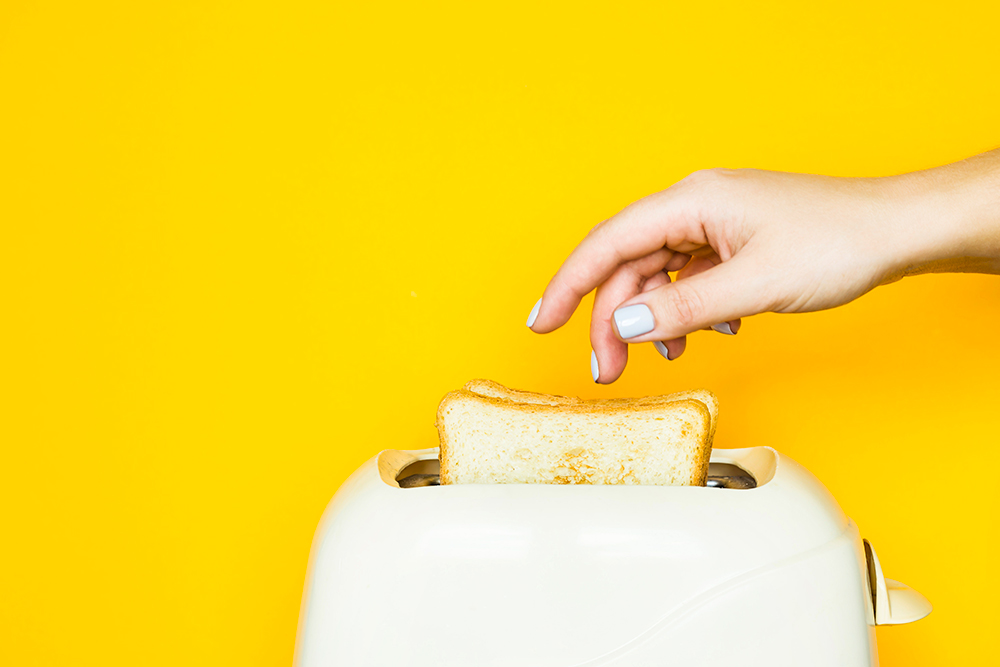
The first meal the book focuses on is in fact vodka and toast. One night, after work, Davies’s intention of preparing a normal supper is replaced by slices of toasted Hovis granary, heavy with salted butter, eaten alongside freezer-cold shots of Stoli. Gradually, toast replaces the need or desire for a ‘proper’ meal and Davies is ‘giddy from the realisation that I don’t have to make dinner and no one can make me’. This deliberate rejection of cooking, and even meals themselves, is liberating. Her spinster approach to food isn’t aspirational but honest and quietly radical. She canvasses her spinster friends for their solo meals-that-aren’t-meals: ‘I kicked off with toast and cigarettes; then one friend responded “Kettle Chips and a satsuma”, with another writing “a handful of grated cheese”. Like I said, feral.’
The Spinster Cookbook is timely: one-person households have risen by more than 11 per cent in the past ten years, with 8.4 million people living alone. In a rental housing market which can outprice the single person, ‘homemaking, and by extension cooking, is far from straightforward’. Despite her mixed feelings about cooking and caregiving, Davies sees making a meal and eating it together as a forum for connection, and she is at her best when looking at the physical spaces in which cookery takes place. Her final chapter on canteens and cooperatives, and what can be built figuratively and literally outside of conventional structures, is hopeful and dynamic.
Davies is not the first person to write about the pleasures of feeding oneself without it being an ‘act of service’ (those words are, in fact, Nigella’s); but she does so by taking in the breadth of the spinster experience, and with an honesty and thoughtfulness that make the reader reconsider the domestic space and what we take for granted within it.






Comments