Before I became confined to a wheelchair two years ago after an operation for a spinal abscess, I’d never read a book about disability. More remarkably, considering the tiny amount of time it would have taken, I’d never read a newspaper article about it either. The only media stories about disabled people I’d bothered with concerned famous sufferers, such as Christopher Reeve and Robert Wyatt. I’d also followed with voyeuristic revulsion the 2021 story of Giles Coren celebrating the death of the young, working-class, disabled journalist Dawn Foster after she’d had the temerity to cross him.
So there you go. My concern with disability was confined to where it overlapped with showbiz and media. This being the case, it would ill behove me to strike indignant attitudes now about how my kind are treated, reading my first book on the subject at the age of 66. It didn’t start well. There was a content warning, listing all the unpleasant things that the book might contain, signed off with ‘Please approach with care’. Surely it’s this sort of squeamishness that has made the disabled so invisible – a situation which this book seeks to right.
But it got much better. David Turner begins with an examination of 1821’s Biography of the Blind by James Wilson, a 37-year-old furniture restorer, who wrote ‘the first book to centre on the historical experiences of disabled people’. Sorry for myself because I was constipated (a common side effect of being in a wheelchair), I felt a mixture of admiration and annoyance at the roll-call of sightless heroes in history, from mathematicians to messenger boys – annoyance as it made me feel like a self-pitying lump. All I have to do to make a living is wheel myself from bed to chaise longue, turn on my laptop and proffer my opinions. I’ll never be one of the brave disabled. But I do like reading about them, on balance, in the way that any generous person enjoys excellence in others.
Moving on to the disabled in general, I was interested rather than offended by the names we have been called in the past. ‘Impotent’ and ‘monstrous’ stand out; ‘cripple’ is deemed a bad word here – but I often describe myself as such, whereas I swerve the gentler ‘lame’, with its connotations of not being good at what one does.
Though the book is well written there are some knee-jerk ‘progressive’ ideas which weaken it, such as the mandatory Britain-bashing in the quote from the journalist Frances Ryan: ‘Britain is a country profoundly uncomfortable with disability and difference.’ Compared to what other country? I wonder whether she or Turner have read anything by the Indian-born, UK-residing disability activist Firdaus Kanga, who has written affectingly of the big difference between the attitude to the disabled in his birthplace and his chosen home. The Paris Metro is pretty much off limits to wheelchair users except for one line, which is not true of the London Underground.
I don’t think that linking the fight for disability rights with climate change catastrophists and the toy Trots of the Occupy movement makes any sense, and could actually put people off. And I’m always suspicious of those who approve of ‘neurodiversity’ being added to the disabled list. If, say, the journalist Laurie Penny were shipwrecked on a desert island, she’d soon get over her mental glitches and focus on survival. But I’d still be in a ruddy wheelchair and probably find it impossible to do anything practical in the surviving line.
I don’t get cross when people say nasty things to me because disability waits down the line for so many
So when the book tells me that there are more than 16 million disabled people in Britain today, I wonder how many of them might suffer from anxiety, which I would consider a normal part of life. I’m not nitpicking or trying some sort of ‘cripple-privilege’ here. Those with mild mental troubles would surely be better off having a job to go to rather than lying in bed contemplating their sorrows, real or imagined. The size of the benefits bill could break our economy if it continues to increase in the way it has. Then the rug would be pulled from under all our feet, able-bodied and disabled alike.
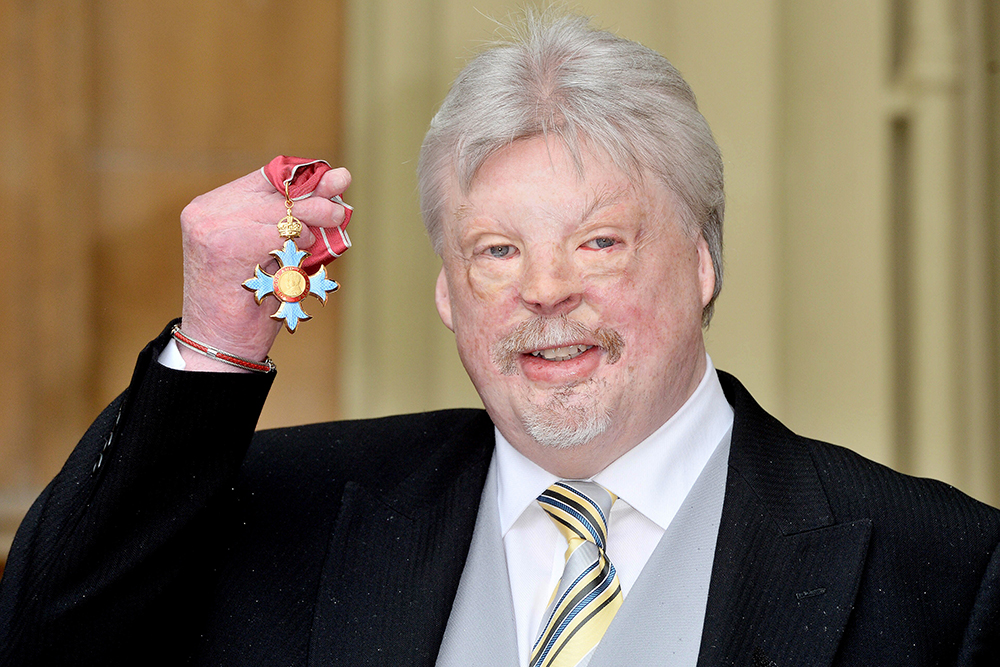
At the other end of the scale, we have the most deserving of the disabled, the war veterans, disfigured while either defending their country or attempting to conquer someone else’s. As early as 1593, the Act for Relief of Soldiers was introduced, apparently as much from fear of insurrection by angry, militarily trained men as from a desire for justice. ‘For returning soldiers, the step from war hero to object of disgust was just one festering wound away,’ writes Turner. This made me think of the loathsome people who complain when injured veterans use public swimming pools lest their children be frightened. Yet the national affection and respect for Simon Weston (not mentioned here – is it because ‘progressives’ disapprove of the Falklands War, even though it was against a fascist junta?) indicates that we have made real progress in recognising that disabled people are not lesser – and are sometimes even superior – in their achievements and productivity.

An omission in this wide-ranging book is the way my disabled brethren were at the forefront of the recent fightback against the assisted dying bill. On the one side are the ghoulish likes of Esther Rantzen and Kim Leadbeater; on the other, charming people such as Baroness Tanni Grey-Thompson, the paralympic multi-gold medallist, who warned that this was ‘a really dangerous path to go down’ . She feared that some disabled people might feel they had a ‘duty to die’ rather than be a ‘burden’ on society, as has happened in countries where euthanasia is legal.
One of the reasons I don’t get cross with people who patronise me or even say nasty things – like the man who hissed ‘people like you should be put away’ – is that disability waits down the line for so many. ‘Longer life expectancy means that most of us will become disabled… across the world; disability is becoming the “new normal”,’ Turner writes.
I still miss my old swaggering self and I doubt whether I’ll ever get over the shock of becoming a wheelchair-user overnight. But reading about the vast cast of disabled heroes throughout history has made it a little bit easier to soldier on.





Comments