Snp

Alex Salmond’s economic policies would drive an independent Scotland into the ground

Within the white paper on economic policy in an independent Scotland that was published by Alex Salmond’s government this week there is a liberal economic manifesto trying to get out. The First Minister speaks about using new ‘levers and instruments’ to revive Scotland and that, freed from Westminster control, he might lure businesses by slashing corporation tax, reducing national insurance contributions and cutting air passenger duty. Unfortunately, none of these ideas is likely to get off the page because the SNP has a much more prominent agenda which could not have been better designed to promote economic stagnation.

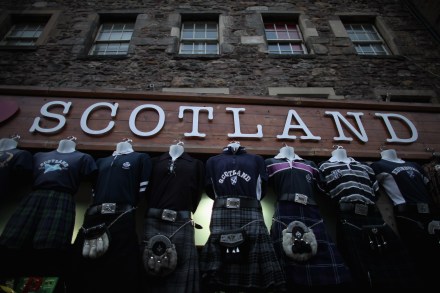
An Age of Tartan Austerity looms after Scottish Independence. There are worse fates than that.

The first thing to be said about the Institute for Fiscal Studies' latest assessment of an independent Scotland's long-term fiscal well-being is that the IFS's assessments of the UK's long-term vitality are also pretty gloomy. Neither is terribly pretty. Much the same, of course, could be said of France and, in fact, most other western countries. An Age of Plenty is being replaced by an Era of Making Do. Reality stings. So the difference between Scotland and the rest of the UK is one of degree not kind. Moreover, it would be wise to remember that these are projections, not predictions, and that they are largely based on present trends and assumptions. These have a habit of changing. So, for that matter, does policy.

One Great Thing gets embarrassing for the Yes campaign in Scotland

Big Country's song ‘One Great Thing’ is an anthem for the Scottish Yes campaign: it was soaring in the background during an item recorded at a ‘Yes’ rally on the Today programme the other day. And since Big Country's bagpipe-sounding guitars were one of the joys of my adolescence and I've been partial to a check shirt ever since, my heart soared along with it. ‘Yes,’ said Jim Lafferty from the Yes campaign's communications office, appropriately enough, when I rang to ask how it had come about. ‘It was suggested by Jim Downie and Will Atkinson of the creative team.’ I understood that they had not, however, spoken to the band, having gone straight through to the record company about the rights.

Scottish independence: the Union is endangered by premature and misguided complacency

Somehow I managed to miss Iain Martin's praise for the manner in which David Cameron has "handled" the referendum on Scottish independence. Happily, John Rentoul has prompted me to take a keek at Iain's article which, somewhat uncharacteristically, concludes that the Prime Minister has "played a blinder". This, as Mr Rentoul cautions, is premature praise. We are asked to believe that Cameron has pursued a policy of masterly inactivity. It is also suggested that securing a single-question referendum was a masterstroke rather than, well, the obvious outcome of a negotiating process between Edinburgh and London that was much less dramatic, and much less important, than everyone agreed at the time to pretend it was.

I see no ships (on the Clyde)

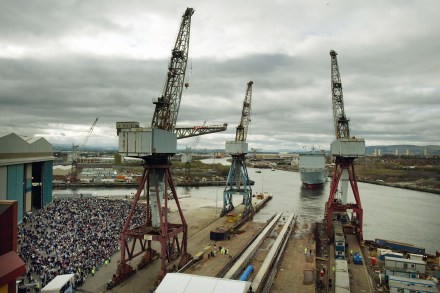
The sorry truth of the matter is that Glasgow has been in decline for a century. 1913 was the city's greatest year. Then it produced a third of the railway locomotives and a fifth of the steel manufactured anywhere in Britain. Most of all, it built ships. Big ships and many of them. A ship was launched, on average,  every day that year. In 1913, 23% of the entire world's production of ships (by tonnage) was built and launched on the river Clyde. It was an astonishing achievement and the high-water mark of Scottish industrial prowess. Ship-building, more than any other industry, became part of Glasgow's essence. The locomotives and the steel and the cars and the sewing machines might all disappear but so long as ships were still built on the Clyde something would remain.

Theresa May’s grubby little warning: an independent Scotland will be out in the cold

It is a good thing that government ministers come to Scotland sometimes. It is a bad thing that they insist on opening their mouths when they do. Earlier this year we endured the spectacle of Philip Hammond making an arse of himself; today it has been Theresa May's turn to make one wish cabinet ministers would, just occasionally, contemplate the virtue of silence. The Home Secretary was in Edinburgh to warn that an independent Scotland would be a dangerous place. It would, in fact, be left out in the cold. It would not, you see, be part of the English-speaking-world's Five Eyes intelligence-poolling network. The UK, United States, Canada, Australia and New Zealand will continue to share information. Little Caledonia will be left on the outside, all forlorn, friendless and at risk.

Life after Scottish Independence: lower taxes, lower spending, no free lunches

Every so often a report is published that cheers you up. Not because it contains any particularly good news but simply - that is to say, selfishly - because it appears to support notions you've held for some time. So trebles all round for the Institute for Fiscal Studies whose latest report on life in Scotland after independence is published today. Sponsored by the Economic and Social Research Council, the report concludes that 'an independent Scotland could face pressure between [a] need to lower tax rates and [the] need to fix its public finances'. Well, yeah. Some of us have been making this kind of case for some time now. It's just scaremongering, apparently. Except, of course, it is not. I've never supposed an independent Scotland must fail.

PMQs silence on Grangemouth benefits SNP

Ed Davey is currently answering an urgent question in the Commons on the Grangemouth petrochemical plant. He urged Ineos and Unite to return to talks, describing the failure of the negotiations as 'regrettable'. As the questions from backbenchers to Davey continue, it's worth noting that there wasn't a single mention of the plant at Prime Minister's Questions, even though the closure of that plant will lead to around 800 people losing their jobs. Ineos estimates that around 10,000 jobs rely indirectly on the factory. The SNP have already picked up on this silence, and can quite easily argue that it shows that Westminster doesn't care about jobs in Scotland.

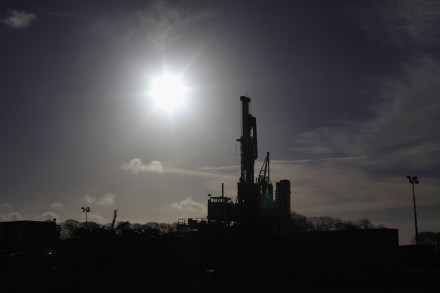
Why won’t the SNP embrace the shale gas revolution?

One of the odder elements of the current energy debate at present is that the political party that spends the most time talking about energy - that's the SNP by the way - is strangely reluctant to chase the opportunities afforded by the imminent shale gas revolution. It's a subject I consider in a column for The Scotsman today: Scotland’s oil resources are a vital national asset. Everyone, I think, knows this. If there were no remaining oil reserves waiting to be exploited in the North Sea, the economic case for independence would be severely weakened. Oil is a cushion and a comfort blanket.

Small Reshuffle in Britain; Not Many Dead

First things first: a reshuffle in which only one cabinet minister is sacked redeployed is a reshuffle in name only. It means the action - if you can call it that - is confined to the replacement of ministers of whom most of you have never heard with other MPs of whom you are most likely equally ignorant. A day of low drama in Westminster then. Secondly, ejecting Michael Moore from the Scotland Office is not, I think, a reflection on his performance. If he was an accidental Secretary of State whose elevation to the cabinet was the result of David Laws' disgrace, Moore still carried out his duties diligently - a very Michael Moore word, by the way - and without fuss or drama. Alistair Carmichael will, we are told, bring a more combative approach to the Scotland Office.

David Cameron ducks a debate with Alex Salmond. This makes sense but is still depressing.

A novice poker player quickly learns - or had better quickly learn - that strength often connotes weakness and weakness is a reliable indicator of strength. But as the stakes increase and the level of play becomes more sophisticated such elementary tells can be misleading. They are false friends in the land of the double and triple bluff. So a novice poker player might conclude that David Cameron's refusal to debate against Alex Salmond is a sign of weakness. A slightly more experienced player would think this weakness too obvious to be true and conclude that Cameron is holding better cards than he is indicating. And it is true: with the polls indicating a No vote Cameron has little need to risk a debate the outcome of which must be uncertain.

A Cheap Parcel of Rogues

What price a Scotsman's vote? About £500 apparently. Beneath a headline claiming 'New poll gives Yes campaign hope' The Scotsman reports that support for independence, as measured by ICM, rises to the giddy heights of 47 per cent if voters are told that they will be £500 a year better off in an independent Scotland. If this seems a disappointingly mercenary reason for voting Yes the same poll finds that many supporters of independence have their price. Only 18 per cent favour independence if, hypothetically, it were to leave you £500 a year worse off. The Incorruptible 18 per cent! Almost everyone else, it seems, has a price. Upon such things does the fate of nations hang.

Alex Salmond’s selective history lesson

The First Minister of Scotland is masterful at mixing anti-English rhetoric, rose-tinted recollections of Scottish history and no gloves politicking. When he does it right, it can be devastating. History is at the heart of his campaign for Scottish independence in the run up to the referendum, so I was surprised to see how quiet he is today over an important point in his nation’s heritage. How come the Scottish government are silent over today’s anniversary of the Battle of Flodden. Where is the usual fanfare? Could it be because the invasion of England cost James IV of Scotland his life in 1513, taking with him most of the Scottish aristocracy? The 30,000 invading Scots were not enough to defeat the smaller English army, and the ruling class of Scotland faced a near wipe out.

A Game of Numbers: Pollsters Go To War in Scotland

On Sunday an opinion poll was just a poll. Nothing to be too excited by. Unreliable too. The real poll - the one that counts - is still a year away. So put not your faith in numbers. Disappointment that way lies. On Monday the mood in the Scottish nationalist camp changed. Opinion polls now offered a persuasive and necessary reminder that Scotland's on the march. A march that ends in freedom and liberty and whisky next September as an ancient country reasserts her prerogatives  and takes here rightful place in the family of nations once again. Polls are pure dead brilliant, don't you know? From which you will gather that two opinion polls have been released in Scotland these past few days and they cannot both be accurate.

The Closing of the Nationalist Mind

A paper with the title Scottish Independence: Issues and Questions; Regulation, Supervision, Lender of Last Resort and Crisis Management is not one liable to set pulses racing on the streets of Auchtermuchty. Or anywhere else, for that matter. Nevertheless it is a matter of some importance. The paper, published by the David Hume Institute, was written by Professor Brian Quinn and reported upon by Bill Jamieson in today's Scotsman. According to Quinn, who is an expert of some standing in these matters, a currency union between Scotland and the remainder of the United Kingdom would - or at least has the potential to be - sub-optimal.

Two nations, two cultures? Britain is divided by the Trent, not the Tweed.

Of the many certainties those Scots in favour of independence hold to be self-evident two in particular stand out. First that Scotland and England are fundamentally different places whose political cultures are so divergent  they can no longer sensibly be expected to live together. Secondly that the British state is moribund and impervious to practical reform. They are nice theories. They persuade Yes voters that independence is both necessary and virtuous. The only wonder is why so many Scots seem so stubbornly hesitant about accepting these obvious truths. This may have something to do with the fact that neither of them is actually true. At least not obviously true. Take the second article of faith.

David McLetchie’s decency served the Tories well but they need bolder leadership now.

David McLetchie, who died this week aged only 61, was a politician who, in style and manner, rebuked those cynics who presume - lazily - that politicians go into politics to advance causes that have nothing to do with the public good. This may seem ironic given that his own stewardship of the Scottish Conservative and Unionist party was abruptly curtailed by a row over the misuse of parliamentary taxi warrants but there you have it. That "scandal" was, as Bill Jamieson reminds us today, typical of life at Holyrood: a micro-tempest in an espresso cup. Like the "scandals" that brought down Henry McLeish and Wendy Alexander it now seems embarrassingly trivial. Officegate, Taxigate, Giftgate: never before had this tedious suffix been so abused.

Nate Silver on Scottish independence: Alex Salmond has “no chance”

Nate Silver, in Edinburgh to punt his new book, appears to have annoyed some Scottish nationalists today. The "polling guru" (according to all newspapers everywhere) has told the Scotsman that he thinks Alex Salmond's merry bunch of nationalists have 'no chance' of prevailing in next September's independence referendum. It is true that Scottish politics is not Mr Silver's area of special expertise. It is also true that I am not sure his views are necessarily all that important. They do not carry top-weight in this handicap. I am not sure they merit being treated as some sort of Oracular revelation.

Independence would not change single ideology Scotland

There is probably no other country in the democratic West where the state oversees economic activity and regulates private life as thoroughly as in Scotland. So it has come as little surprise to learn of the latest plans of the government led by Alex Salmond. By next year, he hopes that every child will have a guardian with the legal authority to ensure that they are raised in a manner prescribed by the state. Alarm has been expressed that a government with no obvious answers for Scotland’s problems of de-industrialisation is compensating for its impotence by micro-managing the family in such a glaring way.  At least the ruling Scottish National Party acknowledges that the conventional family is in crisis.

Denial is a River in Scotland

Aye, the old ones are the best. You might think that George Osborne's decision to  leave the Scottish block grant more-or-less untouched in yesterday's spending review would be a cause for chuffedness north of the border. You'd think wrong. Osborne announced a 1.9% reduction in real-terms funds made available to the Scottish government. Alex Salmond's ministry will have to make do with £25.7 billion. All hail the Barnett formula since Mr Osborne's decision to protect health spending ensures that the funds available to Scotland are similarly guaranteed, minimising the ability to cut the block grant even if that were deemed economically - or, rather, politically - wise.