Slavery

Towards Zero: the gruesome countdown to the American Civil War

From our UK edition

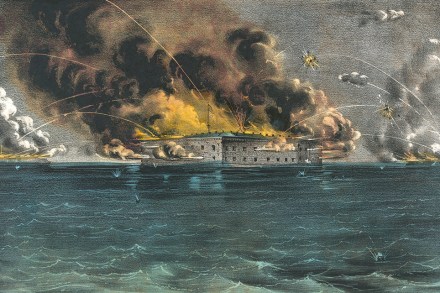
Some 100,000 books have been written about the American Civil War since it ended in 1865. That’s hardly surprising, given the four-year conflict’s impact on society, and not just because of the immense death toll, which new estimates put as high as 750,000 – more than the losses from all other wars combined. The effusion of blood created a new nation and a new mythology, anchored on the principles of freedom, equality and democracy. There is not much room in this crowded field for Civil War neophytes. Erik Larson knows what he is about, however, in The Demon of Unrest – but do his critics? The mixed reception this book has received suggests not.

A visit to the world’s worst capital city

From our UK edition

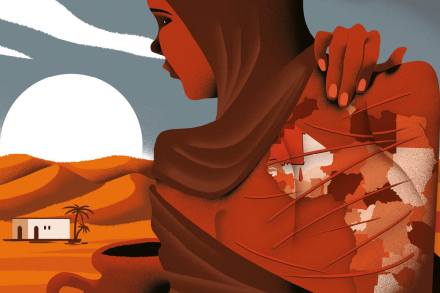
Nouakchott in Mauritania is often referred to as the ‘worst capital city in the world’. That may be a little harsh, but it is difficult to recommend it to Spectator readers as a must-visit destination. The heat is savage, the poverty endemic, corruption is off the scale and this west African country is one of the last on Earth where you can still find hereditary slavery. Which is why I’m here. Troubles begin on arrival. A succession of three police officers grill me in the airport. Why have I come to Nouakchott, who am I working for, who am I planning to meet, why, what are their telephone numbers, what am I going to talk to them about, where am I staying? They are flummoxed by the word ‘historian’.

A new and compelling study of the life of the iconic rebel Nat Turner

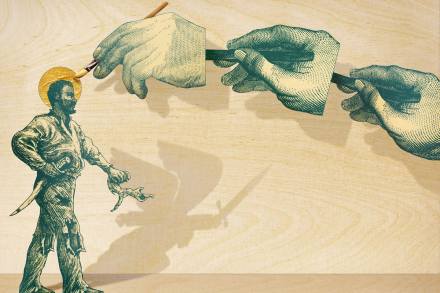
In 1831, while the slave rebel leader Nat Turner sat in jail awaiting trial in Southampton County, Virginia, he was visited by a local lawyer named Thomas Gray. Turner spoke at length to Gray, who subsequently published his record of their conversations. At one point Turner said he had been visited many years before by the spirit. “What do you mean by the spirit?” Gray asked. “The Spirit that spoke to the prophets in former days,” Turner replied. Gray was unmoved by Turner’s claims of divine inspiration and concluded that he was a “gloomy fanatic” moved to mass murder by religious delusions.

Turner

Why must we be in constant battle with the ocean?

From our UK edition

I recently learned to dive in the bay of Dakar. It was exciting. I’d started learning in a Leeds swimming pool and though I knew the ocean would feel different, I didn’t expect it to feel comfortable. It shouldn’t. It is not my element, and humans have long since left it to the rest of the ocean’s creatures. I also didn’t think the ocean would sound like my neck when I roll it during yoga: that same crackle. With their remarkable sonar, dolphins can even tell when a human is pregnant That the ocean is not quiet is one of the most pleasing revelations of the past century (I mean the ocean’s native noise, the fish songs and grunting and whistles – not ships’ propellers). But it is not the best revelation.

The slave’s story: James, by Percival Everett, reviewed

From our UK edition

Rereading The Adventures of Huckle-berry Finn can be a saddening experience. It’s not just the oft-repeated n-word that jolts, then pains, then twinges; it’s the ‘no sah’, ‘I’s agwyne to’ locutions of Huck’s companion, the runaway slave Jim. In retelling the celebrated adventure story in Jim’s own voice, Percival Everett upends the convention. James and his fellow slaves can speak perfectly good English between themselves. It’s only when white folks are around that they perform blackness. Whether two slaves out of the earshot of whites would discuss if a situation represents ‘an example of proleptic irony or dramatic irony’ is another matter.

Has the C of E got its reparations bill all wrong?

From our UK edition

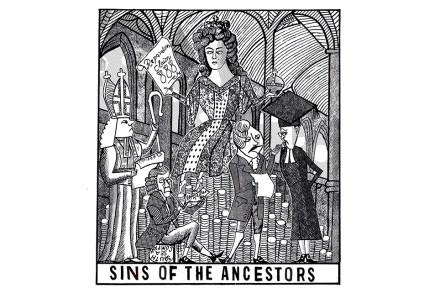
Reparations have a troubled history, and rightly. The word itself, in its familiar sense, seems to have been a euphemism thought up by lawyers after the first world war. President Woodrow Wilson had promised a peace ‘without indemnities’. So no indemnities: ‘reparations’ instead. It sounded less objectionable. It was further agreed that liability should cover only demonstrable damage, not be punishment for the act of war itself – a remarkable and perhaps unprecedented concession by the victors to the vanquished (who had themselves recently imposed heavy indemnities on Russia, and before that on France). Yet reparations – relatively modest in total and largely unpaid – still became probably the most divisive and damaging aspect of the post-war Treaty of Versailles.

Modern-day slavery in Mauritania

In April 1864, the US Senate passed a bill that set in motion what would become the Thirteenth Amendment to the Constitution. Slavery was to be abolished. Seven months later, Union forces would burn Atlanta to the ground, a year after Lincoln’s address at Gettysburg marked the battle that began the South’s collapse and the April 1865 surrender of General Robert E. Lee and his Confederate army. The Civil War remains the bloodiest and most divisive conflict in American history with at least a million dead, including soldiers and civilians from both sides. You might think that given American history, if slavery had an in-your-face visibility anywhere on the planet, Congress would call for intervention by the UN, perhaps threaten to send in the Marines. Think again.

Mauritania

Letters: the real problem with a Labour super-majority

From our UK edition

Good trade-off Sir: I applaud your excellent editorial (‘Trading in Falsehoods’, 6 April) – a succinct and insightful essay on the role of Great Britain in the abolition of slavery and the slave trade. All are agreed that slavery in any form was and is reprehensible. As a white and proud Barbadian, initially educated there, I contend that some of my ancestors, who were probably slave owners, did not believe that they were involved in anything immoral or sinful, but were serving the economic interests of the Empire as they saw it at the time. You rightly point out that the huge cost in treasure and lives incurred by Britain and the Royal Navy in ending the slave trade is largely ignored.

New light on the New Testament

From our UK edition

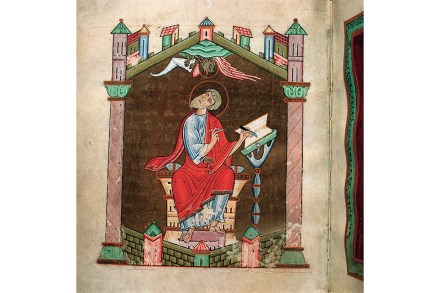
Readers of the Bible, you are almost certainly in for a shock. A new book, drawing on recent archaeology and literary criticism, persuasively argues that some of the most important parts of the New Testament were written or edited by slaves. Its author, Candida Moss, presents this thesis in God’s Ghostwriters, a general interest book which asks readers to look beyond the Bible’s named authors and imagine their collaborators, some of whom were enslaved scribes. In the Roman era, ‘writers’ did not usually inscribe the text themselves but composed through dictation; and most people who took dictation were enslaved. They were well educated from a young age, and it was customary for them also to act as proofreaders. St Paul, for one, clearly employed scribes.

Ghosts of the KKK still haunt American politics

From our UK edition

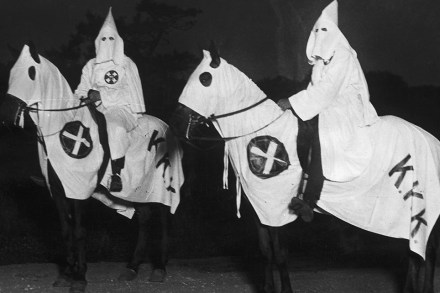
This is the first history of the Ku Klux Klan from ‘its origins in post-Civil War Tennessee to the present day’ and it makes for a lively read. Kristofer Allerfeldt, a history professor at the University of Exeter, combines lucid political analysis with eye-popping details of violence. One victim of a lynching was made to climb a tree with a noose round his neck but stubbornly clung onto a branch. Rather than waste a bullet and spare him a slow death by strangulation, a Klan member climbed up after him and sawed off his fingers one by one until he dropped. The Klan started as a fraternity of six young, former Confederate soldiers soon after the Civil War ended.

I was dreading this show – how wrong could I be: Entangled Pasts, at the Royal Academy, reviewed

From our UK edition

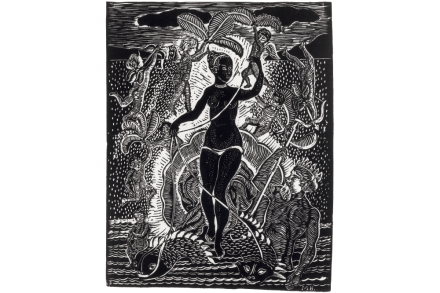
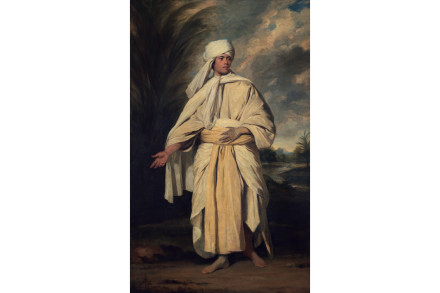
In the wake of the Fitzwilliam Museum’s exhibition Black Atlantic about its founder’s ties to the slave trade comes the Royal Academy’s Entangled Pasts, less of a mea culpa than an examination of conscience by an institution which, although hailed by its first president Sir Joshua Reynolds as an ‘ornament’ of Empire, was innocent of direct links to slavery.

Did the fight over slavery cause the Civil War?

Nikki Haley reignited the battle over the cause of the Civil War. Today’s racial protocol requires a reflexive one-word answer: “slavery.” Haley didn’t give that response, but neither did she give one that reflects our best historical knowledge. Instead, she blamed government for not ensuring “that individuals have the liberties so that they can have freedom of speech, freedom of religion, freedom to do or be anything they want to be without government getting in the way.” The media pummeled Haley. In fact, the primary cause of the American Civil War was different from the pat answer. It was slave-produced cotton. Cotton and race-based slavery cannot be separated here.

The popularity of ‘Amazing Grace’ owes much to its melody

From our UK edition

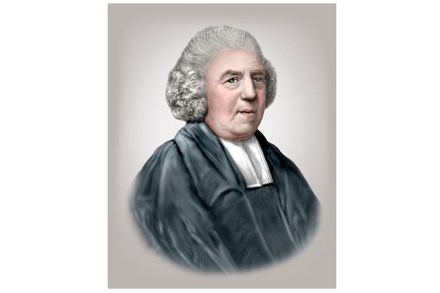
Type ‘Amazing Grace’ into YouTube and you can cancel any other plans you might have had for the day. Page after page serves up everything from Elvis Presley to Pavarotti, Gospel choirs and winsome Celtic lovelies, folkies in fabulous knitwear and X Factor finalists strenuously proclaiming their surgically enhanced faith; even an American president. There are arrangements for electric guitar, steelpan orchestra, bagpipes or (God help us) beginner flute ensemble. Saved from the storm, Newton was aware of ‘a sense of the amazing grace that snatched me from ruin’ All of which suggests that James Walvin’s Amazing Grace is a book landing in fertile soil.

The hell of the antebellum South: Let Us Descend, by Jesmyn Ward, reviewed

From our UK edition

Jesmyn Ward, America’s only female two-time National Book Award winner, has had more than her share of hellish experiences to fuel her literary life. Her Mississippi-based family endured Hurricane Katrina. Salvage the Bones (2011), set during the catastrophe, was Ward’s response. Her memoir, Men We Reaped (2013), tackled her grief at losing five men close to her, including her brother, who was killed, aged 19, by a drunk driver. In January 2020, Ward’s husband died of acute respiratory distress syndrome. Ward recreates the hell of the antebellum South for the ‘stolen’ people forced into chattel slavery Hell is very much the context for her fourth novel, Let Us Descend.

Wallowing in misery: Tremor, by Teju Cole, reviewed

From our UK edition

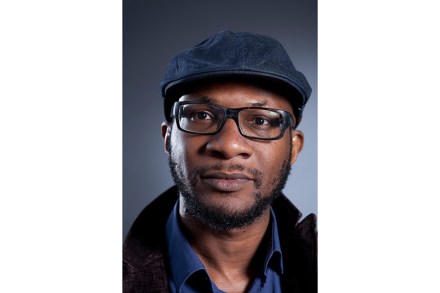
Tunde can’t explain why he grows addicted to screen depictions of ‘inexhaustible brutality’ The protagonist of Teju Cole’s latest novel is a composite of his earlier creations, which in their turn are partial self-portraits. An artist roaming around with his camera, Tunde photographs hedges and trinkets, contemplates colour and listens to Malian music. Having left his native Nigeria three decades earlier, aged 17, by 2020 he is settled in New England. Meanwhile, Lagos has become ‘a reality of his life so large and at the same time so intimate, so intense and so various’, a feeling that increases whenever he returns to the city in person or in his imagination.

A tale of cruelty and imposture: The Fraud, by Zadie Smith, reviewed

From our UK edition

‘Is this all that these modern ladies’ novels are to be about? People?’ So asks the bewildered author of Old St Paul’s, The Lancashire Witches, The Tower of London and three dozen other forgotten blockbusters stacked with costumed folderol. In Zadie Smith’s sixth novel, William Harrison Ainsworth disapproves, in 1871, of hiscousin-housekeeper, Eliza Touchet, reading a nameless story of dull village folk with ‘no adventure, no drama, no murder’. It can only be George Eliot’s Middlemarch. The Fraud alights briefly on this quarrel, as it does on many Victorian topics. Yet Smith’s triple-pronged tale of imposture and masquerade, public lies and secret truths, often reverts to fiction’s role either as gaudy stage for the ‘human comedy’ or mirror for the hidden spirit.

Zadie Smith’s latest novel is glittering, grand and powerful

Zadie Smith’s ambitious latest novel, The Fraud, is loosely based on the life of the little-known nineteenth-century novelist William Harrison Ainsworth. He was, at one point, as popular as Charles Dickens, his novel Jack Sheppard even outselling Oliver Twist. But Ainsworth’s fortunes and talents declined, and his forty-odd novels vanished, going out of print soon after his death. Throughout The Fraud, as he sits groaning at his desk, he is an arch reminder not only of the vagaries of literary fame, but the pains of fiction-writing. As his cousin Eliza Touchet observes: “God preserve me from that tragic indulgence, that useless vanity, that blindness!” Ainsworth’s actual writing is redolent of educated middle-class male privilege. (“‘Zounds!

fraud

Our great art institutions have reduced British history to a scrapheap of shame

From our UK edition

Let’s indulge in some identity politics for a second: I am from Hong Kong, born as a subject of the last major colony of the British Empire, minority-ethnic, descended from Chinese refugees, now living here in exile. This summer, both the National Portrait Gallery and Tate Britain are presenting new displays that are meant to reflect the ‘inclusive’ and ‘diverse’ identities of Britain. Supposedly, I fit nicely among their target audience. In reality, as an immigrant looking to be included in this nation, I am perplexed by my visits.

A thoroughly modern 18th-century heroine: The Future Future, by Adam Thirlwell, reviewed

From our UK edition

Adam Thirlwell’s latest novel begins in revolutionary France and chronicles the travails of its embattled celebrity heroine, Celine, who is being subjected to a campaign of malicious gossip about her sex life. She resolves to cultivate a coterie of influential writers to wrest back control of the narrative – cue earnest meditations on power, misogyny and the ability of the written word to shape reality. Meanwhile, she finds solace in female company, reflecting: In a society made of words and images and circulating and recirculating, all devoted to disinformation, it was very difficult to find any personal safety, and one minuscule form might just be this intense form of friendship between two women.

Black Britons betrayed

From our UK edition

In this frustrating book, Tomiwa Owolade sets out to establish that American attempts to identify and deal with issues of race are irrelevant to those of Britain. His basic case is that even if it might exist in America, structural racism based on colour is not found in Britain, and he criticises a significant number of people of colour, on both sides of the Atlantic, who’ve argued that it is. He believes that looking at the lived experience of people should be the starting point; and that the lived experience of black Britons is determined by nationality (and class) more than it is by race. That’s fair.