Clement Knox

Why are Lawrence Osborne’s novels suddenly popular in Hollywood?

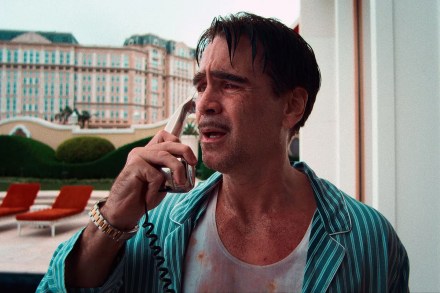
The film Ballad of a Small Player opens with a blast of classical music, a shot of the Macau skyline and Lord Doyle (Colin Farrell) waking up in a hotel suite littered with Champagne bottles, cigarette butts and designer loafers that are starting to show their wear. While he dresses and shaves, a voice-over informs us he has three days to live. A sharp observer might notice he seems to have considerably less than that. Either way, for the next 100 minutes, director Edward Berger (All Quiet on the Western Front and Conclave) treats us to a sumptuous vision of one English con man’s final spree before oblivion. It will take an even sharper-eyed observer to catch, as the final credits snap past, that they have just watched an adaptation of a Lawrence Osborne novel.
A new and compelling study of the life of the iconic rebel Nat Turner

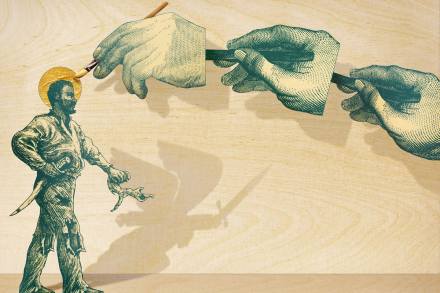
In 1831, while the slave rebel leader Nat Turner sat in jail awaiting trial in Southampton County, Virginia, he was visited by a local lawyer named Thomas Gray. Turner spoke at length to Gray, who subsequently published his record of their conversations. At one point Turner said he had been visited many years before by the spirit. “What do you mean by the spirit?” Gray asked. “The Spirit that spoke to the prophets in former days,” Turner replied. Gray was unmoved by Turner’s claims of divine inspiration and concluded that he was a “gloomy fanatic” moved to mass murder by religious delusions.

Turner

An impressive examination of the conjoined fates of Iraq and the United States

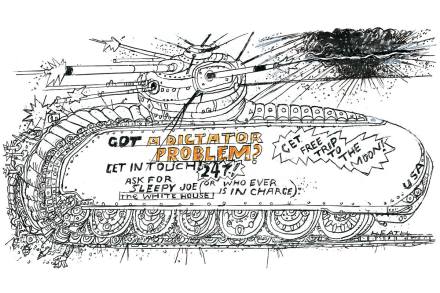
In July 4, 1821, secretary of state John Quincy Adams gave a speech to Congress on American foreign policy. He said of the United States that “wherever the standard of freedom and independence has been or shall be unfurled, there will her heart, her benedictions and her prayers be. But she goes not abroad, in search of monsters to destroy.” For the first 150 years of the republic, its leaders dutifully observed Adams’s counsel. But after Woodrow Wilson’s intervention in World War One, American policy has tacked in the opposite direction. For over a century America has indeed been going abroad, searching for monsters to destroy.

Iraq