Daniel Rey

Daniel Rey is the author of 'Checkmate or Top Trumps: Cuba's Geopolitical Game of the Century'. He lives in New York.

Singing of arms and the man: Son of Nobody, by Yann Martel, reviewed

From our UK edition

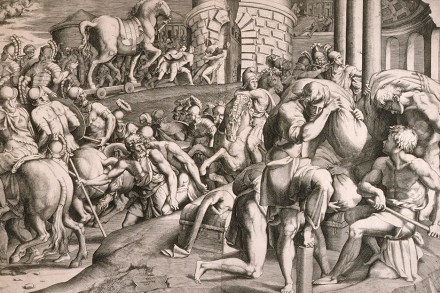
Yann Martel, the author of Beatrice and Virgil and Life of Pi, typically explores competing storylines, narrative reliability and the nature of truth. His new novel, Son of Nobody, pursues these themes in a first-person account written by a scholar who discovers a Greek epic. The narrator is a Canadian called Harlow Donne – a PhD student at a middling university. Offered an ‘unbelievable opportunity’ to spend a year at Oxford, he leaves home, his wobbly marriage and his young daughter. His doctoral supervisor repeats his habitual plea: ‘Just find something to say.’ He does. From ‘hints and scraps’ found at the Bodleian Library and the Ashmolean Museum, Donne stitches together and translates 30 fragments of a lost poem of the Trojan War.
Can ‘Bazball’ help England finally triumph Down Under in the Ashes?

From our UK edition

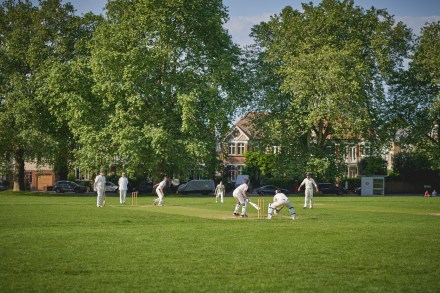
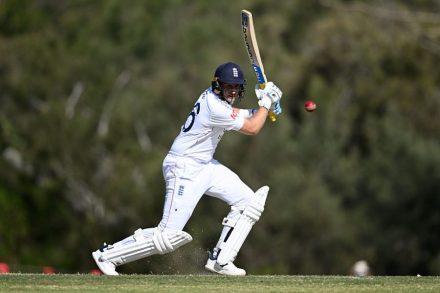
'Bazball' – England’s exhilarating and exasperating style of playing cricket – has reached its denouement. Starting tomorrow, England face Australia in five Ashes tests that will define the legacy of this controversial philosophy and the four-year tenure of coach Brendon ‘Baz’ McCullum. Bazball is a spirit of freedom. McCullum – who was a brilliant, daredevil captain for New Zealand – has rewired England to play cricket aggressively, and without 'fear of failure'. Bold, and often brash, Bazball is a revolt against English cricketing orthodoxy – a stand for the cavaliers against the roundheads. It can be argued that this approach is needed most in Australia. Winning a series Down Under is tough. Very tough.

Cinema doesn’t have to be stuck in a loop

From our UK edition

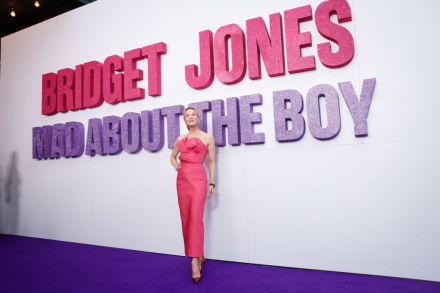
If you’ve recently been to the cinema or turned on your streaming platform of choice, no doubt you’ll have been offered ‘new’ stories that are fundamentally familiar. From Beetlejuice Beetlejuice, to Dune: Part Two, and now Bridget Jones 4 – the film industry is being driven by franchises and sequels. Of the top 10 highest-grossing films released in Britain in 2024, franchises and sequels accounted for nine. The exception, Wicked, was a prequel. Despite innumerable creative possibilities, studios are flogging offshoots of things we’ve either already watched or already rejected.  The trend is driven by one thing: money. Hollywood likes to present itself as an artistic community, underwritten by great ideas and talent, but really it’s a cold-hearted corporate industry.

Biden’s Cuba policy has been a disaster for the Democrats

From our UK edition

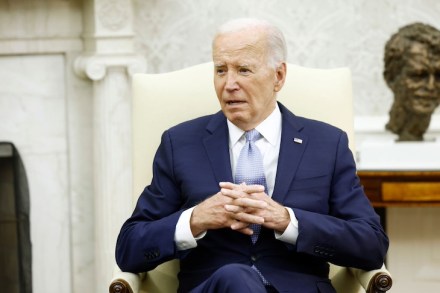
Ten years ago this week, Barack Obama announced the historic US rapprochement with Cuba. Alongside Obama during years of secret negotiations was Joe Biden – then Vice President, and a trusted advisor on foreign affairs. But while Obama’s policies reduced Cubans’ reliance on the communist state, President Biden’s actions have done the opposite: spurring extreme hardship and a huge wave of migration to the US. Time and time again Cuba has had an outsized influence on US elections After four years of Donald Trump’s hardline stance, Biden entered the White House in 2021 with a pledge to ‘reverse the failed Trump policies that inflicted harm on Cubans and their families’. But rather than overturn Trump’s stringent measures, Biden added to them.

In defence of Starmer’s junk food advert ban

From our UK edition

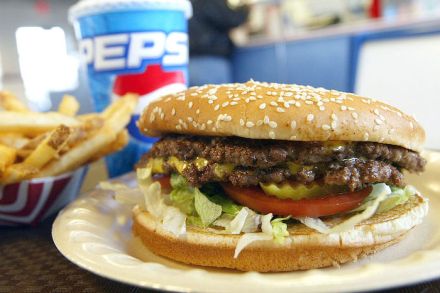
Keir Starmer’s government has just made itself even more unpopular. This week, Health Secretary Wes Streeting, author of One Boy, Two Bills and a Fry Up, specified which junk foods will be banned from online and TV adverts before 9pm. The prohibition, set to begin next October, is so extensive that it includes lentil-based crisps and seasoned chickpeas. It’s drastic, disciplinarian, and very sensible. Obesity costs Britain dearly The ban, which covers adverts promoting foods or drinks that are high in fat, salt or sugar, comes as Britain desperately needs to contain an alarming rise in obesity. Two-thirds of adults are overweight and just under a third are living with obesity, according to the House of Lords Food, Diet and Obesity Committee. Obesity costs Britain dearly.

The flawed genius of Rafael Nadal

From our UK edition

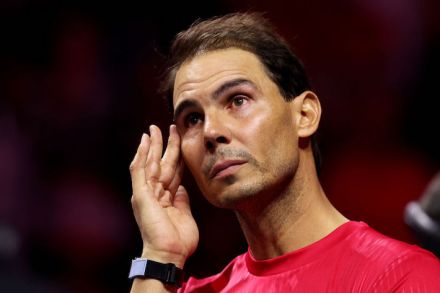
When Rafael Nadal triumphed in the 2005 French Open, he was still just a teenager. The Spaniard won 21 more Grand Slam titles, and became the second most decorated man in tennis history. He retired this week after Spain were knocked out in the quarter-finals of the Davis Cup by the Netherlands. His final match, played in front of a home crowd in Málaga, ended in a loss in straight sets to Botic van de Zandschulp, the world number 80. It was a dispiriting and yet strangely fitting end to his career. If Federer resembled a Renaissance artwork, and Djokovic an acrobat with a racket, Nadal was like a scrappy kid The Spaniard could have retired more gloriously at this year's French Open, where he has an unsurpassable 14 titles, and where he left his most extraordinary legacy.

Can Republicans be trusted with the US economy?

From our UK edition

When it comes to the economy, Americans typically trust the Republicans. They’re the party traditionally aligned with big capital; and their policies – low taxes and minimal government interference – sound sweet in a believer’s ear. Donald Trump, leading the GOP for the third election in a row, is a famous businessman; and the party’s previous nominee, back in 2012, was Mitt Romney – the co-founder of one of the largest private equity firms in the world. The Republicans, you might think, are a safe pair of hands. However, despite the Republicans prioritising the economy, it’s the Democrats who have the far superior record.

How postal votes could deliver Donald Trump the White House

From our UK edition

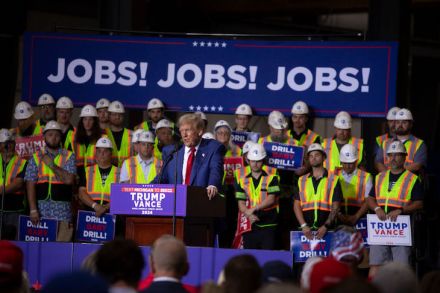
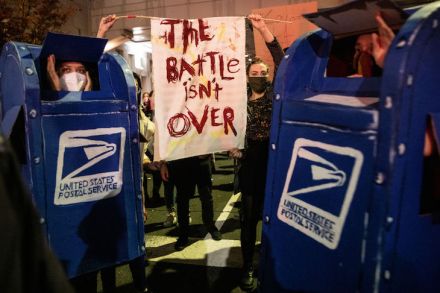
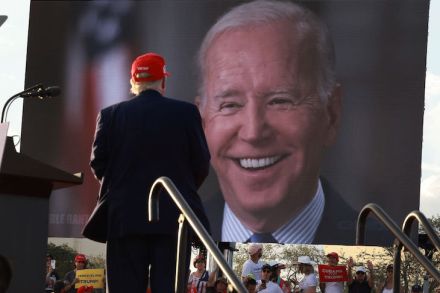
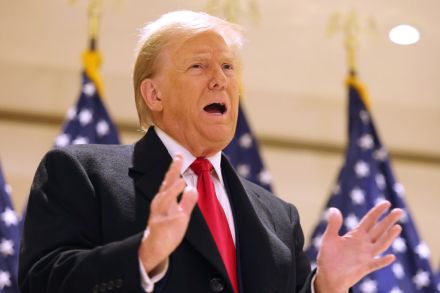
Watch or attend one of Donald Trump’s rallies, and you may well see something surprising: an electronic billboard encouraging people to vote by post. It’s a big u-turn for Trump, who has spent years maintaining that postal votes are manipulated. Ahead of the 2020 election – which took place in the pre-vaccine era of the pandemic – Trump's White House even blocked additional funding for the Postal Service, fearing that Democratic voters were more likely to avoid going to a polling station. Following the election, one of his many claims of voter fraud was predicated on supposedly corrupted postal ballots. 'Mail-in voting is totally corrupt,’ Trump said So why the sudden endorsement of postal voting?

Biden’s legacy is in Harris’s hands

From our UK edition

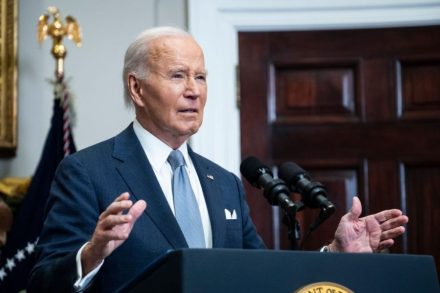
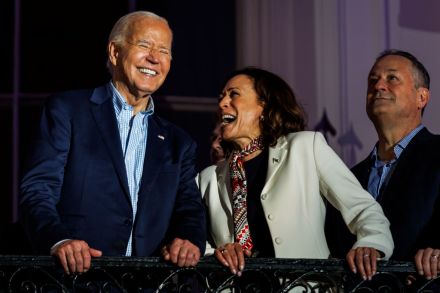
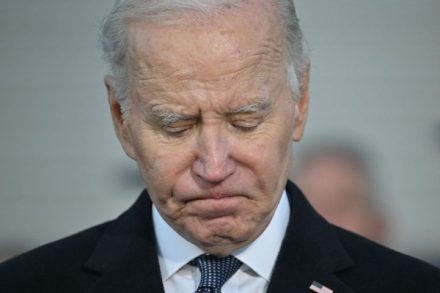
Joe Biden did the honourable thing. It took dire polls and home truths from donors and allies, but the President finally admitted that his political race is over.  Biden was trailing Donald Trump in the swing states – in some cases with a wide margin – and was showing little sign of being able to close the gap. On course for defeat, Biden made his decision in the interests of his party and country, but also his legacy.  Biden’s legacy could go one of two ways. Like almost every US president, his tenure has included both major successes and significant failures.

The Democrats should remove Joe Biden from office

From our UK edition

In a sense, Democrats ought to be relieved. After his calamitous presidential debate, Joe Biden delivered one of his most embarrassing gaffes on Thursday, when he introduced Volodymyr Zelensky as ‘President Putin’, and called Kamala Harris ‘Vice President Trump’. These howlers – which could have been mistaken for hard-right disinformation – are incontrovertible evidence the Democrats need to remove Biden from the ticket. The President’s inner circle, which has stubbornly defended Biden’s health and argued that the debate was an anomaly, have no arguments left. Democrat donors and members of the party establishment are publicly and privately calling for Biden to give up the nomination.  https://www.youtube.com/watch?

Biden’s health is a worry for Republicans and Democrats in tonight’s debate

From our UK edition

Tonight, Donald Trump and Joe Biden face each other in the first of two presidential debates. With about ten per cent of the electorate undecided, the debate – the first between a current and a former president – could change the momentum of the race. Both candidates want to debate. Trump thinks he can trounce the rival he has often dubbed ‘Sleepy Joe’. Biden, a doddery octogenarian, urgently needs to persuade voters he is not too frail for office.   Tonight’s debate helps cement the choice as Biden or Trump Debating against a much more dynamic candidate might seem like a risk for Biden. But in fact, it’s a good idea. Trump is ahead in the polls, and the perception is that the president is weak.

Don’t dismiss America getting into cricket

From our UK edition

US cricket is rising. After beating Pakistan and pushing India, the Americans have reached the last eight of the T20 World Cup. On Sunday, they play England. The success comes at a time of vast growth for American cricket. The US, the co-host of the tournament, launched a professional league last year and added T20 cricket to the 2028 Olympics in LA.  Long regarded as an oxymoron, cricket in America is being powered by serious financial backers. Its domestic championship, Major League Cricket, has secured investment from the CEO of Microsoft and the owners of four teams from the Indian Premier League, cricket’s sporting and commercial behemoth.  American cricket might only be emerging, but it is already a threat to the game in England.

Trump is forcing Biden to the right

From our UK edition

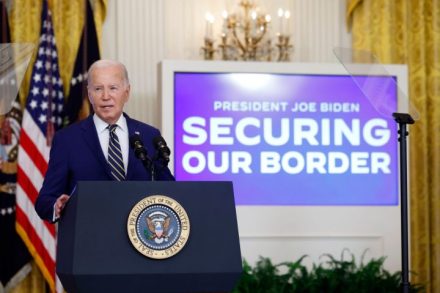
Joe Biden is a pragmatist. With just five months to go until his rematch against Donald Trump, the veteran Democrat is making political decisions based on an electoral calculation. These decisions, intended to undermine Trump’s appeal among wavering voters, cross into economic, domestic and foreign policy. They are taking him closer to the views of his Republican opponent. A case in point is immigration – one of Trump’s electoral strengths, and one of Biden’s biggest weaknesses. Biden, who is lagging behind Trump in the polls, has just signed an executive order denying asylum to migrants who enter the United States illegally.

Have NeverTrumpers found a way to hit Donald where it hurts?

From our UK edition

With Donald Trump confirmed as the Republican nominee, a group of NeverTrump conservatives have tried to hit the former president somewhere vulnerable: the musicals of Andrew Lloyd Webber. The Lincoln Project, an organisation led by old-school Republicans, has released a video parodying one of the tunes most associated with Trump’s rallies – the theme song from The Phantom of the Opera. Trump has a profound love of musical theatre, particularly the work of Andrew Lloyd Webber. Since 2015, songs like ‘The Music of the Night’, ‘All I Ask of You’ and ‘The Phantom of the Opera’ have been part of his pre-speech soundtrack. He revealed in Think Like a Billionaire that he saw a production of Evita six times.

New light on the New Testament

From our UK edition

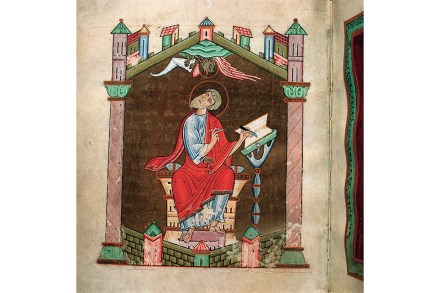
Readers of the Bible, you are almost certainly in for a shock. A new book, drawing on recent archaeology and literary criticism, persuasively argues that some of the most important parts of the New Testament were written or edited by slaves. Its author, Candida Moss, presents this thesis in God’s Ghostwriters, a general interest book which asks readers to look beyond the Bible’s named authors and imagine their collaborators, some of whom were enslaved scribes. In the Roman era, ‘writers’ did not usually inscribe the text themselves but composed through dictation; and most people who took dictation were enslaved. They were well educated from a young age, and it was customary for them also to act as proofreaders. St Paul, for one, clearly employed scribes.

What Hugo Chávez failed to understand about Karl Marx

From our UK edition

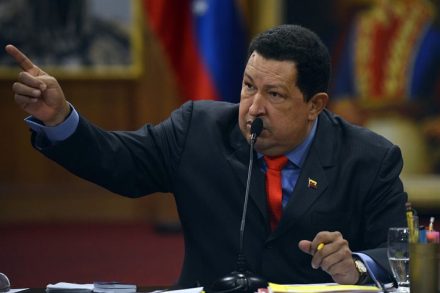
It’s 25 years this week since Hugo Chávez – an inspiration for leftwingers like Ken Livingstone and Jeremy Corbyn – was elected president of Venezuela. Chávez may not be the person primarily responsible for his country’s descent into dictatorship, anarchy and humanitarian disaster (that would be his hand-picked successor, Nicolás Maduro) but the foundation was laid by his unrestrained populism.  That populism had two pillars: socialism and nationalism. Chávez claimed inspiration from Karl Marx and, particularly, from the Venezuelan independence hero Simón Bolívar. During his 14 years in power, Chávez tried to combine these two influences to create a socially equal and sovereign Venezuela. He called his project ‘Bolivarian Socialism’. The problem?

Next year’s US election promises a crisis

From our UK edition

There's only a year to go until the most complex and consequential US presidential election ever. Ukraine, the Middle East, geriatric candidates, big-name independents, the criminal charges against Trump, a new House speaker (who must ratify the outcome) who didn't recognise Biden’s victory in 2020 – the complexity is staggering.  The two main candidates, Biden and Trump, are both unpopular. Biden’s approval rating stands (or rather, squats) at around 37 per cent. Polls indicate he is losing support among two traditional bastions of the Democratic party: African-Americans and young voters. Meanwhile Trump, who has still to secure the Republican nomination, lost the popular vote in his two presidential campaigns. In last year’s midterms, the Trumpist candidates were routed.

The horror of Halloween

From our UK edition

Temperate weather, perfect apples, and leaves turning yellow, red, and purple – ‘Fall’ ought to be the most charming time to be in the US. But the season’s natural beauty is defiled by a grotesque American obsession – Halloween. For all of October (and most of September) Halloween kitsch is as ubiquitous as leaves and acorns on the ground. It’s there in offices, bars, restaurants, and coffee shops. It’s outside houses, inside houses, and on top of houses. Butcher’s knives hang from washing lines. There are six-foot tarantulas, eight-foot zombies, and twelve-foot werewolves, some of which move, cackle or howl as you walk past.

The outrageous felling of the Sycamore Gap tree

From our UK edition

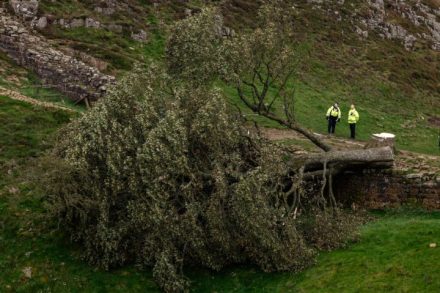
One August afternoon, my dad, my uncle, and I were walking along Hadrian’s Wall. It was pouring. Our shoes were full of water, our glasses had steamed up, and our pac-a-macs were sticking to our bodies.  Seemingly out of nowhere, we came upon a little dip in the cliff, within which was nestled a tall tree. We stopped under the cover of its wide branches and five-lobed leaves and ate our ham and cheese sandwiches. There was no one else in sight and we had this beautiful part of Northumberland to ourselves.  Thanks to an individual act of vandalism, the Sycamore Gap is now really a gap That tree was called the Sycamore Gap, and yesterday a vandal cut it down. 100-foot high and 300 years old – it was slashed down in an instant with a chainsaw.

Radio 4’s In Our Time is still the best thing on the BBC

From our UK edition

For 25 years, Melvyn Bragg and his guests on Radio 4’s In Our Time have discussed most things from antimatter to Zoroastrianism. Their conversations have attracted a live audience of two million, and provide the BBC’s most-listened-to weekly podcast. At 9 a.m. today, In Our Time will broadcast its one thousandth episode. How has the BBC’s flagship intellectual programme achieved such success and longevity? By doing something the corporation rarely does: respect listeners’ intelligence.  In Our Time’s success should be a lesson to broadcasters to stop dumbing down Across the BBC, there seems to have been a fiat not to commission anything that might be called elitist. The Today Programme is a watery version of its former self and lacks political clout.