Scotland

The Union is in graver danger than ever

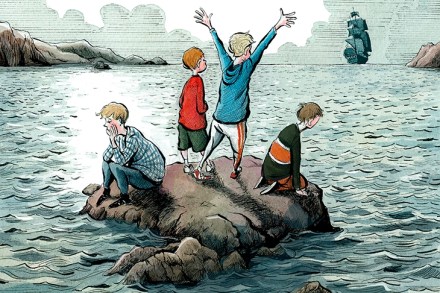
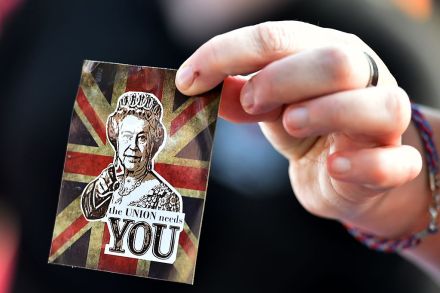
The greatest single danger to this government is the state of the Union. Prime ministers can survive many things, but not the break-up of the country they lead. No. 10 has a plan to avoid this: it simply won’t allow a Scottish independence referendum this parliament. No legal referendum can take place without Westminster’s consent and it will be declined on the grounds that a generation has not elapsed since the ‘once in a generation vote’ in 2014. This approach, however, cannot change the fact that the Union is now in even graver danger than it was during that campaign. In recent weeks, the polls have consistently shown independence ahead. Scottish Unionists are downhearted.

Scotland’s Covid nationalists

One of the rare upsides of living in a country run by nationalists is that nationalists are not great at hiding their true feelings. When you’ve got a superiority complex, it’s hard to prevent it from bursting out, often at the most inopportune times. Efforts to explain to outsiders that the SNP isn’t actually a more left-wing version of Labour, but a strategically savvier version of Ukip may fall on deaf ears but, sooner or later, the subjects of your hand-wringing will just come out with it by themselves. On Saturday, a modest band of Scottish nationalists just came out with it in dramatic fashion on the border with England.

Scottish government’s website collapse

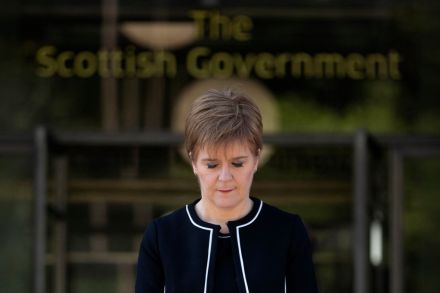
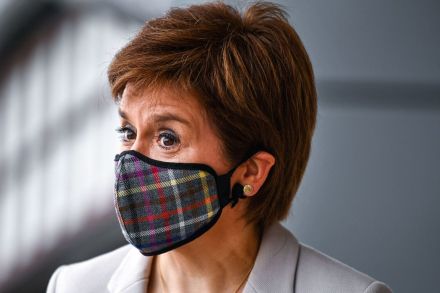
Nicola Sturgeon today released her ‘roadmap’ for easing the lockdown in Scotland, after the first minister decided to pursue a separate strategy to Boris Johnson when it comes to lifting restrictions on freedom of association and movement. In an announcement, the first minister said that Scotland would pursue a ‘four-phase’ route out of lockdown, with some restrictions lifted next week, such as allowing people to meet others from another household outside. But, rather unfortunately, the majority of the guidance was unavailable to read, as the Scottish government’s website helpfully crashed soon after Sturgeon’s announcement, with thousands of users unable to access the new guidance.

Scotland’s chilling new blasphemy law

The new Hate Crime Bill proposed by the Scottish Government is a sweeping threat to freedom of speech and conscience. The draft law radically expands the power of the state to punish expression and expression-adjacent behaviour, such as possession of ‘inflammatory material’. It provides for the prosecution of ill-defined ‘organisations’ (and individuals within them) and could even see actors and directors prosecuted if a play they perform is considered to contain a hate crime.

Six places in Britain that make you feel like you’re abroad

Even when lockdown ends in Britain it may be a while longer before international borders begin to reopen. But not being able to hop on a flight doesn’t mean you can’t enjoy an exotic escape. There are plenty of beautiful spots across the British Isles that make you feel as though you’re hundreds of miles from home. Here is our pick of the best. Somerset Lavender Farm, Somerset Sipping a coffee al fresco and gazing over the lilacy haze of fields at this family-run farm, you’d think you were in deepest Provence. In fact you’re just 10 miles from the UNESCO world heritage city of Bath and right on the fringes of the Cotswold Hills. The working farm has around 50,000 plants, including five acres of different types of lavender and a rose garden.

The SNP may have overreached by planning to suspend jury trials

The Scottish Government may have overreached for the first time in its response to Covid-19. Today MSPs will vote on the Coronavirus (Scotland) Bill, which grants Scottish Ministers emergency powers to tackle the outbreak and suspends or amends the legal status quo in some important areas. Physical attendance in court will no longer be required unless a judge specifically instructs it; instead, appearances will be made ‘by electronic means’. Ministers will be able to permit the release of prison inmates in the event of custodial transmission (lifers and those convicted of sex crimes will not be eligible).

Male violence pulses through Evie Wyld’s The Bass Rock

‘It’s a woman’s thing, creation,’ says Sarah,a girl accused of witchcraft in 18th-century Scotland, in one of the three storylines in Evie Wyld’s powerful new novel. Sarah is pregnant, having been raped and nearly killed. She is looking at a piece of sacking sewn by a sister and mother, and continues: ‘You can see how they felt in each stitch, you can hear the words they spoke to each other and into the cloth.’ The Bass Rock is in many ways an amplification of these words spoken into the cloth, a feminine counterforce to the masculine violence that pulses viscerally throughout.

Alex Salmond will have his revenge

Alex Salmond has been cleared of sexual assault following a trial at the High Court in Edinburgh. The jury returned this afternoon and found the former First Minister not guilty of 12 charges and resorted to Scotland’s special not proven verdict on a 13th allegation. Salmond’s twin defences were that the claims against him were ‘exaggerations’ (he wasn’t perfect but he had never done anything criminal) or ‘deliberate fabrications for a political purpose’ (he was the victim of a conspiracy). In private, much of the Scottish political and media class already had him hanged, drawn and quartered and so this verdict is being met with a mixture of shock, horror and contempt. But the law is the law and the law says he didn’t do it.

Letters: How to really revitalise the North

Devolved or decentralised? Sir: Paul Collier (‘Northern lights’, 22 February) conflates what devolution has come to mean, in UK terms, with decentralisation of authority. Thus it is adrift to imply that Edinburgh has benefited from a conscious decentralising of powers from central government. It was simply that Scotland as a whole got devolution and Edinburgh is its capital city, whereby it administers the devolved responsibilities. Until such time as commentators and politicians distinguish properly between devolution and decentralisation, they will continue to prompt fears that England could be balkanised rather than treated as a national entity on a par with Scotland.

Barometer: The brands regretting calling themselves ‘Corona’

Going viral A few of the businesses which chose ‘Corona’ as a brand name and now have a bit of an image problem: — Corona beer — brand of lager owned by Anheuser Busch InBev. — Corona Energy — gas and electricity supplier to businesses and the public sector. — Corona Pine Furniture — range from Mercers Furniture of Rotherham. — Corona ‘the 2D game engine’ — software for designing video games. — Corona, the ‘lemon capital of the world’, a city of 160,000 people 45 miles from LA. — And one which changed its name in time: Corona lemonade — South Wales manufacturer taken over by Britvic in 1987 and rebranded.

Boris Johnson must start taking Scexit seriously

Polls come and go and the YouGov survey showing support for Scottish independence at 51 per cent should be read with that in mind. The Nationalists have been ahead before and have fallen behind again. What Downing Street cannot take in its stride is this: five years since the Scottish referendum, and with the SNP government in Edinburgh plagued by crises in health and education, support for secession has not fallen away. The separatists still enjoy a solid base of support, around 45 per cent, which delivered them 47 of Scotland’s 59 seats in the general election. They lost the 2014 referendum 55 per cent to 45 per cent and have been inching forwards ever since.

Boris is failing a crucial One Nation test in Scotland

Yesterday, Nicola Sturgeon unveiled a proposal to devolve certain aspects of our post-Brexit immigration policy to Scotland. Well, you might say, she would say that, wouldn’t she? But Sturgeon’s argument has some merit, for Scotland has a demographic problem that is not shared by the rest of the United Kingdom. A few thousand Scotland-only visas issued each year has the potential, assuming they proved sufficiently attractive, to address that. This is not just an SNP ploy, either. There is a widespread acceptance in Scotland that the country needs to be able to do more to attract more immigrants. On current trends, immigration is likely to be essential for the population growth Scotland is likely to need.

Can anyone stop the SNP’s drive for independence?

Nicola Sturgeon’s reshuffle of her Westminster team is more than a post-election shake-up of the Nationalist front bench. For one thing, it represents a shift to the next generation. Mhairi Black (25), who became something of a political superstar upon her election in 2015, has been promoted to Scotland spokeswoman; freshly elected Stephen Flynn (31) is suddenly shadowing the chief secretary to the Treasury; David Linden (29) will head up housing and local government policy; and Amy Callaghan, the 27-year-old who unseated Jo Swinson in East Dunbartonshire, will lead on pensions. The SNP has a wealth of talent coming up and is giving them their first step on the ladder. The SNP’s front bench line-up is markedly more impressive than Labour’s.

Corbyn’s problem was not that the media hated him – but that he hated the media

On the morning of the election, we buried my lovely mum. I write this 24 hours later, now on a flight to the States, with the mud from her graveside still all over my shoes. This was just the ashes, because we had the funeral six weeks ago, but it was oddly fitting. The 1970 election was called a week before she married my father, who would go on to spend the bulk of his working life as a Tory MP, which meant they had to postpone their honeymoon and spend it canvassing the streets of Edinburgh instead. Four years later, the sudden second 1974 poll was held two days before the birth of my older sister. And there we were, right at the end, doing it to her yet again. She hadn’t talked much for the past few years, because multiple sclerosis can be savage like that.

Indyref2 could be the biggest headache of Boris’s premiership

Nicola Sturgeon is the only opposition leader who survived the general election. She has emerged far stronger. The Tories had hoped to halt the nationalists’ advance, but in the end, Scotland was the only part of the UK in which their party suffered serious setbacks. Sturgeon’s advancing army dethroned Liberal Democrat leader Jo Swinson, claimed seven of the 13 Scottish Tory seats and took 48 of Scotland’s 59 MPs. The First Minister’s message now is pretty clear: she is the only politician who can stand up to the Bullingdon boy, and the battle for the Union is back on. Within hours of the result, Sturgeon declared that the SNP surge ‘renews, reinforces and strengthens’ her case for another independence referendum.

The 15 Scottish seats that could decide the general election

For at least a generation — something we define loosely up here — Scottish hacks have been trying to interest London newsdesks in Scotland’s role in general elections. Then, in 2015, we had the good fortune of Scotland deciding to up and turn into a one-party state overnight. Then, in 2017, we revised our arrangements to a one-and-a-bit-party state when Ruth Davidson’s Conservatives liberated 12 seats from Nationalist control. Scotland may end up being the main story of this election too, if, as Eeyore types like me have been warning, the Tories do not romp home on December 12.

Sturgeon struggles on the currency question

It was one of the defining moments of the 2014 Scottish referendum campaign. In that early August TV debate, Alistair Darling said any 8 year old could tell you what a country’s flag, capital and currency were but that Alex Salmond couldn’t say what currency an independent Scotland would use. Salmond’s floundering that night badly hurt the ‘Yes’ cause. This evening, when Andrew Neil pressed Nicola Sturgeon on what currency an independent Scotland would use, she replied the pound but without a monetary union. She indicated that this would be the case even if Brexit had happened. So, Sturgeon is saying that Scotland would be applying to join the EU while using a third country’s currency without a monetary union.

If we do get a good Anglo-American trade deal, we should thank Trump’s mother

In an uncharacteristic fit of almost-robustness, Culture Secretary Nicky Morgan has said she is ‘open-minded’ about scrapping the BBC licence fee and replacing it with a Netflix-style subscription service. Good idea. What would we actually miss if we didn’t subscribe? Not an awful lot in my view. Some people cite David Attenborough’s nature documentaries but I certainly wouldn’t now that they have become so obtrusively propagandistic. The problem with the BBC isn’t — and never has been — lack of talented filmmakers, wildlife camera crews, presenters, actors, writers or production teams. It’s that, from news to drama, the BBC’s woke politics now subsume and corrupt its entire output.

Nicola Sturgeon’s Brexit bounce

There was a fairytale quality to Nicola Sturgeon’s speech to the SNP conference this afternoon. On the one hand, she demanded a second referendum on independence next year; on the other, almost no-one in Scottish politics really believes there will be a referendum next year. In tandem with this rallying call for national liberation – an emancipation made ever more urgent by the looming Brexit fiasco – there ran another line of argument: conference delegates, like the wider nationalist movement, must be careful and canny and patient. Which is another way of saying that, whatever the headlines suggest, it’s probably not happening. At least not yet.

Should the Scottish Tories join forces with the Lib Dems?

Scottish politics is stuck. As with Brexit across the wider United Kingdom, the 2014 independence referendum has permanently shifted attitudes of the majority of the population into Yes/No camps, with little room for compromise. The SNP government stumbles from one crisis of service delivery to another yet continues to consistently poll around 40 per cent. In first-past-the-post Westminster elections, this is sufficient to return a clear majority of MPs, and probably to still be returned as the largest party in the Scottish Parliament in the scheduled 2021 election. The problem for Scotland is that the SNP believe this to be a mandate to speak “for Scotland” in broader constitutional matters, like Brexit. Fair enough, you might say.