Scotland

Can Scotland afford independence?

How would an independent Scotland have fared during the pandemic? We found out this week on the annual release of Gers, which adds up all Scottish spending and taxes and states the size of the gap. This year it's estimated at about 27 per cent of GDP, according to the Institute for Fiscal Studies, which would make it the worst-hit country in the developed world. It's unlikely that a small country could sustain a deficit of this size even in a pandemic: the UK has been hit bad, but we have the pound and the Bank of England's QE to lower the cost of issuing debt. For a country of five million to run a deficit of 27pc would be far, far harder.

Andrew Marr: Scotland is slipping away from the Union

Staying in Britain for the summer has been, in many ways, entirely glorious. We have zigzagged from Shropshire through Derbyshire to the Northumberland coast, from Fife and Perthshire to Herefordshire and Devon. On the way, beautiful little towns and sweeping coastlines, not empty but not crammed either; excellent local food and plenty to keep us interested, from echoing cathedrals to buzzing bookshops. But it has also allowed me to see first hand just how desolate so many high streets are: not only the shops closed because of plague, but those shuttered, clearly from a long time back. Boarded up doors, bleached posters… If it wasn’t so wet, the tumbleweed would be blowing.

Letters: Why do we need beavers?

It’s not about money Sir: Professor Tombs criticises Alex Massie (Letters, 22 August) for ignoring evidence when the latter claims that economic concerns ‘no longer matter’ in great political decisions. But the evidence from the last Scottish referendum tends to support Massie. At the beginning of the Scottish referendum campaign in 2014, polls showed 26 per cent of Scottish voters favoured independence. The Better Together campaign amassed compelling evidence that independence would be a financial disaster and set about presenting this to the Scottish public in an exercise they christened Project Fear.

My Unionist faith is wearing thin

How does a believer lose the faith? It might begin with some quibble about a point of doctrine: the Virgin Birth, for instance. The believer struggles intellectually but cannot accept the dogma. What starts as a quibble then turns into an obstacle; as the doubt grows, the whole belief system starts to unravel. One day it dawns on them that they no longer believe. Reader, I am myself undergoing such a struggle to maintain my political faith in Unionism. I have been an instinctive, largely unquestioning Unionist ever since I became politically aware. The roots of my faith are simple enough: Scotland and England can do more together than individually. That and the fact of our shared history and land mass.

Scots poll in favour of free expression

The SNP’s determination to push on with its draconian Hate Crime Bill has put it on the wrong side of Scottish public opinion. A new poll indicates popular unease with plans to criminalise speech on everything from religion to ‘transgender identity’ if it is deemed ‘likely that hatred would be stirred up’. The Savanta ComRes poll of 1,008 Scottish adults found both generalised endorsement of classical liberal precepts such as free expression, open debate and the absence of a right not to be offended, as well as more specific concerns about the Bill itself.

Scotland’s Hate Crime Bill would have a chilling effect on free speech

Among the encroachments on Milton’s three supreme liberties contained in Humza Yousaf’s Hate Crime Bill is a cloturing of the debate on gender identity and the law. Proposals to remove medical expertise from the gender recognition process have either stalled or been shelved, but not before their radical scope prompted a lively dispute about the ethics of gender identity, sex-based rights and the freedom to dissent. That freedom will be meaningfully reduced in Scotland if the Hate Crime Bill becomes law because it is a piece of legislation that begins from the position that all legitimate debate has already concluded. The Bill creates an offence of ‘stirring up hatred’ against a list of protected characteristics, including ‘transgender identity’.

Letters: why do we put up with bats?

Scottish hearts and heads Sir: Alex Massie ignores the evidence when he espouses the assumption that economic concerns no longer matter in great political decisions (‘Scottish horror’, 15 August). Compare, as he does, a future Scottish referendum with the 2016 Brexit vote. Then, around two thirds of the British electorate held ‘Eurosceptic views’ (so Sir John Curtice of Strathclyde University tells us). But the barest majority voted to Leave. The cause is plain: the largest single motive for Remain voters was that ‘the risks of voting to leave the EU looked too great when it came to things like the economy, jobs and prices’. A Eurosceptic two thirds was whittled down by ‘hearts vs heads’ considerations.

A rainy day in the Highlands: Summerwater, by Sarah Moss, reviewed

There is an old Yorkshire tale about a prosperous town which, legend has it, once stood on the site of Lake Semerwater. A beggar comes looking for alms but is turned away by everyone, save for a poor couple. As he is leaving, he curses the proud townspeople and water rises up and floods their houses, leaving only the couple’s hovel high and dry. In Summerwater, her seventh novel, Sarah Moss moves this tale north to a holiday resort by a Scottish loch and transforms it from a moralistic parable into a complex reflection on the contemporary situation. But she retains the haunting images of rising water and strangers being refused hospitality.

Portrait of the week: Employment falls, exam failures and a roundabout rigmarole

Home In fine weather with calm seas, 565 migrants in four days crossed the Channel in small craft. French officials said that 33 migrants in two boats that got into difficulty had been returned to Calais. In July more than 1,000 migrants crossed the Channel. Priti Patel, the Home Secretary, appointed Dan O’Mahoney as Britain’s Clandestine Channel Threat Commander, tasked with somehow making such voyages ‘unviable’. Employment fell by 220,000 in the three months to June, the biggest quarterly fall since 2009, but unemployment remained at about 3.9 per cent, as millions stayed on the furlough scheme. At the beginning of the week, Sunday 9 August, total deaths from Covid-19 stood at 46,566, with a seven-day average of 53 deaths a day.

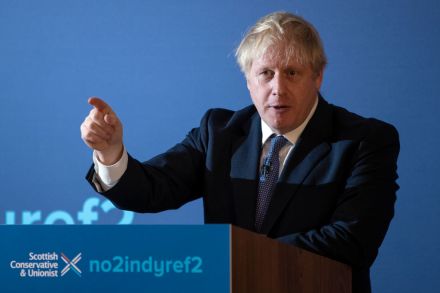
Here’s Nicola: can Boris Johnson stop Scottish independence?

Boris Johnson is far from being the first prime minister to holiday in Scotland. David Cameron used to slip off the radar at his father-in-law’s estate on the Isle of Jura, and plenty of other Conservative premiers have enjoyed a Scottish August on the grouse moor. But Johnson may be the first to holiday north of the Tweed as a matter of political calculation and convenience. He comes to Scotland to show his commitment to what he calls the ‘magic’ of the Union. About time too. At last — at long last, Scottish Unionists might say — the cabinet has recognised it has a problem in North Britain.

Could possession of the Bible become an offence in Scotland?

For the Scottish National party, the phrase ‘nanny state’ is not so much a criticism as an aspiration. This is the party that wanted to assign a state guardian to every child born in Scotland through its ‘named person’ scheme, only to be thwarted by the Supreme Court. Under Nicola Sturgeon’s leadership, there have been repeated attempts to regulate the eating and drinking habits of people, including proposed bans on two-for-one pizza deals and minimum pricing on cheaper alcoholic drinks. It makes sense, then, that the party’s paternalism should extend to the question of free speech.

Can the new Scottish Tory leader thwart Nicola Sturgeon?

As a boy, Douglas Ross, the new leader of the Scottish Conservative and Unionist party, had two interests: cows and football. Growing up on a dairy farm in Moray, he never aspired to hold political office. He enjoyed the solitude of early morning milking. ‘Some people like big tractors, other people like sheep. I was just really interested in dairy cattle, and Holsteins in particular,’ he explained earlier this year. Now he finds himself faced with one of the more daunting tasks in British politics: thwarting Nicola Sturgeon and, in the process, preserving the United Kingdom of Great Britain and Northern Ireland. In 2016, Ruth Davidson identified Ross as one of the most talented new Tory MSPs produced by that year’s Holyrood election.

Is Sturgeon right to brag about Scotland’s coronavirus response?

What political opportunities Covid-19 has presented for Nicola Sturgeon. Day after day in recent weeks she has appeared at her press conference, presenting a picture of a Scotland where the disease has been all but eliminated – placed in contrast with England where, she says, the government is merely trying to contain the disease, and not very well at that. It is an image which, naturally, aides the cause of Scottish independence. To remind us of the game she is playing, she has several times pointedly raised, or failed to rule out, the threat of imposing quarantine on visitors from England. But is the image of a Covid death-free Scotland fair? Interesting analysis by Sam Taylor lays bare the accuracy of Sturgeon’s – and other nationalists’ – claims.

Why does England have the worst excess deaths in Europe?

On 12 May, the government stopped publishing international comparisons of its Covid-19 death toll in the daily press briefings. The argument was that the data wasn’t helpful, and perhaps even misleading: the way calculations were carried out varied country-by-country, with each nation on a different timescale when experiencing the peak of infections and death. There would be a time for international comparisons, but that time wasn’t now. Today, the ONS picks up where the press briefings left off, comparing excess mortality rates throughout Europe. The data is not specifically calculating Covid-19 deaths, but rather all causes of mortality on a five-year average.

Dear Mary: What gift can you buy for the hosts who have everything?

Q. I am not expected to pay rent at the cottage which has been lent to me by a super-kind friend-of-a-friend who stepped in when she heard I would be homeless in the short-term. Unfortunately she didn’t mention that, although there is wifi in the cottage, the signal is so patchy it effectively means I can’t work here. Even mobile phone calls keep cutting out and I have to walk for a mile up a hill to be able to speak to anyone. How can I, without seeming ungrateful, get across the message that, generous as she has been, in 2020 a cottage without reliable wifi is no good to anyone except a hermit? — Name and address withheld A. Rather than grumbling, why not take the reins on this issue and ring the broadband provider to see what the difficulties are?

Should Nicola Sturgeon get a statue?

The Scottish National party and its supporters like the world to see Scottish independence as a final act of decolonisation, Scots throwing off the yoke of English imperialism and, with it, the taint of having been imperialists themselves. Last week Scots academic Sir Geoff Palmer compared it to the process that led to his native Jamaica gaining its independence. Yet Scots were the greatest of British colonialists and, for most of the 300-odd years of the Union, strong unionists. Scots statuary of figures from before the 1707 Act of Union is quite sparse. But even those few earlier Scots haven’t been exempt from the wider debate about our monuments.

Letters: Why is the problem of working-class white boys not considered worth solving?

Left-behind boys Sir: Christopher Snowdon’s perceptive and informative article (‘The lost boys’, 18 July) reflects perfectly my own experiences in trying to highlight the under-attainment of white working-class boys in higher education, particularly in chemistry, a frontline Stem subject. I was elected to the Inclusion and Diversity Committee of the Royal Society of Chemistry to investigate this matter. Despite strong acknowledgment of the under-representation of ‘white working-class males’, any positive action remains painfully slow. It is abundantly clear that while white working-class males are the largest group of disadvantaged young people in this country, their cause is the least fashionable and the problem not considered worth solving.

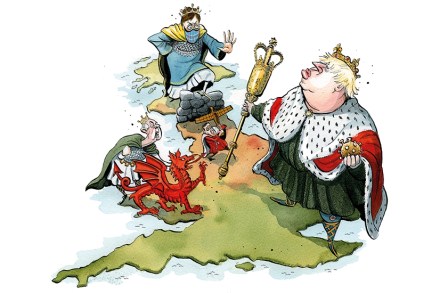
The continued existence of the United Kingdom is now at stake

When they come to write the history of the Union’s demise, there will be three guilty men. Tony Blair was a transformative prime minister, but he nodded through devolution after allowing himself to be convinced that it was an administrative change, rather than an unravelling of the United Kingdom. Many believe Iraq to be the blot on his legacy but contracting out the rewriting of the constitution to the Scottish Labour Party would cut against anyone’s greatness. David Cameron has no claim to greatness, but he deserves to be the toast of Scottish nationalists.

Nicola Sturgeon’s coronavirus failings

The numbers have seldom been better for Nicola Sturgeon. Ten months from the next Holyrood election, the SNP is polling 55 per cent on the constituency ballot and 50 per cent on the regional vote. Support for Scexit has swung into the majority. Almost three-quarters of Scots say she has handled the Covid-19 pandemic well, compared to just 21 per cent for Boris Johnson. Yet in terms of the record, Sturgeon’s response to coronavirus has been at least as impaired as that of Boris Johnson. The UK Government has been criticised for its lack of pandemic preparedness despite the findings of a 2017 simulation called Exercise Cygnus. However, the Scottish Government had its own review, conducted the previous year and codenamed Silver Swan, which heard warnings of PPE and staff shortages.

The SNP’s next battle against Westminster

The greatest danger to the current government is the state of the Union, I say in this week’s edition of the magazine. Prime Ministers can survive many things but not the break up of the country they lead. Number 10’s position is that there won’t accept a Scottish independence referendum in this Parliament. Given that no legal referendum can take place without Westminster’s consent, this means there won’t be one. But this position will come under huge pressure if the SNP win an outright majority on a pro-IndyRef2 platform in next year’s Holyrood elections. The next skirmish between Westminster and Holyrood will be over the internal market bill.