Schools

Long life: Will we all be Old Etonians soon?

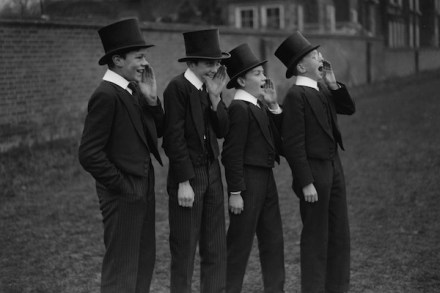
When I was a child there was never any doubt that I would go to a boarding school. My father, my uncle and my elder brother had all gone to Eton, and it was assumed that I would eventually go there, too; but I would first be expected to board at a preparatory school with a good record for getting its pupils into that famous establishment. And so it was that from the age of 8 to 18 I spent more than half of every year away from home, living in communities of other boys in the care not of parents but of schoolmasters. My two sisters went to boarding schools, too, just as our mother had before them, and it didn’t seem to matter whether or not we children were happy boarders; boarding school was our inevitable fate, and nobody questioned that it was the best thing for us.

Don’t jump, Felipe!

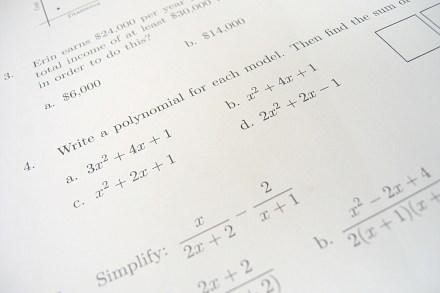
Peering over my son’s shoulder as he forced himself through a pile of practice IGCSE maths papers in readiness for this week’s exams, I was shocked both by the absence of pounds sterling and by the ardently international imaginary first names dreamed up by the question-setters. That ‘I’ stands for ‘international’ — and goodness, you’re not allowed to forget it. ‘Nyali paid $62 for a bicycle.’ ‘Alejandro goes to Europe for a holiday. He changes 500 pesos into euros at an exchange rate of…’ ‘Abdul invested $240…’ ‘At 05 06 Mr Ho bought 850 fish at a market for $2.62 each…’ ‘On 1 January 2000 Ashraf was x years old.

What Michael Gove should know about going to school in Singapore

I like to tease my friend Wei about being a tiger mother. She once told me of an incident where her daughter Shu was making an artwork for a friend as a birthday present. Shu doodled for a few minutes, then showed her mother a sketch of a funny face. ‘I told her to knuckle down, spend more time, and come back with a far better drawing,’ said Wei. ‘It just wasn’t good enough.’ I said that was a bit harsh on her eight-year-old, especially since it was not schoolwork but part of Shu’s leisure time. Wei snorted. ‘It was a gift for her best mate, yet she hadn’t put any thought into it,’ she said. ‘She needs to know that you must make an effort for the things you really care about.

Michael Gove’s planned national curriculum is designed to renew teaching as a vocation

Michael Gove’s planned national curriculum, heavily influenced by American reformer E.D. Hirsch, came under strong attack over the weekend. Critics claim that it will de-professionalise teachers. NUT activists and their allies insist that teachers will have to abandon the ideas that were prevalent when they were trained, and teach in a different way, which risks alienating and demoralising them. There are good reasons for being concerned about the de-professionalisation of teachers, but Hirsch’s curriculum for the UK is not one of them. On the contrary, his curriculum, found in books such as What Your Year 3 Child Needs to Know, is designed to encourage the renewal of teaching as a vocation.

Letters | 21 March 2013

Joining the club Sir: As Robert Hardman notes (Royal notebook, 16 March), not only is the C back in FCO but these days there is a waiting list of countries interested in joining, or being more closely associated with, the Commonwealth. I have a list of at least half a dozen, and even some strong signals from Dublin that they, too, are now thinking about joining the club. How can this be so when we were told so firmly by foreign policy experts in the past century that we should break our ties with the Commonwealth and that our future prosperity and destiny lay in Europe?

What is this word?

‘What are you writing?’ I asked my nine-year-old daughter as she sat at the kitchen table doing her homework. ‘A recount,’ she said. ‘What’s a recount?’ She looked at me with utter disdain. ‘Duh! A recount.’ I calmly explained that you could recount an event in a piece of writing, but that didn’t make what you’d written a ‘recount’. The only sense in which you can use ‘recount’ as a noun is when referring to the act of recounting something. ‘What’s this then?’ she said, waving a piece of paper in my face. Sure enough, the exercise she’d been given by her teacher was to write a ‘recount’ of something that had happened to her the previous week.

Long life: Polite silence on my old prep school’s possible paedophile

It is usually a mistake to return to places one has known as a child. I have only once been back to the large, white-stuccoed, early-Victorian manor house in Hertfordshire where I was born and brought up, and it was a dispiriting experience. Although the house was near to the town of Ware, less than an hour’s drive from central London, it was set in unspoiled country alongside a village in which the names of some of the inhabitants had been there in the Domesday Book. Apart from a small row of bleak pre-war council houses on the edge of the village, there was nothing there to offend the eye or to suggest proximity to a great city. My parents, finding the house too expensive to run, sold it in 1959, when I was 19 years old, and I didn’t go back for some 20 years after that.

Letters | 7 March 2013

Gove’s history lessons Sir: ‘The idea that there is a canonical body of knowledge that must be mastered,’ says Professor Jackie Eales, ‘but not questioned, is inconsistent with high standards of education in any age.’ This is not true. Primary education is, or should be, all about just such a body of knowledge. This gives children a foundation of fact, preferably facts learnt by heart. Without it, they cannot begin to reason, and develop valid ideas, in the secondary stage. It may be a tight squeeze to get them through English history up to 1700 by the age of 11, but it is better than not covering the ground at all. The bizarre result of 25 years of the national curriculum is that schoolchildren don’t know English history.

The tastes of temptation

There ought to be a wise adage: ‘If invited to do good works, always procrastinate. A better offer is bound to turn up.’ About a month ago, the phone rang. Would I attend the Oxford vs Cambridge wine tasting, sponsored by Pol Roger, which would also include a wine hacks vs wine trade contest? Festivities were to continue over lunch. The likelihood of a wooden spoon did not deter me. I was joyously accepting, when a horrible thought occurred. I checked the diary. My forebodings were justified. I was already engaged, to speak at the King’s School, Bruton. There was one possible solution: do both. Get thee behind me, Satan. There could be worse embarrassments than finishing last in a tasting.

Our brightest children are falling behind their peers in other countries

Today’s jobs market is highly competitive and globalised. It is no longer enough simply to see if we are doing better than we did last year, or the year before, or 10 years ago. Far better to judge how we are doing against other countries – for our young people will be fighting for jobs against their peers from Singapore and China, from Canada and the US, from Sweden and Slovenia.That is why I such set stock by international league tables, and of analysis of them. We see how we compare against others – and we discover who we must learn from. So it is enormously worrying when respected researchers say that our brightest pupils, on a par with their peers in the world-leading education systems of the Far East at age 10, have fallen two years behind them by age 16.

Yes, Gove has lost a battle. But he’s winning the education war

Michael Gove's enemies will have savoured his defeat yesterday, and enjoyed every second of his Commons speech admitting that his pet project, the EBacc, was ‘a bridge too far’. Gove is fighting a war on many fronts — and he lost a battle. It doesn't happen often, which is precisely why it's memorable. I look at this in my Telegraph column today. Here are my main points: 1. The passion of Gove — and Adonis. Gove is just as passionate about the transformative power of education as Andrew Adonis and, I suspect, for the same reason. Both were born in modest circumstances: Adonis to a single father in Camden, Gove to a woman in Edinburgh who gave him up for adoption. Both had the very unusual opportunity of a first-class education.

Half of the British Army’s officer corps is privately educated. Does that matter? – Spectator Blogs

An interesting spot, courtesy of the good chaps at Think Defence. From Hansard: Diana Johnson (Kingston upon Hull North, Labour) To ask the Secretary of State for Defence what proportion of new recruits to the Army at (a) soldier and (b) officer level previously attended state school. Andrew Robathan (South Leicestershire, Conservative) The proportion of soldier recruits that had previously attended a state school is not held centrally and could be provided only at disproportionate cost. Including the most recent intake of officer cadets to the Royal Military Academy Sandhurst, in January 2013, 53.5% of the UK educated intake over the last 12 months came from state schools.

Michael Gove’s plans for profit-making schools

Coffee House readers won't be surprised by the Independent's report that Michael Gove has been telling friends he has no objections to profit-making schools: he explained his position on the matter at length to Fraser in December. Then, the Education Secretary said he was keen for the one profit-seeking school in this country, IES in Suffolk, to make the case to the public for more profit-seeking schools: 'What I said to them [IES] is the same argument that Andrew Adonis has made: we’ve created the opportunity for you to demonstrate what you can do and win the argument in the public square. You have an organisation that has been criticised, in some cases demonised, now running a state school.

Why for-profit companies should take over weak schools

The basic question in my report for Policy Exchange on school chains, out today, is simple: we’ve got a big education problem in this country and what can we do about it? Here is the problem. We know that England is only a middling country when it comes to the international league tables. The cause of this disappointing performance is the large group of schools where the education on offer is no more than satisfactory. Estimates vary, but according to Ofsted the quality of teaching and learning is no better than satisfactory in 40 per cent of schools, and 6,000 (out of around 20,000) schools only reached 'satisfactory' in their last Ofsted inspection.

The pupil premium and profit-making schools could be a winning combination

Ask any Liberal Democrat what their party has achieved in government, and the answer will involve the words 'pupil premium'. It was a key manifesto pledge in 2010, and is one of the policies that the party is proudest of from its time in government so far. It'll be sure to come up time and time again in speeches in Brighton, too. Which is why it's rather awkward that with two days to go to the Liberal Democrat autumn conference, Ofsted has revealed 'disturbing findings' about the way schools are actually administering the premium. Chief Sir Michael Wilshaw said the extra £600 per pupil from a disadvantaged background was largely plugging gaps in school budgets rather than helping those pupils who brought the money in.

You can’t judge a school by its sports fields

There's a glass case in the hall of Number 10 at the moment which contains a large sports bag with two shiny Olympic medals poking out. This wasn't left behind by a Team GB athlete: it's actually an enormous, elaborate cake, complete with icing zips. Downing Street staffers are looking forward to eating this part of the Olympic legacy soon. A considerably less tasty leftover from the Games is the row over school sports provision. During the Olympics, I argued that the Prime Minister's interventions on the matter were largely unhelpful, but as Fraser and Matthew d'Ancona have pointed out, schools selling off old tennis courts to pay for new gyms, or a proliferation of Indian dancing classes will become more common under the freedoms they now enjoy.

Gove, sports and school freedom

The problem with granting independence to schools is that you never know what they’ll do with it. Quite a few of them want to use pre-existing freedoms to sell their school sports ground which happened all the time under Labour and was (like forest disposals) not much remarked upon. But now, post-Olympics, the issue of school sports grounds has become hugely political and Michael Gove is being portrayed as the enemy of sports because he is not casting a ministerial veto. This is a small taste of what is to come for Gove: he has granted independence to hundreds of schools, who now have Academy status, and they may make all manner of other changes. They may decide to cut the costs of a science lab, and put the money towards better tuition.

Ministers fail to sell themselves on playing field sell-offs

If you're a minister, or even the Prime Minister, and you take to the airwaves holding a page of figures aloft, it's always a good idea to make sure the figures are actually correct before you enter the studio. When David Cameron read out a break down of playing field sales on LBC radio during the Olympics, he was trying to crush reports that under this government, schools are continuing to reduce their sports facilities in return for money. You can watch the film of Cameron with his sheet of paper here. The problem is that this sheet of paper wasn't actually correct when it said there were only 21 sell-offs, and as Christopher Hope reveals in today's Telegraph, there were actually 35 applications to sell school playing fields, of which 30 were approved.

The ideological row over profit-making schools

Earlier this week IPPR published a paper which made the case against for-profit schools. Two of the leading proponents of such schools, Toby Young and Gabriel Sahlgren, have since responded. Young accuses me of being ‘an evangelical believer in an ‘evidence-based’ approach to public policy’. He implies at the start of his piece that empirical evidence should play little part in policy development. Confusingly he goes on to set out which types of empirical analysis he values and which he doesn't. It is unclear from this what role he thinks evidence should play in policymaking. Young is particularly scathing about the use of cross-national evidence.

Labour plays a sensible game on school sport

It would be wrong to say that David Cameron has had a bad Olympics. After all, the Games went extremely well, both in terms of logistics and Britain's wonderful medal haul. The Prime Minister is not responsible for the bouncy mood of the country at the moment, but he's also not having to answer aggressive questions from the media about an awful security breach, total gridlock in central London or worse. But the Prime Minister did rather let himself down by being drawn into the inevitable debate about sports provision in the state education sector during the Games. That discussion started so early into Britain's rise up the medal table that at the time it was impossible to assess whether state-educated athletes were pulling their weight.