Schools

Cameron digs a hole on school sports

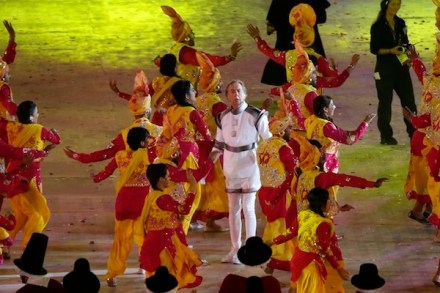
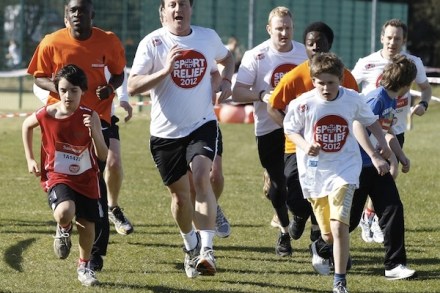
The Prime Minister today criticised schools for filling their compulsory two hours of weekly sport with 'sort of Indian dancing classes'. He said: 'Now, I've got nothing against Indian dancing classes but that's not really sport.' Now, dancing isn't really sport, is it? It's dance. But it gets the heart rate going like the clappers, improves core strength, balance, and co-ordination. Dancing was good enough for the Great British swimmers, who took up ballet before the Olympics to improve their technique. Just up the road from Downing Street are the Pineapple Dance Studios, founded by a former model who lost three stone from dancing. David Cameron would do well to visit them and watch the sweat dripping down the studio walls in the midst of a fast-paced jazz class.

Cameron’s big sporting society

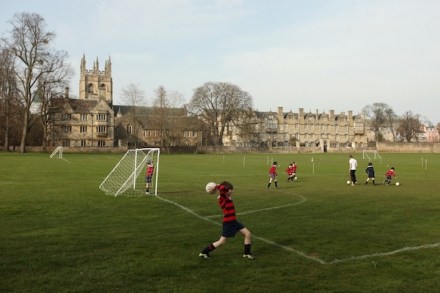
David Cameron made a spirited defence of school sport this morning when he appeared on LBC radio. Waving a sheet of paper triumphantly, the Prime Minister argued that the 20 school playing field sales that Michael Gove had signed off were actually schools that had closed, surplus fields and 'surplus marginal school land'. He also defended the decision to remove a compulsory target for all children to take part in two hours of sport a week: Well, look, we haven't done that, you know, sport is part of the national curriculum and we want schools to deliver sport and I think that's very important, but frankly, and we're putting a lot of money in, there's a billion pounds going into school sport over the next four years. But frankly if the only problem was money, you'd solve this with money.

How state schools can boost their Olympic chances

Lord Moynihan's comments about the dominance of private school athletes in Team GB have caused a stir.  He suggests that  the fact that half of our medals in Beijing were won by athletes who attended fee paying schools is 'one of the worst statistics in sport'. He's right and it's worrying.  But rather than hand-wringing and suggesting the imposition of quotas, we should be asking what independent schools are doing well and what state schools aren't.  We should be celebrating our medallist and their incredible achievements, whilst also asking what state schools can do to improve the statistics that Lord Moynihan found so shocking.

Training does not make the best teachers

None of us would accept being treated by a doctor or by a nurse who hadn’t had extensive training, nor would we want legal advice from someone who hadn’t been through law school. Nor would we be comfortable with our company accounts being managed or audited by anyone not trained to a high level in accountancy. So why should we accept teachers coming into our schools who haven’t been properly professionally taught how to teach in a college or university? Schooling is a once-in-a-lifetime opportunity, and poor teachers, as research shows, destroy life chances. How can we play dice with our children’s lives?

Unqualified teachers haven’t ‘irreparably damaged’ the private sector: why do state schools deserve anything different?

The furore surrounding the news - which James broke on Coffee House this afternoon - that academies will now be able to employ teachers who are not qualified was so brilliantly predictable that we could have written the unions' press releases for them. Christine Blower of the National Union of Teachers slammed it as a 'clear dereliction of duty' and a 'cost-cutting measure that will cause irreparable damage to children's education'. Blower and her union colleagues are not clear why education will be so badly damaged by this, though. Top schools in the private sector regularly employ staff who have gone through no formal training at all. But parents have to pay for this privilege: it is not available to them in the state system.

How long can the government ignore demands for free grammar schools?

The argument about grammar schools had been stuck in a rut. Opponents argued that the division between grammar schools and secondary modern was too binary. But with the advent of free schools this argument has lost its force. There is now a diversity of provision meaning that there’ll be no return to the old stark grammar/secondary modern split. Free grammars would also boost the number of state school children going to our best universities and unleash a new wave of educational philanthropy.

Low marks for Labour’s Gove debate

Labour's Opposition day debate tomorrow on Gove-levels might not reveal as much as the party hopes about where Liberal Democrat MPs stand on the Education Secretary's planned reforms. True, you won't see a Lib Dem lift so much as a finger in outright support of what Nick Clegg dubbed 'a two-tier system' created by scrapping GCSEs and replacing them with two sets of exams, but this might not be the forum for them to launch a rebellion. One key figure on the left of the party points out that 'it's not where the decision will be made', while another MP says Labour's motions are often so 'over-the-top' that they are unsupportable.

Schools: the cash illusion

13 years of Labour rule taught us two vital lessons about school reform. The first is that there is no direct link between money and results. Funding per pupil more than doubled under the last government: But for all that extra cash, Britain's schools have slipped down the international league tables over the past decade. Every three years, the OECD rates countries according to student performance. Of the 31 with scores for both 2000 and 2009, here is the top twenty in mathematics for 2009, along with changes since 2000: So if money doesn't work, what does? The Blair/Adonis City Academy reforms — which themselves stem from the Major/Baker reforms — show that stunning results are achievable if the tuition changes.

More pupils, fewer schools

On Tuesday next week, The Spectator will hold its third annual Schools Revolution conference. On the agenda will be the striking failure of new 'free schools' to keep pace with the rising pupil demand. Michael Gove, the education secretary, will be our keynote speaker. To book tickets, click here. A couple of month's ago, Fraser warned that the recent baby boom would lead to a schools crisis, with demand for places outstripping supply. Today's new figures from the Department for Education show that the crisis has already begun. This year, there are more primary school pupils than there were 30 years ago, but 3,800 fewer primary schools.

The ideological quandary over Gove’s curriculum reform

Primary school children studying subordinate clauses and foreign languages? What an outlandish but suddenly very real idea. Michael Gove announced earlier this week a curriculum reshuffle to restore rigour and aptitude to primary education. But why is liberalising Gove instigating a top-down approach, prescribing what teachers teach?   It’s not the first time that Gove’s policies have become contradictory. Earlier this year, Tristram Hunt MP wrote a magazine article about the Tory divide over forcing secondary schools to teach British history while also increasing their freedom.   The Times’ Alice Thompson (£) provides an answer for these dilemmas in her column this week.

Social mobility — more than a political battle over universities

Nick Clegg wants to make social mobility his big theme in office. This is an ambitious target and one unlikely to be motivated by electoral consideration given that visible progress on this front is unlike to be achieved by 2015. The publication of the former Labour minister Alan Milburn’s report, commissioned by the coalition, into the professions and social mobility takes us to the heart of the debate: when can most be done to aid social mobility. Personally, I think the emphasis should be on education reform and family policy. Others, argue that more can — and should — be done later.

What to make of Gove’s remark about for-profit free schools?

Garlands from all quarters for Michael Gove’s performance at the Leveson Inquiry this afternoon (well, not quite all quarters) — but the most significant thing that the Education Secretary said wasn’t actually related to the media, but to his ministerial brief. When asked about the prospect of profit-making free schools, he replied that they ‘could’ happen ‘when we come to that bridge’. It’s probably the clearest statement that Gove has made, on record, to demonstrate that he’s not averse to introducing the sort of profit arrangements that could give his agenda an almighty boost. The question is: when will he get to that bridge, then?

The unions versus the Department for Education — continued

Oh dear, seems that the one of the union officials behind that presentation I posted earlier isn't happy that it made its way on to Coffee House. Here's an email exchange — leaked to me by a different Department for Education source — that starts off with one from that union official, Brian Lightman, to various union and departmental types. Names and email addresses have been omitted to protect the innocent: From: Brian Lightman Sent: 18 May 2012 15:40 To: Numerous union officials and Department for Education staff Subject: RE: Education forum Sorry – the first half of this message was sent before it was complete.

The unions’ lazy opposition to schools reform

ATL ASCL Presentation to Edu Forum 16May12 Now here’s a peek behind the Westminster curtain that you’ll find either amusing or dispiriting, depending on your mood. It’s a presentation delivered by a union delegation at the Department for Education this week, which Coffee House has got its hands on. You can read the whole thing above. We’ll get onto why it’s amusing (or dispiriting) shortly, but first a bit of background. Various school unions are invited into the DfE each month to meet with a minister or two, as well as with their advisers and civil servants. The idea is that they’ll talk policy; presenting problems and solutions in a way that ought to be mutually constructive.

Choice matters more than tuck shops

Does it matter that academy schools are defying Jamie Oliver's fatwa against sweets? An organisation called the School Food Trust has found 89 of 100 academies guilty of harbouring tuck shops. Selling crisps, chocolate and even cereal bars. The Guardian is shocked and has made the story its page two lead. Schools with tuck shops, says the Trust's director, ‘should be named and shamed for profiteering at the expense of pupils’ health… Mr Gove is putting ideology above children’s wellbeing’.   I plead guilty to having once been behind the counter at the tuck shop of Rosebank Primary in Nairn, blissfully unaware that I was poisoning Highland children with this filth.

Clegg goes mobile

Just as David Cameron is trying to move on from a tough few weeks by returning to themes that worked for him earlier in his leadership, Nick Clegg is also focusing on familiar territory. He’s given a speech this morning on the pupil premium — which he made a key component of his Lib Dem leadership bid back in 2007. And today’s speech marks the start of a two-week push on a key Clegg concern: social mobility. It’s not as if Clegg’s been silent on the topic recently, but this is the first time it’s been at the top of his agenda since he launched the government’s social mobility strategy last year. In a way, Clegg’s speech was set up nicely by Michael Gove’s forceful words on Thursday.

Gove takes on private school dominance and trade union opposition

The Education Secretary gave a very pugnacious speech this morning on the need to improve the country’s state schools. ‘It is remarkable,’ Michael Gove said at independent school Brighton College, ‘how many of the positions of wealth, influence, celebrity and power in our society are held by individuals who were privately educated’. He cited the various professions — politics, law, medicine — where private schools are ‘handsomely represented’. That’s certainly not a new observation. Gove could have, if he’d wanted to, cited the Sutton Trust’s statistics (below) showing the proportion of judges, Lords and CEOs who come from independent schools.

Gove gets covering fire

Good teaching matters; that’s something we don't need to be taught. But how much does it matter? What are its measurable benefits? Today’s education select committee report collects some striking, if pre-existing, research into just those very questions, and it is worth reading for that reason. There is, for example, the IPPR’s suggestion that ‘having an “excellent” teacher compared with a “bad” one can mean an increase of more than one GCSE grade per pupil per subject.’ Or there’s the American study which found that the best teachers can ‘generate about $250,000 or more of additional earnings for their students over their lives in a single classroom of about 28 students.

Cameron needs results that match his words

Further to James’s post on the Cameron interview, here’s what jumped out at me: 1. ‘Governments have difficult months. This government came together to dig this country out of the huge economic mess that it's in…’ This is the official No.10 explanation about the last few months; that it’s the problems of the austerity agenda. As James Forsyth says in his political column in the current magazine, there are strongly-held alternative explanations. 2. ‘We’re not just a bunch of accountants dealing with the deficit…’ Cameron kicks off with this, an interesting phrase as it has been used by those criticising his Chancellor’s economic message.

The coming schools crisis

Michael Gove’s school reform is being overwhelmed by the surging demand for school places, I argue in my Telegraph column today. When the Education Secretary first draw up his ‘free school’ programme, he said in a Spectator interview that his aim — while radical — was simple.  ‘In your neighbourhood, there will be a new school going out of its way to persuade you to send your children there. It will market itself on being able to generate better results, and it won’t cost you an extra penny’ Choice is only possible when supply outstrips demand. But the latter is growing faster than anyone envisaged a few years ago.