Schools

James McAvoy is wrong – the arts are better off without subsidy

The season of cringe-making acceptance speeches at arts awards ceremonies is nearly over, thank heavens. But it hasn’t passed without a most fatuous contribution from James McAvoy as he accepted a nomination for best actor at the Olivier Awards this week. He should have stuck to sobbing and thanking his agent. Instead, he launched a feeble and trite attack on the government for supposedly thwarting social mobility by failing to fund the arts. According to McAvoy’s thesis, ‘Art is one the first things you take away from society if you want to keep [people] down.

The end of childhood – what we lost when we dropped the age of consent

[audioplayer src="http://rss.acast.com/viewfrom22/the-death-of-childhood/media.mp3" title="Melanie Philips and Sarah Green discuss the end of childhood" startat=37] Listen [/audioplayer]In all the sound and fury about historic sex crimes against children, one crucial factor has been generally ignored. Last week, a review of the agencies dealing with the phenomenon of ‘grooming gangs’ in England said that more than 370 young girls in Oxfordshire had fallen victim to them over the past 15 years, and called for an urgent national debate into these ‘indescribably awful’ sex crimes.

The teachers who (quietly) miss Michael Gove

‘Michael Gove,’ the joke goes, ‘you either loathe him or hate him.’ According to one poll (by Ipsos Mori) the former education secretary is by far the most unpopular politician in Parliament, with a net likeability rating of minus 32. A video of him falling over has been watched 487,000 times on YouTube, you can buy crocheted pin cushions of his head for £25 and teaching groups loudly accuse him of ‘doing to children what Thatcher did to the miners’. So why does my mother love him? It’s pretty simple. She’s been a primary school teacher for more than 20 years, and she says her pupils are producing better work than they ever have thanks to his reforms.

Seb Payne’s schooldays

The 17th of December 1999, nothing more than an ordinary school day close to the Christmas break. But to my family, it was a devastating moment. That morning a letter dropped on to the doormat informing us that I would not be attending Emmanuel College for my secondary education. Places at Emmanuel, one of the original city technology colleges, were the most coveted in Gateshead. It’s easy to see why: a school with no fees offering a top-notch education. It was such a successful venture that it inspired Andrew Adonis to start the academies programme during his time as schools minister. Five years later, the Paynes were waiting for another communiqué on the future of my education. This time it was from a small private school across the river in Newcastle-upon-Tyne.

Why choirgirls are a bad idea

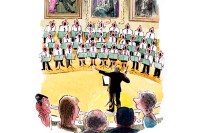
Boys, by Edward Bell Boy or girl, it isn’t easy being a full-time chorister, but the rewards are vast. For me, it was a good two years before the homesickness fully dissipated, and I was a veteran nine-year-old before I started really having fun. A year later the school became co-ed and our elite band had to adjust to the sudden arrival of girls. For a brief moment I thought they were even going to infiltrate the ranks of the choir. I couldn’t articulate why, but I remember thinking that would have been a bad thing. Very aware of the limitations of my own voice, I developed an obsession with the voices of others. Singing with the girls at school, I noticed that while their voices lacked the individuality of boys’ voices, they had a natural purity and sounded cleaner.

State schools are ‘character building’ too

In tough times, we have to be persuaded to buy the non-essentials in life. While no one would deny an education is essential, many parents are beginning to question whether paying tens of thousands of pounds for a clutch of GCSEs is really worth it. Therefore public schools are having to come up with ever more selling points to draw in the punters. Anthony Seldon, the never willingly underquoted Master of Wellington College, has a new reason to encourage you to send your children to his school. He claims that his establishment, and others like it, can offer to teach your children ‘character’ in a way that no state school can. What is ‘character’ anyway? Can it really be taught by a bunch of soldiers coming in and telling you about their time in Afghanistan?

Why Scottish public schools are in a field of their own

In 1919 the literary critic G. Gregory Smith coined the term ‘Caledonian antisyzygy’, by which he meant the ‘zigzag of contradictions’ that so dominated the national literature that it might be reckoned a useful summation of the Scottish character itself. ‘Oxymoron,’ Smith observed, ‘was ever the bravest figure, and we must not forget that disorderly order is order after all.’ Perhaps so. Certainly, the Scottish public schools endure an often ambivalent, even awkward, relationship with their native land. The most prestigious are outposts of England in Scotland, custodians of an idea of Britishness that’s increasingly out of favour north of the border.

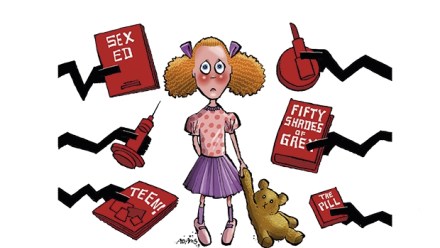
The tragedy of these sex education plans is that five year olds might miss the joke

Most people look back fondly at their sex education classes, remembering the stammering, red faced teachers, the very silly jokes and the endless, irrepressible giggles. The real tragedy about this week’s proposals to teach five-year-olds about sex is that children that small may not see the funny side of it. Generations of policy makers, teachers and journalists have spent years agonising over the question, while generations of schoolchildren have spent the happy hours of the PSHE classes passing notes, thinking up absurd innuendoes and flirting outrageously, eyes shining with laughter. But perhaps the privilege of having whole lessons given over to such cheerful pastimes was only ever to be a flash in the pan.

Proof that the schools revolution isn’t over

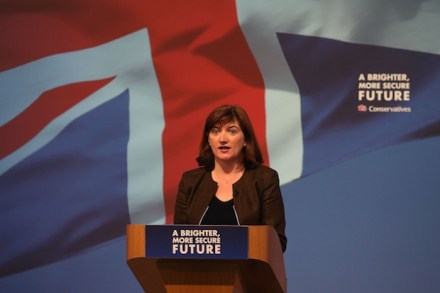
[audioplayer src="http://traffic.libsyn.com/spectator/TheViewFrom22_5_Feb_2015_v4.mp3" title="Isabel Hardman and Fraser Nelson discuss the plans for 50+ new free schools" startat=1694] Listen [/audioplayer]For those who assumed that the removal of Michael Gove as Education Secretary marked the end of the Conservatives’ scholastic reforms, this month may hold a surprise. More free schools are coming, The Spectator understands: at least 50 of them. Gove’s successor, Nicky Morgan, is due to announce the first of three waves this year. If the Tories win the election, Britain might have 150 more free schools by the end of the year. That means thousands more pupils enjoying independent education within the state system.

The Conservatives will lose votes if they fail to defend their school reforms

We can be sure that between now and May there will be an endless barrage of lies and disinformation aimed at belittling this government’s achievements in improving schools. The real danger is not that these arguments will be persuasive, but that they will not be rebutted. It sometimes seems as if the government has lost faith in its own successful reforms. Where Tristram Hunt was poised ready to pounce, misrepresenting the committee’s report the moment it was published (in fact, he was at it the day before it was published!), Nicky Morgan has been recorded as absent once again. It may be that the new Education Secretary has orders from No. 10 to do little and say nothing beyond making emollient noises about teacher workload. If so, this is an opportunity missed.

Female bishops are very, very old news

Female bishops The Reverend Libby Lane was ordained as Bishop of Stockport, the Church of England’s first female bishop. — By the time the first 32 female C of E vicars were ordained in 1994, the Episcopal Diocese of Massachusetts had had a female bishop, Barbara Harris, for five years. — Yet the first Anglican woman priest was ordained half a century earlier. Florence Li Tim-Oi had been deacon at Macao Protestant Chapel in the early 1940s. When the war prevented a priest travelling from Japanese-occupied territory to administer communion, Li Tim-Oi was ordained by the Bishop of Victoria on 25 January 1944. Cash or card?

The Tories have one real success in government – and they’re scared to talk about it

The most significant achievement of this coalition, the only thing they really have any right to crow about, and possibly all that posterity will ever remember them for with anything approaching gratitude, will not be the ‘long-term economic plan’ they never cease to talk up, but the school reforms that the Conservatives seem almost to want to deny as the general election approaches. This reticence is a mistake. With many voters grown so cynical about mainstream politics that they’re ready to throw in their lot with any passing populist chancer, here is a rare success story that needs shouting from the rooftops.

Children’s radio was once at the core of the BBC – now it’s all but disappeared

It was a bit of a surprise to hear Jarvis Cocker, the embodiment of cool and former frontman of Pulp, confessing to a love of Singing Together, a BBC programme straight out of the 1940s, with its clipped pronunciation and uptight pronouncements. But in his edition of Archive on 4, broadcast just as the Advent season began (and produced by Ruth Evans), Cocker took us on a musical journey back into his past and to his memories of singing in the classroom, ‘which certainly left its mark’ on him and millions of others. He reminded us that children were once at the heart of BBC programming and Singing Together was thought to be a great way to ‘improve young minds’.

Nicky Morgan vs Socrates

After the Philae space-lab’s triumph, one can see why Education Secretary Nicky Morgan should have hymned the ‘Stem’ subjects (science, technology, engineering and maths). At the heart of our service industries, they solve physical problems from vacuum cleaners to Viagra and make life more agreeable for billions. Solve the problem of finite resources and pollution, and all should be peace and light. But will it? In Phaedo — a conversation reported by Plato between Socrates and his friends on the day of Socrates’ execution (399 bc) — Socrates talks of his enthusiasm as a young man for speculation about how the world worked.

If you want an argument against state-school-only Oxbridge colleges, just look at me

I read with some interest the proposal for Oxford and Cambridge to set up state-school-only colleges in the Guardian this week. As someone who was educated exclusively in the state sector, and then went on to Oxford and Cambridge, I have a special interest in this area. I’m not in favour, obviously. The main objection is that if Britain’s two best universities set aside a quota of places for applicants from state schools they would effectively be saying that independent schools will always be better. That would be profoundly demoralising to those of us trying to raise standards in non-selective state schools.

The hidden price of more overseas students at British public schools

Just a decade or so ago, most public‑school-educated parents felt obliged to give their children the same start in life they themselves were given — selling off heirlooms to send their Jacks and Henriettas off to Eton, Stowe, Cheltenham Ladies or St Paul’s. These days the price is just too high, says Andrew Halls, head of King’s College School in Wimbledon, and he’s been honest enough to name the cause: the hordes of prospective parents from other countries, oligarchs and oil men, all jostling for places for their progeny. They push the price of an elite ‘British’ education up beyond the reach of any ordinary Brit.

Richard Madeley’s diary: Forgetting Tom Conti’s name, and other harrowing experiences

Oh God, it’s happened again. Another evening where I’m surrounded by people I know personally or have interviewed, and I can’t remember a single name. Multiple blanks. It’s a sort of self-fulfilling nervous tic — a phobia, almost. We were at a fundraiser at our kids’ former school in north London. For some reason, lots of celebs send their children there, including Jonathan Ross. He once joked that it’s the only school in London with a permanent posse of paparazzi hanging around outside the gates. Anyway, a veteran actor with grandchildren there strolled over for a chat. After he’d wandered off, I looked at my wife in mute appeal. ‘Tom Conti, for fuck’s sake,’ she sighed. ‘You’re bloody hopeless.

Alex Salmond’s School of Denial

Alex Salmond is on his way out. The First Minister gives every impression of enjoying - or at least making the most of - his farewell tour. And why not? Far from weakening the SNP, defeat in September's referendum has - at least for now - strengthened the party. Its supremacy is unchallenged and while recent polls putting the Nationalists on 50 percent of the vote are unlikely - surely! - to last forever this is the kind of problem worth having. Nevertheless, the First Minister's final days in office have also reminded us that policy and, indeed, philosophy are not necessarily Salmond's strengths. Unusually, First Minister's Questions proved a useful exercise this week. Both Jackie Baillie, Labour's temporary head at Holyrood, and Ruth Davidson pressed Salmond on education.

Jonathan Sacks on religion, politics and the civil war that Islam needs

Jonathan Sacks has an impressive track record for predicting the age we are in. In his 1990 Reith Lectures, ‘The Persistence of Faith’, the then chief rabbi pushed back against the dominant idea that religion was going to disappear. In the early 2000s, he predicted a century of conflict within Islam. And he was one of the first religious leaders and thinkers not only to critique multi-culturalism (‘the spanner in the works for tolerance’) but to try to think of a path beyond it. We recently talked over some of this at his house in London, where he lives during gaps in a busy teaching schedule that also takes him to New York.