Schools

State secrets

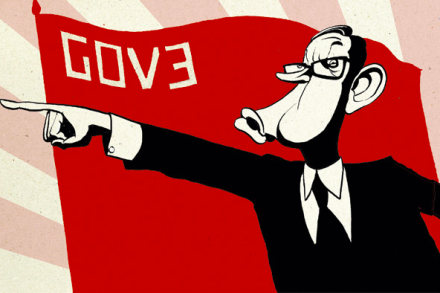
So much of the divide between state and private schools is a matter of mere perception — the perceptions of the teachers, the parents and the children. When, years ago, I announced that I would be sending my children to state schools, my colleagues (journalists on a national newspaper) turned on me as a pack of hounds, baying their disgust at what they called my willingness to ‘experiment’ on my own children. Move over Mengele, here comes Waugh. There are of course differences between the two types of education — but how many of them really matter? For my (yes, state-educated) children, many of the differences they saw between their

The complete picture

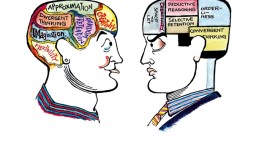
Everything in the 21st-century developed world is something the 21st-century developed world believes it can monetise. Children, and their education, are most certainly not exempt from this paradigm. Educationalists rarely tire of worrying about how the next generation are falling behind in just about everything compared with their equivalents in those pesky developing nations. Somewhere else in the world, countries are churning out prodigies, geniuses and work–ethically driven automatons who would rather kick in their own heads than kick a football if it meant missing an hour of maths tuition. Naturally this is a concern when we rely on the next generation to invent, discover, build and deliver the things

Inside the teenage brain

Why on earth did you do it?’ must be one of the most frequently posed questions to teenagers. The bright, ambitious boy standing before me is perplexed: prompted by a video clip online, he has liberally sprayed aerosol on his torso and then set fire to himself. There is a pause, then, ‘It seemed like a good idea at the time.’ In matters trivial, dramatic or, in this case, painful, teenagers seem to behave in bizarre ways. It is tempting for parents to believe that once our children reach adolescence somehow the huge gulf between childhood and adulthood has been bridged. We tend to believe that we are dealing with

China’s battery-farm schools

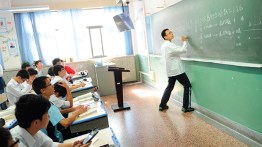
In the early morning light, the sleepy students of Hengshui Senior Secondary School are putting on their tracksuits in the dimly lit dormitories. It’s 5.30 a.m. By the time lessons begin at 7.45 they have already had morning exercise, an hour of self-study and a balanced breakfast. Under a strict regime that you might think belonged at a correctional centre, the youngsters are getting ready for another day in this high-achieving school in China. As one of the country’s ‘exam factories’, Hengshui has perfected the art of battery-farming children to produce exceptional results. A day in the life of the Hengshui student consists of a constant loop of work, rest,

The new A-levels: a user’s guide

This September’s sixth-form students are the first to start courses involving the new A-levels. New A-levels are not ‘modular’. Each involves taking several exam papers, but they must be done all together, at the end of the course. New A-levels have same A*–E pass marks, but exams will include a wider range of question types, and course work will be examined only if it is essential. Another major change is that AS exams will continue as a stand-alone qualification, but will not count towards new A-level marks. New A-levels are arriving in stages — this September for English, economics, biology, chemistry, physics, psychology, art and design, history, sociology, business and

Lessons in dyslexia

The term ‘dyslexia’ has always been emotive, and it remains so. Julian Elliott and Elena Grigorenko’s book The Dyslexia Debate (2014) has done nothing to dispel the controversy. In a recent paper, ‘Why Children Fail To Read’, Sir Jim Rose, an apologist for dyslexia, said, ‘Dyslexia continues to come under fire as a myth. At its unkindest, this myth portrays dyslexia as an expensive invention to ease the pain of largely, but not only, middle-class parents who cannot bear to have their child thought of as incapable of learning to read for reasons of low intelligence, idleness, or both.’ Rose emphasises that both environmental and genetic factors influence reading ability

Cameron’s crusade (and mine)

Even I was taken aback when, during the election campaign, David Cameron pledged to create 500 new free schools if the Conservatives won a majority. Was he being serious? Five hundred is twice the number that opened during the last parliament and, to be frank, some of those probably shouldn’t have done. Two have closed already — the Discovery New School and the Durham Free School — and a few more will probably shut before 2020. Was this just intended as another negotiating chip for use in the coalition talks in the event of a hung parliament? I don’t think so. I bumped into Cameron at a party in July

Animal magic | 17 September 2015

‘Yee-ha!’ is the triumphant shout from a riding school in south London, where Hamza, a teenage boy, has just completed a gymkhana exercise in a faultless rising trot. He takes a hand off the reins and makes lassoing motions in the air to emphasise his point. Hamza is wearing his school shirt and jumper (tie neatly rolled in a cubby hole in the tack room) above tracksuit trousers and borrowed riding boots. The sand-covered riding school has been built between the tower blocks of the Barrington Road estate and the railway line between Brixton and Loughborough Junction. Lambeth is one of the poorest boroughs in London: 32 per cent of

What do they do in there?

The idea of private schools as bastions of academic achievement has taken me some getting used to. When I left school 30 years ago, private schools were places of cold showers, beautiful but crumbling buildings and expansive playing fields. But good exam results? We never knew, of course, because exam results were not published, but there was always a suspicion — at least among grammar-school pupils like me — that private schools had more than their fair share of duffers who gained a leg up in life through friendships made on the rugger field rather than hard study. Yet since the Department for Education started to publish school exam results

School portraits

  Benenden   Founded in 1923, Benenden school in Kent began life as one of many all-girls boarding schools. But as other similar schools gradually introduced day pupils, Benenden stuck to its guns, and is now the only all-boarding girls’ school in the country. It argues that the boarding ethos means that it can ‘treat education as a seven-day experience’, allowing girls to learn both inside and outside the classroom. As well as achieving consistent exam results, with 61 per cent of this year’s A-levels awarded an A* or A, Benenden offers a wide range of extracurricular activities, ranging from EPQ to lacrosse, a chamber choir and a model UN.

The cruellest month

In six months’ time, my son is due to attend an assessment day for a nursery. The details on the nursery’s website are deliberately sketchy — presumably to avoid parents coaching their children — but it seems to involve my son being observed while he plays and graded on the results of his burbling: it sounds very much like an interview. He is going to be two and a half. It is easy to be satirical about a child going for an interview at the age of two and a half — his PowerPoint skills are not up to it; we haven’t arranged a single internship for him; he doesn’t

How to build a school

King’s College London Mathematics School is precisely one year old. And on 13 August it woke up to AS-level results that make it one of the ten best state schools in the country. 97 per cent of students got an A in mathematics. 90 per cent of grades in maths and further maths were As. Students’ grades were, on average, two grades higher, across all their subjects, than would be expected from their GCSE results. As a governor, I bask in reflected glory. Ours is a ‘free school’ sponsored by King’s, and it teaches talented, committed 16- to 18-year-olds. We select for potential, using our own test. But we also

Labour asks school pupils to act as informants ahead of vote

Although Buzzfeed managed to successfully register a cat to vote in the Labour leadership election, the party remains insistent that they are successfully weeding out ‘supporters’ who are not genuine. However, in a sign that they may not have quite as good a grasp on these checks as claimed, it turns out that they are asking school children to help by acting as whistleblowers on fellow pupils. Writing in the Guardian, Tim Dowling claims that his 17-year-old son — whose six-month membership means he is ‘considered something of a senior figure in the party’ — has been contacted by Labour to offer the inside scoop on his classmates who have applied to

The lessons of exam results season

Every year without fail, as the trees start thinking about losing their leaves, the papers are full of the same photographs and the same stories. The pictures are of groups of teenagers grinning triumphantly — hugging one another or throwing their exam results in the air in joy. What we have just experienced is exam results week; or, to be precise, results fortnight: first A-levels and then, one week later, GCSEs. GCSEs lead to A-levels, A-levels to university (and yet more exams) — and then at the end of it all? Well, that’s the next obstacle. But for parents, as well as children, the endless tests can be incredibly confusing.

Why are private schools so touchy about state schools' success?

The success of school reform in Britain seem to be worrying the private schools’ spokesmen. They’ve taken the unusual step of releasing a statement in response to my Daily Telegraph column yesterday, where I show that the top state schools outperform top private schools in A-Level league tables. I’m not sure why they’re so upset; I didn’t have a word of criticism for private schools. I think their success is admirable. I just argued that there is, now, just as much excellence in the state sector – and I produced data to back this up. Barnaby Lenon, chairman, Independent Schools Council, didn’t seem to that one bit. He issued a statement with the catchy

Don’t act white, act migrant

A black head teacher told me a story of his early days at a failing inner-city school. The job was a thankless one and everybody was waiting anxiously for the arrival of the new ‘super-head’ (the school had gone through three leaders in two years). In the playground it was leaked that the new head was an old-school type from Jamaica. During his first encounter with the students, they asked him how many children he had. He told them he had one and that she lived with him and his wife. ‘No sir, how many do you have in Jamaica?’ they asked. He replied: ‘None.’ They jeered, ‘Oh sir you’re

Common sense, moral vision — and the magic touch

An Intelligent Person’s Guide to Education is Tony Little’s valedictory meditation on his profession, published on his retirement as headmaster of Eton. In a series of loosely connected essays, erudite and eccentric, he contemplates issues of fundamental concern to us all. What are schools for? How should teachers be educated? How do good schools work? The book is rather oddly larded with insights from The Schoolmaster (1902) by A.C. Benson (brother of E.F. and Robert Hugh) who was, like Little, an Old Etonian who went back to teach at the school. Benson’s commentary on his own teaching experience is used as a touchstone, generally reinforcing Little’s civilising, rational approach to

Portrait of the week | 2 July 2015

Home At least 30 British people were among 38 shot dead at a beach resort at Sousse in Tunisia by Seifeddine Rezgui, aged 23, a Tunisian acting for the Islamic State and said to have been trained in Libya. Soldiers, emergency services and 1,000 police took part in a two-day exercise in London simulating a terrorist attack. A statutory obligation became binding on public bodies, including schools, to prevent people being drawn towards terrorism. Nicky Morgan, the Education Secretary, said that schools should look out for ‘homophobia’ as a symptom of Islamist jihadism. James Brokenshire, the Immigration Minister, said the National Barrier Asset (lengths of nine-foot fencing) would be deployed

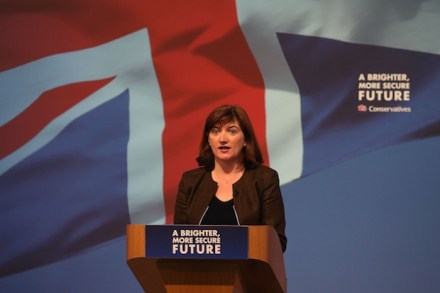
Nicky Morgan: intolerance of homosexuality in schools may be a sign of extremism

Nicky Morgan is taking the fight against radicalisation into the classroom. On the Today programme, the Education Secretary outlined what her department is doing to support schools in tackling, what she called, this ‘very real threat’. The DfE will release new guidance for teachers today, offering ‘examples and support in how they might look for young people who are risk at radicalisation – perhaps changes of behaviour or things they might say’. But Morgan admitted there is a unclear line between what constitutes a ‘healthy debate’ and upholding ‘British values’: ‘Schools should be a safe space for young people to explore all sorts of ideas, but we have since last year been very clear that schools should also be teaching British