Schools

Blazers of glory

From our UK edition

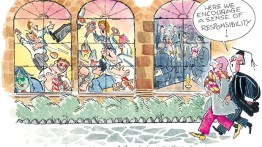
Most mornings on the way to work I pass students flowing out of Fulham Broadway tube station en route to the London Oratory School. They are an assorted bunch. Some seem more confident than others. One or two of the boys look immaculate, while others have clearly stirred their cornflakes with their ties. Some of the girls appear remarkably grown- up for their age — but presumably that’s my ‘how-come-policemen-are-getting-younger’ syndrome. What they share apart, obviously, from wishing they were still tucked up in bed, is a uniform chosen for them by the school, which they have adapted with varying success to their own personalities or moods on any given day.

Can a school share out its success?

From our UK edition

They have enviable results in the classroom and on the sports field. They command substantial fees and send large numbers of pupils to top universities. So why have leading private schools found it such heavy going transferring their success when sponsoring state schools? It seemed the ideal solution to help break down the great barrier between state and private schooling, as well as to address the charge that private schools were not doing enough to justify their charitable status: a leading private school takes a struggling state school under its wing, lends it some expertise, allows it to use some of its facilities and even shares some of its teachers. Results surely cannot fail to be impressive.

Blackboard jungle

From our UK edition

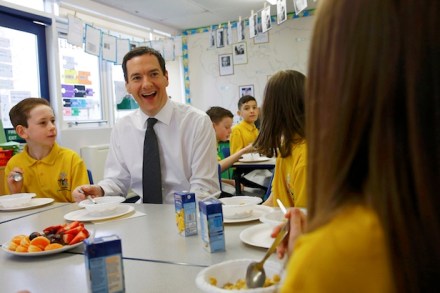
The world of education is a complex one. There are so many options – public schools, academies, state schools; single-sex ones and co-educational ones – that it’s no wonder people get bogged down. This supplement, kindly sponsored by Investec Wealth & Investment, aims to make things at least a little clearer. When people raise the subject of boarding schools, for example, it’s normally expensive public schools that you think of. But as Beth Noakes explains, there are also state schools that also offer boarding – although you might find the odd frog in the swimming pool. School food is changing, as Laura Freeman discovers when she visits a state primary whose chef previously worked at Ottolenghi. So are funding methods.

Perhaps public schools do have their benefits, after all?

From our UK edition

Guardian journalist in self-awareness shock. A very good piece by Hadley Freeman about the utter ubiquity of public school-educated monkeys at the top of every desirable profession (and, of course, trade). Here’s the crucial bit: Life is unfair, and I benefit from this unfairness every day. Even besides being born in the era of modern medicine and Ryan Gosling’s face, I went to a private school. As much as I’d like to think my career is all thanks to my special snowflake qualities, it’s difficult, when looking around at the rest of my heavily privately-educated profession, to draw any conclusion other than that my schooling might have helped me. Yes, Hadley. And your affluence, the two going hand in hand. She is an exception which proves the rule.

What schools don’t want you to know about rugby

From our UK edition

Today, I have joined 70 doctors and academics in writing to the government calling for a ban on tackling in rugby matches, saying that injuries from this 'high-impact collision sport' can have lifelong consequences for children. I speak from both professional and personal experience. I remember as if it were yesterday, that autumn afternoon 11 years ago when my son’s school phoned me at work to tell me my child had been injured and hospitalised for a second time while playing rugby. I was sickened, upset, anxious and angry. School should be a safe place for children. The first time my son was injured the school had described it as ‘bad luck’ and promised that he would play in the third and fourth teams where he would be less at risk of injury.

The best state schools have pulled ahead of private schools. Why is that so hard to accept?

From our UK edition

For years, now, the Sutton Trust has been releasing research showing how many doctors, judges, journalists etc were privately educated and conclude that it’s all a posh boys' stitch-up. The British press loves banging this old drum, but in doing so they drown out a new tune. Today, there is more academic excellence in the state sector than the private sector. Not that many people want to know. Take, for example, an article in this week’s Economist. “Education should not be about wealth” it quotes Tony Blair saying in 1996. Wrong, Blair! The Sutton Trust’s report shows that “two decades later, it still is" about wealth.

Big heads

From our UK edition

The term ‘superhead’ was first used during the Blair government in 1998: an eye-catching word for a new breed of Superman-style headmasters or headmistresses, fast-tracked star teachers who would be parachuted into failing inner-city state schools and paid six-figure salaries to ‘turn them around’. It reaped rewards and can generally be considered a Good Thing. Sir Michael Wilshaw, for example, now chief inspector of schools, became known as ‘the hero of Hackney’ for transforming the academic record of Mossbourne Community Academy, built on the site of the totally-failed Hackney Downs School. Sometimes power went to the superheads’ heads and they were caught siphoning off funds to pay for their holidays.

A lesson in self-censorship

From our UK edition

According to my former colleagues, history teachers in an urban English state school, anyone who votes for the Conservative party is ‘thick’, the British Empire was ‘unambiguously evil’ and capitalism leads to ‘mass inequality and misery for the vast majority of working people’. The only answer was, you guessed it, socialism. Yes, the cliché of the Little Red Book-carrying schoolteacher is alive and well. As the only right-of-centre teacher in the history department, I found lunchtime particularly galling. My colleagues would sit around denouncing the British empire, Michael Gove’s changes to the national curriculum and the government’s ‘ideologically driven’ attempts to cut the nation’s deficit.

Why I now believe in positive discrimination

From our UK edition

The Prime Minister no doubt knew he would be fanning the flames when he waded into the argument about the admission of black undergraduates to universities like Oxford and Cambridge. We should do him the courtesy of trusting he means it when he says he feels strongly about discrimination in the awarding of university places – and I think he does. In this week’s issue Toby Young marks David Cameron’s essay with tutorial authority, and finds his case wanting. Particularly valuable among Toby’s marginal notes is his point that you can’t accept applicants if they haven’t applied – and black and working-class students disproportionately don’t. But we enter a vicious circle here.

In defence of gender

From our UK edition

[audioplayer src="http://rss.acast.com/viewfrom22/whysexmatters-thedeathofsportandistheeusinkingwhetherbrexithappensornot-/media.mp3" title="Melanie Phillips and Jacqui Gavin, a trans activist and civil servant, discuss gender"] Listen [/audioplayer]Once upon a time, ‘binary’ was a mathematical term. Now it is an insult on a par with ‘racist’, ‘sexist’ or ‘homophobic’, to be deployed as a weapon in our culture wars. The enemy on this particular battleground is anyone who maintains that there are men and there are women, and that the difference between them is fundamental. This ‘binary’ distinction is accepted as a given by the vast majority of the human race. No matter. It is now being categorised as a form of bigotry.

It’s dangerous and wrong to tell all children they’re ‘gender fluid’

From our UK edition

This is the cover piece of this week's Spectator, out tomorrow: Once upon a time, ‘binary’ was a mathematical term. Now it is an insult on a par with ‘racist’, ‘sexist’ or ‘homophobic’, to be deployed as a weapon in our culture wars. The enemy on this particular battleground is anyone who maintains that there are men and there are women, and that the difference between them is fundamental. This ‘binary’ distinction is accepted as a given by the vast majority of the human race. No matter. It is now being categorised as a form of bigotry. Utterly bizarre? Scoff at your peril. It’s fast becoming an enforceable orthodoxy, with children and young people particularly in the frame for attitude reassignment.

Elite sport

From our UK edition

England’s cricketers won a remarkable Test match inside three days in the bearpit of Johannesburg, a victory that put them 2-0 up in the four-match series, with only the final Test to play. It is a remarkable achievement by Alastair Cook’s team because, before a ball had been bowled, most judges expected South Africa, the No. 1 ranked team in the world, to claim another triumph by right. In particular it was a wonderful tribute to the public schools which sharpened the skills of the star players. Stuart Broad, who took six prime wickets for only 17 runs on that tumultuous third day, reducing South Africa’s second innings to rubble, was educated at Oakham. Joe Root, who scored a superb century to set up the bowlers, was a sixth-former at Worksop College.

Q: What is a good school? A: One that other people like

From our UK edition

A few months ago I received a call from someone running a small private school near New York. They believed their school was objectively better than a larger, more famous establishment nearby, but had more difficulty attracting pupils. What should they do? This is not easy. You see, however skilled your teachers are, what really makes a good school is often simply having a reputation for being good. When parents choose a school for their children, much as they pretend otherwise, they are not really choosing a school so much as buying a peer group for their offspring (and, to some extent, for themselves).

Faith schools are now under attack from the interfaith community

From our UK edition

It’s depressing to read of yet another attack on faith schools in today’s papers, this time from a self-appointed 'Commission' set up by something called the Woolf Institute - an organisation dedicated to 'interfaith research, teaching and dialogue'. It has just published a 'report' on 'religion and belief in British public life' called 'Living with difference: community, diversity and the common good'. I will leave it to others to comment on the substance of the report, but at first glance it reads like a product of the ‘Thought for the Day’ school of theological discourse. In other words, the usual wishy-washy, Kumbuya, inter-faith bilge, overlaid with a thick layer of Jewish and Christian self-loathing, as well as craven praise for 'the religion of peace'.

Lessons in jargon

From our UK edition

‘Excuse me, sir. Seeing as how the VP is such a VIP, shouldn’t we keep the PC on the QT? ’Cause if it leaks to the VC he could end up MIA, and then we’d all be put out in KP.’ How I cheered when Airman Adrian Cronauer mocked Lt Steven Hauk’s fondness for acronyms in Good Morning, Vietnam. Using jargon is an act of unconscionable self-indulgence. It is designed to make the user feel superior while saying not much, and Adrian, played by the late Robin Williams, spoke for millions of cheesed-off employees when he attacked it. Jargon, acronyms and corporate-speak — all too common in offices — should be banned from schools.

Tory MPs expect changes to school funding

From our UK edition

A running sore in the Tory party is the way in which school funding is allocated. Under the current arrangements, a school in a rural area receives less money per pupil than one in a town or city, and this causes a great deal of resentment. It means that schools in the best-funded areas get £6,297 per head, but those at the bottom of the list receive just £4,208 per pupil. Conservative MPs have held repeated meetings with ministers about this arrangement, but got nowhere before the election because the areas they were worried about were more likely to be safer territory for the Tories. They had a particularly grumpy meeting with Nicky Morgan before the election in which this was made clear to them, and which many left in a bit of a huff.

The fine art of talking bunkum

From our UK edition

At the last minute, a friend invited me to a ‘Distinguished Speakers Dinner’ at the Oxford and Cambridge Club earlier this week. The dinner was being hosted by Christ’s College and the speaker was Sir Nicholas Serota, director of the Tate galleries and one of the college’s alumni. His subject was ‘The arts in education: luxury or necessity?’, which is why my friend thought I might be interested. Indeed I was. There’s an awful lot of bunkum talked about the arts in education and I’m afraid Sir Nicholas’s speech was no exception.

She could be a contender

From our UK edition

[audioplayer src="http://rss.acast.com/viewfrom22/boris-nickyandthetoryleadership/media.mp3" title="Fraser Nelson and James Forsyth discuss whether Nicky Morgan could be the next Tory leader" startat=38] Listen [/audioplayer]Nicky Morgan has been Education Secretary for 15 months now. Yet her office looks like she has just moved in. She has some family photos on the desk, a small collection of drinks bottles by the window and a rugby ball in her in-tray. But, unlike other cabinet ministers, she has made no attempt to make her office look like her study. This is not someone who sees their office as a home away from home. When Morgan was made Michael Gove’s successor last year, it seemed an unusual appointment. She’d only been an MP for four years.

Thinking inside the box | 17 September 2015

From our UK edition

There are almost half a million foreign students in the UK — at boarding schools, universities and colleges. In independent schools alone, one in five new students are from abroad. And this creates a problem that no one really thinks about. What do these children do with all their belongings? Any parent who has sent their child off to school, boarding or not, will remember the seemingly endless school uniform list. ‘Two pairs of black, lace-up, polishable shoes, plus a pair of Sunday shoes.’ (What’s wrong with using Friday shoes on a Sunday?) Trunks, bath sheets, three pairs of pyjamas… and the games kit, of course. Tennis rackets, hockey sticks, football boots, and the helpful fact that the entire school uniform changes for one short term in summer.

The perils of prep

From our UK edition

‘We will have to look at how we are doing things. Will we even be doing prep?’ So spoke Eve Jardine-Young, principal of Cheltenham Ladies’ College, this summer, galvanised to speak out by the alarming increase in depression among teenagers. It was brave of her even to question the need for prep: in our age of competitive league tables, it seems heresy to suggest any kind of decrease in daily output from students. But she is right to question it, and I hope her tentative question will soon be transformed into an untentative statement: prep should not be routinely given, and it should only be given if there’s a compelling reason for doing so. This would get rid of the vast majority of prep that children are set at the moment.