Schools

Not dead – yet

From our UK edition

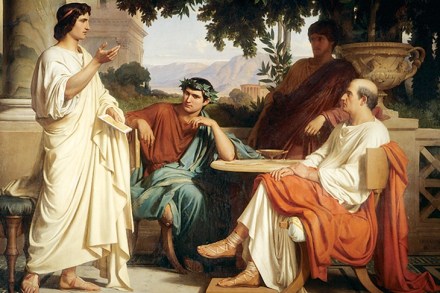
It was a dark afternoon in November, and the wind was rattling the casements of the bare schoolroom. My small but enthusiastic class of Greek students nibbled chocolate biscuits and listened politely as I ploughed through yet another list of irregular verbs. Suddenly, standing by the electronic whiteboard, I had a sort of minor epiphany (Epiphany: from the Greek term for a god’s manifestation to undeserving mortals). Why, I asked myself, were these bright teenagers devoting so much time to studying a difficult language which they would never be able to use to communicate, whose native speakers died two millennia ago, and in which it would take years to reach fluency? Twenty years ago, when I was learning Greek and Latin, this question would never have occurred to me.

Rise of the machines

From our UK edition

‘There is a profound mismatch between the way we are educating our young and the world we’re educating them for, and what should, and could, be happening.’ So says Sir Anthony Seldon, former headmaster of Wellington College and vice-chancellor of Buckingham University. Seldon is well known for promoting novel ideas when it comes to education. During his time at Wellington he was often in the limelight for his original style of thinking, or ‘visions for education’ as he puts it; for example, his decision to introduce mindfulness into the curriculum there. Seldon isn’t just a teacher, though. He’s also a historian and a political biographer, as well as being a regular on TV and radio, discussing education.

Summertime blues

From our UK edition

Every year, like clockwork it comes, the traditional concern that the younger generation don’t do summer jobs like they used to. As the school holidays approach a politician is wheeled out to write a nostalgia piece about part-time jobs, and the ‘essential skills’ these offer. Holiday and Saturday jobs, you see, are the foundations of a successful career, with their promise of resilience-building and priority-juggling. Some statistics will be cited about businesses being desperate for applicants with ‘soft skills’, and on cue, media-friendly CEOs are trotted out to support whichever wayward minister has been handed the keys to the Workshy Teenagers wagon.

Share in the community

From our UK edition

The theatre, we are told, is increasingly becoming the domain of the privately educated. The Guardian has even claimed that the working-class actor is ‘a disappearing breed’, and it’s certainly true that public school-educated actors such as Eddie Redmayne, Benedict Cumberbatch, Tom Hiddleston, Damian Lewis (the list goes on) are rarely off our screens. But what’s the reason for it? Why are our independent schools so good at churning out Bafta- (or indeed Oscar)-winning actors and actresses? A large part of it comes down to the teaching and the facilities available. Most public schools offer a school theatre, as well as full-time drama teachers, theatre managers and so on.

Did I destroy my daughter’s prospects?

From our UK edition

Every year, thousands of parents face the situation I did in 2014 when I realised that I could no longer afford to educate my ten-year-old daughter privately. At first, I didn’t panic. After all, I lived near some excellent state schools. After queuing for two hours one cold winter Saturday morning for Open Day, we learned that to gain a place at Holland Park you had to live within yards of it, or win a heavily oversubscribed art scholarship, which my daughter attempted — and failed. I still didn’t worry. Why should I have, when 93 per cent of children under 16 in England are educated in state schools? We queued for one Open Day after another. We tried a couple of church schools, but as non-churchgoers our chances were slim.

A parent’s dilemma

From our UK edition

In my study at home stands a small cork board with the names of eight target schools for my ten-year-old son. The state schools are on the left, the private schools on the right. The decision is due soon and I still have no idea what to do. There aren’t many things that Britain genuinely does better than anyone else in the world, but secondary education is one of them. The discerning Russian plutocrat, who could buy anything anywhere, would have his son in England for his teenage years followed by an American Ivy League university. International league tables rank our private schools top of the world — their quality is world famous. But what’s less well-known is that exam results in the best state schools are now just as good.

School report | 6 September 2018

From our UK edition

    MAKING THE GRADES  When he was education secretary, Michael Gove took it upon himself to reform the GCSE exam system. The A* to G grading system was replaced by a numerical one, with the aim of making it easier to differentiate between the top candidates — A* and A grades were, for example, replaced with three grades: 7, 8 and 9. These new exams were supposed to be harder than the previous ones, with former Harrow headmaster Barnaby Lenon commenting that they ‘contain questions of a level of difficulty that we have not seen since the abolition of O-levels in 1987.’ Despite all of this, GCSE results improved this year. The proportion  of students achieving the pass mark (previously a C, but now a 4) increased by 0.

Editor’s Letter | 6 September 2018

From our UK edition

State or private? Years of saving every penny in a bid to scrape together enough to pay the school fees, or months of cramming to get your child a scholarship, a bursary… anything to ease the pain. Is it worth it? Fraser Nelson is going through this process, and writes about his dilemma. Charlotte Metcalf, meanwhile, tells the tale of her bid to find the best possible state school for her daughter, and how she still wonders whether she has doomed her child’s prospects by being unable to afford to go private. Elsewhere in the magazine, classics teacher Emma Park argues that children shouldn’t give up on Latin just yet (even if today’s high-achieving pupils see little point in learning for learning’s sake, rather than for exam-passing).

In defence of Public schools

From our UK edition

Public schools are the jewel in the crown of the British education system. Across the centuries, they have educated our elite across government, law and the arts. They are as synonymous with England — golden, verdant, timeless England — as scones with cream and jam, cricket (played in whites, please) and The Queen. Their allure is partly myth, partly nostalgia, partly cold, hard commercialism. Of course, there is the romanticised ideal, cemented in our best fiction: the public schools of Jennings and Darbishire; of Billy Bunter; of devoted, beloved Mr. Chipping. Harry Potter is, though JK Rowling may not admit it, the ultimate scholarship boy made good. Our best comedians and raconteurs play on the stereotypes.

Vocational schools are not to be sneered at

From our UK edition

When I was 16 I failed all my O-levels, bar a grade C in English Literature, and concluded I wasn’t academically bright. Instead of retaking my O--levels, doing some A-levels and trying to get a place at university, I decided to pursue a career as a tradesman and enrolled on a residential work experience course. It was a bit like a boarding school, except it offered students a technical and vocational education rather than an academic one. It was a miserable period of my life. The stench of failure hung over the institution like a toxic cloud and my fellow students and I were treated as if we were semi-delinquents who might at any moment go off the rails.

The secret segregation of state schools

From our UK edition

Is it all right for the Muslim parents of children at British state schools to prevent their sons and daughters from being friends with non-Muslim kids? And is it sensible? These questions have been knocking around my head like a pair of trapped moths, unable to find a way out. Quite by coincidence and on separate occasions, in the past month I’ve met two (non-Muslim) women whose children have had trouble at Muslim-dominated state schools. The kids made friends easily in their first term, said the mothers, but as the months went by it became harder to stay pals. Their schoolmates never invited them home, nor would they come round for playdates or parties. The friendships faded away and the kids were left confused.

In my illness and old age, children give me hope

By 74 it is easy to feel that you have seen it all, done it all, that nothing much surprises you any more. Striving gives way to coping. Drop a pencil and it rolls under the sofa. What you have to do is think about the best way to find it and pick it up. Problem. Do you get down on your knees and reach in under, which of course means you will have to get up again, or do you simply push the sofa away? Such problems don’t really bother you. You cope with it. You don’t reflect on growing decrepitude. It has been so slow coming, you have hardly noticed. Push the sofa away. Bend slowly, pick it up. Done. Straighten up. No one was watching. That’s good. Even an unwelcome medical diagnosis does not surprise you. You cope because you have to.

Diary – 31 May 2018

By 74 it is easy to feel that you have seen it all, done it all, that nothing much surprises you any more. Striving gives way to coping. Drop a pencil and it rolls under the sofa. What you have to do is think about the best way to find it and pick it up. Problem. Do you get down on your knees and reach in under, which of course means you will have to get up again, or do you simply push the sofa away? Such problems don’t really bother you. You cope with it. You don’t reflect on growing decrepitude. It has been so slow coming, you have hardly noticed. Push the sofa away. Bend slowly, pick it up. Done. Straighten up. No one was watching. That’s good. Even an unwelcome medical diagnosis does not surprise you. You cope because you have to.

Tips on how to get your child into the best state school

From our UK edition

Monday was ‘national offer day’, which means that more than half a million parents across England were notified about which primary school their child got into. For most, the news was good, with nine in ten parents securing a place at one of their top three choices. But for some — particularly in London — the offer letters brought disappointment. In Kensington and Chelsea, for instance, just 68.3 per cent got their first choice of school. Not surprising, then, that parents have been resorting to fraud. In some cases, desperate parents end up spending so much money to game the system it would be cheaper to go private.

Money can’t buy good exam results

From our UK edition

A paper published last week in an academic journal called npj Science of Learning attracted an unusual amount of press attention. It looked at the GCSE results of 4,814 students at three different types of school — comprehensives, private schools and grammars — and found that once you factor in IQ, prior attainment, parental socio-economic status and a range of genetic markers, the type of school has virtually no effect on academic attainment. Less than 1 per cent of the variance in these children’s GCSE results was due to school type.

Sex education now means whatever schools want it to mean

From our UK edition

I’ve never shied away from discussing sex with my children and they’ve always been precocious enough to ask probing questions, usually in public. So when the letter came home from school announcing sex education classes for my then ten-year-old, I was relaxed. And when I later asked him, ‘Did you learn anything you didn’t already know?’, I expected a bored ‘no’. In fact, he said, ‘Yes. Oral sex and masturbation.’ Clearly sex education has moved on since I was at school. Schools have traditionally covered reproduction in science lessons and, since the 1960s, sex education as a discrete subject has dealt with contraception, sexually transmitted infections and unwanted pregnancy.

Why pay for the privilege?

From our UK edition

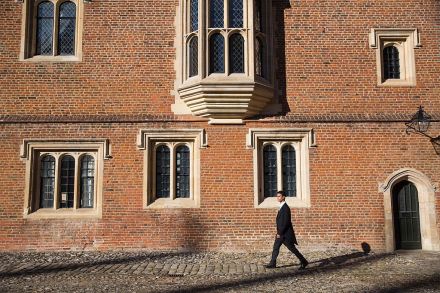
In downstairs loos of houses of a certain sort, the old school photograph is a constant. When you’ve seen a few of these slightly yellowing portraits, you’ve seen them all. But this trend might soon reach its end. If you listen carefully in particular enclaves, you’ll hear faint whisperings about a new way of doing things. Maybe, just maybe, public school isn’t quite for everyone any more. Say goodbye to the old school pictures; the toffs are going native. Last year, in a Viscount’s kitchen, I spotted an invitation to a school fair — at the local primary. A few weeks later, an Old Harrovian whose family has a 300-year history with the school remarked that he’d be preparing his children for the 11-plus, rather than common entrance.

Minding the gender gap

From our UK edition

Boys are behind girls: at primary school, secondary school and at university. In the UK, white working-class boys have long been at the bottom of the heap in terms of attainment, but these days boys of all backgrounds are underperforming relative to girls. Last year, girls got two-thirds of the new top grade 9 scores at GCSE, while just 32 per cent of boys applied for university, compared with 44 per cent of girls. It’s not just in Britain either. Across the OECD countries, a study has found that 15-year-old boys are 50 per cent more likely than girls to fail to meet the baseline standards in reading, maths and science. So the question is why? How do boys and girls differ in their approach to learning? And what are schools doing to help boys learn effectively?

School report | 15 March 2018

From our UK edition

TRUE GRIT Education secretary Damian Hinds gave his first big speech at the Education World Forum in January, about the vital importance of learning from other countries and ensuring young people are able to thrive in a global economy. He also spoke of the benefits that come from sharing Britain’s educational excellence and know-how with the rest of the world. But he made it clear that he doesn’t believe education is all about exams and A grades. ‘There is much outside the relevant qualifications which matters a great deal as well,’ he said.