School

My unofficial music teacher

In the early 1970s my father moved offices and I was plucked out of my cosy prep school in Surrey to land in the eccentric surroundings of Presentation College. My new school’s modern block was surrounded by decaying Edwardian villas occupied by Irish teaching brothers with impenetrable accents. There was a broken aeroplane on one of the lawns; I never found out how it got there. Talk about a culture shock. Already I was besotted with classical music; to say that the brothers didn’t share my enthusiasm is putting it mildly. There wasn’t a flicker of interest in eight years – something that puzzled me until I read Thomas Day’s book Why Catholics Can’t Sing, which argues that, in the Irish diaspora, highbrow music stirs folk memories of English colonial occupation.
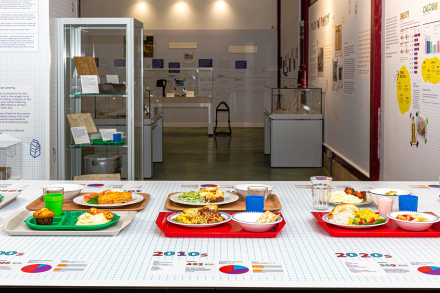
Prepare to feel nauseous at this School Dinners exhibition

If your stomach turns when you walk past a Japanese restaurant with moulded plastic replicas of sushi on display, prepare to feel even more nauseous in the School Dinners exhibition at the Food Museum in Stowmarket, Suffolk. Here, moulded in that same plastic, in (if anything) even more garish colours, you’ll see a sample two-course school dinner from each decade from the 1940s to the 2020s. If orange PVC cod’s roe looks a bit disgusting, a heap of pale, lumpy, plastic 1970s mashed potato with over-boiled carrots is even worse. The sample plate from the 1940s contains chunks of dark brown liver polluting the inside of a jacket potato. (I’m not sure dinner ladies would have put liver inside a jacket potato in the 1940s.

Why homeschooling rates have doubled

Schools are a relatively new phenomena in human history. In Britain, they expanded in the 19th century and early 20th century in step with industrialisation and urbanisation, but in many places in the world, what little education the young receive occurs at home. The assumption most share, not unreasonably, is that where there are schools to attend, parents should send their children to them so they can avail themselves of the opportunities for academic learning, for socialisation and working through what they might do after they leave with the rest of their lives.

As children go back to school it’s parents who need lessons

Britain’s children go back to school this week. But after months of chatter about grade inflation and the harmful effects of lockdown on learning, is it parenting, rather than schooling, that actually needs attention? New polling reveals that one in ten younger parents think it’s down to someone else to teach their pre-school children to speak. Dig a little deeper and this number doubles to almost a fifth for the very poorest parents. Getting the basics right is seen as someone else’s job. Too many children fall behind before they have even started school. Many never catch up. By the time they leave school, children from the poorest backgrounds are on average almost three years behind those from the most affluent homes in reading and writing.

Hollywood has a school violence problem

From our US edition

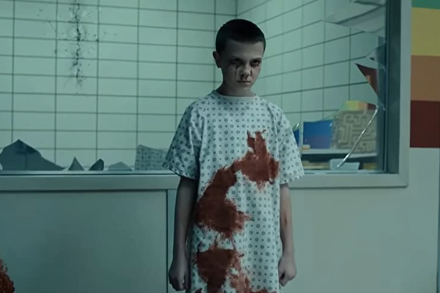
Streaming services have a school violence problem. For all the hand-wringing and anti-gun stances actors love to indulge on social media, their industry has no problem glorifying the very terror they claim to condemn. Two such cases came last week, right after the Uvalde school shooting that left twenty-one people dead, nineteen of which were schoolchildren. On Friday May 27, three days after Uvalde, the fourth season of Stranger Things premiered on Netflix with an opening scene of mass child death, apparently at the hands of the show’s protagonist, Eleven, in a flashback. Several kids' corpses lie on the floor with smears and pools of blood around them. The streaming service added a disclaimer at the beginning of the season specifically referencing the incident in Texas.

stranger things school

Left-wing shame and fear will end the mask mandates

From our US edition

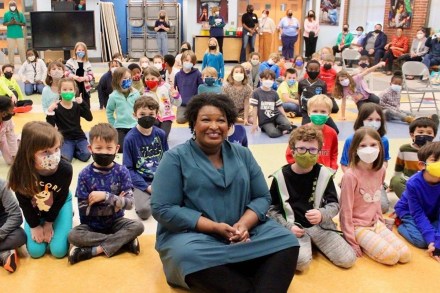
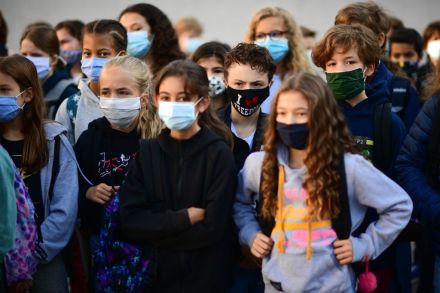
After two years of nonsense messaging on masks, some liberal politicians are ready to hang up their KN95s. Numerous blue states such as California, Connecticut, New Jersey, New York and Oregon have announced wind-down plans for their mask mandates this week. All this comes on the tail of a spate of Democratic politicians being pictured unmasked with masked schoolchildren or workers. A complete coincidence, I am sure. Some of the recent images seem tailored to piss voters off. Last week, Stacey Abrams tweeted out a photo with a group of masked school children in Georgia. The Democratic candidate for governor posed proudly without a mask. The image was so blatantly callous, it almost made you wonder if she was trying to rub her hypocrisy in people’s faces.

mask mandates new normal

Is this the beginning of the end of the Biden administration?

From our US edition

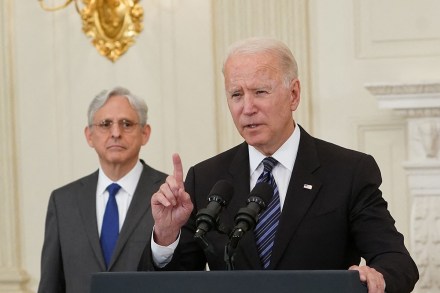
When future historians congregate to conduct their postmortem of the short-lived Biden administration, what date will they pick to mark the crisis that signaled the beginning of the end? I’d like to offer October 4, 2021 for consideration. In the weeks before, it is true, Biden’s approval rating had been in free fall. (Fun pastime if you’re bored: enter ‘Biden’ and ‘free fall’ into your favorite search engine). There was the world historical disaster of our evacuation of Afghanistan, the nearest parallel to which was not America’s ignominious departure from Saigon in 1975 but William Elphinstone’s disastrous evacuation from Kabul in 1842. There was the unfolding crisis at our southern border.

administration

Will vaccinating teenagers really prevent disruption to schools?

After the JCVI recommended against offering vaccines to children aged 12 to 15 on health grounds, the government asked the four chief medical officers to consider the broader case, including the impact on schooling. As we know, the government has now accepted the chief medical officers’ recommendation: that all 12 to 15 year olds should be offered one dose of Pfizer on the grounds that doing so will reduce disruption to education. The government has released details of the modelling that underpins that rationale. The approach was first to estimate the number of infections with and without vaccination under different scenarios of infection spread. Next, they used this to model the number of days of lost education that could be prevented by vaccination.

Stop using toddlers as pawns in the COVID war games

From our US edition

Maddie, my three-year-old daughter, is home this week because one of her classmates tested COVID positive. You read that right. It’s July 2021, but our toddler, who is at virtually no risk of transmitting or getting sick from COVID, is forced by the ruling class to be out of school, as are her 23 tiny classmates. So while I try to do work as I listen to Maddie talk to her imaginary friends, I’d like to pose a question to those making and enforcing policy in Sacramento and Los Angeles. When is it enough? The folks now telling our beloved Montessori school to shut down the offending class do not seem to be the brightest among us — what with their unwillingness to grasp and apply basic science — so I’ll define the ‘it’.

toddlers covid

The plot against religious education

Faith is not the declining force that some secularists believe or indeed desire it to be. Even here in the UK, we have our growing and vibrant black-led churches; increasingly present mosques, temples and gurudwaras; and believers arriving from Eastern and Central Europe.  This is why it's important for religious education to continue to have a special place in the curriculum of our schools. Although RE is not a ‘core subject', it remains a compulsory one. Successive Education Acts have stipulated that it should be taught in such a way that reflects the mainly Judaeo-Christian traditions of this country — while also covering the teachings and practices of other religions present here.

Covid restrictions are taking a terrible toll on our schoolchildren

In some senses, life in Britain is slowly returning to normal. Thousands of people gathered to watch Royal Ascot last week. Next week is Wimbledon, where 15,000 fans will pack into centre court to watch the finals. Meanwhile at Euro 2021, up to 65,000 people are expected to attend the tournament's climax at Wembley. It’s wonderful to see these sporting events back. However, it is deeply troubling that this ‘can do’ attitude doesn't seem to apply to events holding equivalent significance in children’s lives. The end of what has been a historically troubled school year is upon us.

School closures on trial

From our US edition

You get a look at your high-school daughter’s smartphone. You see a note there, a note to you and your family. It’s a suicide note. What to do, that is, what after seeing the troubled girl through time on a psychiatric ward? You sue. I refer to litigation brought by desperate parents in Los Angeles and San Diego counties in an effort to get their kids back into public schools. While looking into the effects of COVID lockdowns, I happened upon certain court documents. I have since been provided others by one of the plaintiffs’ law firms, Aannestad Andelin & Corn. But let’s not consider these cases as literally what they are: legal prayers for relief in state courts, relief from persisting, on-and-off, lockdowns; relief from COVID hysteria.

school

The school that made an American century

New York With the Karamazovian hangover now only a weekly occurrence, the healthy life rules supreme. Well, most of the time. Up early, I go for a brisk 30-minute walk, then it’s breakfast in the park that stretches out two blocks away. I finish off with two sets of 20 push-ups on a park bench, a few kicks and punches using leaves as targets, then cross Fifth Avenue going east. (Karate is now a three-night-a-week activity, and I’ve given up Judo as it takes up too much time and needs too many partners.) I then buy the papers from a friendly Indian, get my first coffee of the day from a friendlier Greek, and return to my flat in the 1928 art-deco marvel that is my Park Avenue abode.

Kids will thank us for shortening the school summer holidays

Oh for a normal summer – so close now, but Covid remains capricious, a wave across Europe threatening to wash it all away. But just think: for some schoolchildren, and their parents, the normality of the long six-week summer break may not be such an appealing prospect. Sure, the middle-classes are able to pack it with enriching activities – exciting new skills, friendships and memories. But, for kids in families with stretched budgets, it can be isolating, impoverishing, boring. And, as quite a substantial body of evidence now shows, very bad for their emotional and cognitive development – some studies even conclude that the majority of the attainment gap between rich and poor children can be explained by the cumulative impact of successive summer breaks.

Exclusive: Haberdashers’ Aske’s could change name over slavery links

In the wake of last summer's Black Lives Matter protests, a number of leading British private schools announced plans to decolonise their syllabus. Winchester, Fettes, Ampleforth and St Paul's Girls were all reported to be 'formulating new approaches' to teaching about Britain's colonial past and whether subject curriculums were inclusive enough. Now Mr S can reveal that the Haberdashers' Aske's schools are the latest to join the list. The governing body of the Haberdashers' Company has written to parents and guardians at its famous boys and girls schools in Elstree and its sister Federation in South London about its benefactor Robert Aske, a London merchant who died in 1689.

Face masks in schools: a note on the evidence

Secondary-school children returning to school from 8 March will be required to wear masks in classrooms, at least for several weeks. That is in contrast to the initial return of children to school last summer. It wasn’t until November that they were required to wear masks at school, and then only in corridors and other communal areas. But should we be forcing children to wear masks? A German study – in a preprint which has yet to be peer-reviewed – has reported negative symptoms of children who wear masks in that country.

Parents are being gaslighted about home-schooling

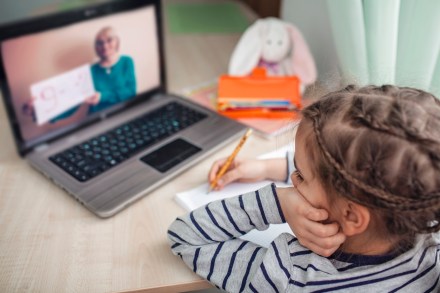
Forgive me, I’m not going to go through all the tragedies of the pandemic in this piece, not because I don’t care, but because I've got no time and I’m writing under very harried circumstances: the kids are still up, my deadline's looming, and my wife keeps sending me WhatsApp messages about emailing the headteacher again. Oh boy. Things are very tense for parents. My wife’s been googling when she should be sleeping. I wake up to emails about my schedule or screenshots of government guidance, which is what this article’s about: we read this guidance, which is published for parents, and we listen to what politicians say, and we read the news, but the things we hear and read do not match reality.

The parent gap: what’s happened to mums and dads in Britain?

During a recent webinar with MPs, I learned that parents in Bradford were up in arms because their children had not received their free spectacles. On a visit to the optometrist, organised by the school, the children had been diagnosed with failing eyesight. Why had the school failed to follow up in providing these near-sighted children with the spectacles they were entitled to? I was not sympathetic. When my daughter was nine, I spotted that she was near-sighted because she kept squinting as she struggled to read the road signs in our new neighbourhood. Her (state) primary school had nothing to do with our visit to the optometrist, or with Izzy’s (free) spectacles. I felt that was my responsibility. It seems this is a minority view.

The A-level algorithm shattered my university dream

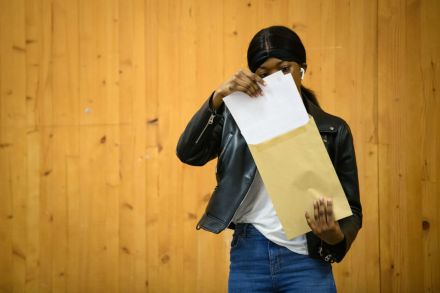
With a B, an E and a U at A-Level, it came as no surprise that yesterday I was rejected by both my first and second choice universities. Had I sat the exams myself, then I would have been more understanding of the outcome: at least I would only have myself to blame. But those grades do not reflect my ability, nor were they predicted by my teacher. Instead, the BEU that greeted me on results day was based on what an algorithm thought I ought to achieve. Last week, I wrote for Coffee House of my concern that students from disadvantaged backgrounds would be disproportionately impacted by the cancellation of exams and introduction of calculated grades, and I’m afraid I was right.I held offers from top Russell Group universities to study Law (Cardiff being my firm choice).

In Los Angeles, school’s out…forever?

From our US edition

Americans have mixed feelings about opening schools this fall. Some — like the Trump administration’s Department of Education — want schools to reopen, withholding federal dollars from those that remain closed. However, the majority of Americans see opening schools as a health risk to their children.After two-thirds of teachers opposed the reopening of schools, the Los Angeles School District will not be returning to in-person classes this fall. However, United Teachers Los Angeles, the main teachers' union in the city, seemingly wants to suspend the return of quality instruction indefinitely. UTLA — composed of 35,000 teachers — released a list of policy demands that must be met before schools reopen.

school