Russia

Why Putin could reject a ceasefire

From our US edition

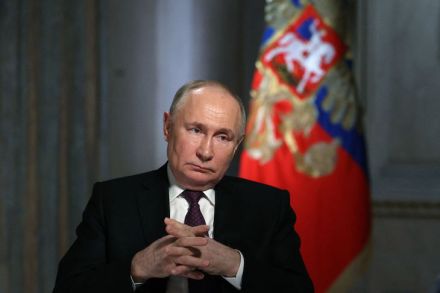
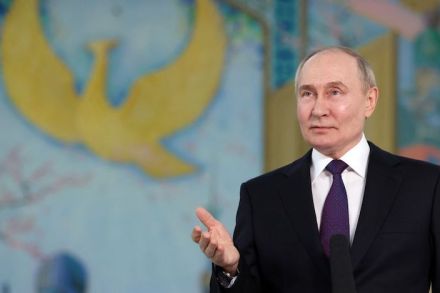
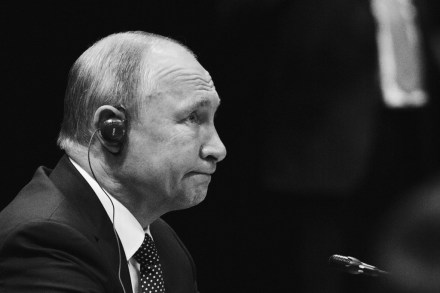
With all the good news coming out of the Jeddah talks about a 30-day ceasefire in Ukraine, there’s only one question that needs to be answered: Will President Putin be interested in any kind of deal right now? President Trump is convinced that Putin wants peace. But if the Russian leader truly wants to end his war, will he do so on America’s terms, or will he wait until he achieves one of his main objectives — the total subjugation of the four provinces in eastern Ukraine that he claimed to have annexed in the first seven months of the invasion? At a ceremony in St. George’s Hall at the Kremlin in September 2022, Putin declared that Russia now had four new regions: Donetsk, Luhansk, Kherson, and Zaporizhzhia.
Putin

Why Putin could reject a ceasefire

With all the good news coming out of the Jeddah talks about a 30-day ceasefire in Ukraine, there is only one question that needs to be answered: will President Putin be interested in any sort of deal right now? President Trump is convinced that Putin wants peace. But if the Russian leader really wants to bring his war to an end, will he do so on America’s terms, or wait until he has fulfilled one of his main objectives: the total subjugation of the four provinces in eastern Ukraine that he claimed he had annexed in the first seven months of the invasion? At a ceremony in St George’s Hall at the Kremlin in September 2022, Putin declared that Russia now had four new regions – Donetsk, Luhansk, Kherson and Zaporizhzhia.

Is China serious about ‘war’ with America?

48 min listen

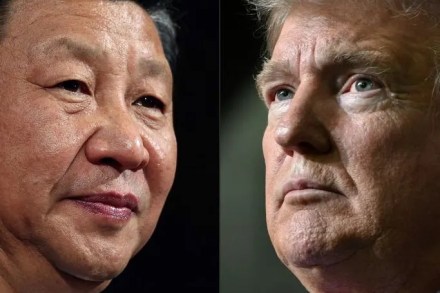
Freddy Gray is joined with Michael Auslin who is an academic and historian at the Hoover Institute and author of the Substack 'THE PATOWMACK PACKET'. They discuss China's response to Trump's tariffs, whether China is serious about threats of war and how concerned Trump is about China's relationship with Russia.

The MAGA movement is wrong on Ukraine

How can the right be so wrong? Or at least portions of the right – especially the American right – when it comes to Ukraine? To begin to grapple with this you have to go way, way back to Donald J. Trump’s first term in office. In that time Ukraine came to the public’s consciousness just twice. The first occasion was when Trump and other Republicans began to make hay over the business dealings of Hunter Biden. Since 2014 the then vice-president’s son had been sitting on the board of Ukrainian energy company Burisma. He was earning around $1 million annually to advise a company in a sector about which he had zero expertise. Why might a foreign company want the son of the vice-president on their board?

The weakness of Donald Trump

Forgive the mordant tone, but this article was written in a desolate post-industrial nightmare girdled by diversionary roads going nowhere aside from away from places. It is somewhere in middle England, where the West Country merges into the Midlands and the north into the south: it is essentially delocated, it is nowhere. There are 15 or so deserted light industrial units, vast metal hangars for storing stuff, acres of car-parking spaces and a few trees suffering from rickets or polio. There are also huge and very bright lamps shining in through my hotel window, betraying no evidence of their purpose other than to keep me awake, and in the foreground a continual mechanical hum, the source of which remains a mystery.

Why Europe needs to take the Putin threat more seriously

From our US edition

Russia’s war on Ukraine presages a dire future for all of Europe unless Vladimir Putin’s military is decisively defeated. That is the powerful and persuasive argument advanced in Keir Giles’s new book. To appreciate fully the importance of his contentions, you must acknowledge not only Giles’s own status as a supremely well-connected senior fellow at the famed Chatham House think tank in London but even more so the all-star cast of international military luminaries who have publicly endorsed his analysis: the now-retired US generals John Allen and Ben Hodges, UK general David Richards, Australian general Mick Ryan, plus former Estonian president Toomas Hendrik Ilves. Giles’s assertions thus should be taken with the utmost seriousness.

Giles

Will Trump’s pause of Ukrainian military aid force Zelensky to the negotiating table?

From our US edition

The decision couldn’t have come as a surprise to Ukrainian president Volodymyr Zelensky. And if it did, then his capacity to read the room is even worse than imagined. Last night, the Trump administration paused all US military aid to Ukraine. The move came after an extremely tumultuous few weeks, which started on February 19 when Zelensky claimed that Trump was living in a Kremlin-orchestrated disinformation bubble. Trump wasted no time howling back by calling Zelensky a dictator because he canceled elections during a time of war. The spat accelerated on Friday, when the two men, egged on by Vice President J.D.

ukraine military aid pause

All along Trump’s aim has been to dispose of Zelensky

From our US edition

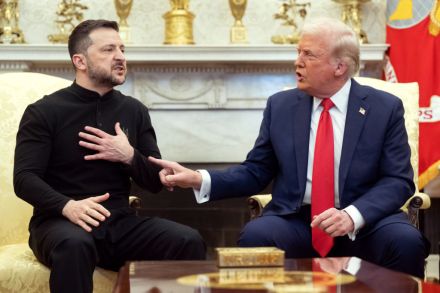
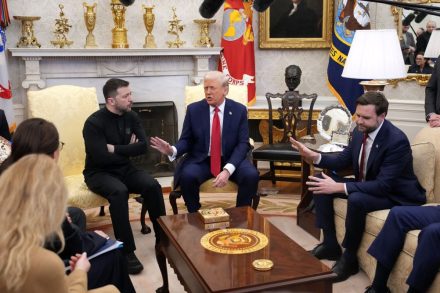
So much for the flurry of visits by European leaders such as French president Emmanuel Macron and British prime minister Keir Starmer this past week to placate, prod and persuade President Donald Trump to back Ukraine in its struggle against Russia. Kyiv’s lonely battle to retain its sovereignty just got a little bit lonelier as Trump, Vice President J.D. Vance and Ukrainian president Volodymyr Zelensky quarreled during a televised meeting in the Oval Office.   The president and his deputy disrespected Zelensky by telling him that he was being “disrespectful.” It ended with Zelensky being dismissed from the White House, a canceled press conference and the mineral deal with Ukraine in a state of inanition.  https://www.youtube.com/watch?

zelensky
ukraine zelensky white house

Zelensky’s White House visit goes off the rails

From our US edition

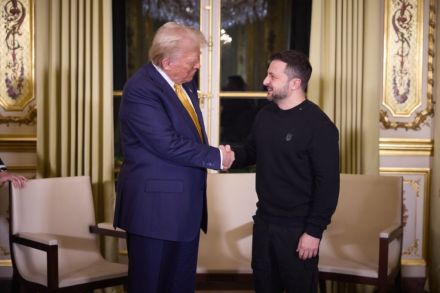
An astonishing flare-up in the White House between President Donald Trump, Vice President J.D. Vance and Ukrainian president Volodymyr Zelensky appears to have thrown any Russia-Ukraine peace deal — or US-Ukraine mineral deal — into jeopardy. Trump met Zelensky at the door of the White House where he gave reporters a thumbs up ahead of his arrival. However, the mood quickly turned sour when they sat down for initial remarks ahead of talks and a press conference where the pair were expected to sign the US-proposed minerals deal with Ukraine. Sat in the Oval Office, Trump was accompanied by key members of his team including J.D. Vance and Marco Rubio.

The engagement vs isolation debate returns

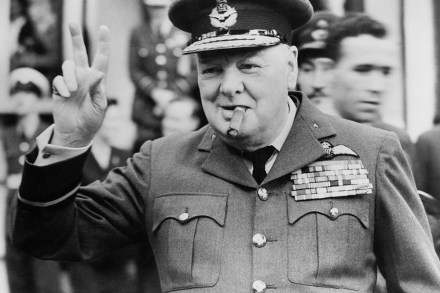
British foreign policy has always oscillated between isolation and engagement. The division has shaped Conservative thinking over generations. The archetypal icon of engagement is Winston Churchill. In the wake of the Munich Agreement, Churchill made his greatest anti-appeasement appeal: ‘What I find unendurable is the sense of our country falling into the power, into the orbit and influence of Nazi Germany.’ He was for rearmament and, ultimately, for war. Churchill had in his sights the isolationists of the right – those Tories who would not ‘die for Danzig’. Victory in the second world war, the western alliance, Nato, America’s nuclear guarantee, the European Union, communist collapse – all seemed to prove Churchill triumphant and correct.

Donald Trump is utterly wrong about Ukraine’s leadership

The Anti-corruption Action Centre, the NGO I chair, is probably one of the loudest watchdogs in Ukraine that is monitoring President Volodymyr Zelensky and his administration. We expose corruption, advocate for comprehensive rule-of-law reforms, and demand better governance ­– even during war. For over a decade we have built anti-corruption infrastructure in Ukraine, and endured persecution for simply carrying out our work. We want to strengthen Ukrainian institutions and build a more effective, resilient democracy. It’s unacceptable for any foreign leader (even of the United States) to humiliate our president, decide on behalf of the Ukrainian people that we should hold elections, and spread falsehoods about who started the war.

Europe learns the facts of MAGA life

From our US edition

Panic, even hysteria, has swept Europe. Its leaders realize that in their case Trump should be taken literally as well as seriously, and he seems prepared to trade the transatlantic alliance for détente with Russia. Eight decades of good times for the continent might be coming to a dramatic end. Trump demonstrated contempt for Europe during his first term; however, his top aides moderated his antagonism, carrying on policy as normal. While out of office he evidently decided never again. Today he is firmly driving American foreign policy. As ever, Trump’s tactics are often dubious, even counterproductive. However, only shock treatment is likely to cause Europe to take its own defense seriously.

europe

The Caviar Kaspia experience

From our US edition

It’s been almost 100 years since Arcady Fixon, a refugee from the Russian Revolution, opened the doors of Caviar Kaspia on Place de la Madeleine in Paris, and began beguiling his fellow exiles and the crème of Paris society with the exotic flavors of his homeland: shiny black caviar, served with blinis or potatoes, and ice-cold vodka. After being passed down through family hands, Caviar Kaspia is now owned by the charismatic entrepreneur Ramon Mac-Crohon, who has ensured that the place has lost nothing of its prerevolutionary charm: Nicolas II’s seal sits alongside antique porcelain in a display cabinet, and Nicolas Swertschkoff’s Troika, depicting a Russian horse-drawn sledge moving through snow, still hangs in the dining room.

Were Trump’s comments about Ukraine a gambit to bring about peace?

From our US edition

If you have a pot that needs stirring, call Donald Trump.  A couple of days ago Trump made heads explode when he claimed (among other things) that Volodymyr Zelensky was “a dictator without elections” who started the war with Russia. “Oh my God, can you believe it? Trump doesn’t know Russia was the aggressor in the war. What an idiot.” The BBC, CNN and many other news sites ran little “fact-checking” stories. Politicians dusted off their most serious faces to deplore Trump’s lies/exaggerations (the US hasn’t given $350 billion to Ukraine, it was “only” $180 billion or whatever)/historical ignorance. “Ukraine did not start the war,” CNN intoned. “Russia started the war by invading Ukraine in 2022.

trump ukraine

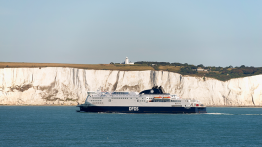
How has Brexit affected ferry travel?

Meeting expectations Donald Trump and Vladimir Putin had a telephone call prior to US and Russian officials meeting in Saudi Arabia. It was the first time the US and Russian leaders had spoken in three years. How often did US and Soviet leaders meet during the Cold War? — After Harry S. Truman met Josef Stalin in Potsdam in July/August 1945, shortly after the end of the second world war in Europe, Stalin did not meet a US president again. Nikita Khrushchev met Dwight Eisenhower three times, at Geneva (1955), Washington (1959) and Paris (1960). John F. Kennedy also met Khrushchev in Vienna in 1961. — After the Cuban missile crisis US and Soviet leaders did not meet again until Richard Nixon met Leonid Brezhnev in Moscow in 1972. They met twice more.

Who lost Ukraine?

In the America of the 1950s, one question dominated foreign policy: ‘Who lost China?’ The Communist victory in the Chinese Civil War and the defeat of America’s ally, the Kuomintang regime, provoked agonised debate about the principles that should guide statecraft – the balance between containment and pushback, the relative importance of winning hearts and minds or prevailing by strength of arms. The question that we might ask today is: ‘Who lost Ukraine?’ Of course, the war between Kyiv and Moscow is not over. Ukraine’s army continues to fight with a tenacious courage that is inspiring. Volodymyr Zelensky’s diplomatic efforts to maximise support for resistance are unflagging. But all the winds blowing now are ominous for Ukraine.

Portrait of the week: US and Russia talk, Chiltern Firehouse burns and Duchess of Sussex rebrands

Home Sir Keir Starmer, the Prime Minister, said that, to guarantee the security of Ukraine, he was ‘ready and willing’ to put ‘our own troops on the ground if necessary. I do not say that lightly’. Parliament would be allowed a vote on such a deployment, the government said. Earlier, Sir Keir took an unannounced telephone call from President Donald Trump of America about their forthcoming meeting. Afterwards, Mr Trump said: ‘We have a lot of good things going on. But he asked to come and see me and I just accepted his asking.’ The Chiltern Firehouse hotel in Marylebone burnt down.

Donald Trump speaks his ‘Truth’ about Ukraine in attack on Zelensky

From our US edition

Negotiating peace can be delicate business. Often it requires a steady hand, a strong sense of compassion and inexhaustible patience. As Senator George J. Mitchell, a leading architect of the Northern Ireland peace process, once wrote, "In order to understand what another person is saying, you must assume it is true and try to imagine what it might be true of." Cockburn was reminded of Mitchell's sage words when he read the president's Truth Social post about Volodymyr Zelensky on Wednesday afternoon, which he republishes in full below: Think of it, a modestly successful comedian, Volodymyr Zelenskyy, talked the United States of America into spending $350 Billion Dollars, to go into a War that couldn’t be won, that never had to start, but a War that he, without the U.S.

donald trump zelensky

The US and Russia must not force Ukrainian elections

After four hours of talks in Saudi Arabia, Russian and American negotiators have reportedly come up with a three-stage plan to end the war in Ukraine. According to Fox News, the plan includes a ceasefire, elections in Ukraine and the signing of a final agreement. Ukrainian leader Volodymyr Zelensky, who was neither informed nor invited to the talks, said that Russia and the US are discussing the same old ultimatum Moscow set at the start of full-scale war. ‘I wonder – if we didn’t accept such ultimatums in our most difficult moment, why does anyone think we would now?’, he said. Back in February 2022, Russian president Vladimir Putin said he invaded Ukraine to protect people from the ‘Nazi regime in Kiev’.

Putin

What does Putin want from America?

From our US edition

If I had a penny for every time I have been told that Russian president Vladimir Putin only wants respect. Or that he is only interested in eastern Ukraine. Or that if Kyiv is only denied NATO membership, then he will call off the tanks. Well, in the last seven days President Donald Trump has given Putin all this and more. And, though it is still early days, so far the war is showing no sign of slowing. And what has the man who wrote The Art of the Deal asked for in exchange for all this diplomatic largesse? Absolutely nothing. In fact, the only substantive demand Trump has made so far is of the Ukrainians. Last week Washington sent Treasury secretary Scott Bessent to Kyiv with an extraordinary demand.