Russia

Meet the western conservatives moving to Russia

Tofurious Maximus Crane was sitting in a barber’s chair in Moscow when he received the greatest news of his life. It was 19 August, the day Vladimir Putin signed a decree allowing foreigners to immigrate to Russia. Now, the 46-year-old native of Virginia Beach, Virginia, could finally achieve his life’s dream of remaining in Russia for ever. ‘For me, the decree is the best thing that ever happened in my life besides, you know, family and children,’ says Crane, a charismatic bear of an American who sports a long Old Testament beard and perfectly coiffed hipster hair. ‘I got the notification about the decree, and I jumped up out of the chair and was crying. I was very excited.

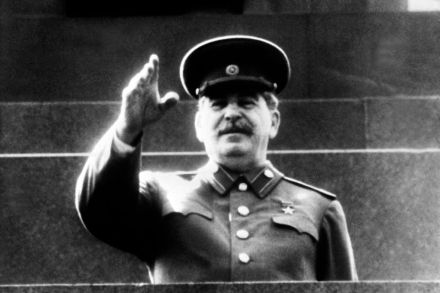
Is Stalin-worship back in Russia?

As if the Russian political barometer hasn’t fallen low enough, news comes that it has yet to reach the bottom of the glass. Official symbolism is a reliable indicator of trends, and an announcement by Georgi Filimonov this week marks a new low. Filimonov, recently appointed as governor of Vologda province, plans to erect a life-sized statue of dictator Joseph Stalin in the provincial capital. Not to denounce him but to ‘commemorate’ him.  Probably, Putin always had an admiration for Stalin Decades have passed since Nikita Khrushchëv spread the word in the Soviet Union that Stalin was a despot and a mass killer. Mikhail Gorbachev and Boris Yeltsin expanded the story to cover the millions who died at his hands.

Ukraine becomes another battlefront in the American election

From our US edition

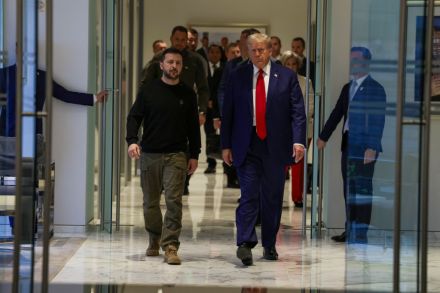
They were the odd couple, one lumbering in his trademark oversized Brioni suit, the other ripped in his olive green military attire. The two had been engaged in a kind of mano-a-mano verbal combat before their official meeting in Manhattan at Trump Tower. It was getting ugly. Ukrainian president Volodymyr Zelensky suggested that J.D. Vance’s plan, such as it was, for ending the war between Ukraine and Russia was “too radical.” Add in Zelensky’s visit to an armaments factory together with Pennsylvania governor Josh Shapiro, and Trump and his flunkeys went nuts. House Speaker Mike Johnson wrote a sniveling letter demanding the ouster of Ukrainian ambassador Oksana Marakarova.

zelensky

What does ‘victory’ for Ukraine look like?

This week in New York Volodymyr Zelensky will present Joe Biden with a ‘Victory Plan’ for Ukraine. But how to define what ‘victory’ actually means? A fundamental and fast-widening distance is opening up over that question between Zelensky and his western allies – as well as inside Ukraine itself. Zelensky insists that the bottom line of a Ukrainian victory remains ‘the occupation army [being] driven out by force or diplomatically, in such a way that the country preserves its true independence and is freed from occupation’. He has also rejected the idea of a ceasefire, saying that any ‘freezing of the war or any other manipulations… will simply postpone Russian aggression to a later stage’.

It’s time to let Ukraine join Nato

Kyiv The young amputee had a question. We were sitting once again in the rehab centre in Kyiv, and I was looking at the same sort of injuries I saw last year: the missing limbs, the cranial scars, the withered hands and feet that no longer obeyed their owners’ commands. The difference was that Vladimir Putin’s carnage had been inflicted on a new group of Ukrainians – noticeably younger than last year’s victims, and now including a woman. Once again, I shook their hands (where possible) and put my arms around them, and did my best to be reassuring to all, including the young man on the bed, who had lost his left leg up to the hip. ‘When are you going to let us use the Storm Shadow?’ he asked – amid a general murmur of agreement.

The end of the Orbán era

From our US edition

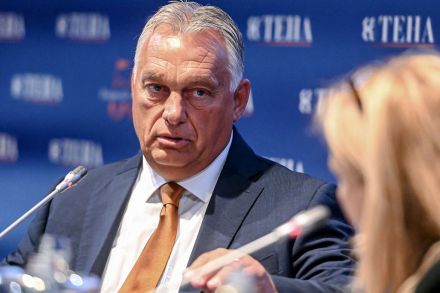
Over the headline “Peace Mission,” a recent cover from the conservative Hungarian periodical Mandiner shows an awkwardly photoshopped Viktor Orbán mediating between a bemused-looking Vladimir Putin and a grim Volodymyr Zelensky. Behind Orbán, a map of the world connects Kyiv, Moscow, Beijing, Washington and Budapest. One of these capitals, as they say, is not like the others. Even before Ukraine’s Kursk offensive, the chances of Orbán’s July trips to Kyiv and Moscow producing a peace settlement were slim. The Mandiner cover, however, is a revealing window into the mindset of Orbán’s conservative fans. The idea of a Hungarian prime minister mediating between squabbling great powers is both attractive and plausible to many of Orbán’s fervent supporters.

Orbán

Do polls really matter after Labor Day?

From our US edition

The political pundits like to tell us that general election polls don’t matter until after Labor Day. That, they say, is when the average American actually starts paying attention to what is happening in the election and so you can get a better understanding of which way the electorate is leaning. The only problem with that traditional wisdom is that it’s hard to put much stock into polls when so many are returning drastically different results.Take the Morning Consult poll that dropped this morning that shows Harris surging with a lead in six of the seven battleground states. The poll has her up eight points in Wisconsin, four in Pennsylvania and Nevada and three in Michigan. To be frank, no one serious believes these numbers.

What China wants from Russia

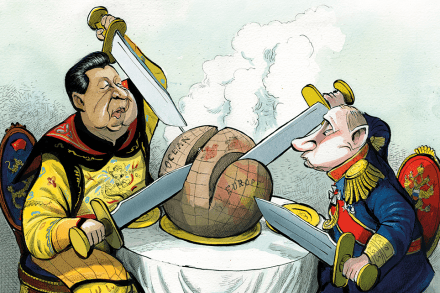
On the face of it, the ‘no limits’ partnership between Russia and China declared weeks before Vladimir Putin invaded Ukraine in February 2022 appears to be going from strength to strength. Last week, Chinese Premier Li Qiang spent four days in Moscow and signed off on what Putin described as ‘large-scale joint plans and projects’ that would ‘continue for many years’. Russia’s trade with China has more than doubled to $240 billion since the invasion, buoying the Kremlin’s coffers with oil money and substituting goods sanctioned by the West. Moscow and Beijing have also stepped up joint military exercises.

Portrait of the week: Sir Keir’s tax warning, Russian air attacks and another prisons crisis

Home Sir Keir Starmer, the Prime Minister, speaking in the garden of 10 Downing Street, warned that the Budget in October is ‘going to be painful’, and that ‘things will get worse before they get better’. ‘I didn’t want to means-test the winter fuel payment, but it was a choice we had to make,’ he said. ‘A garden and a building that were once used for lockdown parties are now back in your service.’ Meanwhile, it was discovered, a pass to Downing Street had been given to Lord Alli, the Labour peer and party fundraiser, who gave £10,000 to the Beckenham and Penge constituency party; the seat was won by Liam Conlon, the son of Sue Gray, Sir Keir’s chief of staff.

Letters: we have let down white, working-class boys

The lost boys Sir: The only statement in your powerful leading article (‘Boy trouble’, 17 August) which can be challenged is that ‘the plight of poor white boys is a new burning injustice’. It is certainly not ‘new’. Even 40 years ago when the Inner London Education Authority (ILEA) produced policies designed to counter inequality affecting girls, it was obvious that the problem was no less serious for white working-class boys. But the subject was highjacked by those obsessing about girls, with the results described in your article 40 years later. During the hijacking (for which he was not responsible), ILEA’s former leader Sir Ashley Bramall said to me: ‘Perhaps we should also be worried about the boys.

What’s the real aim of Ukraine’s Russian offensive?

On Monday morning, Vladimir Putin was briefed about Ukraine’s audacious invasion of Russian territory. With his military chiefs in front of him, he announced that Kyiv had been doing the bidding of its western masters but would succeed only in the ‘annihilation’ of the troops it had sent to Kursk. All this was, as usual, broadcast live by the Kremlin to reassure Russians that the President was in control of the situation – then everything started to go wrong. Alexei Smirnov, the acting governor of the invaded Kursk region, had been expected to give details of the successful evacuation of citizens. Instead, he began to reel off the extent of the defeat. The Ukrainians, he said, had captured territory eight miles deep and 25 miles wide.

Zelensky’s new offensive could push Putin to the brink

A Russian friend speaking from Kursk tells me the latest war joke. Vladimir Putin summons Stalin’s ghost. ‘Comrade Stalin!’ asks Putin. ‘German tanks are in Kursk again. I need your advice.’ Stalin’s ghost ponders before answering. ‘Do what I did. Get hold of as much American military aid as you can, and make sure to send in the Ukrainians at the vanguard of your army.’ In 1943, the battle-scarred fields of Kursk were filled with troops of the Red Army’s First Ukrainian Front, riding American-supplied aircraft and tanks as they advanced westwards towards Berlin. Today, Ukrainian troops – some in German-supplied vehicles – are fighting Russians less than 50 miles from where my friend is. He chuckles at the bitter irony of his own wisecrack.

Hungary is stretching the EU’s patience to its limit

Hungary is no stranger to spats with its European neighbours. Under prime minister Viktor Orbán’s leadership, it has exercised veto rights to block Ukrainian military aid and Russian sanctions, delayed the Nato accessions of Sweden and Finland and shrugged off EU asylum regulations. For Budapest, the disputes have proven to be effective leverage in unfreezing funds — once €30million (£25 million), now some €22million (£19 million) — held by the Commission over rule of law violations and corruption concerns. For the EU, Hungary is a diplomatic headache - and one that may be about to get worse.

Evan Gershkovich is free

From our US edition

An emotional scene unfolded at Joint Base Andrews last night, with the surprise return of a number of American hostages after a prisoner swap with Russia and Belarus. Among those returned were Wall Street Journal reporter Evan Gershkovich, Pulitzer Prize-winning Washington Post columnist Vladimir Kara-Murza, Radio Free Europe correspondent Alsu Kurmasheva and former US Marine Paul Whelan. The returned hostages were greeted by their families, along with President Biden and Vice President Harris. Harris exchanged what are technically her first remarks with the press since becoming the presumptive nominee: “This is an extraordinary day and I’m very thankful for our president.

A lifesaving prisoner swap with the worst incentives

From our US edition

The massive prisoner swap which led to Russia’s release of prisoners Evan Gershkovich, Paul Whelan and Vladimir Kara-Murza, among many others, is the greatest gift their families and loved ones could ever hope for — in several cases, it is a lifesaving development. But it also serves as an indication of just how much the practice has become a weapon of the world’s great powers. For my family, the news is deeply personal. Vladimir, a longtime dissident imprisoned for the crime of speaking out against the war in Ukraine in remarks to the state legislature of Arizona, was a pallbearer along with me for my father-in-law, John McCain. My wife joined with his, Evgenia, to speak to a bicameral congressional committee earlier this year to advocate for his release.

prisoner

The new alliances dedicated to destroying democracy

After staging a failed coup and going to prison, the Venezuelan army officer Hugo Chavez ran to be president in 1998, campaigning against corruption and offering revolutionary change. His nation was seen as a prosperous beacon of stability, built on its great oil wealth, envied by many people elsewhere in the region. He won by promising to tackle the inequality that scarred it so badly and take on the oligarchs enriching themselves through favours and nepotism. Western celebrities, journalists and politicians, from Sean Penn through to Jeremy Corbyn, started flocking to South America to hail their new progressive hero supposedly fighting for social justice.

Could Ukrainians ever trust a Putin peace deal?

Last week at the Buxton International Festival I joined a big audience for an onstage interview with Anna Reid. She’s a writer who specialises in Eastern European history, was once the Economist magazine’s correspondent in Ukraine, and made her name with a brilliant book, Borderland, which was both a portrait, a history and an appreciation of that country long before it entered the western public consciousness. It’s still worth reading today. But at Buxton she was introducing her latest book, A Nasty Little War: the Western Intervention into the Russian Civil War, which opened the eyes of many in the audience (including me) to an almost forgotten but serious and grisly conflict straddling the end of the first world war.

From the front line of the battle to save Kharkiv

Moonlight shines on the wings of the reconnaissance drone as it glides over the field. Within minutes, the Leleka – Ukrainian for ‘stork’ – crosses the border into Russia’s Belgorod region. The soldiers monitoring it wait in their car, hidden in the undergrowth. Soon the image on their laptop freezes: the Russians are jamming the signal. They manoeuvre the Leleka back and forth, eventually finding a gap in the enemy’s electronic defences. The drone is back in contact, sending footage of Russian roads and towns. The hunt for enemy troops begins. Some 30,000 Russian soldiers are amassed north of Vovchansk, a Ukrainian border town that was attacked two months ago.

The rape of Ukraine continues while the world’s sympathies move on

‘Write and record’ was the dying instruction of the historian Simon Dubnow – shot by Nazis in the Riga ghetto – and two books recently emerging from Ukraine embody this spirit in spades. Now that the world’s anger and sympathies have largely moved on to the Middle East, they may do something to rekindle that earlier sense of outrage and remind the ‘caring’ classes of atrocities closer to home. ‘My hatred flows from thesmall things to the big things. Every fibre is filled with it’ The first, Our Daily War, comes from Andrey Kurkov, the celebrated Russo-Ukrainian novelist and author of 2022’s Invasion Diary, a detailed on-the-ground account of Putin’s attack on his country.

What I saw at the Okhmatdyt bomb site

Kyiv For weeks, Kyiv had felt relatively safe compared with just about everywhere else in Ukraine. People had adjusted to wartime life as the city’s air defences managed to intercept most of Russia’s missiles and drones. There had been a sense that things were improving. This was shattered on Monday morning when a missile struck a children’s cancer hospital in the capital. Okhmatdyt is the largest paediatric clinic in Ukraine, the equivalent of London’s Great Ormond Street. Each year, it treats more than 20,000 children with the most serious health conditions. That Russia had targeted it came as a shock but not a surprise: some 1,700 medical facilities in Ukraine have been hit since the start of the full-scale invasion.