John Foreman

John Foreman was formerly Britain’s defence attaché in Moscow. Before that, he was Britain’s defence attaché in Kyiv.

Ukraine won’t give up at the behest of Donald Trump

Four years after President Putin bragged that he would ‘demilitarise and denazify’ Ukraine, it still stands free. Talking to locals, expats, journalists and diplomats recently in Kyiv, I found a profound sense of realism and a confidence. Ukraine’s military strength is burgeoning. Its people are determined to see things through. They are cautiously optimistic. Although life is looking up after an exceptionally difficult winter, one astute insider noted that the country faces the same strategic challenges: a larger, implacable, and cunning enemy; economic fragility; $500 billion damage to infrastructure; US hostility; and steady civilian and military deaths. The faces of the fallen were everywhere.

Why George Robertson has turned on Starmer

From our UK edition

There was always a risk that the external reviewers who led last year’s Strategic Defence Review would turn on the government. George Robertson’s intervention last week – saying that the government was not doing enough to improve Britain’s defence, saying a ‘corrosive complacency’ had set in – was born of deep frustration about the large gap between Labour’s lofty rhetoric on defence, and reality. Robertson’s threat analysis was overly pessimistic. Russia is not about to launch a military offensive on a Nato member. Britain does not face Russia alone. He was right, however, to criticise ‘lethargic thinking’, and the lack of urgency to rebuild our brittle armed forces.

Britain doesn’t need an Iron Dome

From our UK edition

Air defence was in the news this week, after Israel, with the help of allies including the UK, shot down around 99 per cent of over 300 cruise and ballistic missiles and drones fired at it by Iran. The perils of depleted air defences were shown by Russian missile and drone bombardments of Ukrainian energy infrastructure and cities, leading again to many civilian deaths. Eighteen civilians were killed in a Russian strike on Chernihiv. In the wake of the Iranian attacks, Tobias Ellwood, former chair of the House of Commons Defence Committee, told the Telegraph that the UK needs to build ‘a permanent umbrella of security defending our key locations’.

HMS Prince of Wales is not yet the finished product

From our UK edition

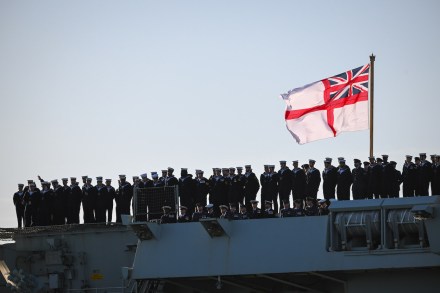
Huge crowds of locals, plus families and friends of the crew, greeted the return home of the nation’s flagship aircraft carrier, HMS Prince of Wales, last week. It was a fitting climax to a flawless, highly significant, eight-month, 40,000-nautical-mile deployment to the Far East. Sailors spoke about the emotion of their homecoming, pride in their hard work, and their desire for shore leave. In November, the Ministry of Defence announced that Britain’s carrier strike capability had reached Full Operating Capability (FOC). This means we will have one carrier always available for operations with 24 advanced F-35 stealth jets embarked. The UK is alone in having its carrier committed to Nato at short notice. But Full does not mean Final.

Britain needs a Stolen Valour Act

From our UK edition

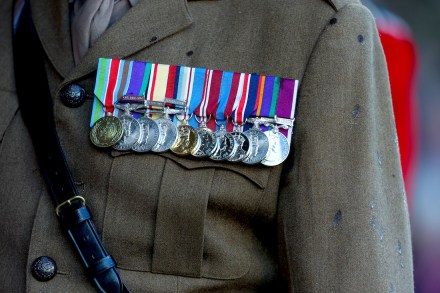
Next month Jonathan Carley will appear in court in Carmarthen, charged with wearing military uniform without permission. This charge comes after a man purporting to be a Rear Admiral was pictured at a Remembrance Sunday service in Llandudno while wearing an impressive row of medals. One was Britain’s highest awards for gallantry – a Distinguished Service Order. This case of alleged ‘stolen valour’ highlights an odd loophole in the law. While it is illegal to wear military uniform if not serving in the armed forces, there is no current criminal sanction for wearing unearned medals. A previous legislative attempt to deal with this issue failed. Parliament should act again. Stolen valour involves ‘falsely claiming military service, rank or medallic recognition’.

The Chief of the Defence Staff who faced Russia head on

From our UK edition

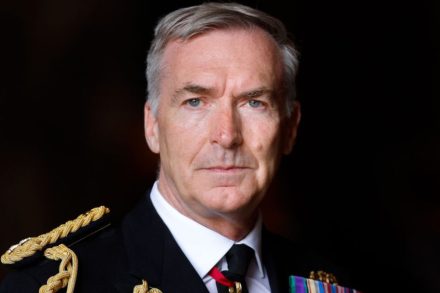
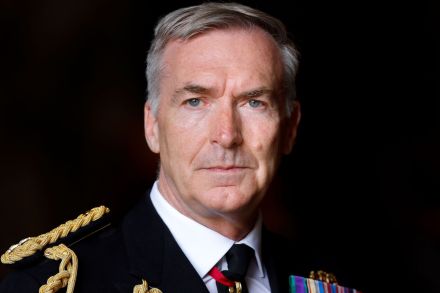
On Tuesday, Admiral Tony Radakin finished his term as Chief of the Defence Staff much as he started it – dealing with the immediate and long-term consequences of Russia’s invasion of Ukraine. There is an irony that Radakin, appointed by Boris Johnson to ‘restore Britain’s position as the foremost naval power in Europe’ as part of a global, maritime strategy, has been defined by his response to a major land war in Europe. During a flying visit to Kyiv, the Ukrainian commander-in-chief praised Radakin for his ‘personal contribution’ to stiffening Ukraine’s defences, and for being the ‘leading advocate’ for providing it with lethal weapons when others wobbled. Radakin was leading negotiations on potential security guarantees until his last day.

Mounting Russian deaths will not deter Putin

From our UK edition

In June, a grim milestone passed. The Ministry of Defence said that one million Russians had been killed or wounded in Ukraine. The Guardian reported that fatalities alone are ‘five times higher than the combined death toll from all Soviet and Russian wars’ after 1945. Marco Rubio, the US Secretary of State, stated that Russia had already lost ‘100,000 soldiers – dead – not injured’ this year. Yet the unmentionable odour of death offends the Russian night. In Moscow, the milestone passed without official remark. The soaring butcher’s bill has not, as some naively still hope, been matched by large-scale public unrest.

Gagging the military is a mistake

From our UK edition

Some weeks ago at an army conference I listened to senior officers discussing the lethal, agile, ‘integrated’ British military of the future as set out in the government’s recent Strategic Defence Review. Unfortunately I can’t tell you what they said. The Chief of the General Staff Sir Roly Walker answered questions on what the SDR meant for the army. I can’t tell you what he said either. Officers attending the conference were apparently told that, if they found themselves in accidental conversation with a journalist, they were to extricate themselves immediately. At a time of increased focus on national defence, it was a poor day for transparency. This was not a one off.

Don’t forget Bomber Command

From our UK edition

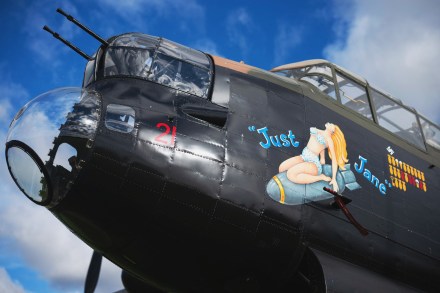
There were many tributes when John ‘Paddy’ Hemingway, the last surviving fighter pilot of the Battle of Britain, died in March. Prince William said he was saddened about the death of the ‘last of The Few’ while the prime minister saluted Hemingway’s ‘extraordinary life’. There were no such statements in February on the death of Jack Harris, believed to have been the last surviving Lancaster bomber pilot. Official indifference to those who served in Bomber Command is not new. Churchill said little about the bomber offensive in his war memoirs, seeking to distance himself politically from the widespread destruction wrought by his own decision to focus on bombing as a way of hitting back against Germany, and as a method to convince the US that Britain could fight on.

Is Havana Syndrome real?

From our UK edition

Aficionados of zombie films will know that some ghouls just won’t stay dead. In 2013, the economist Paul Krugman came up with the concept ‘zombie ideas’ – propositions that have been refuted, and should be no more, but keep returning because they serve a political purpose, or appeal to people’s prejudices. In the run up to Russia’s invasion of Ukraine, I experienced some of the symptoms associated with Havana Syndrome myself In March this year, US officials will have hoped that a well-known zombie idea, Havana Syndrome, had finally been killed off. Havana Syndrome is the name for a group of unexplained medical symptoms which have been reported by hundreds of US government officials and their families in locations around the world in the last few years.

Of course Britain’s military chiefs should be meeting with China

From our UK edition

It’s quite something when the Chinese Ministry of Defence is more transparent than its British equivalent. Despite the Prime Minister on assuming office promising ‘transparency in everything we do’, a flying visit to Beijing last Wednesday by the UK chief of defence staff, Admiral Sir Tony Radakin, only emerged via a Times scoop a day later. Official silence from an habitually opaque UK MoD about the first such visit for 10 years ceded the information advantage to China, allowing it to paint a rosy, false picture that Radakin had discussed deepening engagement and cooperation with his Chinese equivalent, General Liu Zhenli.

Europe cannot be surprised by Trump’s approach to Ukraine

From our UK edition

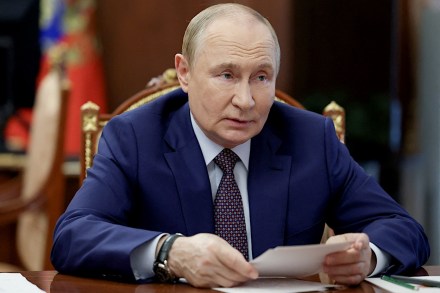
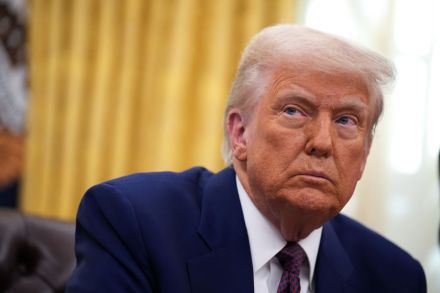
There’s something about Donald Trump that sends Europeans mad. The President and Vladimir Putin agreed last week to commence talks about ending Russia’s war in Ukraine. From the hysterical reaction, you would have thought Trump had handed Putin the keys to Kyiv. Shrill cries of surrender, betrayal and appeasement are premature; extremely difficult negotiations lie ahead, involving Ukraine, on the precise terms of any deal. And Putin himself has blinked by abandoning many of his pre-conditions for talks set out last year. The mood among European security panjandrums at this weekend’s Munich Security Conference was fraught.

What the Russian spy ship exposed

From our UK edition

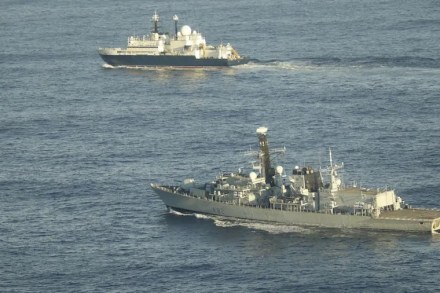
Britain is heavily dependent on its underwater infrastructure. Ninety-nine per cent of our digital communications overseas are carried through subsea fibre optic cables. Significant damage to them at the hands of malign actors would jeopardise our way of life. Defence Secretary John Healey reported to parliament on an incident last November when a Russian spy ship, Yantar, was detected ‘loitering over UK critical undersea infrastructure’ off Cornwall, a chokepoint for trans-Atlantic underwater communications. After the rapid deployment of ships, aircraft and submarines by Britain, Yantar took the hint to leave and is now, after a spell in the Mediterranean, on her war back home with the Royal Navy closely monitoring her movements. Russian mischief is not new.

Why Paddy Mayne shouldn’t get a Victoria Cross

From our UK edition

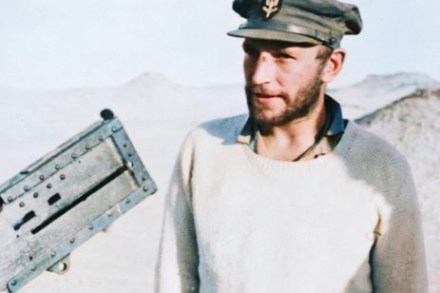
The quietly spoken, thoughtful, brilliant Robert Blair ‘Paddy’ Mayne, four times winner of the Distinguished Service Order and co-founder of the Special Air Service, was nothing like his profane, psychotic, paddywhacking caricature in the cartoonish BBC series SAS: Rogue Heroes. His hideous portrayal does him a grave disservice and has understandably upset his family. Truth about Mayne the man is now obscured by his outsized myth.

How to evacuate a country

From our UK edition

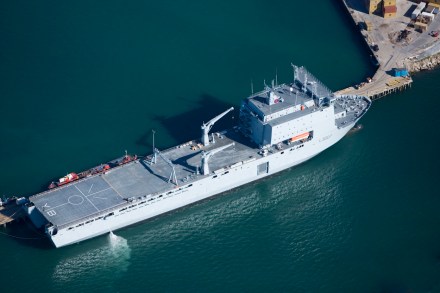
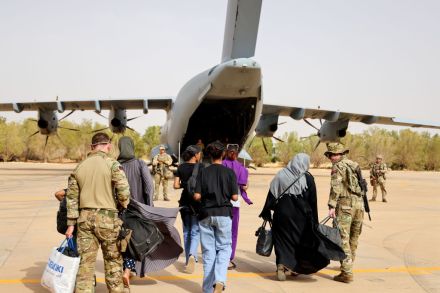
As fighting continues between Israel and Hezbollah, planning for a potential evacuation of British nationals from Lebanon has seen troops, ships and aircraft preparing in Cyprus and the wider region. Defence Secretary John Healey has chaired meetings in London to avoid the government being caught on the hop as happened before the evacuation from Kabul in 2021, following the unexpected collapse of the Afghan National Army. UK tabloids are already screaming about a ‘Dunkirk-style’ amphibious evacuation should an air extraction route become unavailable. This comparison is misleading. Naval planners had only seven days before launching the miraculous evacuation of 330,000 members of the British Expeditionary Force in 1940 under ferocious German attack.

Don’t let Ukraine’s culture be erased

From our UK edition

Ukraine’s cultural autonomy is again under assault by Russia. Vladimir Putin appears to believe that ‘Ukraine and Ukrainian culture independent of “Mother Russia” do not exist’. Travel to the Royal Academy of Arts on Piccadilly, to see the untruth of that statement. The exhibition, In the Eye of the Storm: Modernism in Ukraine, 1900 – 1930s, displays the works of various ‘exuberant, hyper-energetic artists in Kyiv, Kharkiv and Odesa amid the fevered optimism of socialist Ukraine’. Drawn from Ukrainian, Polish, Jewish, and Russian communities, the artists combine revolutionary, international, religious, technological, urban and rural themes with ‘the vivid colour and rhythmic compositions of Ukrainian folk and decorative art’.

Nato has fudged support for Ukraine, again

From our UK edition

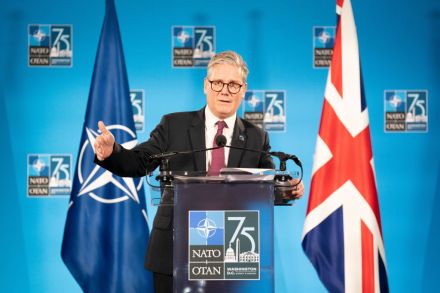
On his flight back to London from Washington DC, Keir Starmer will have been satisfied with the outcomes of his first Nato summit. He will be concerned about the vigour of President Biden and the rhetoric of his presidential challenger. He and his European colleagues can do more to help assure the future of the trans-Atlantic alliance. The summit in Washington marked the 75th anniversary of the most durable and successful defensive alliance in history.

What war graves teach us about peace

From our UK edition

Hugh Jones was 29 when he was killed in action. On Wednesday, the eve of the 80th anniversary of D-Day, his grave at Bayeux – and those of 22,000 Commonwealth war dead in cemeteries across Normandy – was illuminated in a vigil to these silent witnesses to the pity of war. All Commonwealth war cemeteries share a powerful aesthetic. There are more than 2,000 across 134 countries, and in each, lines of soldiers’ graves evoke a battalion on parade. In life, officers and soldiers may have been divided by religion, rank or class but they are unseparated in death. They sit, Kipling wrote, on ‘fair and level ground… Where high and low are one’. It is difficult to imagine today how revolutionary these cemeteries were when they were built.

Britain’s diplomacy with Russia needs a rethink

From our UK edition

A week after the UK expelled the Russian defence attaché, Colonel Maxim Yelovik, for being ‘an undeclared intelligence officer’, Russia predictably responded on Thursday by expelling my successor, Captain Adrian Coghill, from Moscow. He has a week to leave. Russia has also promised to retaliate to visa restrictions placed on Russian diplomats by Britain, and the to the removal of diplomatic status from buildings around London allegedly used for nefarious activities. Using the pretext that Yelovik was an ‘undeclared intelligence officer’ sets an impossibly high bar for of future Russian military attachés in London.

Who is General Gwyn Jenkins, the UK’s national security adviser?

From our UK edition

The Prime Minister’s announcement this week of an increase in UK defence spending from 2 per cent to 2.5 per cent of GDP by 2030 was unexpected. Debate continues on whether this is indeed, as Sunak claimed in Poland, ‘historic’, or sufficient for the UK to ‘re-arm’ in the face of ‘real risks to the United Kingdom’s security and prosperity’. All this overshadowed a significant government appointment: for the first time, a serving senior military officer is to be the UK’s national security adviser (NSA). In the summer, General Gwyn Jenkins, currently serving as the Vice Chief of the Defence Staff, will become the UK’s 7th adviser on national security to the prime minister since the post was created by David Cameron in 2010.