Russia

Why Putin wins

From our UK edition

Does Vladimir Putin intend to invade Ukraine? Or are his troop manoeuvres just a game — another test of the West’s resolve? If the former, he will win: British troops (and citizens) have been told to leave Ukraine in the event of conflict and no one doubts that the estimated 130,000 Russian forces could succeed in their objective. So the first major land war in Europe since World War II would end in an easy victory for Russia.  “My guess is he will move in,” Joe Biden said last week, as if he were a casual observer. Families of US diplomats in Ukraine have been ordered to leave the country But even if it's a bluff, Putin can count the past few weeks a success.
Portrait of the week: Queen Camilla, a cabinet rejig and NHS waiting list warning

From our UK edition

Home In a message for the 70th anniversary of her accession, the Queen said it was her sincere wish that ‘when that time comes, Camilla will be known as Queen Consort’. She signed the message: ‘Your servant, Elizabeth R.’ Rishi Sunak, Chancellor of the Exchequer, said that the government would pay energy suppliers to discount bills by £200 in October, but customers would then have to pay back £40 a year for five years. People living in houses of the A-D council tax bands would receive a £150 rebate. The regular Ofgem energy price cap adjustment meant that a typical household would pay £693 extra a year, a 54 per cent rise.

Can Macron really lecture Putin about democracy?

From our UK edition

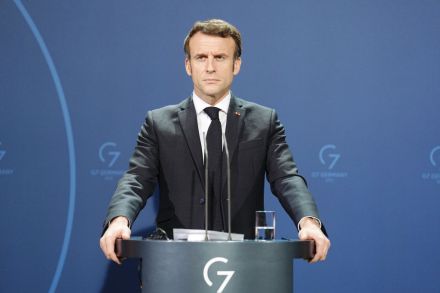
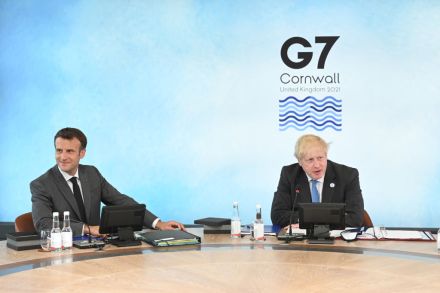
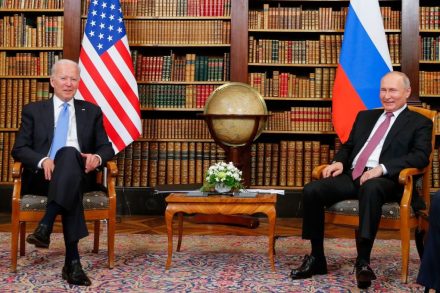
A penny for the thoughts of Vladimir Putin on Monday as he stared at Emmanuel Macron from the end of a very long table. If the Russian leader has a sense of irony he might have been struggling to suppress a smirk as he welcomed the President of France to Moscow to discuss the situation in Ukraine. Macron was in his element as he played the international statesman representing the EU, but the President will be dismayed to learn that his grandstanding has not impressed the folks back home. Of the 140,000 who have so far responded to an online poll in Le Figaro, 60 per cent considered his visit to Moscow a failure. It doesn't appear to have yet dawned on Macron and many other western leaders that the days of dispensing lessons in democracy to despots are over.

The new unpatriotic conservatives

The die against conservatives opposed to the Iraq war was cast by David Frum in a now-infamous essay for National Review back in 2003. Not only were the right's antiwar sorts unpatriotic, Frum charged, they were defeatist and conspiratorialist appeasers. “They have made common cause with the left-wing and Islamist antiwar movements in this country and in Europe,” he wrote. As one can imagine, this made it quite difficult for this small but active faction of the conservative movement (which included the American Conservative magazine and libertarians like Texas Congressman Ron Paul) to penetrate the mainstream, or build trust with their compatriots across the aisle.

Kudos to Macron for going to Moscow

Landing in Moscow on February 7, French President Emmanuel Macron had a twinkle in his eye and a spring in his step. There he was, taking it upon himself to be the first European head-of-state to meet Russian President Vladimir Putin since over 130,000 Russian troops massed on Ukraine’s border from three sides. Macron's mission was to explore whether a de-escalation with Russia was possible. “I believe that our continent is today in an eminently critical situation, which requires us all to be extremely responsible,” he told reporters before his five-hour session with Putin began. The other option, what could be the largest land war in Europe since World War II, would be far worse.

Putin and Xi’s Potemkin alliance

From our UK edition

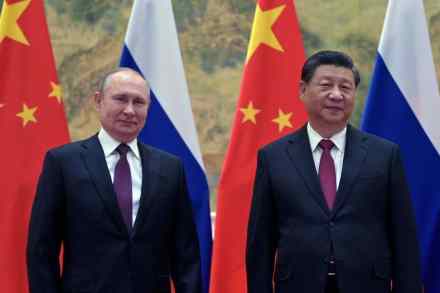
Vladimir Putin very rarely travels abroad these days – and Xi Jinping has not met a foreign leader in person for almost two years. Yet there they were together, just before the opening of the Beijing Olympics, hailing their and their nations’ friendship and concluding $117 billion in oil and gas deals. Although they themselves avoid the word, can we yet talk of a Sino-Russian alliance? Not quite: there’s more here than meets the eye. Certainly the focus was on amity and common interests. This had been signalled in the lead-up to the summit. Chinese foreign minister Wang Yi said that Moscow’s security concerns about Nato were ‘legitimate’ and needed to be ‘taken seriously and addressed.

Could Viktor Orbán be a peacemaker in Ukraine?

From our UK edition

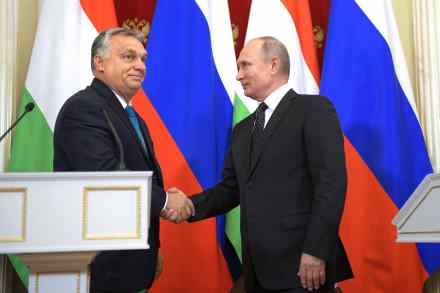
For a politician whose calling card is the struggle for Hungarian national sovereignty, Viktor Orbán and Vladimir Putin’s press conference on Tuesday didn’t look good for the Hungarian leader. Putin abruptly walked off the stage, brusquely beckoning Orbán to follow. The Hungarian strongman dutifully picked up his papers and traipsed across the large, socially distanced podium all alone, apparently flummoxed by whether or not to button up his suit jacket. The unfortunate clip makes Orbán look every inch Putin’s puppet – quite the turnaround for a politician who made his name campaigning against Hungary’s lack of independence as a Soviet satellite state in the dying days of the Cold War.

Viktor Orbán or: How I Learned to Stop Worrying and Love Putin

From our UK edition

Viktor Orbán first came to prominence when in 1989 he declared on live TV that Hungary must put an end to the ‘Russian occupation’. On the first day of February this year, he held his thirteenth meeting with Vladimir Putin. What’s changed? Like much of his generation, Orbán initially believed that the fall of communism would mean a ‘return to Europe’ — with not only western democracy but also a western standard of living. Yet after a brief and unpleasant stint studying in Oxford, the student politician discovered that Britain’s future elites were ignorant and decadent.

Is our Ukrainian ambassador OK?

From our UK edition

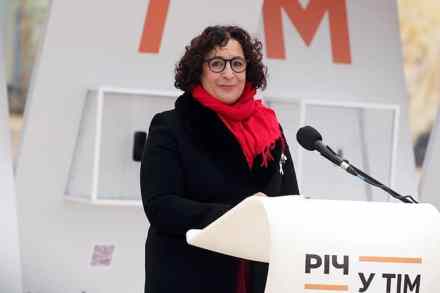
I know the following sentence is going to get me into trouble. Still, there are times when you wonder whether highly feminised people should perform certain jobs. I am not saying ‘women’ and I am not saying ‘always’, just ‘times’. Still, I can hear you say: what sort of a dinosaur are you? Well, join me in the Jurassic period for a moment by contemplating the social media activity of our lead diplomatic representative and ambassador in the Ukraine, Melinda Simmons. Simmons is in a rather important position at present, yet her social-media account suggests otherwise. Here is Simmons a few months ago, writing on Instagram about a photograph of her at a podium with a chaplain to one side and a military guard at the other.

Europe: the little kids’ table at the Ukraine talks

While American and Russian officials are yelling at one another in the UN Security Council chamber, another international actor has found itself at the little kids’ table: Europe. It's possible the phrase “little kids’ table” is too harsh. To be fair, French president Emmanuel Macron is at least in direct communication with Russian president Vladimir Putin and urging his European colleagues to formulate a joint European negotiating position on the Ukraine question. France is also a chief mediator of the Normandy Format, which seeks to resolve the eight-year conflict in Ukraine’s Donbas region. But Macron is largely an outlier on his own continent.

America’s control over the international system is slipping

The US-led expansion of NATO in the direction of the Russian border took place when America was at the peak of its power — the "unipolar moment" — and when Russia had hit geostrategic rock-bottom. The global balance of power has changed since then, and that helps explain what is happening now. Vladimir Putin is correct when he argues that, since the collapse of the Soviet Union, the United States and its Western allies have taken advantage of Russian weakness. It may sound simplistic, but back then in the immediate aftermath of the Cold War, American policymakers did a lot of things just because, well, they could do them. And then they created geostrategic narratives to justify what they wanted to do.

biden putin

Sanctions on Russia won’t work

Another battle in the West’s sanctions war against Russia is set to begin. The US and its NATO allies have put together what they’re calling a strong package of economic restrictions on Russia in response to its military buildup near Ukraine’s border. What’s in the package remains a secret but it appears to focus on Russia’s energy sector. A State Department spokesperson told NPR on Thursday that the Nord Stream 2 pipeline from Russia to Germany would remain inoperable if an invasion happened. The Financial Times suggested that other new Russian gas developments are also on the sanctions list. The UK wants Russia booted from SWIFT, the Belgian financial messenger services company, while the West also floated the idea of sanctioning Russian President Vladimir Putin.

The dangerous alliance between Russia and China

From our UK edition

The growing alliance between Russia and China is something we shouldn’t lose sleep over, their long history of mutual suspicion runs too deep – or so we are told. Such a view is too complacent by half. China and Russia’s mutual hostility towards the West and their opportunism also run deep. And even if their burgeoning alliance is a marriage of convenience, it is still a very dangerous one. As Russia has massed more than 100,000 troops near the Ukrainian border, the nightmare for western strategists is that Vladimir Putin’s actions are being coordinated with those of Xi Jinping in and around the Taiwan Strait, where China’s military intimidation of Taiwan has reached new levels of intensity.

Ten films set in Russia

From our UK edition

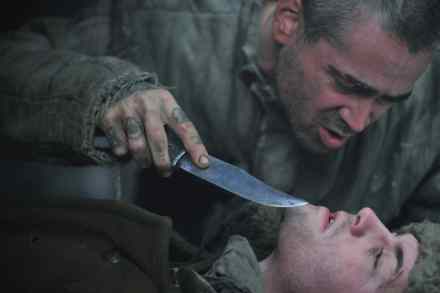
With Russia back in the news yet again, it’s interesting to note how comparatively few English language movies set in the country there actually are. Admittedly in TV there’s been an uptick, with two recent series on Catherine The Great in youth/middle age, the Andrew Davies Pass Notes version of War & Peace, McMafia and the multi award-winning Chernobyl.

Save Ukraine by admitting Georgia into NATO

As the Ukraine crisis continues to develop, it has become impossible to avoid mentioning Georgia and its relations with the West. This is not only due to the similarities in the two countries' geopolitical circumstances, but also because Georgia is explicitly mentioned with Ukraine in President Putin's demands to the West to forego any future NATO expansion. Like Ukraine, for years, Georgia has sat in the uncomfortable position of being pro-Western without enjoying the protections afforded by membership in both NATO and the European Union. Yet a country that was once a staunch Western ally has become mired in accusations of authoritarianism, behind-the-scenes governance, and covert pro-Russian sentiment. Georgia and Ukraine have occupied a unique position in the post-Soviet space.

vladimir putin alexei navalny

No one should celebrate the decline of America

From our UK edition

Where is America? Like an old friend who hasn’t been in touch for years, you wonder if its silence is lost interest or if it just got too busy. America used to be everywhere, the dominant voice in world affairs, a desirable friend and a much-feared enemy. It intervened (and, yes, interfered) whenever it felt its interests or values were threatened. Often its involvement was unwanted and sometimes it didn’t improve matters, but there was a reliable solidity to it, a sturdiness born of military might, prosperity and national self-belief. It could be admired or reviled, but it had to be reckoned with. America shies away from it all now. Observe how Joe Biden alternates between stark warnings and unintelligible ramblings on the prospect of a ground war in Europe.

The phoney war: what’s really going on between Boris and Putin

From our UK edition

What a lucky coincidence. At the start of a week that could see the ignominious collapse of Boris Johnson’s premiership, an opportunity to go fully Churchillian has appeared out of the blue. In an unprecedentedly detailed and direct memorandum, the British Foreign Office announced that it had exposed Russian plans to mount a coup in Kiev. Johnson was quick to back the alarming news with a grave warning to Vladimir Putin. ‘The intelligence is very clear that there are 60 Russian battle groups on the borders of Ukraine, the plan for a lightning war that could take out Kiev is one that everybody can see,’ Johnson told reporters on Monday. ‘We need to make it very clear to the Kremlin that that would be a disastrous step.

Letter from Odessa: life on the front line of a new Cold War

From our UK edition

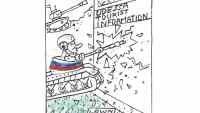
‘God Save the Queen’ trended on Ukrainian social media over the weekend. ‘As a Brit in Kiev I have never felt so popular,’ one expat tweeted. Four hundred miles to the south, however, on the once grand, now shabby streets of Odessa, the enthusiasms of the Twittersphere seem remote. There is little optimism that Britain, or indeed any other western country, can do much to halt the tidal wave that locals fear Russia is about to release on them. At first blush, life might look normal. On the main pedestrian street, Deribasovskaya, horsemen offer children rides on ponies with pink saddles. But in the city’s cafés, markets and large open squares, there is gnawing fear and growing unease. ‘How can we plan for tomorrow?