Russia

In the pipeline: would Germany side with Russia in a conflict?

From our UK edition

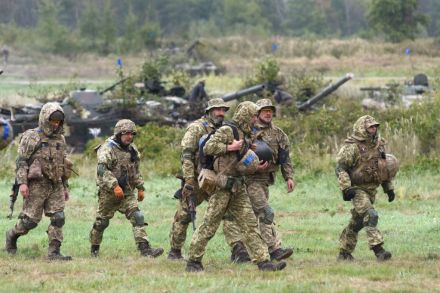
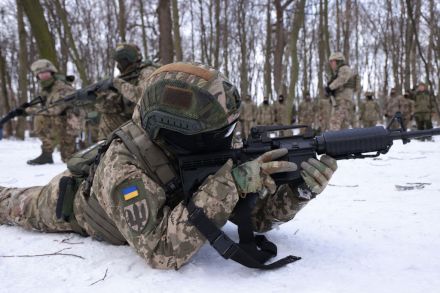
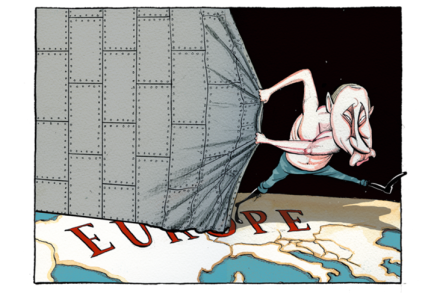
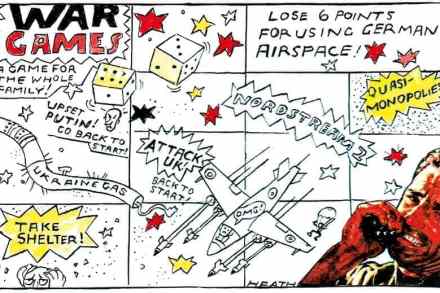
If Russia were to invade Ukraine, would Germany side with the Russians? For most of our post-war history, that would have been an absurd question, but things are changing fast in Europe. In the wake of recent events, it would not be irrational for Vladimir Putin to bet that if push came to shove, he could count on German neutrality — or even support. The Ukraine crisis continues apace, with up to 100,000 Russian troops now gathered near its border. The obvious question is: what would happen if Putin were to invade? It would split the EU, exposing its energy dependence on Russia, ruin what is left of transatlantic relations and force Germany to choose sides.

My new nickname for Putin

From our UK edition

According to the new Chief of the Defence Staff, Admiral Sir Tony Radakin, the Russians wish to ‘put at risk and potentially exploit the world’s real information system, which is undersea cables that go all around the world’. Apparently, these carry 99 per cent of international communications. The cables which serve Britain are in the Atlantic, where Russian submarines are increasingly probing. This revelation resembles the plot of a book I loved as a child, The Pirates in the Deep Green Sea, by Eric Linklater, published in 1959. Timothy and Hew are two boys living, temporarily without their parents, on Popinsay, a Scottish island.

Haunted: the spectre of revolution is stalking Putin

From our UK edition

A spectre is haunting the former Soviet Union — the spectre of people power. Every time it appears, Vladimir Putin leads an unholy alliance of all the reactionary autocrats of the former Soviet space to try to exorcise it. Last week, Putin sent 3,000 Russian paratroopers to Kazakhstan at the request of its president to crush a sudden revolution that left at least 160 protestors and 12 security officers dead. For the time being, it looks like Putin’s timely intervention — as well as an internet shutdown that paralysed protestors’ ability to coordinate — has successfully quelled the flames.

Portrait of the week: No. 10’s garden party, Djokovic’s visa row and France’s vaccine protests

From our UK edition

Home Boris Johnson admitted to attending evening drinks for about 40 staff in the garden of 10 Downing Street on 20 May 2020, when lockdown regulations made social gatherings illegal. ‘We thought it would be nice to make the most of the lovely weather and have some socially distanced drinks in the No. 10 garden this evening,’ said an email from the Prime Minister’s principal private secretary, Martin Reynolds. ‘Please join us from 6 p.m. and bring your own booze!’ Mr Johnson said that he had been talking to Rishi Sunak, the Chancellor of the Exchequer, about how people could be helped with soaring energy bills.

Biden chickens out of Iran negotiations

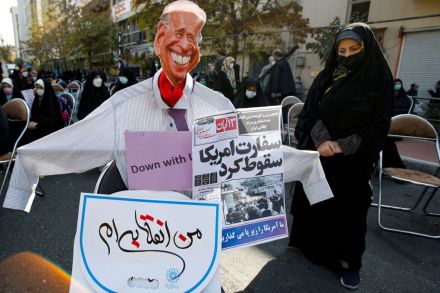
We were promised a war of nerves in Vienna between Washington and Tehran, a game of chicken. Instead, President Biden has chickened out. He's also blaming Israel. Call it fowl play. Here's how it should be going. The United States wants Iran to re-commit to refreezing its nuclear program. Iran demands in exchange the revoking of the economic sanctions against it. Each side insists that it won't give up on its demands — even if that could lead to the collapse of the negotiations, the demise of the Joint Comprehensive Plan of Action (JCPOA) and eventually to a military confrontation. The diplomatic and military tensions between the United States and Russia over Ukraine involve just such an exercise in brinkmanship.

iran

America still won’t risk a war with Russia over Ukraine

Anybody who thought this week’s intense diplomacy between American, European, and Russian officials would magically resolve the ongoing crisis in Ukraine should lie down until the feeling passes. Crisis diplomacy isn’t a walk in the park; if anything, it’s a slow-moving car ride through rush-hour traffic, with plenty of speed bumps along the way. On Monday, January 10, Washington and Moscow met for a round of discussions in Vienna to sound each other out and present their list of seemingly endless grievances. After eight hours of talks, both delegations left the room with, coincidently, similar assessments as to how it all went.

Was the Kazakhstan uprising an attempted Jihadi takeover?

From our UK edition

The Kazakh uprising is over. The stench of burnt-out vehicles and bombed out buildings in Kazakhstan’s most populous city and former capital, Almaty, has begun to dissipate. Life is returning to normal. Banks have reopened. Salaries and pensions are being paid. The internet is up and running again. Almaty airport is expected to reopen today. As the fog of war lifts some clarity about these events is beginning to emerge. Officials have reported that 100 businesses and banks were destroyed along with 400 vehicles. Seven policemen died and hundreds more were wounded; 8,000 people have been arrested. Some 164 civilians were killed. The government of President Kassym-Jomart Tokayev has survived and with some ease as it turns out.

Antony Blinken’s soundtrack to failure

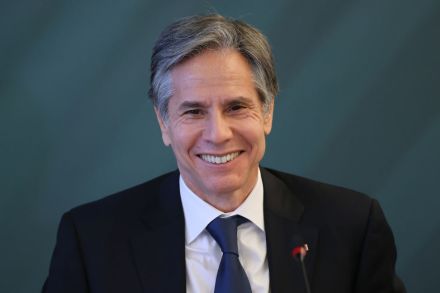
Antony Blinken, the secretary of state and first guitarist, has broken with the tired protocols of the past, faced the complexities of the multipolar twenty-first century world, and issued a Spotify playlist. This may be a better way of reaching new audiences than bombing them. But shouldn’t public figures be judged on their records, not their record collections? “The thread that runs throughout my life is probably music,” Blinken told Rolling Stone last year as he meditated his mixtape. Hitler would probably have said the same about painting had Rolling Stone been around to profile the Viennese amateur who was turning the art world upside down.

Letters: Afghan interpreters deserve better from Britain

From our UK edition

Welcome changes Sir: Lloyd Evans’s sympathetic piece on the fate of Afghans once they arrive in the UK made for sobering reading (‘New arrivals’, 18 December). In the Sulha Alliance we are endeavouring to support those Afghans and their families who served with and alongside British forces in Afghanistan. That is not the totality of Afghan migrants, but of the former interpreters and their families it can be truly said ‘they are here because we were there’ — and we owe them. I will not go over the whole sorry saga of the UK’s mistreatment of this group, but we really need a step change in how they are looked after.

The next chapter in American foreign policy

The new year begins a new chapter in American foreign policy. For the first time since 2001, we are not at war in Afghanistan. More than that, we no longer have an architectonic strategy for our role in world affairs. We had one during the Cold War: to win it. And we had one afterward, too: a decade before 9/11, our policy elite had already committed to the idea that we must police the world for the good of the liberal international order. The lead-up to the first Gulf War was the opening paragraph of that chapter, the ignominious retreat from Afghanistan its last line. Our policy mandarins have not changed their minds, but the world has changed too much for their grand design to have any meaning in 2022.

foreign policy

What the Russians thought of James Bond in the 1960s

From our UK edition

Last year I wrote a piece about James Bond for the ‘Freelance’ column of the Times Literary Supplement. All true Bond lovers — of the novels, I mean — know that he lived in a ‘comfortable flat in a plane-tree’d square off the King’s Road’, as Ian Fleming described it in Moonraker. Further internal evidence in Thunderball indubitably established that it was Wellington Square — but there was considerable mystery and doubt about exactly which house contained the Bond apartment. In my article I claimed to have identified it as No. 25, based on a certain amount of sleuthing and, I thought, convincing circumstantial evidence. No.

The genius of Tchaikovsky’s Nutcracker score

From our UK edition

By all accounts, Tchaikovsky struggled to compose The Nutcracker. It wasn’t his idea of an effective ballet scenario, and he was unimpressed with the choreographer Marius Petipa’s prettified storyline. Mid-composition, he learned of the death of his younger sister Alexandra. ‘Even more than yesterday, I feel absolutely incapable of depicting the Kingdom of Sweets in music,’ he wrote. But inspiration can be counterintuitive. On a good day, Tchaikovsky could write as fluently as any Victorian serial novelist, churning out forgettable piano pieces (as he put it) ‘like batches of pancakes’. Projects like The Nutcracker put him through purgatory but the result, with hindsight, was nothing less than the sound of Christmas.

Is Vladimir Putin really willing to invade Ukraine?

From our UK edition

Is Putin preparing to invade Ukraine? It certainly looks that way, with western intelligence agencies estimating this week that around 100,000 troops are now massing at the country’s eastern border. To some, this build-up is proof enough that the Kremlin plans to invade. This week the US president Joe Biden even made significant diplomatic concessions to Moscow to prevent a looming conflict. But the US president should keep in mind that capability does not prove intent: and Putin may well decide that the cost of invasion is too hard to justify. His recent Ukrainian mobilisation could still be a piece of ‘heavy-metal diplomacy’ – a show of force intended to bully and bluff Kyiv and the West into concessions.

The battle for Ukraine has already been lost

From our UK edition

Forget the 'commitment' of the US Secretary of State Antony Blinken to Ukraine’s sovereignty, the EU’s 'firm and decisive' support, and Liz Truss's vow to 'stand firm' with Ukraine. The hard truth is that the West has already lost, or rather abandoned, Ukraine. Even if it is not overrun by Russian tanks this winter, the Kremlin has a free hand to destabilise, threaten, and undercut Ukraine – including by intensifying the conflict in Ukraine’s east. After all, that war, initiated by Vladimir Putin, has been ongoing since 2014. And for all the tough rhetoric, countless sanctions, and the two bargains struck in Minsk, Russia continues to occupy Crimea and treat Donbas as its own territory.

Why America needs a grand bargain with Russia

Russian is losing influence in a region it once dominated: Eastern Europe. Highlighting this newfound weakness are Ukraine and Belarus, two states that were once solidly in Russia’s sphere of influence and are now on the verge of completely falling away. In 2018, Ukraine enshrined in its constitution the goal of NATO membership and last year Belarus experienced massive pro-democracy protests; both of these events are in Russia’s eyes akin to westernization. The American foreign policy establishment acts as if Russia will ultimately accept being surrounded by Western-allied states. Instead, history shows that losing influence will cause Russia to lash out. If Ukraine moves toward NATO membership, it will incur a Russian invasion.

vladimir

Britain’s duty to the Black Sea

From our UK edition

With Russian troops massing on Ukraine’s borders, the Black Sea is looking choppy. While that may seem to have little significance for us, in an age of globalised supply chains, international security commitments and Britain’s ‘tilt to the Indo-Pacific,’ that matters more than we might think. However, there is also an opportunity for the UK. In a report for the Council on Geostrategy that was published this week, I, James Rogers and Alexander Lanoszka, suggest that the Black Sea region is at risk of becoming an anarchic environment where insecurity reigns amid Russian domination. This matters.

Ice fishing in the Arctic

Like a rocket launch from the Cosmodrome, a Russian ice fishing trip must be timed just right. During my month in Archangel, a city in Russia’s far north on the edge of the Arctic Circle, the temperature swung between -30°F and a balmy 36°F. For ice fishing, the closer to the lower end of that range, the better. In fact, it’s a matter of life and death — the ice must have enough time below zero to freeze to a safe depth. I make it up to this chilly harbor town about once a year to visit my in-laws. It’s always a dramatic touchdown at the local airport as the runway, dusted with drifts of snow, appears at the last minute from out of a heavy fog.

ice

Aleksandr Solzhenitsyn’s masterpiece is finally appearing

In the mid-1970s, exiled from the Soviet Union for exposing its vast crimes against humanity, and having won the Nobel Prize in Literature for that endeavor, Aleksandr Solzhenitsyn turned his back on the lionization that awaited him in New York and other cultural capitals of the West and instead settled with his family in the woods of Vermont. Avoiding visitors for the better part of the next two decades, he churned out half a dozen or so books, averaging roughly 750 pages each, that together tell the story of the Russian Revolution and its antecedents. This act of sheer energy, self-discipline and renunciation of the conventional worldly pleasures bestowed by the literary elite was in the spirit of Russia’s own eastern monasticism.

Solzhenitsyn

Ukrainian annexation is already happening

From our UK edition

Nato and the EU are fearing a Russian invasion of eastern Ukraine. They have reason to be concerned, given that Russia would not blink to escalate while the West is still fumbling around on how best to respond. Brussels and Washington are in firefighting mode, while Russia chooses the when and the where. Annexation in the east, meanwhile, is already happening — not by force but through civil and economic ties. Military mobilisation looks like a sideshow, a distraction from what is really happening already: a slow annexation of the eastern quasi-independent republics. The pro-Russian regions of Donetsk and Luhansk declared independence from Kiev in 2014 but have never been recognised by Ukraine.

The art and science of Fabergé

From our UK edition

After all the magnificent presents she’d received from his workshop, Queen Alexandra was eager to meet the most famous jeweller in Russia. ‘If Mr Fabergé ever comes to London,’ she said to Henry Bainbridge, a manager of the design house, ‘you must bring him to see me.’ Peter Carl Fabergé paid a rare visit to the capital to inspect his new shop — the only one located outside the Russian empire — at 48 Dover Street in 1908. ‘The Queen wants to see me! What for?’ he asked an exasperated Bainbridge. ‘Well, you know what an admirer she is of all your things.’ Insisting that she would not wish to be troubled, Fabergé demurred, polished off his lunch and requested the time of the next train.