Russia

As with Iraq, so with Russia

Against the backdrop of the Ukraine crisis, we have been bombarded with many historical analogies. Leading the list are the 1961 Berlin standoff and the 1962 Cuban Missile crisis. And then there is that all-time favorite, the 1938 Munich Agreement. Those crises should certainly not be regarded as ancient history. But then why go back 60 or 80 years when you can walk down memory lane? Like, say, when an American president was trying to rally the public and mobilize international support in the name of using military force against an alleged bloodthirsty dictator who was supposedly threatening Western geostrategic interests and challenging its liberal democratic values?

ukraine

NATO won’t bleed for Ukraine

Ask three different people whether Russian President Vladimir Putin will approve an invasion of Ukraine, and you are likely to get three different answers. Yes, a Russian land, air, and sea blitz is inevitable and will come in fairly short order, likely without warning. Yes, a Russian invasion is possible, but could still be averted with some shrewd diplomacy. Or, no, surely Putin understands an invasion would be a disaster for his legacy and his country’s economy. In the midst of all of this comes wild speculation about what Putin is thinking at any given moment, how the weather may factor into his calculations, and what the Russian government’s end goal really is. What can be said for certain, however, is that diplomacy has picked up significantly over the past week.

The Ukraine crisis has united the West

From our UK edition

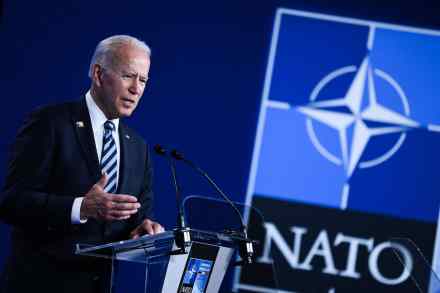
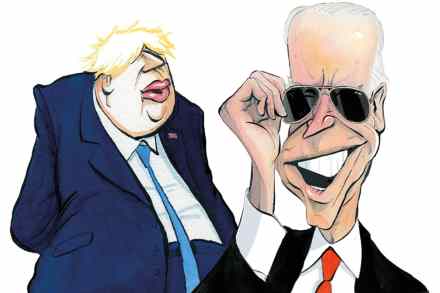
There has been a subtle change of tone from Joe Biden and Boris Johnson about the likelihood of a Russian invasion of Ukraine. It has gone from 'highly likely' to 'there may be a diplomatic solution' — or from 'almost all hope lost' to 'chink of hope'. So from where does that hope emanate? Largely, I am told, from noises out of Ukraine that its government is moving towards a public statement that although it retains the right to join the Nato western defence alliance, it will commit to not consider applying for at least ten years. The US president and UK prime minister are keen to encourage, through diplomatic channels, such a statement from Ukraine’s President Volodymyr Zelensky.

I stand with Diane Abbott

From our UK edition

Not for the first time in her political career, Diane Abbott is getting a lot of flak online. She’s being trolled, heckled and denounced as an enemy of the United Kingdom. Only this time Ms Abbott is being hauled over the coals not for saying something silly, but for saying something sensible. Something true. Something fundamentally correct. Namely, that Nato bears a great deal of responsibility for the current crisis in Ukraine. Browsing the Abbott-bashing headlines you could be forgiven for thinking she had upped sticks, flown to Moscow, and sworn lifelong allegiance to Vladimir Putin. ‘Diane Abbott backs Russia!’, says the Express.

What really happens if Russia invades Ukraine?

From our UK edition

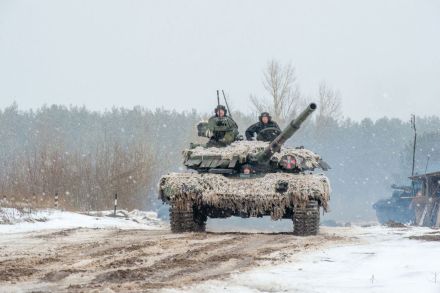
Russia will pay an enormous price if it invades Ukraine, whether it goes for the whole country or only the eastern region around Donbas. Vladimir Putin has already assembled well over 100,000 troops near Ukraine’s borders, moved in tanks, heavy artillery and aircraft, and brought in the medics and blood supplies needed to deal with casualties. Western governments have evacuated all but essential diplomatic personnel and told their citizens to get out now. Still, no one knows what Putin has decided, or even if he has decided. Visits to Moscow by senior western politicians have yielded little information and no diplomatic solution. The message seems to be that Putin remains uninterested in a compromise.

Why does Germany look so weak on Russia?

A recent survey of Germans done by Forsa, amongst the most reputable polling institutions in that country, shows that at least in one way, the Cold War has not quite ended. A majority of West German respondents (52 percent) blame Russia for escalating the conflict with Ukraine, while a plurality of East German participants (43 percent) blame the United States. All respondents, meanwhile, plead for peace in the region and expressed fear of a looming war between Europe and Russia. The political repercussions here are very real. The generation born in the late 1960s, having been completely educated in the East German communist dictatorship, currently constitutes the most significant single voting block in the East.

Is Orbán serious about leaving the EU?

From our UK edition

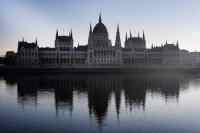
First the UK decided to leave the EU. Then in Poland, lawmakers started talking about it. Is Hungary now seriously considering Huxit? For the first time ever, Viktor Orbán has insinuated that leaving the union could be a possibility. The Hungarian Prime Minister kicked off his campaign for re-election over the weekend by attacking Brussels’s ‘Jihad’ against his country and suggesting that continued membership of the EU might not be possible. This is obviously an alarming prospect for the EU. Over the course of Orbán’s premiership, Vladimir Putin has brought Hungary into his orbit. The latest step in that process was a 15-year gas deal signed in September. Russia will now supply about half of Hungary’s gas.

The unthinkable horror of a Russia-Ukraine war

In the coming days, if intelligence assessments are accurate, the world will watch the unfolding of a bloody war between Russia and Ukraine. It will make history for all the wrong reasons, as the largest armed conflict since World War Two. And while Moscow would almost certainly defeat Kyiv on the battlefield, the real story will be the horror unleashed by the first modern war fought between nations of real consequence in decades. Such a war would showcase military modernizations that, while well-known, will still shock most Americans and change our perception that war in the twenty-first century is anything but cost-free. Worst of all, there's chance that a Russia-Ukraine war might not be contained to just those two countries, sucking in America in the process.

Ukraine’s plight paints a bleak vision of Europe’s future

From our UK edition

It is tempting to view Vladimir Putin as a Cold War relic: a former KGB officer who hasn’t got over the fall of the Soviet Union, which he called the ‘greatest geopolitical catastrophe of the century.’ But, as I say in the Times today, what is happening on Ukraine’s border isn’t a throwback to the Cold War. Rather, it is a preview of Europe’s future. Since Nato’s creation, European security has rested on America’s involvement. But Europe is now a secondary concern for the US; Asia and competition with China is the most important challenge facing Washington now. The horribly messy US withdrawal from Afghanistan was justified on the basis that it would free up resources to focus on China.

Why Putin wins

From our UK edition

Does Vladimir Putin intend to invade Ukraine? Or are his troop manoeuvres just a game — another test of the West’s resolve? If the former, he will win: British troops (and citizens) have been told to leave Ukraine in the event of conflict and no one doubts that the estimated 130,000 Russian forces could succeed in their objective. So the first major land war in Europe since World War II would end in an easy victory for Russia.  “My guess is he will move in,” Joe Biden said last week, as if he were a casual observer. Families of US diplomats in Ukraine have been ordered to leave the country But even if it's a bluff, Putin can count the past few weeks a success.

Portrait of the week: Queen Camilla, a cabinet rejig and NHS waiting list warning

From our UK edition

Home In a message for the 70th anniversary of her accession, the Queen said it was her sincere wish that ‘when that time comes, Camilla will be known as Queen Consort’. She signed the message: ‘Your servant, Elizabeth R.’ Rishi Sunak, Chancellor of the Exchequer, said that the government would pay energy suppliers to discount bills by £200 in October, but customers would then have to pay back £40 a year for five years. People living in houses of the A-D council tax bands would receive a £150 rebate. The regular Ofgem energy price cap adjustment meant that a typical household would pay £693 extra a year, a 54 per cent rise.

Can Macron really lecture Putin about democracy?

From our UK edition

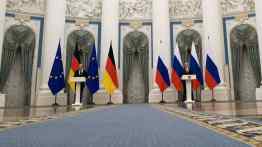
A penny for the thoughts of Vladimir Putin on Monday as he stared at Emmanuel Macron from the end of a very long table. If the Russian leader has a sense of irony he might have been struggling to suppress a smirk as he welcomed the President of France to Moscow to discuss the situation in Ukraine. Macron was in his element as he played the international statesman representing the EU, but the President will be dismayed to learn that his grandstanding has not impressed the folks back home. Of the 140,000 who have so far responded to an online poll in Le Figaro, 60 per cent considered his visit to Moscow a failure. It doesn't appear to have yet dawned on Macron and many other western leaders that the days of dispensing lessons in democracy to despots are over.

The new unpatriotic conservatives

The die against conservatives opposed to the Iraq war was cast by David Frum in a now-infamous essay for National Review back in 2003. Not only were the right's antiwar sorts unpatriotic, Frum charged, they were defeatist and conspiratorialist appeasers. “They have made common cause with the left-wing and Islamist antiwar movements in this country and in Europe,” he wrote. As one can imagine, this made it quite difficult for this small but active faction of the conservative movement (which included the American Conservative magazine and libertarians like Texas Congressman Ron Paul) to penetrate the mainstream, or build trust with their compatriots across the aisle.

Kudos to Macron for going to Moscow

Landing in Moscow on February 7, French President Emmanuel Macron had a twinkle in his eye and a spring in his step. There he was, taking it upon himself to be the first European head-of-state to meet Russian President Vladimir Putin since over 130,000 Russian troops massed on Ukraine’s border from three sides. Macron's mission was to explore whether a de-escalation with Russia was possible. “I believe that our continent is today in an eminently critical situation, which requires us all to be extremely responsible,” he told reporters before his five-hour session with Putin began. The other option, what could be the largest land war in Europe since World War II, would be far worse.

Putin and Xi’s Potemkin alliance

From our UK edition

Vladimir Putin very rarely travels abroad these days – and Xi Jinping has not met a foreign leader in person for almost two years. Yet there they were together, just before the opening of the Beijing Olympics, hailing their and their nations’ friendship and concluding $117 billion in oil and gas deals. Although they themselves avoid the word, can we yet talk of a Sino-Russian alliance? Not quite: there’s more here than meets the eye. Certainly the focus was on amity and common interests. This had been signalled in the lead-up to the summit. Chinese foreign minister Wang Yi said that Moscow’s security concerns about Nato were ‘legitimate’ and needed to be ‘taken seriously and addressed.

Could Viktor Orbán be a peacemaker in Ukraine?

From our UK edition

For a politician whose calling card is the struggle for Hungarian national sovereignty, Viktor Orbán and Vladimir Putin’s press conference on Tuesday didn’t look good for the Hungarian leader. Putin abruptly walked off the stage, brusquely beckoning Orbán to follow. The Hungarian strongman dutifully picked up his papers and traipsed across the large, socially distanced podium all alone, apparently flummoxed by whether or not to button up his suit jacket. The unfortunate clip makes Orbán look every inch Putin’s puppet – quite the turnaround for a politician who made his name campaigning against Hungary’s lack of independence as a Soviet satellite state in the dying days of the Cold War.

Viktor Orbán or: How I Learned to Stop Worrying and Love Putin

From our UK edition

Viktor Orbán first came to prominence when in 1989 he declared on live TV that Hungary must put an end to the ‘Russian occupation’. On the first day of February this year, he held his thirteenth meeting with Vladimir Putin. What’s changed? Like much of his generation, Orbán initially believed that the fall of communism would mean a ‘return to Europe’ — with not only western democracy but also a western standard of living. Yet after a brief and unpleasant stint studying in Oxford, the student politician discovered that Britain’s future elites were ignorant and decadent.

Is our Ukrainian ambassador OK?

From our UK edition

I know the following sentence is going to get me into trouble. Still, there are times when you wonder whether highly feminised people should perform certain jobs. I am not saying ‘women’ and I am not saying ‘always’, just ‘times’. Still, I can hear you say: what sort of a dinosaur are you? Well, join me in the Jurassic period for a moment by contemplating the social media activity of our lead diplomatic representative and ambassador in the Ukraine, Melinda Simmons. Simmons is in a rather important position at present, yet her social-media account suggests otherwise. Here is Simmons a few months ago, writing on Instagram about a photograph of her at a podium with a chaplain to one side and a military guard at the other.