Robert Peston

Robert Peston

Robert Peston is Political Editor of ITV News and host of the weekly political discussion show Peston. His articles originally appeared on his ITV News blog.

Jeremy Hunt thought he was being pranked

From our UK edition

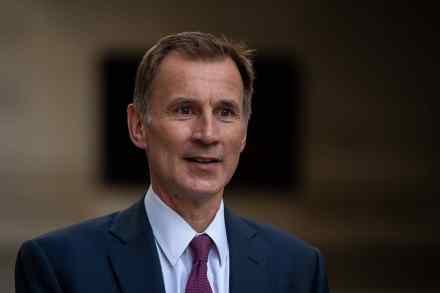
When Jeremy Hunt received a message early yesterday morning from a 'Liz Truss' wanting to talk to him, he assumed he was being pranked. He later found out it was indeed the prime minister and she wanted to make him Chancellor. He has totally reset her economic policy this morning, so maybe the prank is on her. He has totally reset her economic policy this morning, so maybe the prank is on her I have just interviewed him, and what he told me is that in what he now says will in effect be a 'full budget' on 31 October, he will announce public spending plans that are lower than those previously announced (otherwise known as spending cuts), plus tax rises and some taxes not falling as fast as hoped (that promised 1p reduction in the basic rate of tax is at risk).
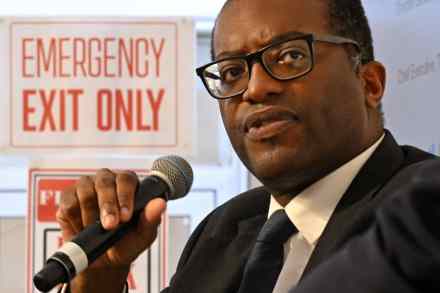
Kwasi Kwarteng’s mini-budget continues to spook investors

From our UK edition

If government bond sales by pension funds are the fundamental cause of a potential systemic crisis that could hurt us all, as the Bank of England says, why are pension funds taking so little advantage of the Bank’s offer to buy £65 billion of the bonds? And why are bond prices still falling? It seems to me the only explanation for what is happening is that margin calls on pension funds’ liability-driven investments (LDIs) – or the trillion pounds of their debt that’s secured against UK government bonds – are not, in fact, the main cause of the spike in bond yields, or at least they are only a small part of it. It is the other way round.

The Bank of England has no good options

From our UK edition

How will and how should the Bank of England, and the Treasury, react to this morning's continued fall in the value of the pound? I've been talking to former Bank of England executives and ex-Treasury officials, who make clear that the stakes are incredibly high and that reassuring markets will not be easy. This further devaluation in the currency is a serious problem for Chancellor Kwasi Kwarteng after his maxi ‘mini-Budget’ on Friday because it means the price of imports will continue to rise, stoking already-high inflation. And it raises the spectre that the government will struggle to borrow what it needs at acceptable interest rates, because of the falling value (in dollar terms) of sterling-denominated assets.

Can Starmer convince voters to back his vision of Labour?

From our UK edition

Here in Liverpool, at the start of Labour conference, politics feels more familiar than it has for many years, and also quite confusing and not wholly predictable. And the cause, mostly, is Friday's budget, which very deliberately delivered the bulk of additional income from tax cuts to those on highest earnings. This feels in many ways like a return to the kind of class based politics – what used to be called class war – we haven't seen since the Thatcher years of the 1980s. After all, ever since the election of Blair's New Labour in 1997 we are all supposed to be middle class.

Truss’s energy bailout is eye-watering

From our UK edition

The government will announce tomorrow that it will cover the costs of more than £1 in every £3 of gas consumed by businesses and households over the next six months. There has been no subsidy of a market price on this scale in British history. Estimates of the final bill for taxpayers range from £100 billion to £200 billion, or more than the annual cost of running the NHS – if the scheme for households lasts for two years, as promised, and the separate one for all businesses runs for six months, to be followed by a less ambitious business scheme for another 18 months.

Kwasi Kwarteng is a politician from a different age

From our UK edition

Liz Truss doesn’t waste energy on unnecessary emotion. At the announcement of her victory at the QE2 Centre, she ditched the convention of hugging your partner and shaking hands with the runner-up. Instead she grabbed her notes from her husband Hugh O’Leary and marched past Rishi Sunak without a second glance. No time for sentimentality! Different from Johnson, surrounded by his siblings and ubiquitous father, or the uxorious Cameron and doting May. She knifed to the microphone with the same steely determination she showed all those decades ago when she told the Lib Dem conference to abolish the monarchy. The script has changed, the focus has not. Just before midnight on the first day of her regime, she rejected another convention: the showy buttering of POTUS.

Will the Bank of England say sorry?

From our UK edition

Months ago I said the Bank of England would face a barrage of criticism and a challenge to its independence for failing to raise interest rates enough last year during the post-Covid economic rebound and then for putting them up big time now as we head into recession. So it has proved. And by the way, this does not mean that Bank independence has failed, or that allowing politicians greater sway over how much and when interests rise, would be better. It probably wouldn’t be. The Bank should stop pleading that its failure to call the inflationary turn early enough is irrelevant Nor does it mean Liz Truss would be right to review the Bank’s mandate, or the target the government obliges it to meet (though there may be a case for this).

What Liz Truss learned from the Brexit referendum

From our UK edition

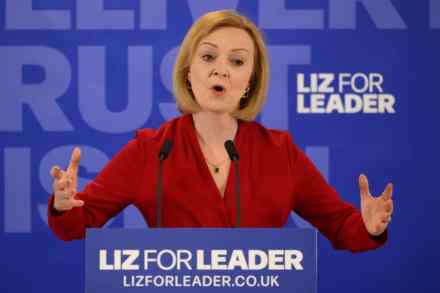
Liz Truss may have been a Remainer but she has learned the political lesson of the EU referendum in the way that her genuine Brexiter opponent has seemingly failed to do.  The point is that in today’s milieu, and especially with an electorate of 160,000 largely Brexit-supporting Tory members, power is with the insurgent. In pinning her colours to at least £30 billion of immediate tax cuts, against Sunak’s steady-as-we-go no-tax-cuts-till-prudent mantra, she has defined herself as the crusader against alleged stultifying Treasury orthodoxy.

Liz Truss presents a serious challenge to Rishi Sunak

From our UK edition

After all that, Sunak entered the final members' round to be Tory leader and UK PM with a comfortable 24 vote margin of advantage over the runner-up Liz Truss. But her 113 votes are enough of a mandate from MPs to present Sunak with a serious challenge during the summer contest. What is striking is that the next Tory leader will represent continuity with the Johnson years Tory members, who according to surveys seemingly prefer Truss to Sunak, can't be swayed by the idea that Truss would not be able to lead MPs because too few support her – which would have been a credible argument if Sunak had been supported by nearer 200 of his colleagues. So the fight is on.

Kemi Badenoch’s role in the Tory leadership race isn’t over yet

From our UK edition

Kemi Badenoch, the Tory leadership contest's Emma Raducanu, finally lost momentum. She put on just one vote to secure 59 backers, and is out. But that's not the end of her story in this battle to find Britain's next prime minister. Where she and her supporters now place their votes will determine which two Tory MPs are whittled to one by the votes of 160,000 ordinary members of the Conservative party. It would be extraordinary if Badenoch threw her weight behind Penny Mordaunt, given her highly personal charge that Mordaunt as equalities minister was too liberal in her policy towards trans people. It's a charge that Mordaunt has rejected, but there's no hint of forgive and forget on either side. What about Badenoch's highest profile supporter, Michael Gove?

Labour won the Tory leadership debate

From our UK edition

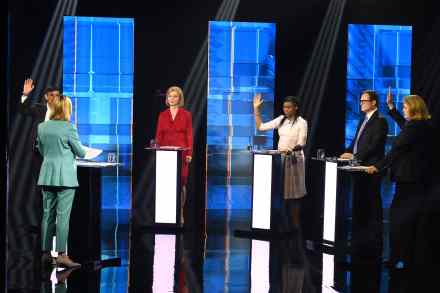
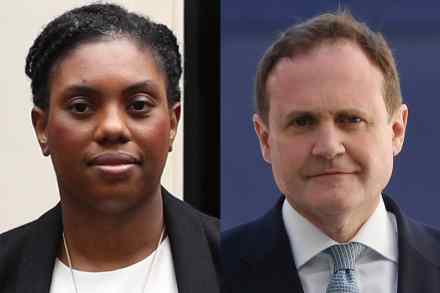
That was quite a debate. I’ve never seen senior Tory ministers and MPs lay into each other so publicly.  Rishi Sunak accused Liz Truss and Penny Mordaunt of being socialists – not a compliment in the Tory lexicon – for being reckless with the public finances. Truss attacked Sunak for raising taxes to record levels. Kemi Badenoch called for unity while attacking more or less everyone for everything. Mordaunt seethed at what she saw as the cheap personal attacks she’s faced in recent days, especially over the trans debate. Tom Tugendhat attacked everyone else for being current or recent members of Boris Johnson’s government.

Why did Liz Truss change her mind on Brexit?

From our UK edition

Rishi Sunak and Penny Mordaunt were both committed Brexiters in the 2016 referendum campaign – and both took career risks to support leaving the EU, against the wishes of the then-Prime Minister David Cameron. By contrast Liz Truss campaigned enthusiastically to stay in the EU (see for example the below forceful speech to the 2016 Food and Drink Industry dinner where she makes a powerful industrial case for staying in the EU). https://www.youtube.com/watch?v=u0cNPM4j1gQ It is striking therefore that Steve Baker and Suella Braverman (supported by the disenfranchised David Frost) prefer the zeal of the after-the-event convert to Brexit, namely Liz Truss, to the other candidates who were always Brexiters.

Will Tugendhat and Badenoch fight on?

From our UK edition

Tom Tugendhat and Kemi Badenoch have both fought impressive campaigns. They were both relatively unknown before the contest and they've significantly enhanced their reputations. But they are both so far behind it would take a miracle for either of them to reach the magic 120 votes needed to enter the final run-off where members pick the leader from two chosen by MPs (Badenoch needs 71, and Tugendhat 88 – when there are at best just 27 of Braverman's former supporters going begging).

The Conservative party is in a terrible state

From our UK edition

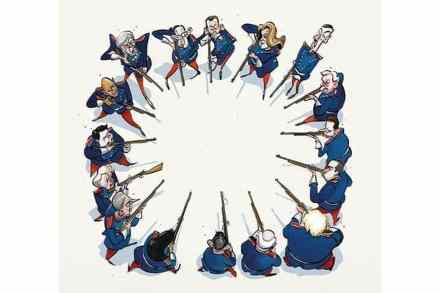
There was only one lesson to be drawn from last night’s Peston show: the Conservative party is in a right old state. On it we had four senior Tory MPs who support four different candidates to be leader: the Treasury minister Lucy Frazer who backs Rishi Sunak, the friend of Boris Johnson Jake Berry for Tom Tugenhadt, Bob Seely for Penny Mordaunt, and Steve Baker for Suella Braverman. They tried to be measured and collegiate. But for most of the hour viewers saw blue-on-blue arguments, mostly about why their respective candidate was better than the others, who was truest to the Brexit cause and whether a true Tory would cut taxes now or only when the public finances are in better shape.

Does Sunak want to face Mordaunt or Truss?

From our UK edition

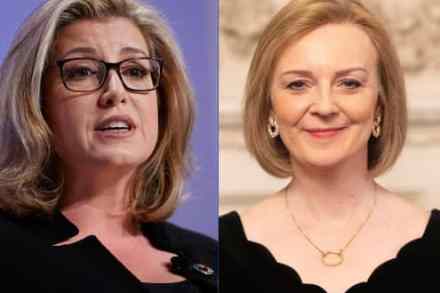
To use a sporting cliche, Penny Mordaunt has brought the Tory leadership election alive. The little known former Defence Secretary placed second in today’s first round, with 67 votes – which is 17 more than third placed Liz Truss, and 21 behind the leader Sunak’s 88. And given that the MP contest is all about finding the top two, Mordaunt will believe that the momentum is with her – whereas the foreign secretary, Truss, should feel anxious. The question is whether the way that Jacob Rees-Mogg and Nadine Dorries yesterday positioned Truss as the Boris’s-Revenge-on-Sunak candidate has hurt or helped Truss. Either way, she has considerable ground to make up. Tonight there are three big questions.

Will Sunak’s polished campaign harm his chances?

From our UK edition

Rishi Sunak has launched a slick, well organised leadership campaign very early. It is impossible to escape the conclusion that he has been preparing his leadership pitch quietly for weeks and months. Will this hurt or harm him? There may be some Boris Johnson loyalists who will accuse him of disloyalty - although Johnson did not manifest much fealty to Theresa May when she was PM and he foreign secretary. Per contra, Johnson’s many critics may want to reward Sunak for quitting as chancellor last Tuesday and triggering the crisis that led on Thursday to Johnson announcing he was stepping down. So it is not clear to me whether Sunak will be rewarded or punished for contingency planning for a bid to become PM while in theory there was no vacancy at the top. https://twitter.

Could Boris Johnson cling on until November?

From our UK edition

The prime minister is resigning today, and staying on as caretaker till the autumn, but that leaves very big decisions to be taken not only about who succeeds him but about the process for replacing him. I am told Boris Johnson rang Sir Graham Brady – chair of the 1922 backbench committee and de facto shop steward for Tory MPs – this morning. Yesterday, Brady told him he’d lost the confidence of the party and that he should resign. Johnson refused and said he was determined to battle on. This morning he telephoned Brady and said that, having reflected overnight, he would be quitting after all.

The meeting tonight that will decide Boris Johnson’s fate

From our UK edition

The 1922 Committee – the organising body for Conservative MPs – faces a momentous decision on Wednesday night. If its members believe the mood of their colleagues is that the Prime Minister must face an immediate further test of his popularity, following the Chris Pincher debacle and the serial resignations from government, they could allow a further vote of confidence in the PM. But the threshold for such a vote would be massively increased, to avoid the charge that the committee was somehow on a vendetta against the PM and was trampling on the party’s internal rules of democracy.

Is Starmer trying to have his Brexit cake and eat it?

From our UK edition

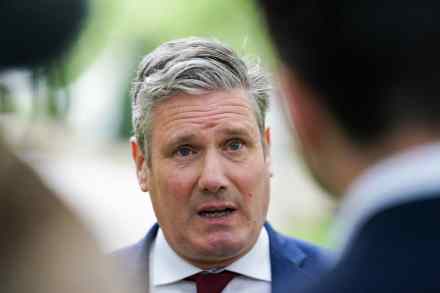
There are three big questions about Sir Keir Starmer's 'five point plan to make Brexit work'. First is whether it makes sense economically: will it help return the UK to growth? Second, will it impress the EU, and is there any chance that what Starmer wants will be agreed by EU leaders? Finally, does it make sense politically, will it reinforce support for the Labour party? In an interview this afternoon, I probed Starmer on all this, and didn't emerge much wiser. You can watch the whole (short) interview here: https://www.youtube.com/watch?

Nicola Sturgeon has put Boris Johnson in a tight corner

From our UK edition

Nicola Sturgeon’s claim that she will not contemplate breaching the rule of law by holding an independence referendum was pretty blatant trolling of Boris Johnson, given the multiple allegations he faces of being less than scrupulous in following domestic and international law. But Sturgeon also put Johnson and the Tory party in a tight corner by asking the Lord Advocate to petition the Supreme Court in London to determine the legality of a referendum. If the Supreme Court rules her way, then there will be the mother of all constitutional crises if Boris Johnson continues to reject the lawfulness of any vote by the Scottish parliament to hold a poll on 19 October 2023.