Russia

Stop pretending Ukraine will ever be in NATO

Russian President Vladimir Putin is once again making the West nervous. And unlike his previous display of military might near the border with Ukraine last spring, Washington is concerned enough that it's sent CIA director (and former US ambassador to Russia) William Burns to Moscow for talks earlier this month. If Burns’s trip was meant to scare the Kremlin into halting additional military formations near the Russia-Ukraine border, then the confab didn’t work as planned. The Ukrainian government estimates that up to 100,000 Russian forces are now camped out in the area. American and European officials are sharing information with one another about various scenarios the Russians could be contemplating, the most dramatic being a second invasion of Ukraine in seven years.

ukraine

Is Russia preparing to invade Ukraine?

From our UK edition

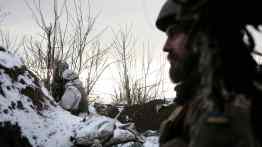
I can still hear the battlefields of eastern Ukraine. Just a mile or so from us, thousands of Russian troops were dug in; shells landed nearby. It was so cold my phone kept switching off. Seven years later, Ukraine is heading into another sub-zero winter. And the Russian troops have returned. Moscow has now massed more than 90,000 troops on Ukraine’s eastern border. Washington is briefing that intelligence suggests an invasion. Moscow says this is ‘alarmist’ and — as usual — accuses Nato of inflaming things. How did we get here? In truth the conflict never ended, it just froze. But it’s also true that the relationship between Kiev and Moscow has tanked this year.

Is the Russia collusion hoax about to be exposed?

Ultimately, I suspect, John Durham will break your heart. At least, he will if you think, as I once hoped, that he was going to get to the bottom of the soft coup that was the Russia Collusion Hoax. I admit that I have been bucked up, somewhat, by Durham’s three indictments. Why only somewhat? First, I remember the many long months of silence. He didn’t call, didn’t write. I began to think he didn’t care. Then, in August of 2020, the radio crackled briefly to life. Amazing! John Durham, who had initially been presented as a sort of super Canadian Mounty, a prosecutor who always got his man, had come in from the cold with that scary facial hair and flashing spectacles with a real, honest-to-goodness indictment. At first blush, anyway, it seemed like a choice one.

Putin’s plan for Ukraine

From our UK edition

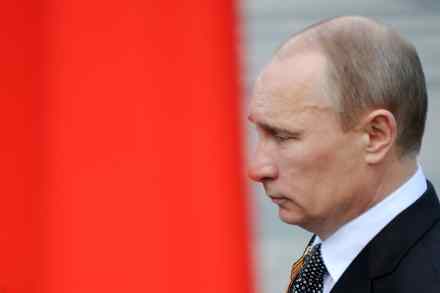
Vladimir Putin’s message was as clear — and familiar — as his method. The Kremlin has begun another major build-up of troops along Ukraine’s border. The reason? Retaliation: last month, president Volodimir Zelenskiy flew to Washington to renew his plea that Ukraine be allowed to join Nato.  The massive show of force — the second this year — prompted US Secretary of State Antony Blinken to warn his European allies that Russia showed dangerous signs of invading its smaller southern neighbour.

Lukashenko and Putin are exploiting Europe’s migration muddle

From our UK edition

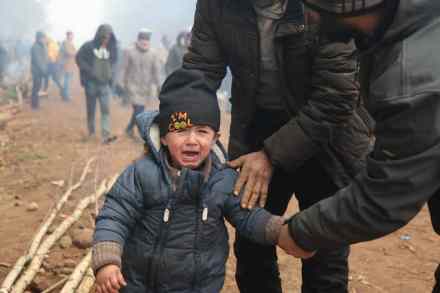
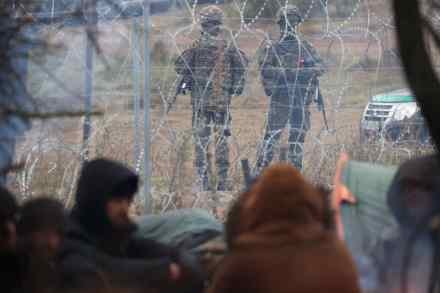
At the border of Belarus and Poland, camps of migrants wait for a chance to cross the border into the EU. Groups attempt to break down the razor wire fences standing in their way, Some 15,000 Polish soldiers stand ready to stop them. Belarusian soldiers urge them on and offer assistance. The Belarusian state shuttles more migrants towards the border by the day, hands out wire-cutters, and prevents them from turning back. Some 30,000 migrants have attempted to cross into Poland since August. That number is swelling by the day, with Belarus now running dozens of flights every week ferrying further desperate people to Europe’s eastern border.

lukashenko

The dictator behind Europe’s next migrant crisis

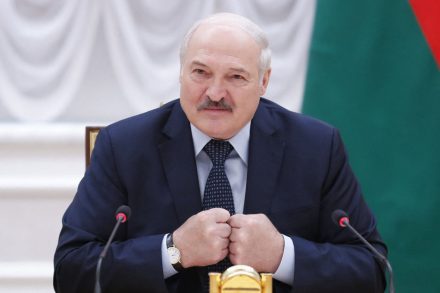
Belarus, the former Soviet satellite state, isn’t exactly a global heavyweight. Alexander Lukashenko, the country’s authoritarian president, is an international pariah who is better at concocting conspiracy theories than he is at running a country. At $60 billion, the Belarusian economy is about the size of Rhode Island’s. Other than petroleum, cheese and dump trucks, Belarus doesn’t offer much in the way of exports. A once promising information technology sector is now gutted, as Lukashenko’s crackdown on dissent forces highly educated talent to flee the country for the Baltics. Lukashenko, however, is smarter than he looks.

How Turkey is fuelling the Belarus-Poland migrant crisis

From our UK edition

In the cold, damp forest lining the border between Poland and Belarus, thousands of refugees flown over from the Middle East have waiting to cross into the EU for days. Belarusian riot police are shoving them away from their gates and towards Poland, where only more forces await. The Belarusian dictator Alexander Lukashenko has recently been in conflict with the EU, which has imposed sanctions on his regime after last year’s contested elections which many believe to have been rigged. Lukashenko is pushing refugees towards Poland to be pawns in a fight, with the backing of Putin. The refugees find themselves between a rock and a hard place: in front of them, a Polish government who looks good appearing tough against migration and Lukashenko.

Cold War, hot planet

From our UK edition

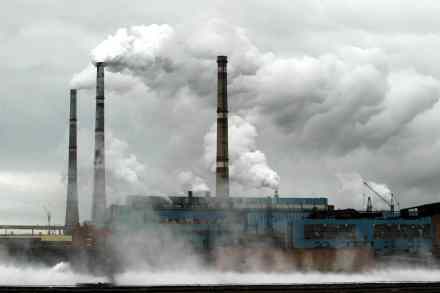
Chelyabinsk is one of the most polluted places in the world. On 29 September 1957, an explosion ripped through the nearby Mayak nuclear plant — which processed plutonium for the Soviet Union's atomic bombs — casting a cloud of highly radioactive debris across the central Russian region. Despite communist officials keeping the disaster tightly under wraps, tens of thousands of people were, eventually, evacuated from the worst-hit villages, and vast swathes of the surrounding area have been closed to the public. More than half a century on, the nuclear fall-out is now the least of the ecological worries.

Biden builds back in the USSR

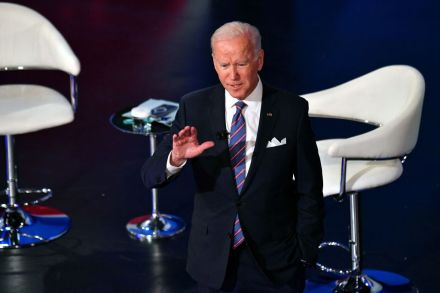
Is it more worrying that President Biden might not be in charge, or that he actually is in charge? Nobody has the power to force a president to undergo the indignities that Biden went through on Thursday night’s CNN town hall. As with the withdrawal from Afghanistan, either someone convinced him to do it or he insisted on doing it. Either way, you could not watch him, clenching his fists as though holding a Zimmer frame while Anderson Cooper spoon-fed him a prompt, without feeling that we are heading nowhere good. On the same day that Donald Trump evoked the ghosts of Soviet propaganda by launching a social-media app called Truth — the Russian translation is Pravda — Joe Biden attempted a Brezhnev-era theatrical of his own.

biden

There is no Russia-China axis

From our UK edition

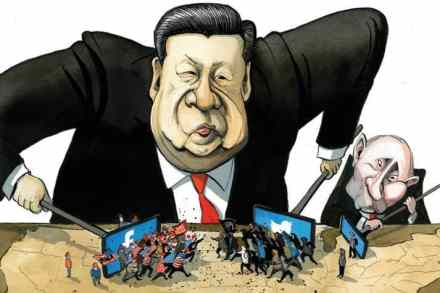
You should be careful what you wish for, because you might just get it, so the old cliché goes. In diplomacy at the moment, it seems you should be careful of the threats you prepare for, because you may end up producing them. There is a growing trend in the West towards treating Russia and China as some single, threatening ‘Dragonbear’ (a reference to the two countries' national animals). This underrates the very real tensions between Moscow and Beijing, but risks pushing them even closer together. The most recent case in point was Nato secretary-general Jens Stoltenberg’s interview in the Financial Times, in which he criticised ‘this whole idea that we either look Russia, or to China… because it goes together.

Welcome to the age of entropy

Americans and other westerners have long been accustomed to thinking that history has a clear direction. Sometimes the direction is contested, as it was during the Cold War. The future could have been capitalist or communist, or perhaps a blend of both systems — ‘convergence’ was a trendy notion for a time — but one way or another the alternatives were clear. After the Cold War, there were no alternatives. Capitalism, democracy and liberalism were here to stay, and soon they would be everywhere else too. All the Islamic world needed if it was to join us at the end of history was a nudge: regime change would speedily bring about social and economic change.

liberalism

Under deep suspicion in Beirut, Kim Philby still carried on regardless

From our UK edition

The story of the Cambridge spies has been served up so often that it has become stale — too detailed, too predictable, too firmly etched in Cold War monochrome. So it’s a good idea to seek another angle, through the warmer lens of a love affair involving its main protagonist Kim Philby and his wife Eleanor. It humanises the tale, particularly as it draws on a vivid and neglected personal source — The Spy I Loved— Eleanor’s own book centred on their romance in the Lebanese capital, Beirut. That was where Philby was despatched in 1956 to play out the penultimate act in a drama stretching back to the 1930s, when he and his fellow Cambridge students were recruited to spy for the Soviet Union.

Congress’s defense budget is pure madness

The United States Congress is divided on pretty much everything these days. But there is one agenda item that traditionally brings lawmakers together: the defense budget. Usually Pentagon funding amounts to a pro-forma love-fest with a result — higher military spending — that is basically baked in. The defense budgeting process is usually like a boring movie, where the conclusion is foreseen about 10 minutes into the flick. Last week, the House of Representatives passed its own version of the National Defense Authorization Act by a resounding 316-113 vote. It's a mammoth 1,362-page bill that piled an additional $25 billion onto what President Joe Biden had submitted in his own $753 billion budget request.

congress defense budget

Is Russia ready for life after Putin?

From our UK edition

When Russians headed to the polls last week, the Duma election results were never in doubt: Putin’s United Russia party won two-thirds of the seats, while the rest went to the tame ‘systemic opposition’. But even if the outcome wasn't a surprise, the manner of Putin's victory should ring alarm bells about what happens in Russia when he eventually departs. The Kremlin ‘won’ the Duma elections insofar as United Russia received the number of seats it wanted. It did this on just 50 per cent of the vote, down on previous elections, with widespread violations, and at the cost of what little credibility the electoral process still enjoyed. In regimes like Russia, elections are not for the people, but for the autocrats.

Putin’s Covid cocoon is a sign of his terror

From our UK edition

Although he has been vaccinated, Vladimir Putin is self-isolating for at least a week after ‘dozens’ in his entourage came down with Covid. He is apparently showing no signs of being infected. And perhaps no wonder, as even by the standards of his usual presidential protection, since the start of the pandemic Putin has been shielded within a formidable bio-security regime. Those due to meet him face-to-face are tested, required to isolate beforehand, and – if visiting him either in the Kremlin or his mansion outside Moscow – has to pass through a tunnel fogged with aerosolised disinfectant and bathed in germ-killing ultraviolet light.

History returns for Putin and Erdogan

Washington’s allies are deploring the Biden administration’s mismanaged withdrawal from Afghanistan, and they’re worrying publicly about its implications for Nato. Russian leaders, resisting the urge to gloat, express well-founded concerns over the spread of jihadist terrorism northward into Central Asia. And China is moving in, cutting deals with the Taliban to mine lithium and other critical minerals. The reaction in Turkey has been more ambiguous, but also more interesting. Early in the evacuation, Turkey sent soldiers to Kabul to secure the airport. It is already clear that Turkey’s Islamist government is ready to recognize and work with the Taliban — while also loudly discouraging Afghan refugees from trying to enter Turkey.

turkey
climate change

Afghanistan and climate change: the West’s twin failures

The West’s humiliation in Afghanistan has an older brother: climate change. As siblings, the two share characteristics, most obviously an inability to confront unwelcome facts. In Afghanistan, there was a large constituency led by the Pentagon invested in the mantra of proclaiming progress in the fight against the Taliban. Climate has its own industrial complex of NGOs, climate scientists, renewable energy lobbyists profiting from the energy transition, eager helpers in the media, and politicians posing as world saviors. Energy experts tell us renewable energy is cheaper than building new fossil fuel power stations. If they’re right, why did China build the equivalent of more than one large coal plant a week last year?

How to have a Russian weekend in London

From our UK edition

Benedict Cumberbatch’s turn as Greville Wynne - the British engineer who helped MI6 smuggle secret intel out of Soviet Russia - in The Courier has shone a light on London's Cold War past. While the USSR and KGB might be gone, our capital still has a few souvenirs from the era - not to mention plenty of modern Russian culture and cuisine to boot. If you’re feeling inspired by The Courier, here's the guide to throwing the ultimate Russian-themed weekend in London: Where to eat and drinkMari Vana, Kensington While the old Soviet bloc wasn't exactly famed for its cuisine, London's eastern Europe and Slavic food has come on leaps and bounds since the days of Perestroika (as you might hope).

Central Asia’s geography after America’s defeat

However much it is denied, we still live in an imperial age, at least metaphorically. Just as the withdrawal from Afghanistan registers the momentary decline of the American empire, it registers the momentary rise of the Russian and Chinese ones. America failed in Afghanistan because its military, while capable of fighting high-tech wars on land and sea, could not fix complex Islamic societies on the ground. Indeed, Afghanistan demonstrated how the deterministic elements of geography, culture and ethnic and sectarian awareness can vanquish Western ideals of democracy and individual liberty.

central asia

Russian spies and the return of the Cold War

From our UK edition

Last week’s arrest of a security guard employed at the British embassy in Berlin, on suspicion of spying for Russia, serves as a stark reminder that the UK and its allies are in the thick of a new Cold War. With the fall of the Berlin Wall in 1989 and the subsequent collapse of communist regimes, it appeared that the East-West stand-off had come to an end. Nato allies breathed a collective sigh of relief and looked to new horizons, believing their principal objective had been achieved and that Russia’s days as a superpower were consigned to the history books.