Russia

Viktor Orbán is no friend of the West

From our UK edition

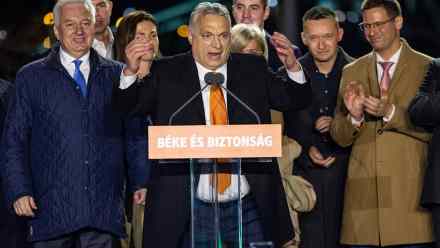
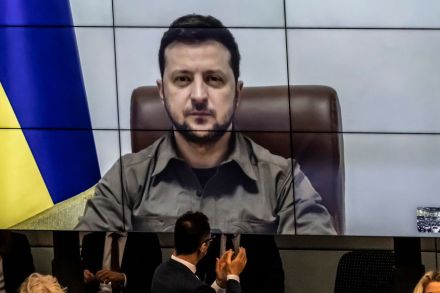
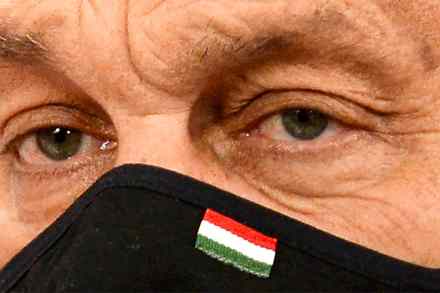
Viktor Orbán‘s victory speech in Budapest on Sunday night took a curious turn. Speaking after a fourth landslide win, he opined: This victory is one to remember because we had the biggest [opponents] to overpower. The left at home, the international left, the bureaucrats in Brussels… the Soros empire... and even the Ukrainian President. Orbán skipped over the challenge to regional stability caused by the Russian invasion of neighbouring Ukraine. Having refused military aid to Kyiv, and having exchanged barbs with President Volodymyr Zelensky, he reassured ethnic Hungarians in West Ukraine: ‘Don’t be afraid, the motherland is with you’.
Russia’s ‘denazification’ project is only just beginning

From our UK edition

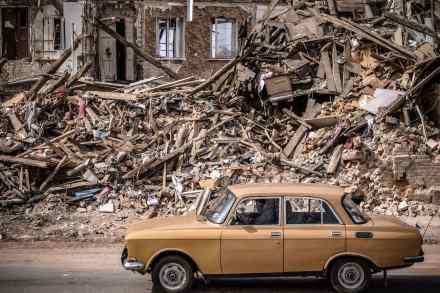
Truth, infamously, is the first casualty of war. But the truth, in modern Russia, was critically wounded before it got anywhere close to the staging grounds, let alone the battlefield. And still the disinformation project limps on. The most recent and blatant example of the Kremlin’s communications modus operandi is its instant write-off as ‘fake’ of photographs and video from Bucha, a quiet town outside Kyiv, now littered with civilian corpses and the broken machinery of war. Perhaps the invading troops left in a hurry, or perhaps Bucha was meant as some kind of warning, but the perpetrators didn’t care to clear up their handiwork.

The West is powerless in the face of Russian war crimes

From our UK edition

‘Our home is our heart,’ a video posted by a couple from the Kyiv suburb of Hostomel begins, showing them cycling through its leafy streets and playing with their dogs. In a split second, the picture changes. Their house is on fire. Outside, a car has ploughed into a ditch, its young passengers shot dead. Helicopters tear overhead while Russian soldiers stalk the surrounding woodland. The UN estimates that 3,500 innocent people have been killed or injured since the invasion of Ukraine began. As Russian troops are pushed back around the capital, evidence is mounting that the number may already be much higher. Just south of Hostomel is the suburb of Bucha, which the Ukrainian army retook last week from Moscow’s forces.

Are sanctions working?

From our UK edition

When allied military operations go well or badly, we very quickly hear about them. But what about sanctions? It is about time that we started to ask: are they hitting their target, or are some of them slewing off, out of control, straight into civilian targets? Notionally, sanctions have been a success – or at least they seemed to be initially. The rouble and Russian stock market collapsed. But then the rouble recovered strongly, and the stock market, too, has staged some sort of recovery since it reopened. What seemed like a pretty comprehensive boycott by western companies turns out to be rather less complete than many might imagine.

Russian cruelty has been laid bare

From our UK edition

It was 2 a.m. when Russian gunmen broke in and took away 21-year-old Milana Ozdoyeva. When Sara, her three-year-old daughter, tried to grab her mother's hand they shoved her aside. Milana's son, who was 11 months old, just stared uncomprehendingly. ‘They were wearing masks and camouflage,’ Milana's mother told me. ‘They forced us all to the floor at gunpoint. Milana was too terrified to speak. She just looked at me and mouthed the words “mama”. It was the last time any of us saw her.’ The kidnapping and subsequent killing of Milana took place in Chechnya on 19 January 2004. Her sin was to have been married to a man who was suspected of taking up arms against the Russian military.

No. 10 prepares decades-long energy plan

From our UK edition

The government's delayed energy strategy is finally due to be released this week. The Prime Minister is due to unveil his plans on Thursday, which will supposedly ensure that the UK is self-reliant on energy supply after Russia's invasion of Ukraine. Not that the proposals will lead to much change overnight. Instead, they are focussed on ensuring self-reliance in the long term – with many of the plans likely to take decades to come to fruition.  So, what's on the agenda? Part of the reason the energy strategy has been delayed several times is a difference of opinion between the Department for Business, Energy & Industrial Strategy, No. 10 and the Treasury.

The next phase of the Ukraine war

The fog of war doesn’t just apply to generals, sergeants, and privates. It applies to strategists and outside observers, including the best-informed journalists on the ground. All are swamped by a confusing barrage of information, some accurate, some not, none of it complete or definitive. That’s why, after over a month of fighting in Ukraine, it helps to step back, consider the basic outcomes, and try to project what will happen next. Remember, though, the “fog of war” applies to these assessments, too. First, let’s clear away Russian misinformation. The Kremlin’s recent claim that their main goal was never to seize Kyiv but always to take eastern Ukraine is simply false.

Zelensky has saved Boris

From our UK edition

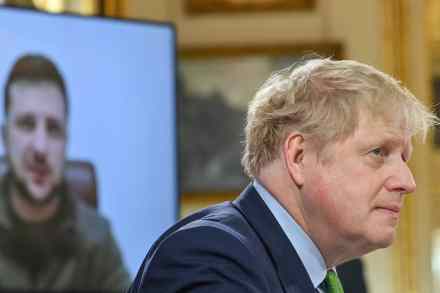
Labour will try all it can to bring up the subject at every opportunity; as will a few backbench MPs. But partygate just doesn’t feel likely to prove fatal to Boris Johnson anymore. War in Ukraine has changed the dynamic: fussing over lockdown parties seems trivial and out of date. Keir Starmer’s continued plugging away on the matter makes him look even duller than normal. Rishi Sunak’s stock has plummeted after what many saw as a bungled spring statement. But if Boris Johnson does stage a revival, the figure he will have most to thank is Volodymyr Zelensky. The Ukrainian President has made it quite clear on more than one occasion that he regards the British PM as a more helpful, more reliable ally than other European leaders.

Ukraine’s most wanted – an interview with Dmitry Firtash

From our UK edition

If you’ve heard of Dmitry Firtash, the odds are you’ll have the impression of a deeply controversial man. He was arrested in Austria in 2014 at the US government’s request on charges of ‘conspiracy to bribe’ in India. A warrant was then issued for his arrest in Spain. Last year, Firtash was sanctioned by Ukraine over claims that he was selling titanium products to the Russian military. In America, he has been called ‘Ukraine’s most wanted’. In Britain, he gave £4 million to Cambridge University and spent much more on other projects, and has since been held up as a classic example of an oligarch buying his way into our establishment.

The three stumbling blocks to a Ukraine peace deal

From our UK edition

A month in, and the war in Ukraine looks very different to how anyone expected. On the first day of the invasion, western intelligence sources believed that Kyiv would fall to Russian forces within 72 hours, underestimating the Ukrainians’ ability to defend their territory and overestimating the Russian military’s capabilities. Among Vladimir Putin’s many errors was his underestimation of western unity. He did not predict the severity of the sanctions against Russia or that his act of aggression would snap Europe (most notably Germany) out of its complacency over defence spending. In some ways, Putin, by going for a full-on invasion, made it easier for the West to adopt a unified position.

How much of a litre of fuel is now tax?

From our UK edition

Common knowledge Tensions in the visit of the Duke and Duchess of Cambridge to Jamaica led some to speculate that the Commonwealth might not long survive the present Queen’s reign. Who came up with the idea of naming the successor organisation to the British Empire after a term first used by Oliver Cromwell? – Lord Rosebery is recorded as referring to a ‘Commonwealth of nations’ in 1884, a decade before he became prime minister. – The term was first used officially in the Commonwealth of Australia Constitution Act 1900, which established a federation of British colonies. – The idea of a British Commonwealth first surfaced at the 1926 Imperial Conference. – The word ‘British’ was dropped in 1949.

Ukraine is witnessing the future of drone warfare

From our UK edition

Russian forces have reportedly been ordered to watch last year’s state-funded propaganda film Sky. The Kremlin-funded drama follows the lives of Russian airmen in Syria, where an estimated 18,000 people are believed to have died in Moscow's bombings. With jets soaring through the sky and explosive special effects, it tells the story of Oleg Peshkov, a pilot shot down by a Turkish fighter plane. When Hollywood makes its own action flicks about the war in Ukraine, directors may settle for a different kind of hero. Instead of strapping military men jumping into cockpits, it is becoming increasingly clear that Kyiv owes much of the credit for its fierce defence to drones.

bioweapon labs

Secret bioweapon labs are Putin’s MacGuffin 

Some commentators have already noted the strange homology between Russia’s evocation of “secret bioweapon labs” in Ukraine and the US evocation of Saddam Hussein’s weapons of mass destruction, which in both cases were used to justify military attack. It’s not that the US was unsure if Saddam had WMDs; they positively knew he did not have them, which is why they risked a ground offensive in Iraq, rather than sticking to air bombing. The nonexistent Iraqi weapons of mass destruction perfectly fulfill the role of a “MacGuffin” in Alfred Hitchcock’s films. A MacGuffin is “an object, event, or character in a film or story that serves to set and keep the plot in motion despite usually lacking intrinsic importance,” per Merriam-Webster.

Don’t let Russia end the old world order

While most Americans believe that the Russian invasion of Ukraine is morally wrong, there is in some corners a pervasive sense of annoyance with the conflict. The real enemy, some say, is China, and they believe that America should not focus on the last vestiges of 20th-century conflicts at the expense of losing focus on those of the 21st. They see NATO and the rest of the Cold War infrastructure as representative of a dying world. Instead of propping up this order, they argue, America should be hard at work building a new order to take on China. The goal of a new American-led, anti-China world order is a necessary one. The currently existing old order is ill-fitted to combat China, which indeed will be America’s main 21st-century enemy.

Who poisoned Roman Abramovich?

From our UK edition

Russia is now 33 days into a war it expected would last 72 hours. Given the relative failure of the invasion, it is surprising anyone in the Russian security establishment has much time to spare for side projects. Yet, yesterday’s news that the Russian oligarch Roman Abramovich was poisoned during informal peace negotiations with the Ukrainians would suggest otherwise. While details are murky, according to the investigative journalism collective Bellingcat, billionaire Abramovich was engaged in shadow negotiations in the Ukrainian capital, Kyiv, earlier this month when he and his two Ukrainian interlocutors fell ill. The men later received medical treatment in Istanbul. Since the story broke, there has been a heady mix of clarifications, confirmations and counter-accusations.

The rouble’s astonishing recovery

From our UK edition

The tank columns are stalled; one or two towns captured from the Ukrainians have been retaken. Russia’s war effort has been going nowhere fast for the past fortnight – unless you count the constant pounding and destruction of apartment blocks a form of progress. But then is the economic war being waged against Russia making any greater progress? True, Muscovites can no longer get a Big Mac, and western-made luxury goods have disappeared from the shelves. Yet look at the dollar’s march against the rouble and it is starting to look like a convoy of Russian armoured vehicles. For the first few days, the rouble sank inexorably as sanctions kicked in. On the day before Putin marched in on Ukraine, a rouble was worth $0.012.

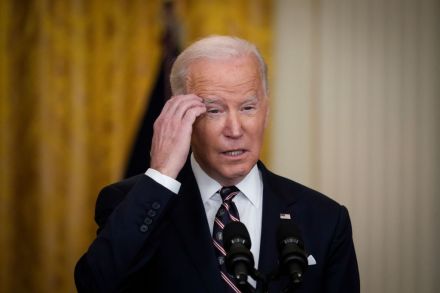
Has Biden lost his mind on Ukraine?

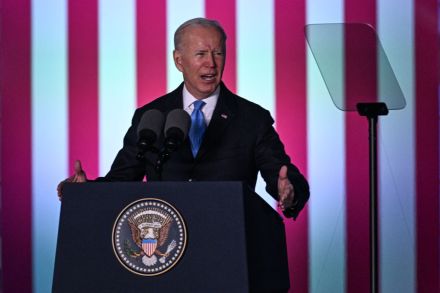
Has Joe Biden gone loco over Ukraine? In Warsaw, Biden proclaimed of Russian president Vladimir Putin, “For God’s sake, this man cannot remain in power.” Biden also called Putin a "butcher." Then, in a meeting with the Polish president, Biden said the US regards NATO’s Article 5 as a “sacred commitment.” Biden called Warsaw a “sacred place” in the history of Europe and in “humankind’s unending search for freedom.” Biden went on to describe the conflict in Ukraine as "a battle between democracy and autocracy, between liberty and repression, between a rules-based order and one governed by brute force.

biden ukraine
biden

Biden’s ad-libs are making the world less safe

Joe Biden, by his own admission, is a man who sometimes goes off script. Whereas some presidents seek to bottle up their emotions and remain reserved for the cameras, Biden wears his emotions on his sleeves. The president proved that yet again during his visit to Poland over the weekend, where he let loose on Russian president Vladimir Putin at the conclusion of a speech: “For God’s sake, this man cannot remain in power.” Many in the West would privately agree with Biden’s assessment.