Russia

Why Putin’s ‘Satanic’ missile launch matters

From our UK edition

In some ways, it’s a headline-writer’s dream: Putin puts his faith in Satan. In reality, it’s actually Putin’s new RS-28 Sarmat (‘Sarmatian’) heavy intercontinental ballistic missile, which has become colloquially known in western circles as the ‘Satan II’. It is intended as a replacement for the R-36M, which in Nato parlance is known as the SS-18 ‘Satan.’ Following a successful test on Wednesday Putin asserted that the missile would not only ‘reliably ensure Russia's security from external threats’ but that it would ‘provide food for thought for those who, in the heat of frenzied aggressive rhetoric, try to threaten our country.’ It is certainly true that it is a powerful, next generation weapon.
Is Putin in pain?

From our UK edition

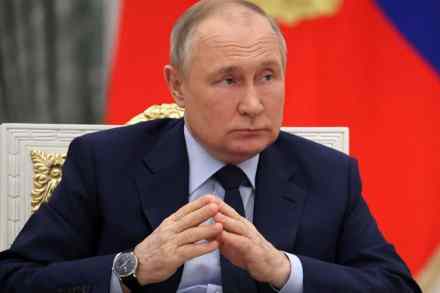
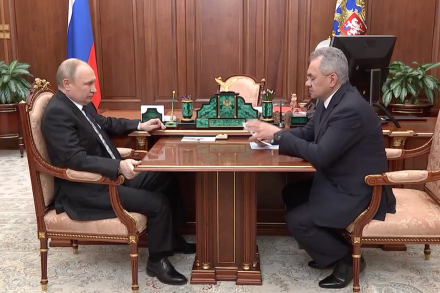
Is Vladimir Putin in pain? Until now, there has been plenty of chatter about the wellbeing of his minister of defence, Sergei Shoigu. Before the war, this veteran political survivor from the Yeltsin era was famous for being photographed on manly Siberian expeditions with his new patron, the bare-chested saviour of ‘All the Russias’. Putin and Shoigu camped out together in the taiga, with moody fireside photos and a spot of fishing – ‘Brokeback Mountain 2’, jested Russian bloggers. Though in reality, the two looked a more like Jack Lemmon and Walter Matthau in a dreary remake: Frumpy Old Men.

Ukraine, the Roman army and why morale matters

From our UK edition

Commentators talk much about the morale of the Ukrainian troops and the edge that this has given them over the Russians, even in a technology-dominated conflict. Ancient warfare was a matter of hand-to-hand fighting, where morale is absolutely crucial – ‘defeat in battle always starts with the eyes’, said Tacitus – and the imperial Roman army offers a masterclass in how to generate it. That army was, uniquely, professional. The soldiers’ physical fitness, kit, mastery of weapons and technical training in battle tactics were second to none.

Portrait of the week: Boris packs his bags, XR blocks bridges and Netflix viewers switch off

From our UK edition

Home Boris Johnson, the Prime Minister, told the House of Commons that it did not occur to him that the gathering in the Cabinet Room on his birthday (for which he had been issued a fixed-penalty notice) could amount to a breach of the rules on coronavirus. ‘That was my mistake and I apologise for it unreservedly,’ he said. He packed his bags for a visit to India to coincide with a Commons debate on whether he had misled parliament. Priti Patel issued a ministerial direction (the second in the Home Office in 30 years) to implement a scheme whereby people deemed to have entered Britain unlawfully since 1 January could be flown to Rwanda, where they would be allowed to apply for the right to settle there. More than 6,000 people had crossed the Channel in small craft in 2022.

Why more and more Russians are backing the war

From our UK edition

O, do the Russians long for war? Ask of the stillness evermore, Ask of the field, or ask the breeze, And ask the birch and poplar trees. So begins a famous Soviet-era song and poem, written by Yevgenii Yevtushenko during Khrushchev’s Thaw. Volodymyr Zelensky cited the poem in his eve-of-war address to Russians, hoping it would rekindle these pacifistic sentiments and encourage resistance against the Kremlin’s imminent invasion. Apart from a relatively few (very) brave souls, Russians did not rise up.

Russia becomes a lost cause

After an embarrassing two-month start to its war in Ukraine marked by pictures of abandoned armored personnel carriers, destroyed tanks and stalled armored columns outside Ukraine’s major cities, the Russian army is re-tooling and re-arming itself for a more manageable fight in the east. I use the word “manageable” not because the battle in the Donbas will be easy for Russian forces, but because the objective of expanding Russian control over the entirety of Donetsk and Luhansk is more realistic than overthrowing the Ukrainian government and occupying the entire country. Capturing, let alone holding, Kyiv, Kharkiv and Chernihiv would have entailed a massive number of personnel and a long-term commitment Russia doesn't have the resources to sustain.

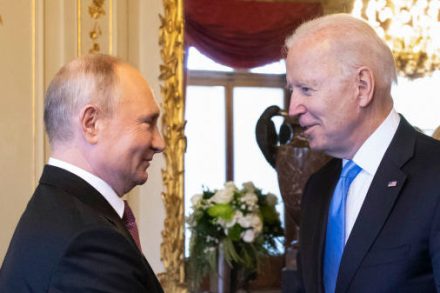
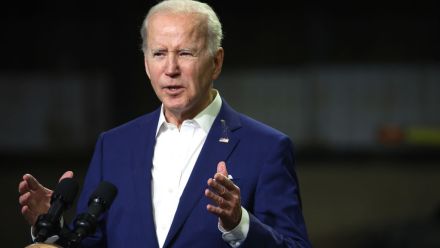
U.S. President Joe Biden and Russian President Vladimir Putin (Getty Images)

The imperfect spy

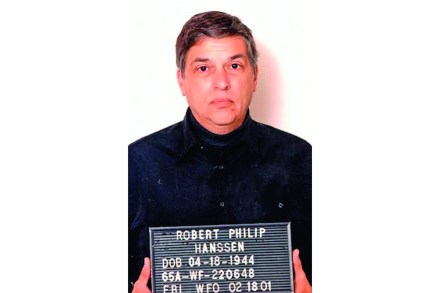
On one level, Lis Wiehl’s enthralling and grimly astonishing A Spy in Plain Sight is simply the story of Robert Hanssen, an FBI agent whose espionage activities were described by the Department of Justice as “possibly the worst intelligence disaster in US history,” a crowded field even at the time of his arrest in February 2001. “Over twenty-two years,” explained the DOJ in a 2002 report, Hanssen had “given the Soviet Union and Russia vast quantities of documents and computer diskettes filled with national security information of incalculable value.” And his betrayals had cost lives.

spy
Cold War

Springtime for Cold War nostalgics

My favorite spy movie cliché of all time is the secret agent stuck in the 1980s. The threats have gone asymmetrical, terrorists slip across borders, but our hero longs for the simple days when the world was divided between good Westerners and bad Russians. “You’re a fossil!” sneer his girlboss department administrator, his vegan drone pilot, his tech whiz who has just hunted down a non-state actor by crosschecking the latest SIGINT with a Yelp! review of an Iraqi yoga studio. Cut to him muttering under his breath à la Judi Dench in Casino Royale: “Christ, I miss the Cold War.” Now, suddenly, those who miss the Cold War are having a moment.

presidents

How to avoid World War Three

The Russian assault on Ukraine has awakened the West to the fact that we may be back in a Cold War — or worse. After a few decades’ respite in which the United States did not find itself in conflict with any nuclear powers, presidents must consider a world in which nuclear-armed Russia and China actively oppose US interests and deliberately test American resolve. This reality will become even more complicated if a hostile Iran gets its hands nuclear weapons too. The return of Cold War-style geopolitics means the return of Cold War-style statecraft. Presidents will once again face the difficult task of calibrating their actions to advance US goals while avoiding escalation toward possible nuclear confrontation.

speech

Why we need robust free speech laws

The biggest tragedy of the Russian invasion of Ukraine is, of course, the loss of thousands of Ukrainians, who have been killed because of Vladimir Putin’s insane and horrific actions. But alongside that horror are many other alarming developments. One of them is the near-total suppression of the free flow of information in both Russia and China. As you have likely read, Putin cast the war with Ukraine not as the unprovoked invasion it is but, laughably, as a “special military operation” for “de-Nazifying” the Ukrainian leadership. Russia swiftly passed a law greatly enabling Putin’s propaganda campaign.

Why Russians celebrate monsters

From our UK edition

Nobody knows how long people live in Dzerzhinsk – life expectancy statistics for the Russian city, 250 miles east of Moscow, aren’t released to the public. In the days of the Soviet Union, it was closed to outsiders and left off official maps, but those in neighbouring Nizhny Novgorod joked that residents must have purple skin and second heads because of the emissions from its secretive chemical weapons plants. In recent years, however, it has gained notoriety as one of the most polluted places on the planet, with a study after the fall of the Iron Curtain reporting locals usually died in their mid-forties.

The next phase of the Ukraine war will be bloody

From our UK edition

The war in Ukraine is about to enter an even deadlier stage, one in which both Kyiv and Moscow will be tempted to apply more and more military might that could even draw in outside powers. The Battle for Donbas, with another battle raging for what is left of the city of Mariupol, will be a new hell that Europe has not seen since the second world war. It has the potential even to mutate into World War III unless the conflict is brought to a conclusion — and fast. Why the war in Ukraine is shifting to these critical regions is simple to understand.

Russia’s dark path towards the death penalty

From our UK edition

In Russia these days, the reintroduction of the death penalty has a grim inevitability about it. There has been a moratorium on capital punishment since 1996, but there are increasing calls for its revival. In December last year, the Head of the Constitutional Court Valery Zorkin wrote that the original moratorium had been a surrender to values ‘alien to the Russian national sense of justice’. The feeble Dmitri Medvedev, Putin’s erstwhile presidential seat-warmer, has reinvented himself as a hardline proponent of the ‘Supreme Penalty’. In a recent interview he claimed that, given Russia had left the Council of Europe, there were no obstacles stopping its reintroduction.

Down with the ‘Third World War’ doomsayers

Some people are always telling you that the world is soon to end. In the old days many of them would wear sandwich boards describing near-term doom, and not wash. Now, their cousins in the environmental movement glue themselves to oil refineries and don’t shave. In each case, they drip with urgency. The oceans will boil, the land will burn. Your children will fry. Or, alternatively, the Lord will return and take only the righteous to their reward. Be afraid and confess, before it is too late. Public life has these people, too, for this tendency is quite universal. Financial doom-mongering is a profitable little side-line for some economists. The great crash they predict is always upcoming.

world war three

How Putin weaponised the Russian Orthodox church

From our UK edition

In the week before Orthodox Lent began, some 233 Russian Orthodox priests published a petition calling for peace. The signatories spoke of the ‘fratricidal war in Ukraine’, with a call for an immediate ceasefire, and deplored ‘the trial that our brothers and sisters in Ukraine were undeservedly subjected to’. Anyone who knows how authority is exercised in the Russian Orthodox church, and how closely it has allied itself with Putin’s authoritarian state, will recognise the clerics’ courage. But what effect is it likely to have on the attitude of the highest authorities in the church?

‘Putin still has a lot left to lose’: Niall Ferguson and David Petraeus in conversation

From our UK edition

David Petraeus is a former CIA director who, as a four-star general, led US military campaigns in Iraq and Afghanistan. He speaks to the historian Niall Ferguson about the war in Ukraine. NIALL FERGUSON: General, I wanted to ask you to give your assessments of the Russian invasion of Ukraine. If you were grading Russia’s military performance and Ukraine’s, what grades would you give? DAVID PETRAEUS: Clearly Russia has failed. That’s the only way to describe the campaign thus far. And the Ukrainians, gosh, I think you have to give them an A at least and perhaps even more for just the sheer determination. But it’s much more than fighting for their very survival. They have done it very, very impressively.

Putin’s war is a cross to bear for all Russians

From our UK edition

‘The photographs of murdered civilians, their hands tied behind their backs, shot in the head and tossed like animals on to the street… we will not forget, and no one will let us forget,’ wrote Russian journalist and author Yevgenia Albats last week. ‘The guilt for this will lie on our children and grandchildren. Bucha, Irpin, Motyzhin – we will now have to live with them for ever.’ Powerful words and moving nostra culpa for Russian atrocities in Ukraine. But they raise a vital question. Who, exactly, is the ‘we’ who is to bear the blame, guilt and punishment? All Russians? The 70 per cent of Russians who official polls claim actively support the war? Russian soldiers responsible for the atrocities?

The rise and fall of the Tsarist legal system

From our UK edition

St. Petersburg University in Russia is (desperately?) inviting scholars worldwide to a conference in September celebrating Mikhail Speransky. It was he who, on the orders of the Russian emperor Nicholas I, published in 1830 a 45-volume compilation of all the laws of the Russian Empire, which he reduced to a 15-volume digest by 1839. It was to form the basis of the Tsarist legal system. The precedent for this was, of course, the legal Digest of Rome’s eastern emperor Justinian (AD 533). This was a compendium of 2,000 volumes of Roman law published between the 1st and 3rd centuries ad. Its purpose was to produce a contemporary, definitive account of all Roman private law. For student use, a handy four-book summary (the Institutes), also with legal force, appeared alongside it.