James Snell

James Snell is a senior advisor for special initiatives at the New Lines Institute for Strategy and Policy. His upcoming book, Defeat, about the failure of the war in Afghanistan and the future of terrorism, will be published by Gibson Square next year.

A crackdown on dangerous elderly drivers is overdue

From our UK edition

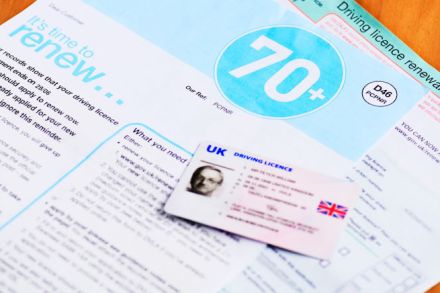
Drivers over the age of 70 will soon need to have their eyes checked every three years in order to keep their licence. This is elementary common sense. For want of a kinder word, older motorists in Britain are a menace. Elderly drivers are responsible for a large number of accidents and fatalities. Almost one in four (24 per cent) of drivers killed on Britain's roads were aged 70 or older. To make Britain's roads safer, a crackdown on old, dangerous drivers is long overdue. Older drivers who cannot see properly stay on the roads in denial Casualties from accidents involving older drivers increased by 12 per cent, while those caused by all other age groups fell by 45 per cent between 2004 to 2023, according to the Office for National Statistics.
Are airports safe?

From our UK edition

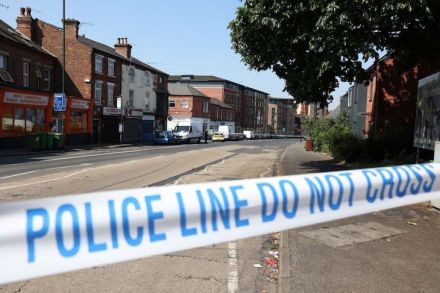
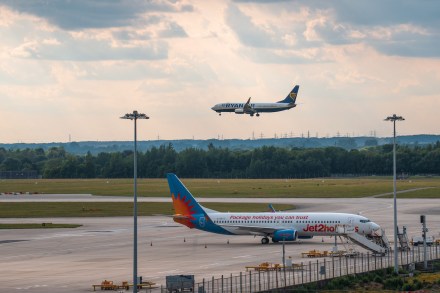
Stansted airport is in trouble. First, its operators say, there was a small fire in one of the lounges. This was quickly dealt with in the early hours, but it produced a lot of smoke in the interim. And then, apparently because of a problem with signals on the rails, all trains to and from Stansted have been cancelled. This is a major problem; Stansted is a major airport. There’s no reason, at this moment in time, to think any of this is out of the ordinary. There have been a fair number of mysterious fires in Britain lately – in warehouses and other places – and there have been plots, according to authorities across the continent, to start fires on planes and possibly to bring them down. But not every fire is suspicious.

We need to purge the Ministry of Defence

From our UK edition

On Afghanistan, you’ll recall, a massive data breach of vast dimensions and bitter consequences has already been revealed, after years of secrecy and lies. The state has forked out billions to transport tens of thousands of entirely unvetted people into Britain, where they and their descendants will reside at public expense. And, to top it off, there was an immense cover-up, the fabricating of official numbers and a super-injunction to muzzle the press. The only part of the whole debacle that the regime executed with any ability was the deceit and the cover-up. It is better at hiding the truth from the public than it is at doing anything else. You might have thought it could not get worse. But the British state — and our Ministry of Defence — will always sink to the occasion.

You were never meant to know about the court service IT bug

From our UK edition

Another day, another scandal in Britain’s collapsing public sector. Today’s concerns the country’s courts. A BBC investigation has turned up an internal report, not for public circulation, from HM Courts & Tribunals Service (HMCTS) about an IT bug that deleted or hid information on hundreds of pending cases. The problem itself was bad enough: Britain’s state IT capacity is very poor, worse than many comparable nations. Things get deleted or disappear; vital information is stolen or hacked. The administrators of these systems are so often simply not up to it. But how this disaster was handled appears to be even worse.

The Chagos deal is a disgrace

From our UK edition

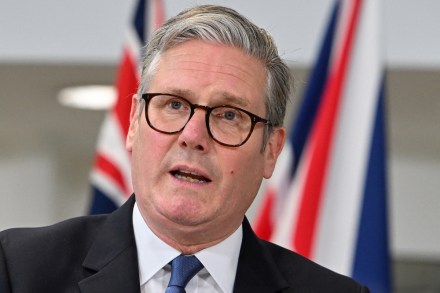
It has been in the background for a few months, but it seems Keir Starmer has now decided to resurface and sign his deal to pay Mauritius billions to take ownership of a British territory. The Chagos Islands, and the broader British Indian Ocean Territory (BIOT), are strategically significant. On Diego Garcia, the largest of the islands, the only population either staffs or supports a joint British-American base. A base which is often used by the Americans; the base from which the B-2s ordered to bomb Iran’s nuclear programme might take off. But all of this is to be surrendered to Mauritius and then rented back by Britain. Why? Because international courts, and the pretence of arbitration, say so. Mauritius has never owned the Chagos Islands, never had real claim to them.

Donald Trump has given Syria hope

From our UK edition

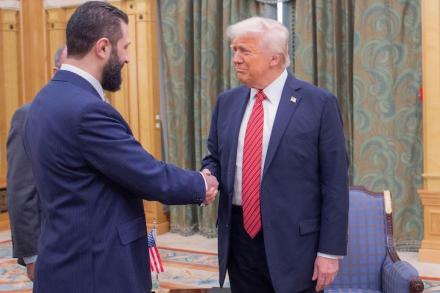
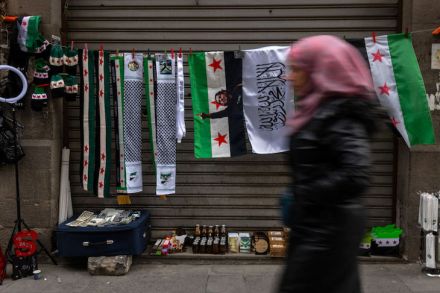
It’s an image that would have been shocking, even a few months ago: US president Donald Trump shaking hands with Ahmed al-Sharaa, formerly Abu Muhammad al-Jolani, a fighter for al-Qaeda in Iraq, imprisoned by the Americans, now interim president of Syria. Getting sanctions lifted is the greatest achievement of al-Sharaa’s presidency so far The pair met in Riyadh, the capital of Saudi Arabia, alongside their respective foreign minsters, for 33 minutes, the Syrian presidency said. Saudi Crown Prince Mohammed bin Salman was there too; Turkey’s president Erdogan joined them on the phone. Before their meeting, Trump announced in a speech yesterday that he would remove all economic sanctions on Syria to give the country a chance at ‘greatness.

How the internet turned ugly

From our UK edition

Consulting a website on my phone recently, I was struck by how painful it has become to use the internet. All I wanted was to read some local news and check the spread of a power cut in my area. Instead, as I scrolled, I was assailed by interruptions from integrated adverts which – in the best case – wanted eagerly to tell me about the charm and usefulness of a new BMW. In the worst case, I was urged to consult some lawyers immediately because I had been mis-sold an insurance or financial product in the past and was due an enormous payout, if only I would contact the least credible-looking advocates in the country.

The Vancouver car attack is all too familiar

From our UK edition

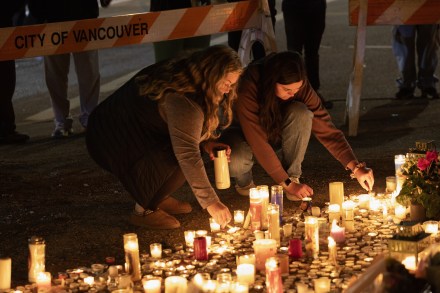
A man named Kai-Ji Adam Lo, 30, has been charged with eight counts of second-degree murder after 11 people were killed and many more were injured in a car ramming in Vancouver, Canada. He allegedly drove his SUV into a crowd gathered for a festival celebrating Filipino culture. The police say the suspect has no connections to international terror groups such as Isis or al-Qaeda. The suspect’s motive is so far unknown. More dangerous these days, it seems, is the lone attacker Ramming attacks are common because most adults have a car parked outside their home. The 22 March 2017 terror attack on Westminster involved a van striking a crowd of pedestrians on Westminster Bridge, killing four. The driver then got out of the van and continued killing.

I’ve had enough of crimewave Britain

From our UK edition

Knife crime, shoplifting and fraud is on the rise in Britain. Fraud was up by a third in the last year, according to figures released by the Office for National Statistics (ONS), which also reveal a 50 per cent increase (to around 483,000 incidents) in theft. Shoplifting offences rose by 20 per cent in 2024 – reaching the highest figure in over 20 years. What’s shocking about this tidal wave of crime is that it is hardly surprising. Anyone who has lived in England over the last decade or so cannot fail to have noticed that our streets feel more dangerous. Where I live in Essex, there have been more stabbings. Many people I know in London and the Home Counties have been mugged for their phones and wallets.

Have we really brought dire wolves back from extinction?

From our UK edition

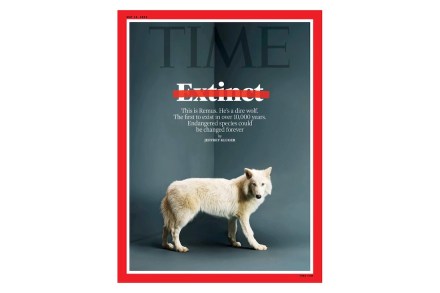
A biotech company claims it has facilitated the first howl of the dire wolf (an extinct canine) heard for 10,000 years. And there’s a video. A scientist holds up two white-coated cubs in his arms. Although their howling, really, is more like a series of yelps, they are meant to be the first of something big. They’re called Romulus and Remus, Colossal Biosciences, says. And they are the beginning of a new project to bring back from the grave a long-gone wolf species. A species that is often in fiction, often in fossil, but not often live and in colour. The de-extinction (which is what Colossal, never notably underselling, calls its process) of the dire wolf was announced with a cover of Time magazine, a profile in the New Yorker, and much social media publicity.

Israel is playing a dangerous game in Syria

From our UK edition

As Donald Trump's tariffs dominate the headlines, in the Middle East, Israel is stepping up its campaign against Syria. Israeli air strikes hit targets across the country, including the T4 airbase in Homs, last night. The latest campaign which has been conducted over the last few months – involving dozens of air strikes and the deployment of troops – is a big escalation. The strikes in Syria overnight were intended to deter Turkey from making use of bases inside the country. The bombings were to ‘convey a message to Turkey,’ an Israeli official told the Jerusalem Post. Turkey has made much of its closeness to the new leadership of Syria.

Why the West doesn’t understand Burma

From our UK edition

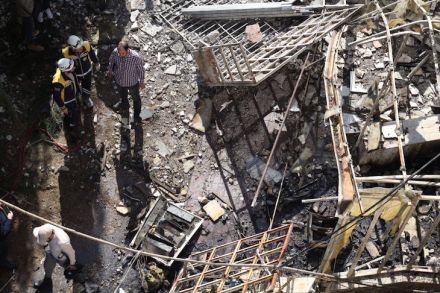
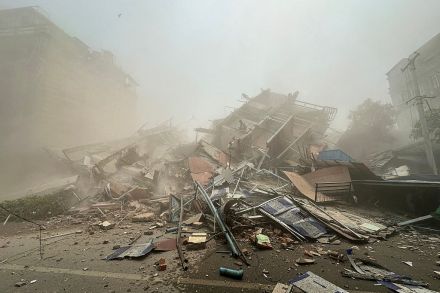
The earthquake that struck Burma and its neighbouring countries on Friday has caused an immense human tragedy. Centring on Mandalay, destruction radiates outwards. Structurally unsound buildings collapsed on those inside them. Shoddily-build neighbourhoods fell in on their residents. Thousands are already officially declared dead. Many times that number are missing. The overall picture will take some time to grasp, as is often the case with disasters of this kind. The true death count will never be known, bodies vanishing beneath wrecked structures, never to be found and identified.

Reform’s ‘think tank’ isn’t serious

From our UK edition

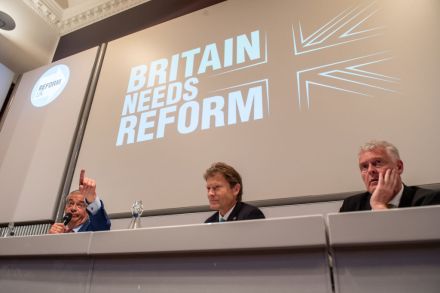
Donors of the Reform party are considering creating a partisan think tank in the American style. These plans are subject to change, but it is not looking good. Many Reform backers, it seems, see the proposed institution, named provisionally as ‘Resolute 1850’, as a way to attract American money. Someone like Elon Musk hands over hundreds of millions of dollars to organisations supportive of the Republican party and Donald Trump but remains legally unconnected to them. Reform donors hope that a similar body could be made in Britain. It would attract money that political parties legally cannot gather, from people who might have problems, as Musk appears to do, with Reform’s own leadership, including Nigel Farage. A new think tank is not itself a bad idea.

Why the Houthis are targeting Jerusalem

From our UK edition

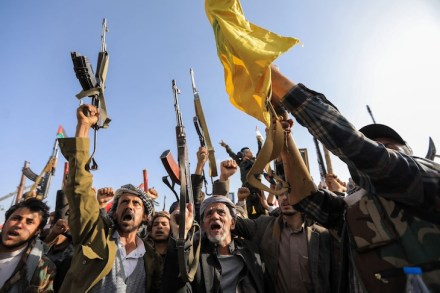
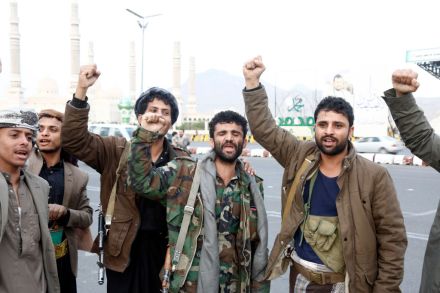
Sirens blare across Israel, from Tel Aviv to Jerusalem. They have been triggered by a barrage of missiles, launched from Yemen, purportedly by Ansar Allah, also known as the Houthis. The Israel Defence Forces claim to have intercepted two missiles launched from Yemen, while Israeli emergency services say that at this time, there have been no injuries reported. This threat is only a new one in the most technical of senses. Israel already lives within the range and under the constant threat of missile attack – from Lebanon, Gaza and the West Bank, from Iran itself and from Iranian proxies in Iraq (and formerly Syria, before the fall of the Assad regime).

Why US airstrikes on the Houthis will fail

From our UK edition

The United States has started what might well prove to be a long – and probably doomed – campaign of air strikes against Ansar Allah, also known as the Houthis, in Yemen. Since October 2023, the Houthis have been very successfully disrupting shipping in the Red Sea, firing missiles and launching drones at cargo ships, oil tankers, passenger vessels: hitting a few, sinking fewer, and inconveniencing millions. While few ships have been hit, fewer sunk, and even fewer people killed by this campaign, the numbers speak for themselves. Fewer and fewer ships are transiting the region, including using the Suez Canal to cut journey times between Asia and Europe. World shipping costs have risen fast.

Houthis

Why air strikes on the Houthis will fail

The United States has begun what may well prove to be a long — and likely doomed — campaign of airstrikes against Ansar Allah, also known as the Houthis, in Yemen. For a year and a half since October 2023, the Houthis have been highly successful in disrupting shipping in the Red Sea, launching missiles and drones at cargo ships, oil tankers, and passenger vessels — hitting some, sinking fewer, and inconveniencing millions. Every conflict the US has engaged in since 2001 has ended before America achieved its objectives. While few ships have been hit, even fewer have been sunk, and fewer still have resulted in casualties, the numbers speak for themselves.

Is this the deal that might give peace in Syria a chance?

From our UK edition

A Kurdish-led rebel coalition which dominates north-eastern Syria has signed a deal with the interim government in Damascus. The agreement, which means the US-backed Syrian Democratic Forces (SDF) will look to hand over border posts and oil and gas fields under its control, recognises the Kurdish minority as 'an integral part of the Syrian state'. Peace in Syria is now a little bit more likely. After a week of new threats to the stability of Syria, with hundreds killed in a series of massacres, this tentative deal is one that many thought might never happen. SDF commander Mazloum Abdi was not in his usual military garb when he signed the deal in Damascus with interim Syrian president Ahmed al-Sharaa.

The slogan that could doom Mark Carney

From our UK edition

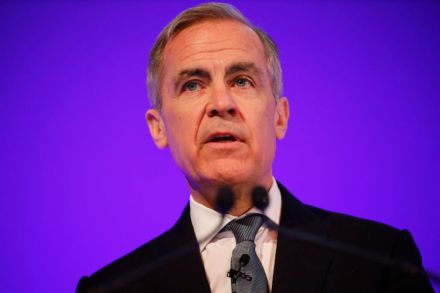
Mark Carney has won the Liberal party leadership contest by an enormous margin. He will soon be the prime minister of Canada. It’s a moment of triumph for the former governor of the Bank of England, the Governor of the Bank of Canada, a senior banker at Goldman Sachs based in the United States, Japan and Britain, for a former shapeshifting personage of the United Nations, for a Davos regular: for one of the most ambitious, globally ambitious, guys around. It’s a repudiation of the idea that a citizen of nowhere financier type educated at Harvard and Oxford could never rise to the top in our populist age. Things are not all roses for Carney But things are not all roses for Carney. He puts me in mind of Michael Ignatieff, who was Liberal leader before 2011 and Justin Trudeau.

How horror returned to Syria

From our UK edition

Once again there is horror on the Syrian coast. The fighting began on Thursday, in the new government’s telling, after a broad uprising was launched by remnants of the old regime and allied militias. In a coordinated series of moves along Syria’s coastal areas and inland, dozens of checkpoints and bases of the new authorities were attacked all at once. Some coastal towns were set ablaze. Overexcited commentators said this was the revenge of Bashar al-Assad, that a counter-revolution was in full swing, and that a new civil war, this time with a different outcome, was beginning. The Syrian coast has a significant Alawi population — the sect from which much of the old regime, and the Assad family, hail. For years the Alawi have feared a massacre if the regime fell.

The man with the ‘golden arm’, who saved two million babies

From our UK edition

James Harrison, who died in his sleep at a care home in Australia last month at the age of 88, possibly did more good and saved more lives, pound for pound, than almost anyone else born in the last century. His blood plasma contained a rare antibody, Rho(D) immune globulin (called Anti-D), which can be used to prevent the blood of some pregnant women from doing damage to their unborn babies. But that is under-selling it. Anti-D is extremely rare (fewer than 200 people produce enough of it to donate their plasma in Australia) and the conditions which it helps with are common. Anti-D injections protect unborn babies from Rh disease, otherwise known as rhesus disease, and haemolytic disease, which affects unborn babies and newborns.