Russia

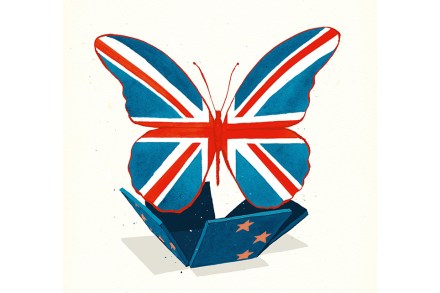
Brexit has helped the EU

There was hardly an election poster to be seen on the roadside during a two-hour drive from London to the country. The British do not appreciate this miracle. In Poland five days before an election, every other fence would be disfigured with photoshopped faces. Our lovely lunch hosts seemed resigned to the coming Red Terror: a purge of the remaining hereditary peers in the House of Lords, a new relationship with the European Union, inheritance taxes. I tried to cheer them up with a piece of Central European wisdom: there is always time for a magnum of champagne between the revolution and the firing squad.

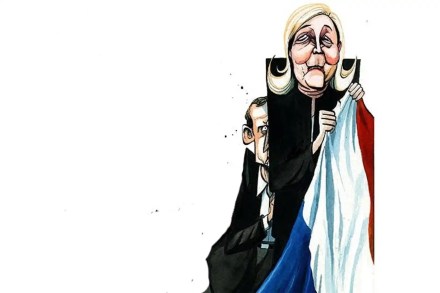
What the National Rally means for France’s foreign policy

The electoral turmoil in France threatens its status as a world power. Friendly nations are despairing; rivals and enemies are gloating, even circling. France is the world’s seventh-largest economic power, a prominent Nato member, a member of the UN Security Council and the EU’s leader on foreign and defence issues. It has the fifth largest strategic nuclear force and the fifth largest navy, a ‘tier one’ military and one of the highly effective ‘Nine Eyes’ intelligence services. Last year France was the world’s second largest arms exporter. It controls the third largest global undersea cables network and has the second largest coastal economic area, whose confetti territories give it a global strategic toe-hold.

Why Russia is flaunting its ships in the Caribbean

From our US edition

Two Russian ships docked Tuesday in Venezuela’s La Guaira port, twenty miles away from Caracas. The stop comes after military exercises were conducted in the Atlantic, with four vessels stopping in Havana late last month. This is all part of a decades-long “look-at-us” operation, also known as a “show the flag” move, as Russia’s defense ministry puts it. While Russia’s presence in Cuba and Venezuela is not a new phenomenon, conflict in the East has only accelerated their muscle-flexing in the West. These movements mark Russia’s first extensive military exercises in the hemisphere in five years, as well as their first deployment of a nuclear submarine in close proximity to the US since the Cold War.

Russia

Sending US contractors to Ukraine could provoke Moscow

Call it ‘slippery slope’ or ‘mission creep’, America’s strategy for helping Ukraine defend itself against the Russian invasion has adapted and expanded many times in the last 28 months. However, there was a golden rule laid down by President Biden almost on the first day of Russia’s aggression against its neighbour. There would be no ‘boots on the ground’, he said. No US troops would be deployed to fight the Russians. Civil contractors have played a significant role in the field in every US war in modern times. But the US is not at war in Ukraine That Biden doctrine has not changed.

Putin is trying to annexe people, not just land

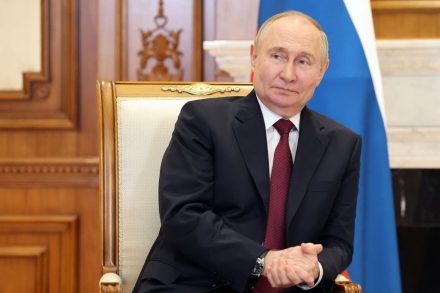
On 1 September 2021, six months before his full-scale invasion of Ukraine, Vladimir Putin was speaking at the All-Russian Children’s Centre, known as ‘Ocean’, near the harbour city of Vladivostok. He turned to a topic that obviously haunted him during his long Covid-19 isolation. He told his audience of children that Russia’s population could have been about half a billion today, rather than the current 146 million, if it hadn’t been for the shocks of the past century: two world wars, the Bolshevik Revolution and the collapse of the Soviet Union.

My return to Ukraine

I arrive at Lviv station just before 9 a.m. As the clock strikes, the conductor announces a minute’s silence: a daily commemoration for those who have fallen in the war. But it’s observed only by the railway staff, who stand up to bow their heads. The passengers just carry on. After all, isn’t part of the resistance to carry on life as normal, despite the war? This was the idea at first, but soldiers at the front line have come to resent the chasm between those who are fighting and those who don’t want to have any part in the war. It’s just one of many ways in which, returning to Ukraine, I can see the Russian invasion reshaping my country. Coming home to my village in the west of Ukraine, I see how the war is draining the life out of it.

The myth and memory of Yevgeny Prigozhin

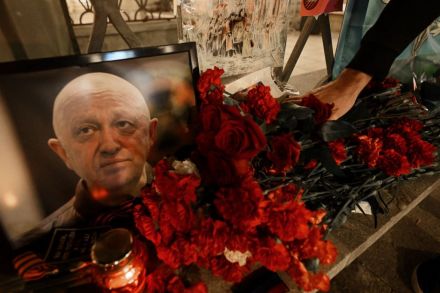
Yesterday was the one-year anniversary of Yevgeny Prigozhin’s mutiny, when his Wagner mercenaries seized the city of Rostov-on-Don and sent a flying column of several men towards Moscow. You would scarcely know it, though, because while Russian social media is full of discussion, eulogies and conspiracy theories, the state-controlled press is largely pretending this never happened. The closest thing to a recognition of the anniversary has been the arrest on extortion charges of two senior figures from Prigozhin’s media – and trolling – arm.

Matt Ridley, William Cook, Owen Matthews and Agnes Poirier

28 min listen

On this week’s Spectator Out Loud: Matt Ridley argues that whoever you vote for, the blob wins (1:02); William Cook reads his Euros notebook from Germany (12:35); Owen Matthews reports on President Zelensky’s peace summit (16:21); and, reviewing Michael Peel’s new book ‘What everyone knows about Britain’, Agnes Poirier ponders if only Britain knew how it was viewed abroad (22:28).  Presented by Patrick Gibbons.

Inside the debate over Ukraine joining NATO

From our US edition

NATO’s summit in Washington, DC will be full of pomp and circumstance. The gathering, from July 9-11, is intended in part to celebrate the Alliance’s seventy-fifth anniversary, a symbolic and emotional event for the leaders in attendance. You can expect the red carpet to cover the entire city. Dozens of speeches will be given about how NATO is the oldest and most successful military alliance in history and why the bloc remains a crucial check on Russian expansionism. Some will even claim matter-of-factly that NATO enlargement over the last twenty-five years — NATO has doubled its membership during that period of time — was sound policy and had nothing to do with Russia’s decision-making calculus on Ukraine.

nato

Who are the Russian NHS hackers?

What do you do if you’re a modern state and need extra capacity in a hurry? You outsource. And if you’re also a kleptocracy, to whom can you turn for this? Criminals. It’s not clear whether Qilin, the Russian hacker group behind the recent attack on NHS suppliers is run, encouraged, or simply given a pass by the Kremlin, but the growing interpenetration of espionage, subversion and crime is a threat we must recognise. Qilin, which engages in ‘ransomware’ attacks whereby it locks up a target’s systems until it pays to have them unlocked – £40 million is the demand in this latest attack – has been active since October 2022. The group refuses to discuss its origins ‘for security reasons’, but has been widely linked to hackers in Russia.

Zelensky’s peace summit flop

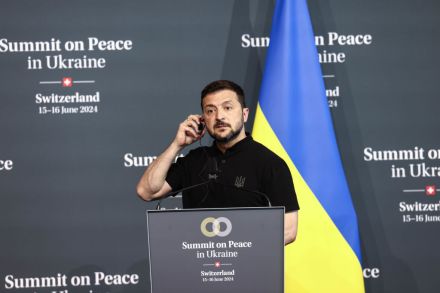
Volodymyr Zelensky’s Global Peace Summit in Switzerland was meant to demonstrate the world’s support for Kyiv and underscore Russia’s isolation. It did the opposite. Russia wasn’t invited. China didn’t send a delegation. Other major countries that might influence the Kremlin – including Brazil, India, Saudi Arabia, South Africa and the UAE – refused to sign the watered-down final communiqué. According to a former senior member of Zelensky’s administration, Ukraine’s leader had ‘hoped the conference would mark a new benchmark of international support… [but] it just showed how badly we have lost the support in the Global South’. Take Brazil’s President, Lula da Silva.

The pleasure of reliving foreign travel through food

The idea of the kitchen as a space for transformation and transportation is not a new one. Many writers have explored the room’s ability to offer both domesticity and alchemy at the same time – how it allows cooks to travel vicariously through the food they make. This is the subject of Cold Kitchen, Caroline Eden’s memoir of her time spent in her kitchen in Scotland and of her travels to Eastern European and Central Asian cities – and somehow she makes it fresh and compelling. She is an author and critic who has written extensively about the food and culture of the countries of the former Soviet Union. Black Sea, in which she explored Odessa, Istanbul and Trabzon, received a clutch of prizes, and Red Sands, about Central Asia, won the prestigious André Simon food book award.

The space race gets serious

From our US edition

We are shifting from the early era of space exploration to a more serious phase extending ever further from Earth’s orbit, focused on key opportunities such as mining and manufacturing as well as military purposes. This newly expanded playing field will determine not only who rules in space, but who ends up dominating Earth. The protagonists include some familiar faces — the US, Russia and the European Union — but much competition will come from emerging powers, notably India and China, both of which look upon the “final frontier” as critical to their economic and military futures. Yet the rise of non-state space entrepreneurs, notably SpaceX, has introduced a fresh and potentially decisive factor to the new space race.

space

‘Trumpists and Communists’ on Ukrainian NGO list fight back

From our US edition

A US government-affiliated Ukrainian NGO, texty.org.ua, published a list last week of all the Americans “impeding aid to Ukraine.” There are 388 individuals and seventy-six organizations on the list, including members of the conservative media Alex Jones, Tucker Carlson, members of Congress and a few Spectator writers. The piece is titled “Rollercoaster: From Trumpists to Communists. The forces in the US impeding aid to Ukraine and how they do it.” “The title of this article oversells the product: it is a substantively thin piece, largely an excuse to smear a large group of Americans who have been skeptical of aid to Ukraine in one form or another,” Senator J.D. Vance and Representative Matt Gaetz wrote in a letter to secretary of state Antony Blinken on Tuesday.

ukraine ngo

A thriving City will test Labour’s tolerance

The City is having a busier year than pessimistic observers – including me – might have expected. The biggest deal on the block, the £39 billion bid by Australian giant BHP Billiton for its London-listed South African mining rival Anglo American, has fallen away. But plenty of bankers’ and advisers’ fees have already been clocked up on both sides and BHP may now pursue global domination of the copper market by stalking other London-listed miners such as Antofagasta of Chile. Meanwhile, the £3.

Portrait of the Week: Farage returns, Abbott reselected and Trump guilty 

Home Nigel Farage took over leadership of the Reform party from Richard Tice and is standing for parliament in Clacton. This came as news on Monday to Tice, and to Reform’s candidate for Clacton, Tony Mack. Outside the Wetherspoons pub where he launched his campaign, Farage had a McDonald’s banana milkshake thrown over him. Farage proposed net-zero immigration. The Conservatives then said they would ask the independent Migration Advisory Committee for a recommended level for an annual cap on visas, and put that to a parliamentary vote. Invasive Asian hornets, which can eat 50 bees a day, were found to have survived a British winter and might stay permanently.

Quentin Letts, Owen Matthews, Michael Hann, Laura Gascoigne, and Michael Simmons

31 min listen

On this week’s Spectator Out Loud: Quentin Letts takes us through his diary for the week (1:12); Owen Matthews details the shadow fleet helping Russia to evade sanctions (7:15); Michael Hann reports on the country music revival (15:05); Laura Gascoigne reviews exhibitions at the Tate Britain and at Studio Voltaire (21:20); and, Michael Simmons provides his notes on the post-pub stable, the doner kebab (26:20). Produced by Patrick Gibbons and Oscar Edmondson.

The shadow fleet helping Russia to evade sanctions

Economic sanctions were meant to be the West’s secret weapon against Russia, a way of crippling Vladimir Putin’s war machine and bringing his invasion of Ukraine to a halt without Nato firing a shot. Instead, Russia’s economy and military remain in rude health. After recent heavy attacks north of Kharkiv, Putin’s troops have seized more than 38 square miles of territory and stretched Kyiv’s already thinly deployed defences as they grind forward in Donbas. Putin has demoted his long-serving defence minister Sergei Shoigu, replacing him with the little-known economist Andrei Belousov. Appointing a finance specialist as military chief was a reminder that armies march on money. In Russia’s case, oil money.

Anti-Semitism has returned to French politics

New Caledonia is an archipelago in the South Pacific not far from Australia. James Cook discovered it in 1774, but, after concluding that too many languages were spoken there, he declined to annex it to the British Empire. France, not as cautious, made it a distant colony under Napoleon III. Today, riots are convulsing the territory. Supposedly ‘decolonial’ in aim, they are most certainly violent and fuelled by the anti-white racism that, from London to Brussels and Paris, has become the trademark of the new radical left. The strangest thing is that among the flags of the Kanak independence movement, one also sees Azeri flags. Why Azeri?

The need for greed

I suspect I’ve had a lot more fun writing about the annual Sunday Times Rich List over the years than many of its denizens have had clambering into it and staying there behind their high-tech security gates and their phalanx of tax advisers. The 2024 roll call includes some great British wealth-creation stories – led by the industrialist Sir Jim Ratcliffe, the inventor Sir James Dyson and the Far Eastern trading Swire dynasty. But if the completed jigsaw of 300 names makes any sort of picture, it is of a vast treasure hoard from elsewhere, and in some cases from nowhere, that has found a relatively safe vault in the UK. That’s not a bad thing in itself as an advert for our quality of life and rule of law.