Royals

Good queen, bad subject

There is a paradox at the heart of all books about the Queen. The very thing which makes her such a successful constitutional monarch is what makes her an impossible subject for biography. We do not know anything about her. The only book which brings her to life as a person is Marion Crawford’s The Little Princesses (reprinted by Orion, £8.99), a vivid picture of nursery life when Lilibet and Margaret Rose were growing up at 145 Piccadilly. Crawfie saw it all — the neatness, the horse-obsession, the deference to the rather awful mother, the selfless sense of duty, and the goodness. No wonder this truth-teller had to be banished, punished forever.

High society

One evening in 1923, Edward, Prince of Wales, pretty as paint in his white tie and a cutaway-coat, went to the theatre to see a new Gershwin musical. It was called Stop Flirting. Always one to ignore instructions, the Prince returned to enjoy this froth no less than nine times more. Obsessed by anything and eventually, disastrously, anyone American, the heir to the throne was fanatical about the new-fangled craze then being displayed at the Shaftesbury Theatre by a dazzling young brother-and-sister act hot-foot from Broadway: ballroom dancing. Practising the charleston and the black bottom rather than studying charters and red boxes occupied the heir to the throne’s days, to the intense irritation of his father. Edward ‘continues to dance every night.

What did he see in her?

When King George I came over from Hanover in 1714 to claim the crown he had inherited from his distant cousin Queen Anne, he was accompanied by his mistress of more than 20 years, Melusine von der Schulenberg. George’s wife Sophia Dorothea was left behind in Germany. She had made the mistake of taking a lover of her own not long after George had embarked on his affair with Melusine, forgetting that by the double standard that then prevailed in courts, it was acceptable for a man to have mistresses, ‘but shameful indeed to be a cuckold’. Sophia Dorothea had flaunted her infatuation with the glamorous adventurer, Count Konigsmark, and wildly compromising letters between the pair were intercepted.

Monarchy’s golden future

In a recent issue of The Spectator Freddy Gray warned that some royal press officers now resemble celebrity publicists, spoon-feeding whole narratives to lapdog hacks, ultimately to the detriment of the monarchy. Gray traced the poisonous origins of the current glossy operation. In the late Nineties senior St James’s Palace courtiers fell for political-style PR (aka spin) as a clever way to transform Prince Charles’s then-mistress into a future queen. Some very unsavoury tactics followed. In one example (not cited by Gray, but proving his thesis) in a bid to discredit William’s newly dead mother, one top adviser lent his personal support to a royal biographer to air a quack ‘diagnosis’ that Diana had been mentally ill.

The View from 22: Greece is burning

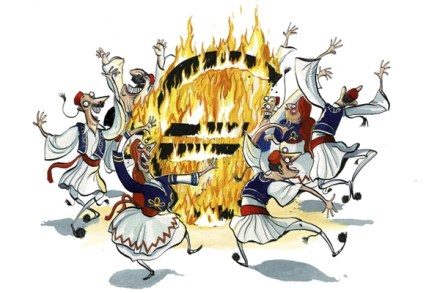
The upcoming Greek elections will push the nation into a confrontation with the European authorities, reports Faisal Islam, the economics editor of Channel 4 News, in his cover feature for the latest issue of The Spectator. And in this week's episode of The View from 22 podcast he provides an insight into the changing attitudes he witnessed during his most recent visit to Athens last week: 'Six months back, there was certainly a high stakes game of poker. But to me, it was pretty clear 6 months ago that the Greek people would do what was necessary to stay in the Euro. When you asked people on the streets, politicians, businessmen, yes things were taken to the edge of the abyss. They were told to peer over but they would still go for the Euro.

An historic moment

There is something incredibly resonant about the images of the Queen arriving in the Republic of Ireland this afternoon. You have probably heard the facts by now — that she is the first British monarch to do so for 100 years, and the first since Irish independence — but they are no less striking. Against a backdrop of terror threats and of Britain's participation in the country's bailout, Queen Elizabeth II is making some kind of history today. It is also, as Ed West says in a thoughtful post over at the Telegraph, a time for remembrance. He suggests that we remember the 300,000 Irishmen who fought in the Great War — and rightly so.

From the archives: Britain’s new Queen

To mark the 60th anniversary of Queen Elizabeth II's ascension to the throne in 1952, here is the leader that appeared sixty years ago on our front cover. It was written under the editorship of Wilson Harris, who had been in the position nearly 20 years. Queen and Nation, 15 February 1952 The slow days are dragging their sad length along to the climax, when the mortal remains of King George VI will be laid, where so many of his forbears have preceded him, in the historic St. George's Chapel at Windsor.

Queen of sorrows

She was the ill-educated younger child of the Duke of York; a mere female, she was sickly and not expected to survive, let alone become Queen. But, as this monumental and long overdue reappraisal shows, it was a mistake to underestimate Anne Stuart. She had always been ambitious and had great tenacity. She had no qualms about putting her beloved Church of England above loyalty to her father and King, the Catholic James II. Indeed, she was a key player in the Revolution of 1688. Legislation declaring that the monarch could not be Catholic or married to a Catholic meant that the question of her Catholic half brother’s legitimacy and his right to the throne was never an issue for Anne.

Gove’s Royal yacht proposal in full

This morning’s Guardian scoop about Michael Gove’s suggestion that the nation should present the Queen with a new Royal yacht for the Jubilee is the talk of Westminster. But the full correspondence indicates that Gove was not proposing any taxpayer funding for a new Britannia.   Gove refers to ‘David Willetts’s excellent suggestion for a Royal Yacht’. This proposal was made in a letter from Willetts to the Prime Minister on the 5th September, which was copied to various colleagues. Willetts writes that Rear Admiral Bawtree sees The Future Ship Project for the 21st Century ‘as a potential replacement for the Royal Yacht Britannia’.

The woman in black | 3 December 2011

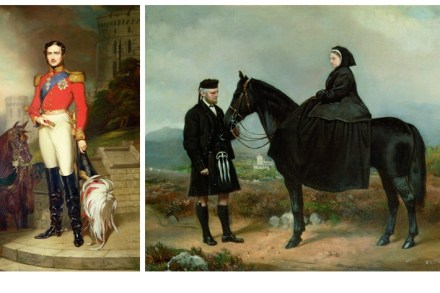
The history of the royal family is punctuated by dramatic, premature deaths which plunge the monarchy into crisis. The most disastrous of these — historically more significant by far than the death of Princess Diana — was the death of Prince Albert in 1861. By the time he died, aged 42, this minor German prince, the second son of the obscure and dissipated Duke of Coburg, had taken over the entire public work of the monarchy. After 21 years of marriage, his wife Victoria had become deskilled and emotionally dependent upon him. His death left the monarchy in tatters and condemned Queen Victoria to a lifetime of black dresses. Helen Rappaport, who is best known as a writer about the Romanovs, has chosen an excellent subject.

The Diamond Queen by Andrew Marr

‘Of making many books there is no end’, particularly when the subject is Queen Elizabeth II. It is less than ten years since Ben Pimlott and Sarah Bradford independently produced authoritative and excellent biography-centred books on the Queen. Since then a fair number of minor studies have appeared. Can enough have happened in the meantime, can enough new information have been revealed, to justify two new books? The answer, rather surprisingly, is a cautious ‘yes’. Both Andrew Marr and Robert Hardman are serious students of their subject. Both write well and thoughtfully.

Yet more questions for News International to answer

The phone hacking controversy first began to come to public attention because of a story in The News of the World about Prince William’s knee in 2005. Now, the Royal angle has revived because of a report from Robert Peston that the newspaper allegedly paid a Royal protection officer for contact details of senior members of the Royal family. Peston reports that:   ‘According to a source, the e-mails include requests by a reporter for sums of around £1000 to pay police officers in the royal protection branch for the information. The phone details could have been used to hack phones of the royal family. "There was clear evidence from the e-mails that the security of the royal family was being put at risk", the source said.

Coolness under fire

The early 19th century was the age of the dandy, and the essence of dandyism was cool self-control. The dandy shunned displays of feeling. There is feeling a-plenty in both these books; yet they may fairly be described as novels which bear the characteristics of dandyism. Though not short of action — something the dandies deprecated — they are cool, elegant and laconic. Stella Tillyard is known as a historian of 18th- and early 19th-century aristocratic and royal life. Tides of War is her first novel, and a very accomplished one. It moves easily between domestic and political scenes in London and Norfolk, and the Peninsula, where Wellington’s army, with the help of Spanish guerrillas, whom Wellington valued little, is gradually winning the war against the French.

Neither Greek nor German

Prince Philip’s childhood was such that he had every right to be emotionally repressed and psychologically disturbed. Prince Philip’s childhood was such that he had every right to be emotionally repressed and psychologically disturbed. Born sixth in line to the Greek throne, at the age of 18 months he was hounded from what, in name at least, was his homeland. His father came within an ace of being executed for high treason. When he was only eight his mother suffered a devastating nervous breakdown; in 1930 she was drugged into placidity, bundled into a car and consigned to a sanatorium-cum-prison. His father shrugged off his responsibilities towards his children, of whom Philip was by far the youngest, and installed himself with his mistress in the south of France.

A princely marriage

There are some things that Britain does better than any country in the world, and we saw one of them today. Two particulars will have jumped out at the tens of millions watching the Royal Wedding from overseas: the sheer splendour of our monarchy, and the depth of its popular support. HD television made the beauty of today's ceremony all the more breathtaking. If this were a movie, it would win an Oscar for best cinematography. The shots from the roof of Westminster Abbey were jaw-dropping, the camera angles throughout were perfect. But no less awesome was the sight of the thousands thronging the streets, or watching in Hyde Park.

From the archives: the marriage of Charles and Diana

It is just under thirty years since Prince William's parents, Prince Charles and the late Princess Diana, were themselves married in St Paul's Cathedral. Below are two Spectator articles relating to that wedding. The first is the Spectator editorial from the time, the second an essay by Auberon Waugh on the lessons to be drawn from the occasion. Now that Kate Middleton has become Princess Catherine, you may also want to click here for an article entitled "What Kate should know," by Diana's former private secretary, Patrick Jephson, for The Spectator in 1996. Anyway, back to 1981… The symbol of unity, The Spectator, 1 August 1981 The marriage of the heir to the British throne inevitably leads one to reflect on the on the monarchy and its function today.

The Royal Wedding: across the web

Here is a selection of articles on the Royal Wedding from around the web. For those, like me, who wouldn’t know an Empire Line if it slapped them in the face, Vogue’s fashion live blog has all the details and photographs of what broadcasters have called a “festival of British fashion.” Sam Cam was wearing a dress from Burberry, Princess Beatrice was bedecked in Vivienne Westwood and, the main event, Kate Middleton’s dress was made by Sarah Burton of Alexander McQueen. The Telegraph’s outgoing Fashion Editor, Hillary Alexander has more details here. It’s been quite a sales demonstration for Britain’s leading designers. Export led recovery here we come!

Street party … in Tirana

Wedding-themed street parties are underway not only in Britain, but wherever Brits are living. I'm in Tirana in Albania where the British Embassy is hosting a street party at the Ambassador's Residence. Union Jacks deck the tables, flowers are everywhere and the raffle table, with wedding-themed presents, is overflowing (profits will go to the Sue Ryder charity). Large TV screens are beaming that kiss to expats, diplomats and locals. Speaking to a range of people last night, it became apparent what an asset the royal family is. Everyone in Tirana was talking about the wedding. People were saying they intended watch the ceremony and even visit Britain. I'm a non-practising republican and will remain one for a while after this fantastic pageantry.

From the archives: the Queen’s wedding

Perhaps it's the pageantry of the occasion, but it does feel like one of those days for looking back as well as forward. In which case, we'll have a double dose of Royal Wedding-related archive posts today, of which this is the first. And what a doozy it is, too: The Spectator's editorial on the wedding of the Queen to Prince Philip in 1947. So many of its observations and exultations might equally apply today. "The spirit of egalitarianism is in the air," it notes, "To that even royalty may have in some degree to adapt itself." The adaptation, you feel, is still being written by those gathered in Westminster Abbey this morning. Princess and wife, The Spectator, 21 November 1947 The heiress to the throne is now a wife.