Richard dawkins

Stephen Fry: the high-priest of juvenile atheism

Well, well, well. Nick Cohen's excellent column in this week's mag  has caused a stir today. Sadly, though, Nick's astute argument became another excuse for a boring slanging match between atheists and believers. And of course Stephen Fry waded in: Mary had a little lamb It's fleece was white as snow All you religious dicks Just fuck off and go. No more discussion with dickheads. Sorry. — Stephen Fry (@stephenfry) August 22, 2013 Really? Fry's Twitter cronies lapped that up. They always do. He's so clever and civilised, our Stephen, bless his colourful cotton socks. Unlike those credulous maniacs who believe in God. In 2013! Celebrity atheists always claim the rational high ground: we are calm and normal, the God squad is angry and mad.

Move over, Dawkins. The atheist spring of the last decade is wilting.

I couldn't get Richard Dawkins to reply to Theo Hobson's excellent article on 'the new new atheists'. Probably, he didn't see my message. Or maybe he thought it beneath him. Or maybe like God he just doesn't respond to all our entreaties. There's no doubt, though, that Theo's piece touched a nerve among the godless trolls of the web -- just look at the comments section. Theo must be on to something. The new atheist spring of the 2000s is wilting. Dawkins suddenly seems like a strange anachronism. In his place, a humbler and more honest atheism is emerging, led by brilliant minds like our very own Douglas Murray on one hand and Alain de Botton on the other.

Richard Dawkins has lost: meet the new new atheists

The atheist spring that began just over a decade ago is over, thank God. Richard Dawkins is now seen by many, even many non-believers, as a joke figure, shaking his fist at sky fairies. He’s the Mary Whitehouse of our day. So what was all that about, then? We can see it a bit more clearly now. It was an outpouring of frustration at the fact that religion is maddeningly complicated and stubbornly irritating, even in largely secular Britain. This frustration had been building for decades: the secular intellectual is likely to feel somewhat bothered by religion, even if it is culturally weak. Oh, she finds it charming and interesting to a large extent, and loves a cosy carol service, but religion really ought to know its place.

AC Grayling vs God

‘Atheism is to theism,’ Anthony Grayling declares, ‘as not collecting stamps is to stamp-collecting’. At this point, we are supposed to enjoy a little sneer, in which the religious are bracketed with bald, lonely men in thick glasses, picking over their collections of ancient stamps in attics, while unbelievers are funky people with busy social lives. But the comparison is flatly untrue. Non-collectors of stamps do not, for instance, write books devoted to mocking stamp-collectors, nor call for stamp-collecting’s status to be diminished, nor suggest — Richard Dawkins-like — that introducing the young to this hobby is comparable to child abuse.

Debating Richard Dawkins

I spent Thursday evening at the Cambridge Union debating the motion 'This House believes religion has no place in the 21st century.' I spoke against the motion. My opponents on the opposite side included Richard Dawkins. My opponents on my own side were Rowan Williams and Tariq Ramadan. Anyhow - there has been a certain amount of press coverage and a number of readers have got in touch. This is just to say that I hope to post the video of the debate here as soon as it becomes available. UPDATE: Video of the debate is available here.

Why Prof Dawkins has it wrong

No sooner does Baroness Warsi denounce militant secularists who try to marginalise Christianity than, bang on cue, up surfaces Richard Dawkins with a survey commissioned by his Foundation for Reason and Science intended to demonstrate that Christianity is a minority pursuit. His Ipsos MORI poll, published today, is intended to unpick that bit of the 2001 census which found that more than 70 per cent of respondents identify themselves as Christian.

Cameron’s missing the point: Christian values require Christianity

The Prime Minister does God. At least, that's the gist of his first major speech on religion. Actually, the interesting thing is that a Tory Prime Minister feels that he has to make the point that he is a Christian. Other than Michael Howard, who was Jewish, most other Tory leaders could have assumed we’d take it as read that he or she was more or less CofE, including Mrs Thatcher, who was, of course, a Methodist.  Following Richard Dawkins' remark that the Prime Minister may 'not really' be a Christian, Mr Cameron responded: 'I am a committed – but I have to say vaguely practising – Church of England Christian, who will stand up for the values and principles of my faith'.

The vanguard of the universities revolution?

One new institution does not a revolution make. But there's still something a little revolutionary about the New College of the Humanities that is set to open, in London, in September 2012. Perhaps it's the idea behind it: a private university that charges fees of £18,000 a year (with bursaries available to those who can't afford that). Or perhaps it's the names who are fronting it: AC Grayling, Richard Dawkins, Niall Ferguson, etc. They will, apparently, be conducting tutorials themselves. The public academics, it seems, are pitching their tents on the private sector. Mary Beard lists some reasons no to get too excited here. This is, she says, little more than a US-style liberal arts college that won't offer science courses or post-graduate qualifications.

The teacher you wish you’d had

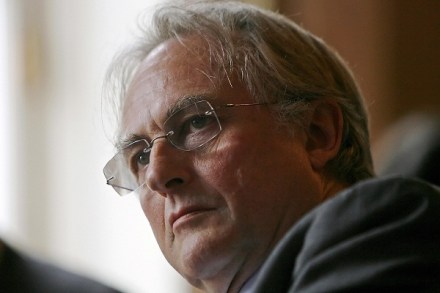
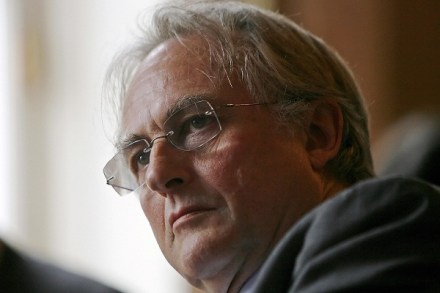
Sometimes you can become too well known. For years Richard Dawkins was a more than averagely successful media don, an evolutionary biologist, fellow of New College, writer of popular science books and tousle-haired face of rationalism on countless television shows. It was a good living, and kept us all entertained, but for Dawkins it wasn’t enough. So he wrote The God Delusion, an unambiguous attack on religion and the religious. I should probably say at this stage that I am not a believer, but it does seem to me that if people want to believe in a god or gods, that’s very much up to them. In his stridency, Dawkins inadvertently aligned himself with the fundamentalists he hates so much: he became identified as a sort of fundamentalist atheist.