Retail

How the coffee subscription ruined Pret

I have a deep-seated hatred of the hospitality QR code. It ripped through the industry as part of questionable social-distancing initiatives during the pandemic, taking the place of menus and human interaction – and has stubbornly refused to disappear, making my heart sink when I find one sellotaped to the table of a bar or restaurant. However, there’s one hospitality QR code that I found myself developing a fondness for – the one that comes with Pret a Manger’s coffee subscription. Launched in September 2020, the scheme is a financial godsend for coffee addicts.

In praise of farm shops

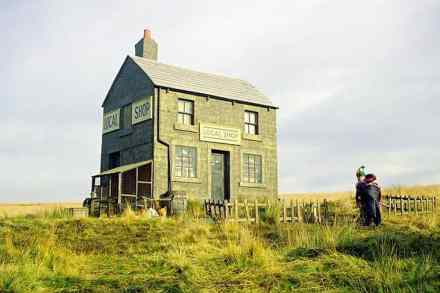
As a city-dweller for 34 years, I am used to the hustle and bustle of other people. Cars, sirens, strangers chatting in the street: it’s the background noise of everyday life, a comforting reminder that you’re never alone. So when I moved to the Suffolk countryside in April last year, I found it a bit of a shock. Pregnant, freelance, with a husband often in London for work, I had a two-year-old for company, few friends and a big empty house overlooking fields, sky – and not much else. It's a 20-minute drive to the nearest town, and there’s nothing but a ramshackle pub in walking distance. We switched to online shopping for convenience, so I didn’t even have the weekly trip to the supermarket to fall back on.

‘Christmas creep’ has gone too far this time

For sale in the village shop last week: punnets of locally-grown strawberries, multicoloured bucket-and-spade sets, postcards featuring British beach scenes… and no fewer than 14 varieties of Christmas bauble. Down the street at the Post Office, you can buy Christmas cards, tinsel – in green, red or sparkly silver – and wrapping paper festooned with candy canes. The garden centre, meanwhile, is doing a roaring trade in tins of festive shortbread (expiry date: 26 October). Christmas, so the saying goes, comes but once a year. And this year, it seems to have come during a baking hot August. Before you suggest I live in a sort of Yuletide wormhole, it’s happening nationwide.

What’s Helsinki’s nightlife like?

Finnish lines Finnish Prime Minister Sanna Marin said she had taken a test for illegal drugs after being filmed at a party at which some people were shouting ‘flour’ – Finnish slang for cocaine. What’s Helsinki’s nightlife like? — The Hostelworld website identifies a Helsinki venue, Kaiku, as one of its 20 top clubs in the world. — Insider.com names Helsinki as the second best city in the world for socialising. — However, Finder.com rated Helsinki as the 16th most expensive city in the world in which to buy a pint, although it did come out cheaper than Oslo and Stockholm. Screen out Cineworld was reported to be on the verge of filing for bankruptcy, following Covid and what it said was a lack of blockbusters this year.

How to save Oxford Street – and your high street

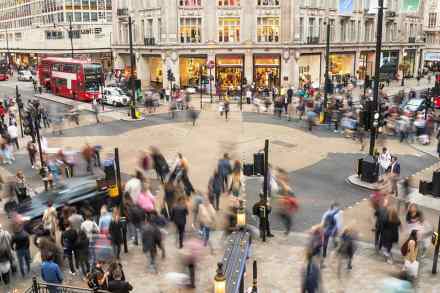
Oxford Street is ‘a dinosaur district destined for extinction’, says Marks & Spencer boss Stuart Machin – whose plan to replace its ‘flagship’ Marble Arch store with a new ten-storey retail and office block has been referred to a public inquiry by Michael Gove as Housing Secretary, despite winning approval from Westminster council. Machin points out that his real flagship nowadays is M&S’s website, which accounts for a third of the group’s clothing and home sales, while much of its pre-second-world-war store estate stands in sad need of repurposing or right-sizing.

My approach to wine? Wishful drinking

I fancy myself as a bit of an oenophile and during the lockdowns, when my local branch of Majestic was forced to close, I joined The Wine Society and started buying wine from a variety of online sellers such as Vivino and Goedhuis & Co. The upshot is that I get three or four emails a day from these companies and have become an expert in deconstructing their sales patter. The common theme is to coddle the self--deception of the buyers that they aren’t full-blown alcoholics – heaven forfend! – but are obsessed with wine for some other, entirely respectable reason. For instance, Goedhuis is currently promoting a ‘platinum selection for the Jubilee weekend’ on the assumption that its customers are going to be hosting garden parties this bank holiday.

How profitable are Britain’s biggest oil companies?

A slip of the tongue George W. Bush condemned a political system where one man could wage a ‘brutal and unjustified invasion of Iraq’ before correcting himself and saying ‘Ukraine’. Some other Freudian slips by US politicians: – In the 2012 US election Senator John McCain, who had been the Republican candidate four years earlier, made a speech in which he attempted to look forward to a Mitt Romney presidency, but somehow managed instead to say: ‘I am confident that with the leadership and the backing of the American people, President Obama will turn this country around.’ – At another event in the same election, Romney himself introduced his running mate, Paul Ryan, as ‘the next President of the United States’.

Why nothing ever comes ‘for free’

‘It’s not as nice as it looks,’ said my husband, not leaving time to look it in the mouth before wolfing down the lemon and sultana Danish that I had thoughtfully bought him, reduced on account of its age. ‘Every day in this store,’ the till at Marks & Spencer’s had told me in a tone indicating that I might be interested, ‘someone gets their shopping for free.’ Yes, I thought, it must be that bloke that exits pursued by the security man. I thought other things too, since I am afflicted by what the French call déformation professionnelle and tend to sub-edit other people’s utterances – those of machines with even less tolerance. For a start, we can’t allow for free.

Could Haldane have helped save us from inflation?

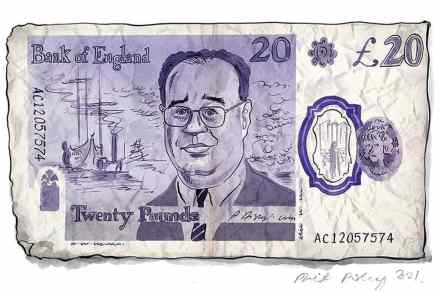
Would Andy Haldane, the economist who left the Bank of England to run the Royal Society of Arts, have made a better governor than Andrew Bailey? You might be thinking that Daffy Duck would have made a better fist than Bailey of combatting the cost of living crisis. But seriously, Haldane was an outsider (backed by this column) in the race won by Mark Carney in 2012, and Dominic Cummings reportedly wanted him to follow Carney in 2020. He’s a brilliant real-world observer and it’s poignant to know that, though he warned Monetary Policy Committee colleagues early last year to brace for inflation, it has ‘surpassed my worst expectations’.

Is ours the oddest high street in the land?

The window of the new shop was as brightly coloured as a circus entrance, and stuffed full of items bearing no relation to each other, from chocolates and candles to vases and old chairs. The unusual name, too, made the place seem like it might have some mystical, hidden purpose. The builder boyfriend wandered over the road from our house to explore this latest niche store to open up in the village. When he came back he said: ‘Do you remember Papa Lazarou from League of Gentlemen?’ I do indeed remember the demonic circus character who featured in four episodes of the TV show. He would bang on people’s doors and kidnap women declaring: ‘You’re my wife now!

Why are so many classic British brands going downmarket?

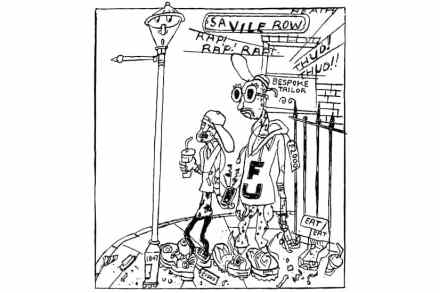
Huntsman, at No. 11 Savile Row, was once an understated beacon of good taste. But if you visit today, you are likely to be met by a gaggle of tourists posing for selfies in front of the window across which is splashed in very large letters: ‘The King’s Man, only in cinemas now.’ The tailor, which dressed the Duke of Windsor in his bachelor days, provides both the inspiration and location for this fun, if silly, spy movie franchise, the latest of which stars Ralph Fiennes. Unfortunately, cinematic fame has led to the brand losing its bearings.

Why cash is still king to me

I recently set out on a simple mission: to break the £10 note in my purse so I’d have a five to put in the church collection plate on Sunday. My first attempt backfired. The café, where my order was delivered with an eye-roll of metro disdain, no longer accepted cash payments. I sat at one of their pavement tables, drinking the single macchiato I’d neither wanted nor needed, and considered my next move. I’m aware that cash is now regarded as a grubby anachronism. All those hands it passes through! Eww! Of the two churches I attend, one has stayed ahead of this trend and installed payment terminals in the nave: tap and give. I can offer no rational objection to this. I simply don’t like it.

Are banking apps luring young people into debt?

Last month, my bicycle got a flat tyre. ‘Both of those tyres are gonna need replacing and you’ve knackered your sprockets,’ huffed the bike man. The bill came to £230. It’s the kind of irritating expense that means I run out of beer money a week before payday. I’ve always assumed I’m a reasonably normal spender. Work pays me, the money gradually disappears over the month, with hopefully a bit left over for my Isa. I’m vaguely aware that something exists called a ‘credit card’, but my parents always made clear to me that if you don’t have the money for something, don’t buy it. Where I differ from older spenders is that like many under-thirties I use a Monzo card.

The problem with online property searches

In 1966, the legendary adman David Ogilvy set out to buy a home in France. He boarded a transatlantic liner to meet a French estate agent who had a perfect house waiting for him in Paris, but while still in mid-ocean he heard he had been gazumped. There were presumably other houses on sale in Paris at the time, but it seems the agent did not show David any of them. Instead he suggested they board a train to Poitiers, 200 miles away, to an area David later described as ‘the South Dakota of France’. On the banks of the Vienne stood a decaying 13th-century château with around 30 bedrooms and a network of dungeons. David bought that instead. He lived there from the mid-1970s until his death in 1999. Restoring the building and gardens was one of the great joys of his life.

Woke California bans boys and girls toy sections

From our US edition

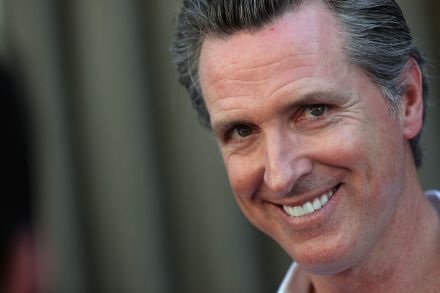
Last week, signing a batch of pet bills to end the legislative session, Gov. Gavin Newsom made California the first state in the nation to require gender-neutral retailing. The law, which will take effect in three years, is limited to toys and 'childcare products' sold by big companies. It will never be enforced, since in essence it's already happening. Target dropped boys and girls toy sections in 2015, and for years retailers have been moving away from gender-specific labels. But the law’s emptiness is immaterial. The point is not to weed out a bias or fix a pressing wrong. The act is a victory for LGBT advocates who claim that sellers pressure children to conform to gender stereotypes and stigmatize non-conformers.

california

How to solve the looming pigs-in-blankets crisis

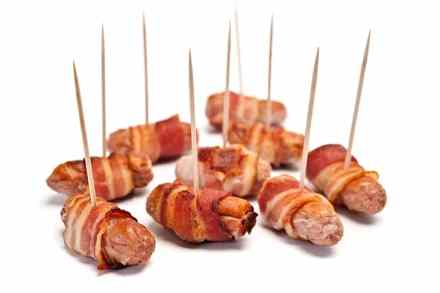
This is getting serious. Never mind global shortages of microchips, plastics, copper and container ships; now we’re running out of pigs in blankets. The British Meat Processing Association says its members are so understaffed that annual production of 40 million packs of this popular pork item for the Christmas market is under threat. The British public have so far stoically accepted occasional empty supermarket shelves as a pandemic knock-on, to be blamed in part on necessary pinging of key workers and delivery drivers and in part on neighbours’ stockpiling, rather than on systemic government cock-up. But if the succulent sausage-in-bacon delicacy is nowhere to be found, trouble will surely follow.

Why filling Father Christmas’s sack will cost more this year

Bank of England governor Andrew Bailey looks increasingly uncomfortable as inflation notches upwards from ‘nothing to worry about’ towards the Bank’s latest prediction of a decade-high 4 per cent peak later this year and a possible ‘Oops, we’re back to the 1970s’ if spiralling wage and price pressures confound the forecasters. I wrote last week about the UK’s lack of lorry drivers, but that’s just one of many bottlenecks that need unblocking, as Bailey says, to bring ‘a wave of supply back on to the market’ and quell the blip. More significant globally, and much more difficult to resolve, is the logjam of shipping.

Will a John Lewis home be up Boris and Carrie’s street?

The Financial Times carried a curious story at the weekend about ‘the secretive process to elect the Lord Mayor of London’ being ‘thrown into disarray’ by ‘objections from some City leaders’ to the candidacy, for 2022, of Nick Lyons — who has just been elected as one of the City’s two sheriffs but who happens to be an Irish citizen. Lyons’s unnamed opposers say City rules have always required the Lord Mayor to be a British citizen. The City Corporation, the Square Mile’s local authority, says it has legal advice to the effect that Lyons is not disqualified, EU citizens being permitted to stand in UK local elections.

Why private equity sharks are shopping at Morrisons

The late Sir Ken Morrison — founder of the eponymous supermarket chain that’s the latest UK target for US private equity — had the blunt manner of the Yorkshire cattle farmer he became in reluctant retirement after he was ousted by his own board. Criticising his successors from the floor at one of his last AGM attendances, he roared: ‘I have 1,000 bullocks… but you’ve got a lot more bullshit than me.’ So I’m sorry he’s not around to accost the suits from the New York firm of Clayton, Dubilier & Rice (and their adviser, former Tesco chief Sir Terry Leahy) on the intentions behind the takeover bid that sent Morrisons’ shares soaring on Monday.

Is Farrow & Ball’s business model flaking?

The happiest thing that happens in May is the coming into leaf of my long beech hedge. The shift from brown to green symbolises, for me, an annual economic revival — of openings, reopenings and entrepreneurial optimism. This year, after April’s frosts on the end of a dismal winter, it was especially welcome. And as revival collides with new fears of ‘the Indian variant’, I’m clinging to optimism while watching for new-season winners and losers. In that spirit, I’ll make this column a collage of consumer themes. First — though I’m not sure what this symbolises — a friend tells me he celebrated relative freedom by driving to Bicester Village to buy ten pairs of Y-fronts.