Racism

The problem with mystery podcasts like Wind of Change

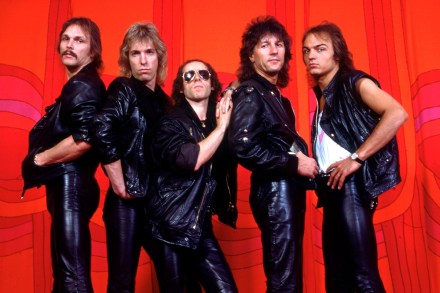
Did the US secretly write a power ballad in order to bring down the Soviet Union? That’s the question behind Wind of Change, a serial documentary that has topped the podcast charts. It’s the work of an investigative journalist called Patrick Radden Keefe who claims to have once received a tip-off, from an intelligence contact, that the song ‘Wind of Change’ — recorded by the hair metallers Scorpions — was actually a CIA campaign to encourage anti-Soviet uprisings. Now he wants to prove it. This week’s episode, the fourth of eight, takes Keefe to a collectors’ convention in Ohio in pursuit of an internet user called ‘Lance Sputnik’ who creates customised versions of GI Joe action figures.

No, Alison Roman isn’t racist

From our US edition

The cardinal rule of a good milkshake-ducking: it's not over until the duck has been declared racist. So it goes for Alison Roman, the popular (or formerly so) New York Times food writer who earlier this month became a loathed and villainous avatar of privilege after some ill-considered remarks about celebrity lifestyle-empresses Chrissy Teigen and Marie Kondo sparked a storm of backlash. The scandal ultimately became big and beefy enough to make the mainstream news: Teigen announced to her 12 million Twitter followers that Roman's comments had wounded her. Roman apologized, and then apologized again, and then stopped posting at all. The tide of takes inspired by the controversy will keep rolling until June.

alison roman

Cambridge’s ‘reverse mentoring’ scheme was always going to fail

Institutional racism is rife at Cambridge university – that was the assumption behind the university’s ‘reverse-mentoring’ scheme which was launched to much fanfare last summer. The idea was simple enough: senior academics who were white would be educated about racism by their BAME colleagues. But the news that the scheme may be scrapped after its short pilot is hardly a surprise. As I wrote back in July, the singling out of white colleagues for mentoring is flawed on many counts. Worst of all, it embraces the increasingly popular belief that racism is an unconscious state of being that is inexorably inherent in some (but not all) racial groups. This is not, however, the reason why the scheme might be shelved.

A book that could save lives: Adam Rutherford’s How to Argue with a Racist reviewed

In the award-winning musical Avenue Q, filthy-minded puppets sang about schadenfreude, internet porn, loud sex, the uselessness of an English literature degree — and racism. Or, more specifically, they sang about the ubiquitous human habit of stereotyping people by race: Everyone’s a little bit racist, sometimes.Doesn’t mean we go around committing hate crimes.Look around and you will find,No one’s really colour blind.Maybe it’s a fact we all should face.Everyone makes judgments...Based on race. The puppets were right: everyone makes judgments based on race. Humans are lazy creatures who like mental short cuts. Thinking in shades of grey is more effortful than thinking in black and white.

Full text: Labour’s suspension letter to Trevor Phillips

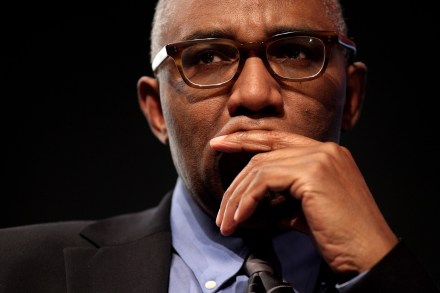
News broke this morning that the former head of the Equalities Commission Sir Trevor Phillips had been suspended from the Labour party over allegations of Islamophobia. Phillips has spent his career documenting the realities of race and integration in British life.  The think tank Policy Exchange has now released the correspondence between Sir Trevor and the Labour party disciplinary department. Phillips is a senior fellow at the research institute.

Bernadine Evaristo shoulders weighty themes lightly: Girl, Woman, Other reviewed

It’s a slippery word, ‘other’. Taken in one light, it throws up barriers and insists on divisions. It is fearful and finger-pointing: them, not us. But looked at in another way, it is rangy, open and expansive. It suggests horizons, not walls. That first meaning has done much heavy lifting in discussions of Bernardine Evaristo’s Booker-winning Girl, Woman, Other. As the first black British woman to be awarded the prize, this was perhaps inevitable. Evaristo cuts an unmistakable dash through the ranks of past winners: they have been, on the whole, more pale and — damningly — a lot more male.

Full of fascinating data and excellent comedy: Messiah at Stratford Circus reviewed

I’ve joined the Black Panthers. At least I think I have. I took part in an induction ceremony at the start of Messiah at Stratford Circus. ‘Stand up,’ said the actor Shaq B. Grant to the predominantly white crowd. ‘Raise your right fist and repeat after me: “I am a revolutionary.”’ Everyone obeyed and chanted his mantra, some with more sincerity than others. Then the show began. The subject is a notorious police raid on a Panther hideout in Chicago in 1969 which resulted in the death of Fred Hampton, a 21-year-old activist nicknamed ‘the Black Messiah’. The police alleged that the Panthers opened fire first. The Panthers claimed that Hampton sustained survivable wounds during the raid and was later executed by unnamed police officers.

James Baldwin’s radicalism was part Marxist, part Christian

Great biographies try to answer questions about the complicated relationship between their subjects’ inner life and outer workings. How did Winston Churchill turn the pain of his early life and his years in the political wilderness into the words that galvanised the free world? How did Frida Kahlo’s physical impairment shape her vision as a painter? I am endlessly interested in the inner and outer lives of the African–American writer and activist James Baldwin, for my money not just the most important black writer of the past 100 years, but one of the most important American writers ever.

Mick Hucknall on women, rejection and cultural appropriation

What makes someone become a pop star? Sometimes, it’s true, pop stardom arrives by accident, and its recipient responds not with joy, but horror. More often, though, pop stardom is sought, sometimes to make up for things that are missing in life, and the newly minted star embraces all the benefits fame brings, until those benefits — unlimited sex, unlimited drugs, unlimited drink — become more of a burden than a pleasure. Mick Hucknall appears to fall very much into the latter camp. What was missing was, first, a mother: she left his father when he was an infant, and records became some sort of surrogate as he grew older.

Universities don’t need to be lectured about racism

I’ve been contacted by a professor at a leading Russell Group university who is worried about the spread of progressive dogma in the UK’s higher education sector. He highlighted last week’s report by the Equality and Human Rights Commission which claimed that around a quarter of students from ethnic minority backgrounds at Britain’s universities have experienced racial harassment. He fears that this will be used by left-wing activists on campus as ‘proof’ that the higher education sector is ‘systemically racist’ and lead to further calls to ‘decolonise the curriculum’.

A 90-minute slog up to a dazzling peak: ‘Master Harold’… and the boys reviewed

Athol Fugard likes to dump his characters in settings with no dramatic thrust or tension. A prison yard is a favourite. He specialises in bored, talkative characters who squirt the time away swapping memories and indulging in bursts of creative play-acting. It’s dull to watch but good fun to perform. Thesps love to step out of character and road-test a range of fictional personalities. ‘Master Harold’… and the boys is classic Fugard. We’re in an empty restaurant in South Africa in 1950. Lunch service has ended. Two waiters twiddle away the afternoon discussing sex, ballroom dancing and beating women (as if this were a standard feature of male behaviour). Enter the boss’s school-age son, Hally, whom both waiters know well.

Rednecks are the least racist people in America

From our US edition

A few years ago we were shocked after a family member gave birth. The pregnancy itself wasn’t a surprise, she was about to be a single mom, we were excited and supportive. But the beautiful, brand new creature she brought forth into the world didn’t look exactly as we expected.‘Chad, she’s white,’ the mom told me when I called to congratulate her, as confused and startled as I was. She’d been laid up in the maternity ward doing a bit of math to figure out who the dad was. We were both slightly disappointed. For months we looked forward to the jolt on her own mother’s face when a caramel little baby plopped into the room.

rednecks

An elegy for New York

New York The master of the love letter to New York, E.B. White, eloquently described the city as a place that can ‘bestow the gift of loneliness and the gift of privacy’. Like many of us, he believed that the place would last and that it would always matter. White was an optimist, sophisticated and thoroughly American. He was lucky to die in 1985. I say lucky because fate spared him from seeing the wreckage of his dream city. New York was also my dream place, an indelible part of my youth: a poem of steel-and-limestone majesty, of high-end shops, hotels, theatres and nightclubs, of dandies and high-class women, of hustlers and gents, of tall blond Irish cops, gangsters in fedoras, and kids playing stickball on empty Bronx streets.

A decorative pageant that would appeal to civic grandees: The Secret River reviewed

The Secret River opens in a fertile corner of New South Wales in the early 1800s. William, a cockney pauper transported to Australia for theft, receives a pardon from the governor and decides to plant a crop on 100 acres of Aboriginal land. His doting wife, Sal, begs him to take her and their young sons back to her beloved London. They make a deal. William must succeed as a farmer within five years or pay for their passage home. He clashes with a tribe of spear-waving Aboriginals who make it clear that they want him off their ancestral turf. Neither side speaks the other’s language. ‘This is mine now. You lot can have the rest,’ says William, pointing vaguely at Australia.

The joys of Radio 4’s Word of Mouth

I first heard Lemn Sissay talking about his childhood experiences on Radio 4 in 2009. At that time he was still fighting Wigan social services for sight of the official dossier on his years as a child in care, fostered at first and then dumped back in the system and institutionalised in care homes and then a remand home. Eighteen years of his life stored in an Iron Mountain data facility. He’d been asking for his files, the story of his life, since he came of age. It was not easy to forget that programme; the banal cruelties of the system and Sissay’s resolute dignity in talking about them. At 18 he was told that the name he had been given by his foster parents was not his birth name.

The Royal Mint’s transphobic decision to snub Enid Blyton

Who knew the Royal Mint, of all places, had been captured by the cult of political correctness? According to the Mail, the Mint’s Advisory Committee decided not to put Enid Blyton on a 50p coin to commemorate the 50th anniversary of her death because she is 'a racist, sexist, homophobe and not a very well-regarded writer'. That’s an odd statement, since it suggests that had she been a better-regarded writer, her racism, sexism and homophobia would have been overlooked. Perhaps that’s the Mint’s rationale for not removing Charles Dickens and William Shakespeare from the £10 note and £20 note respectively, in spite of their liberal use of anti-Semitic caricatures.

The NYT and the triumph of narrative journalism

From our US edition

The Mueller report did not bring down Donald Trump. The president will not be impeached before the 2020 election, and it is clear – in spite of the hopes of the good men, women and nonbinary soldiers of the Resistance – that he is not a Russian superbot manufactured in a cutting-edge information warfare lab in the dark belly of the Kremlin. Trump is not the Manchurian president. An ominous question emerges for liberals: who is Donald Trump, if he is not Vladimir Putin’s dogsbody? What the hell are we going to do with him? Why is he still fouling up our government? The pack howls, but in the four years since Trump descended the golden escalator from the world of television entertainment to the world of political entertainment, they have yet to catch him.

dean baquet narrative

Trump heals the nation…by attacking Beto for his ‘phony name’

From our US edition

The Democratic party, mired in infighting only a week ago, has reunited over racial division. New Jersey senator Cory Booker stated in a speech on Wednesday in Charleston, S.C., that the recent acts of white nationalist violence received a stimulus 'from the highest office in our land, where we see in tweets and rhetoric, hateful words that ultimately endanger the lives of people in our country.' Joe Biden took direct aim at President Trump: in an impassioned speech in Burlington, Iowa, he declared, 'in both clear language and in code, the president has fanned the flames of white supremacy in this nation.' A day earlier, Fox News host Tucker Carlson tried to douse the controversy over white nationalism by averring that the phenomenon is a 'hoax.

phony name

Trump’s truths about Baltimore

From our US edition

‘You would think you were in a Third World country,’ the millionaire white New Yorker of retirement age said of Baltimore’s heavily black Sandtown-Winchester neighborhood in 2015. There is nothing remotely racist about this statement. We know that because Bernie Sanders said it. Yes, the Bernie Sanders who lives in whites-only Vermont and whose inability to connect with a key group of the Democratic base means that he has what the pollsters call an ‘African American problem’. It was, however, disgracefully and irredeemably racist of President Trump to refer to Rep. Elijah Cummings’s Baltimore district as a ‘disgusting rat and rodent infested mess’ and a ‘very dangerous & filthy place’.

elijah cummings

The brutal truth

Novelists will always be interested in enclosed communities — or the ‘total institution’, as sociologists say. When you separate a group of individuals from larger society with a wall and a controlling mechanism, all sorts of interesting facts about the way people interact become apparent. Convents, hospitals, asylums, schools, universities and prisons all serve the purpose. But different nations tend to prefer one sort of institution over another. It’s a curious fact that where the British will enter into a novel of school life with gusto, Americans show a distinct preference for writing about prisons.