Poverty

Letters: Charles Saatchi’s challenge to Taki, and the battle over Benefits Street

On Benefits Street Sir: Fraser Nelson asserts that people in charities do not want to talk about what life is like on poverty (‘Britain’s dirty secret’, 18 January). To those of us who have experienced poverty or supported others stuck in it, there is no secret. We didn’t need a sensationalist pseudo-documentary to know that life with no money is grinding, miserable and soul-destroying. However, few answers to the problems of the poor are offered by low-paid workforces combined with flawed markets deciding the value of essential goods and services. The real means to help people out of this poverty trap would be to reduce rents, utilities and childcare costs while creating a much more generous withdrawal rate of benefits when people start work.

Does it matter if Tories don’t know what it’s like to be poor?

I have this theory that the reason why the British public is so hugely in favour of cutting welfare to the bone, and the British media so hostile, is that many (maybe most) journalists still depend on financial support from their parents well into their 30s. Since most media folk come from the sort of backgrounds where home ownership is expected, and yet work in an industry where the typical salary makes living anywhere near London extremely difficult, they feel too ashamed to opine on ‘scroungers’ because, well, they are scroungers. Anyway, maybe that’s what’s called projection. Most people in politics, like those in the media, tend to come from fairly privileged backgrounds, and this seems to be the crux of Labour’s counter-attack on welfare.

Joy to the world | 12 December 2013

Pessimism sells. It shifts books and newspapers, sends ratings soaring. It fills lecture halls, wins research grants, makes political careers. We are fed this constant diet of doom, predicting anything from meteorological Armageddon to a tyranny of austerity, and so it is little wonder that we tend to miss the bigger story. A cold, dispassionate look at the facts reveals that we are living in a golden era. and that, if you use objective measures, 2013 has been the best year in human history. As a public service - and one which is rarely provided in broadcast or print - The Spectator will below provide evidence for these assertions. We can start from crude figures: $73.5 trillion, the world’s economic output this year.

Our enemy is not global warming. In Britain, people are dying of the cold

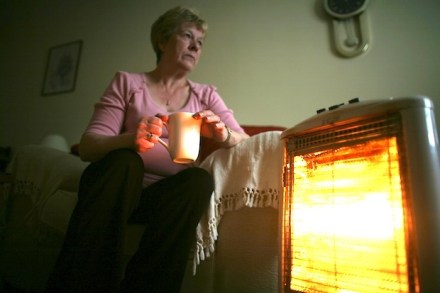
Fanciful predictions of all the deaths that will result from climate change, decades into the future, are regularly thrown into public debate. Less attention has been given to a real statistic from the here and now, released by the Office of National Statistics this week, which shows the effects of one of the policies designed to tackle climate change: high energy prices. It emerged this week that there were 31,000 ‘excess’ deaths in England and Wales last winter, almost a third more than the previous year. Almost all were, in effect, British pensioners who died of the cold. It’s odd: Britain is a rich country with a massive welfare state — and we know how to heat and insulate houses. We also send millions away in overseas aid.

Venezuela: a shining example of how not to help the poor

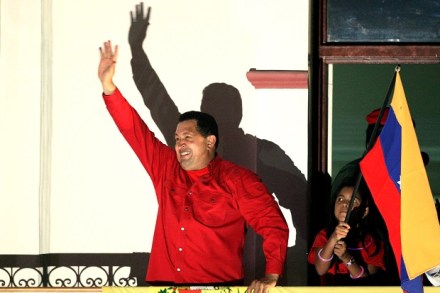
No serious person today views the Cuban Revolution as anything other than an impoverished tyranny – up to and including the leaders of that Revolution, who have been hastily turning toward capitalism since learning in 2009 that the island was on the brink of insolvency. It remains much easier to find useful idiots willing to defend Venezuela’s so-called ‘Bolivarian revolution’, however, which until recently was supposed to promise something better than its ossified Caribbean neighbour. Not for much longer, perhaps; for Venezuela is on the brink of a social explosion after 15 years of economic incompetence by Islington’s favourite petrocrat. It was reported this week that, absurdly, the most oil rich country in the world is facing food shortages.

Why can’t Ed Miliband accept that Labour voters want welfare reform?

David Cameron, it has been argued this week, has become detached from the views of Conservative voters on Europe. Amid the noise on the EU referendum, however, comes more evidence that it is Ed Miliband who has the greater problem of detachment from the views of his party’s supporters. While the Labour leader continues to battle on against welfare reform, a report from the Joseph Rowntree Foundation reveals just how far his voters have moved away from the idea of a redistributive welfare system as a force for good. Miliband’s problem is that he seems to believe he will be facing Mrs Thatcher at the next election. His strategy is built around fighting a Conservative party that is perceived to be harsh on the poor.

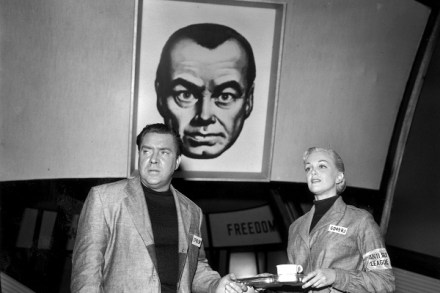
Do we need George Orwell Day?

I doubt that George Orwell needs ‘George Orwell Day’. Aldous Huxley, Henry Green, J.G. Ballard, each of those dead writers might benefit from a bit of sponsorship, and so might we. But Orwell? His spirit pervades our times, and with good reason. Orwell may have recognised some of the ill that our politics and era are producing, a point that Fraser reiterated in a Coffee House post earlier today. The ‘snooping bill’, CCTV, politically correct language – one might see fictional antecedents of those unpleasant realities in the pages of 1984. And perhaps social division caused by polarised wealth and the privations brought by economic decline can be seen in the pages of Down and Out in Paris and London and The Road to Wigan Pier.

A coalition of the complacent

I don’t like to think that I am rich. In theory, I know that in comparison to the vast majority of the world’s population, I am. But perhaps because of my politics, or perhaps because of journalists’ perennial pretence that we are tribunes of the people, I cannot see myself as wealthy, and would protest if others said that was just what I was. And in everyday dealings with others, I don’t feel as if I’m rich. I don’t have a car. My wife and I watch what we spend at the shops. I wish I could wine and dine every night, but, alas, I cannot. So I go on thinking that I am an ordinary member of the British middle class, until I start talking to people who are 25 years younger than me. I have learned to be careful about what I say.

George Monbiot joins the bourgeoisie

They always manage to pull something special out of the hat at Christmas, over at the Guardian. Last year it was that fantastic woman, an editor at The Ecologist, who agonised over what to buy her son for Christmas that was green, ethical, sustainable and non-materialistic, if you remember, when her son Dimitri just wanted a Nintendo DS and a mini car to drive to school in. This time it is George Monbiot’s special Boxing Day tale of how he came to be terrified by some poor people who were a bit rough looking and had tattoos and dirty fingernails. Utterly hilarious stuff from this supposed leftie; Moonbat (Stowe, Brasenose, scion of a Tory dynasty) was quite appalled and a little frightened.

Marriage tax breaks would alleviate child poverty, Mr Duncan Smith

The problem about relative poverty is precisely its relativity. The child poverty index, which measures whether a family’s income is below 60 per cent of the average, is a case in point; when incomes go down, bingo, so does child poverty. Which means that one sure fire if controversial way to improve the Government’s child poverty record would be to drive down everyone’s earnings. Iain Duncan Smith, Work and Pensions Secretary, made just this point yesterday when he made a speech about whether the definition should be rather wider than it is. ‘As we saw last year,’ he observed, ‘when the child poverty level dropped by two per cent – a fall in the median income may lift a family out of poverty on paper.

The Tories Vs Scotland

Interesting comments from Ruth Davidson, the chairthing of the Scottish Conservative Party, about her fellow countrymen. Only twelve per cent of Scots, she says, contribute more to the exchequer than they take out in the form of benefits. “The rest lie around on filthy sofas in subsidised homes, watching daytime television while farting, mainlining heroin and stuffing their sad grey faces with pies full of regurgitated sheep gizzards and Windolene.” Actually, I paraphrase a bit there. She didn’t say all that stuff. She just said almost nine out of ten Scots take more in benefits than they generate in wealth. This is, she says, shocking, and the Scots have too great a sense of entitlement.

Saving the children? Another child poverty report misses the bigger picture

Yesterday’s reshuffle isn’t the only story in town. Save the Children, a global charity, has today started to fundraise for children in Britain whom it says are affected by the government’s cuts. It is now run by Justin Forsyth, an ex-aide to Gordon Brown, who will have understood the political implications of the research: that coalition policies are making child poverty worse. The problem is that this analysis mistakes the nature of poverty in Britain, and – worst of all – the ways of alleviating that poverty. The root problem is a confusion of low income as a cause of these issues, rather than the symptom of wider social failings it often represents. This basic failure has characterised political programmes and grand government schemes for years.

Ignoring struggling families will be politically costly

More bad news for Britain’s families: new research shows that the cost of bringing up a child is an eye-watering £143,000. This piles more pressure on a government that already knows it has to do better to show it’s on the side of families struggling to make ends meet. Based on what parents say is essential, our report shows the minimum required to raise a child until the age of 18 today is £143,000 (including housing and childcare costs), which averages out at about £150 a week. The report also reveals that this cost is rising faster than inflation. The rising price of food, water and fuel contribute to this but it is the high cost of childcare in the UK that is the most significant driver of this above-inflation increase.

The hunger Games

One million children at risk of starvation in Niger; global food inflation last year of approximately 6 per cent; political instability linked to food price rises; drought in the US forcing corn prices up by 23 per cent; and more trouble down the road with Russia possibly banning wheat exports after failed harvests. Food is a very hot topic. The Prime Minister is right to use the Olympics to focus on global hunger. But while the main focus of this summit must be to address the problem in poor countries, it's important to remember that food poverty exists in every country – rich and poor – in the UK as well as Somalia. Food banks are emerging in our cities, and charities like Fair Share are becoming part of daily life in our most deprived communities.

Troubled families policy deserves cross-party support

The report published this week by Louise Casey, the Government’s 'Troubled Families' Tsar, has attracted a fair amount of criticism, but what it does illustrate is the chaotic lives these families lead – and the implausibility of thinking that their problems can be solved by the kind of flagship social policies traditionally favoured by either Conservatives or Labour. As Isabel put it, Conservative 'reform of the welfare system will pass many of the families by. In these stories there is no calculated decision to opt out of the labour market because of generous benefits, more an endless failure to cope with life and the way it has worked out'.

A more ambitious approach to fighting poverty

‘You attack poverty by knowing what you do changes the lives of those people.’ In that phrase on this morning’s Today programme, Iain Duncan Smith summed up the difference between his approach to combating poverty and Gordon Brown’s. As Fraser has put it, Brown saw poverty as ‘a statistical game… his great spreadsheet puzzler’. The aim of the game? To reduce the number of people living in households below the ‘poverty line’ — set at 60 per cent of median income. The easiest way to achieve this is to move people from just below the line to just above it by giving them a bit of extra cash (in the form of tax credits). Brown called this ‘lifting people out of poverty’.

A diplomatic racket

In my Observer column on Sunday I mentioned in passing that in a crisis, elites have to be able to show that they are sharing the plight of the masses. Asking for 'equality of suffering' is too much, you will never have that, but there has to be a sense that — to coin a phrase — we are all in this together. Christine Lagarde had just lectured the Greeks on why they must pay their taxes. She was in no way inhibited by the knowledge that as an official of the IMF she was a 'diplomatic agent' and hence exempt from taxes under the terms of the 1961 Berne Convention. The inevitable accusation from the Greeks that she was a hypocrite so lost in a world of privilege she could no longer know a double-standard when she saw it, took her and her colleagues aback. But not all of them.

Sadly, protest music is alive and well

There is plenty of nostalgia around in this Jubilee Weekend. Any look back on 60 years brings temptation to think that the past was better than the present. This is what Woody Allen calls ‘golden age’ fallacy, which is defined (in his Midnight in Paris) as an age-old and ‘erroneous notion that a previous time period is better than the one one’s living in.’ This disorder was on show during BBC 2’s Review Show last night, where guests were bemoaning the death of protest music.   The panel (dominated by Kirsty Wark and music critic Paul Morley) were discussing BBC 4’s 3 part documentary, Punk Britannia. The first part of this series is available on i-Player and it is worth watching as a piece of cultural – and political – history.

IDS’s important call for ‘social value’

It's the same for celebrities and policymakers: talking about marriage gets you headlines. Hence why the newspapers have concentrated on Iain DuncanSmith's remarks today that ‘marriage should be supported and encouraged’ by the state. But there were two other parts of IDS's speech — and the ‘social justice strategy’ document behind it — that I found more arresting. The first was his incisive attack on the Gordon Brown approach to fighting poverty (define it statistically and then massage the statistics so that they work in your favour), which deserves repeating: ‘First, we have seen a social policy overwhelmingly focussed on moving people above the income poverty line. A laudable ambition surely?

Storm in an Indian teacup

So, does India want the UK’s aid or not? If you believe the Indian finance minister, Pranab Mukherjee, the funds are unnecessary, ‘peanuts’ even. The Daily Telegraph reports that British ministers ‘begged’ the Indian government to take the money. The story is likely to garner attention, especially as aid to a growing power like India is a contentious proposition. But before taking the Indian Finance Minister's word — and the Telegraph's reporting — as truth, it is worth looking at a few facts. First, Mukherjee made the statement in 2010, as reported in the Financial Times at the time.