Police

Can Trump really send troops to Chicago and New York?

From our US edition

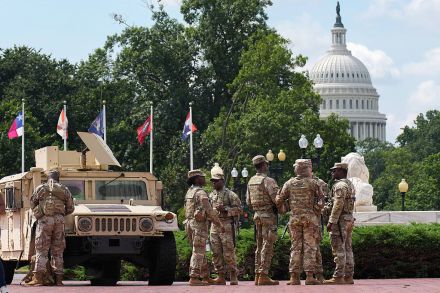
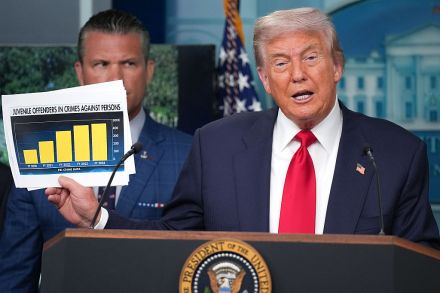
President Trump has once again identified a critical national need: this time, it is the desperate plea for backup from overwhelmed local police, particularly in large metropolitan areas.  Under the Home Rule Act, the President possesses clear statutory authority to exercise at least temporary law enforcement authority over the nation’s capital city by federalizing the Washington D.C. police force and deploying 800 National Guard troops. The city’s own crime statistics depict a municipality raging out of control. Homicide rates have doubled in the last ten years. Washington, D.C. is one of the fifty most dangerous cities in the world and the fourth most dangerous city in the nation.

National Guard

Of course shoplifters are scumbags

A familiar cliché, which in history has been disproved time and again, is that a police force cannot operate without the consent of the people. Tell that to the residents of what was once East Berlin. But that old canard raises a different problem. Which people are giving the consent? The ones who abide by the law, or the ones who are disposed to breaking it? I wondered about this when I read two stories over the weekend, both of which suggested to me that the police have long since lost the support of that first group of people, that more numerous community, the people who don’t habitually break the law.

Why Trump is right to take over DC

From our US edition

Donald Trump's press conference announcing a federal takeover of Washington, DC's police force was packed to the gills with White House reporters – many of whom live in DC and the surrounding area, and are more than familiar with the degradation of law and order in the region. But just because they know it's bad doesn't mean they want to give Trump any credit for trying to clean up the city – in fact, they're likely to attack the move from both sides. The ramifications of Trump's takeover, under Section 740's emergency rule, will have undetermined ripple effects in the capital city, but the initial reaction to it illustrates the difficult position in which it puts the president's critics.

Donald Trump on DC crime (Getty)

My tips to avoid arrest by the Met

An interesting event occurred in London at the weekend. A young man who goes by the name of Montgomery Toms attended a Pride parade. But he did not attend in order to dress in bondage gear while shouting ‘Love is love’ and ‘Free Palestine’. Instead he went with a sandwich board which had a trans flag on it, followed by an equals sign and then the words ‘mental illness’. This is a tactic pioneered by an American man known as ‘Billboard Chris’, because his name is Chris and he wears a billboard. Chris’s schtick is to walk around with a sign saying things like ‘Children cannot consent to puberty blockers’.

My daring escape from the Italian police

Dante’s Beach, Ravenna I often feel as if I know what it was like to be a member of La Résistance in Nazi--occupied France because I have three disco-age daughters. Last week, the call-to-action stations flashed up on WhatsApp at 03.06, just as the cockerels were beginning to crow and the enemy was setting up his road blocks. ‘Papà, can you come and get me?’ It was Rita, aged 16. ‘Where are you?’ ‘Marina.’ Cristo bloody Santo! A 25-minute drive away. ‘I can walk towards you,’ suggested Rita, the little sweetie. ‘No! Not if you’re wearing a miniskirt,’ I messaged back. ‘Or hot pants.

Should you be arrested for reading The Spectator?

Regular readers will know that I have an obsession with home burglaries. Specifically those occasions when a burglar goes into a British home, helps himself to the contents of the household and finds that the last people on his case are the British police. Scanning some recent burglary statistics, I was struck again by the almost miraculous failures of force after force. Take Kent Police. In a recent breakdown of crime statistics, the force managed a career high. In one of the areas where they are meant to have oversight, there were 123 home burglaries. Of those 123 burglaries, they managed a great, round zero in their detection rate of the burglars. Or 0.

cherelle parker

Will Cherelle Parker become the next ‘America’s mayor’ in Philadelphia?

From our US edition

So far this year, Philadelphia has seen more than two shootings a day. Among the statistics was a local rapper known as Phat Geez. Here’s the message in his song “No Gunzone”: “Killings all up in my city / Can’t get enough of it / Facing all of these problems / I cannot run from it.” Derrick Gant was his real name. Dead at twenty-eight. So now comes Cherelle Parker, only a few months into her first term as Philly’s Democratic mayor, trying to plug the dike against a flood of lawlessness. Looking across her native city, she says that too much of what she sees is never OK, no matter concerns, including hers, about “root causes.

Is the end of ‘non-crime hate incidents’ in sight?

Could the end of non-crime hate incidents (NCHIs) be in sight? As the head of the Free Speech Union, I’ve been campaigning for their abolition for five years and there was a breakthrough this week with the Conservatives unveiling a plan to scrap them. Chris Philp, the shadow home secretary, is going to table an amendment to Labour’s Crime and Policing Bill that would make it illegal in almost all circumstances for the police to collect or retain personal data relating to hate incidents where no laws have been broken. For those unfamiliar with this Orwellian concept, an NCHI is a record the police make when someone accuses you of a ‘hate crime’ and they can find no evidence a crime has been committed. That sounds odd.

How I became a missing person

The Forcan Ridge off Glen Shiel can be a tricky place this time of year. There wasn’t a huge amount of snow, but the rocks in places were encased in ice. Without crampons, an ice axe and a head for what you are doing there are plenty of opportunities to fall to your death, but I didn’t. I bagged my hills, drove back to the holiday cottage where I was staying, had supper and turned in for an earlyish night. The only casualty was my phone which I had sat on while descending a rock, delivering the fatal blow to an already cracked screen. So I emailed my wife from my laptop instead, regretting that there would be no glorious photos today. Just after midnight the phone started to ring. I fumbled with it but there was no way to answer it. Then it rang again, and again, and again.

Is Britain ready for blasphemy laws?

In its infinite wisdom, the Labour government appears to be reconsidering the introduction of a blasphemy law in the UK. It has picked up this idea despite it being so idiotic that it was even rejected by the last Conservative government. That well-known theologian Angela Rayner has decided to set up a council to look into the question of ‘Islamophobia’. As mentioned, there was a push to do this during the Conservative era, when a committee including some of the worst people then in public life – Dominic Grieve, Naz Shah, Anna Soubry – looked into the same thing. Their scholarship foundered, as it always will, on how you protect Muslims without simply protecting the feelings of Muslims.

Letters: The case for assisted dying

Craic down Sir: If Ireland had been investing in infrastructure as Ross Clark writes (‘Bog down’, 21 September), Dublin would have a metro, Galway a ring road, and primary school parents wouldn’t be forced to pay for basic necessities. And when the only local hotel cancels wedding and birthday parties because government has block-booked it for migrants and refugees, no wonder people beyond the Dublin bubble are mutinous. Rural areas often lack broadband or even piped water (just ask Melissa Kite) and where the blue pipe does reach, ‘boil water’ orders are common. Corporation tax is 27 per cent of government revenue (per head of population, more than four times that in France or Germany) and 90 per cent of it is paid by foreign multinationals.

British policing needs a total rethink

If you started again with a clean slate, a blank sheet of paper, you would never design a system of policing like this.  It’s a system – in England and Wales – where there are 43 ‘territorial’ forces. No matter how big or small, each force has its own leadership structure, specialist units and support functions, such as finance, vetting and human resources. For instance, there’s Warwickshire constabulary with just 1,126 officers, and neighbouring West Midlands Police, with 8,000. They work together at times, but they are led, managed and organised in separate ways.  The most glaring discrepancies are in the capital.

Calm down about the Notting Hill Carnival

There was recently a mass public party at which all sorts of offences were committed. As innocent attendees cut loose and jived, shadier actors took advantage. There was a burglary, a robbery, 19 drug offences, 26 acts of theft and no fewer than 30 acts of violence against individuals. There were also two sexual offences – shameful. What hell was this? Where did all this moral abasement occur? Must have been at the Notting Hill Carnival, right? Actually, no – it was at Glastonbury. Yes, at this year’s Glasto, famously the hangout of middle-class white folk who like rock, crimes were committed. In those tent cities, amid the thick haze of Mary Jane, things got stolen, people were punched, women were abused. So should we shut it down?

Everything is under (crowd) control: the evolution of riot response

From our US edition

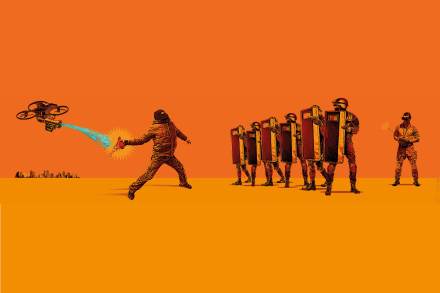
Worldwide unrest is great for those in the riot-gear business. Shields and batons have historically cornered the market as the cutting edge in crowd control, but in recent years it’s evolved to include robots, armored trucks and drones. Milipol Paris is the homeland security expo of all expos. This is the kind of giant showroom where you will find law enforcement and private security agents checking out the newest innovations in robot dogs, armored vehicles and unmanned turrets as if they’re going from painting to painting at the Louvre. The Milipol expo comes around every two years. In 2023, you would have seen men plugged into VR headsets killing terrorists with a pistol.

crowd

Tales with a twist: Safe Enough and Other Stories, by Lee Child, reviewed

Lee Child has sold more than 200 million books. He reckons his royalties at about a dollar per book. He doesn’t write short stories to make money. He contributes to anthologies, largely pro bono. ‘Fabergé eggs they ain’t,’ he says, in the introduction to this collection of 20 stories, but they are real gems nonetheless. With no global readership to worry about and no commercial interests involved, Child was free to have fun. And fun he has with the short story form, shooting from the hip – ‘no need’, as he says, ‘to save anything for Chapter 17’. The trademark economy of style is faultless, each cop, hitman, fixer or judge fully fleshed out in just a few words; the scaffolding for each narrative constructed with the absolute minimum of material.

Clear, thorough and gripping: BBC2’s Horizon – The Battle to Beat Malaria

If you transcribed the narrator’s script in almost any episode of Horizon, you’d notice something striking: an awful lot of the phrases would end with a colon, and for one obvious reason: to play a neat trick on the viewers: that of making them keen to hear what comes next. (You get the idea.) Monday’s programme therefore began by explaining that the mosquito is ‘the target of one of medical science’s greatest quests: the battle to save millions of lives and end a scourge that has shaped human history: malaria’.

Why state bureaucracy is crucial to our happiness

Most days, outside the local courtroom where I live in Finchley Central, a man holds up a placard that says in big black capitals: ALL OUR BRAINS ARE MICROCHIPPED BY THE SECURITY SERVICES. It’s a foolish conspiracy theory, of course, but it’s also a symptom of the fear and loathing of the state which has grown in recent years and which, according to this lucid and persuasive book, threatens to return us to a time when we were governed by the whims of a monarch whose wishes were implemented arbitrarily by his family, friends and flatterers. The problem, say Stephen E. Hanson and Jeffrey S. Kopstein, is not that this presages an end to democracy.

Letters: Rod was right about Bob Marley

Copping out Sir: Both the Police and Crime Commissioner Dr Andrew Billings and your recent correspondent John Pritchard are partly right (Letters, 16 and 23 March). Policing has gone wrong for two reasons. First, the massive cuts in staff instigated by Theresa May as home secretary resulted in a large number of the most experienced officers leaving. Even the replacement of these officers under Boris Johnson took time and could not make up for the loss of experience. Secondly, the inspection regime under the Inspectorate of Constabulary fails to address the crimes that matter to the public. During the years I was PCC for the Thames Valley, I made household burglary, theft, violence on the streets and rural crime our priorities. That was what the vast majority of the public wanted.

If you hate the Irish, you’ll adore this play

Faith Healer is a classic Oirish wrist-slasher about three sponging half-wits caught in a downward spiral of penury, booze, squalor, sexual repression, bad healthcare, murderous violence and non-stop drizzle. The mood of grinding despair never lets up for a second as the healer, Frank Hardy, along with his moaning wife and their Cockney sidekick, motors around the British Isles trying to cadge pennies from cripples in exchange for bogus cures. Every cliché in the rich thesaurus of Celtic misery is brought together in this rancid melodrama about mob justice.

A ride-along with the King County Sheriff’s Office

From our US edition

There are probably better ways to start your fifteen-hour work shift than to hear the words: “Fire at the Renton Avenue gas station. Pump still leaking fuel. Possible injuries. Attend scene immediately.”  That was the stark dispatch that came over the radio of the King County Sheriff’s car driven by thirty-two-year-old Deputy Cy Brame, one of 720 law enforcement officers who serve the needs of half a million people living in the sprawling unincorporated areas around Seattle. I recently joined him on a characteristically drizzly early March afternoon on his beat behind the wheel of a black Ford Interceptor SUV. “You’re lucky,” said Deputy Brame, with a thin smile. “The last ride-along I had was here all day without an emergency.

seattle