Police

The BBC at its nation-unifying best

Children of the Blitz began with the surprising news – to me anyway – that while 800,000 British children in places likely to be bombed were evacuated during the war, two million weren’t. The evacuees’ stories have long been a TV staple, but this riveting documentary was the first programme of any kind I can remember about those who stayed at home. The experience was recalled with extraordinary vividness by people mainly in their nineties or beyond, all of whom gave the type of revelatory interview that programme-makers don’t get merely by pointing the camera and asking questions, but through the careful building of wholly justified trust.

Letters: No, pensioners don’t ‘have it easy’

Same old Sir: In Michael Simmons’s otherwise excellent yet alarming essay on ‘Benefits treats’ (11 April), one sentence spoiled the rest of my day: to say that pensioners are ‘protected from and by every government decision’ is maddening nonsense. Pensioners are affected in exactly the same way as everyone else whenever the government of the day changes anything. Every time we switch on the heating, shop, fill up the car, pay any bill, we are suffering under the same government-fuelled inflation as everybody else. The chaotic finances of local government mean our council tax goes up along with everybody else’s. Every time tax thresholds are frozen, many of us pay more tax.

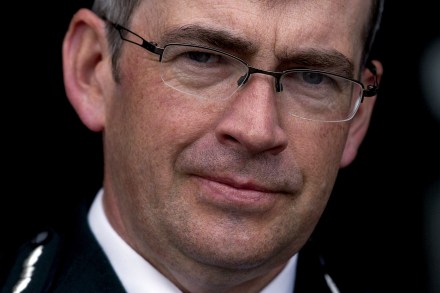
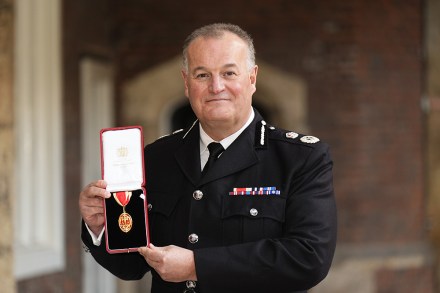
‘Here’s a novel concept – arrest bad people’: how Sir Stephen Watson turned around Greater Manchester Police

Sir Stephen Watson, Chief Constable of Greater Manchester Police (GMP), is Warrington-born, Rhodesia-raised. His father was an engineer in the Royal Navy and his work took the family to South Africa, South West Africa and then, when Sir Stephen was still a schoolboy, the breadbasket. The Watson family stayed in Rhodesia until Robert Mugabe became prime minister in 1980 and threw them out. ‘I saw the collapse of policing,’ Sir Stephen says. ‘I saw the collapse of the rule of law. I saw the collapse of health systems, of education systems, of legal systems.’ He also saw what Britain could lose. ‘I think there is a complacency in the UK. We take things for granted. I like to quote Kipling on this: “What should they know of England who only England know?

Welcome to XL bully death row

‘There’s no way of finding out what’s really happening in there,’ says Aaron Rainey, an XL bully expert who advises police forces and dog owners across the UK. ‘Nobody knows where the kennels are – the police keep the information under wraps in case people turn up and try to break out their XL bullies.’ Rainey was preparing to make a trip to assess an XL bully in Leicester, three hours from the dog’s previous home. He is concerned about the number of volunteers working in kennels housing XL bullies: many of them are college students trying to bolster their CV ahead of applying for veterinary studies at university. They are serving as prison guards to the UK’s most dangerous dogs. Welcome to XL bully death row.

Am I a libertarian after all?

I have never been the greatest fan of libertarianism as a political ideology. Libertarians seem to me to be the bisexuals of politics – they want a bit of everything. But even I felt a slight twinge of libertarian sentiment this week when I read some remarks by our Home Secretary, Shabana Mahmood. The Labour minister had told MPs that artificial intelligence is an ‘incredibly powerful tool that can and should be used by our police forces’, though she added that it must be regulated in a way that is ‘always accurate’. I have never before read the words ‘police’ and ‘always accurate’ in the same sentence, so the novelty grabbed my attention.

Our duty to British Jews

Are Jews safe in Britain? To even have to ask the question is extraordinary. But a recent survey has found that half of British Jews feel they do not have a long-term future in the UK and 61 per cent have considered leaving. Those figures are shocking, but not surprising. Since 7 October 2023, anti-Semitism in Britain has reached record levels. Violence against British Jews is more common than at any time since their readmission in the 1650s. The survey was conducted between the Heaton Park synagogue terrorist attack in October and the sentencing of Walid Saadaoui and Amar Hussein in December for plotting to open fire on a march against anti-Semitism.

Could ‘Your party’ become the shortest-lived political party in British history?

Party poopers ‘Your party’ holds its inaugural conference this weekend in a state of internal wrangling. Could it become the shortest-lived political party in British history? It was registered on 30 September, meaning it will have to survive until 6 June next year to outlive Change UK – the anti-Brexit party launched in February 2019. It was formally registered on 15 April that year and dissolved on 19 December after flopping in the general election. Other failed political start-ups lasted a surprising length of time: — Veritas, a Eurosceptic party founded by former Labour MP Robert Kilroy-Silk in 2005, was eventually merged with the English Democrats in 2015.

How bad do things have to get before the police show up?

Earlier this year, I wrote here about the arsonist who'd left our neighbourhood looking post-apocalyptic. In the months that followed, the pyromaniac grew ever more reckless. Initially, he'd stuck to torching vehicles on the road, which was bad enough. But then he took it a step further. He set fire to a car on a driveway, which in turn set the house alight. The young family, who were asleep upstairs, escaped with their lives, but their home was destroyed. A collection was started, and we dropped in some cash. The organiser said that in 20 years in the area, he'd never seen things as bad as they were now. He'd installed CCTV after burglars had smashed their way through the bifold doors – now it might come in handy for identifying the pyro.

Letters: the Church of England still has something meaningful to say

Moscow mule Sir: While visiting Russia, James Delingpole learned from the patriarchate’s press officer that under communism the Russian Church wasn’t allowed to exist (‘Letter from Moscow’, 27 September). However, that doesn’t accord with my own experience of being in the USSR during the Brezhnev era. As a student, I visited the 14th-century Zagorsk monastery complex just outside Moscow one Sunday and was spellbound by the heavenly chant of the Orthodox liturgy which lifted my soul. The church was full of babushkas as well as younger believers crossing themselves and kissing the icons. For all his faults and human-rights violations, Brezhnev, unlike Vladimir Putin, had not been indicted by the International Criminal Court for war crimes.

Crime and no punishment in Khan’s London

Those of us trapped in Mayor Sadiq Khan’s low traffic neighbourhood scheme are now obedient, resigned. We expect a car journey of under a mile to take 40 minutes. We don’t hope for anything more. On Sunday, around five o’clock, my son and I stuck fast in Dalston Lane, but as we settled down to wait in a mist of carbon monoxide, there was a commotion up ahead. Down the wrong side of the road, horn blaring, lights flashing, came a Mercedes G-wagon, matt black with that handy snorkel up the side, the favourite ride of north London’s gangsters. It was interesting how calm everyone was about it, how unsurprised. A souped-up tank of a car coming at us head-on, and no one shouted or beeped.

Letters: The shale gas illusion

The shale illusion Sir: Your leading article rightly makes the case for extracting as much of our North Sea resources as we can (‘All at sea’, 6 September). However the enthusiasm for developing shale gas is misplaced. As energy minister, I commissioned work to establish how much of the onshore gas in-place could be recovered. The truth is just a small proportion – maybe 10 per cent. An energy policy based on shale would put our energy security at risk. Economically, at a time when global gas prices are expected to fall, UK shale would simply not be competitive and projects would fail. It is no accident that none of the large energy companies thought it was worth seriously exploring shale.

How volunteer groups are taking the place of our absent police

Chris Hargreaves used to be a wellness coach with a promising future in reality television. In 2023, he starred in E4’s Big Celebrity Detox and tried to cleanse Kerry Katona’s soul with piñón blanco seeds. Today, he leads The Shield: a private volunteer police force of hundreds of officers. They plan to begin patrolling Britain’s streets imminently. Hargreaves and his team regard Britain as a place of increasing lawlessness. Many would agree. Shoplifting is at record highs, prosecutions are near record lows and people are asking where the authorities have gone. According to a poll by Merlin Strategy for The Spectator, only around half of British people have spoken to a police officer in the past 12 months.

Of course shoplifters are scumbags

A familiar cliché, which in history has been disproved time and again, is that a police force cannot operate without the consent of the people. Tell that to the residents of what was once East Berlin. But that old canard raises a different problem. Which people are giving the consent? The ones who abide by the law, or the ones who are disposed to breaking it? I wondered about this when I read two stories over the weekend, both of which suggested to me that the police have long since lost the support of that first group of people, that more numerous community, the people who don’t habitually break the law.

My tips to avoid arrest by the Met

An interesting event occurred in London at the weekend. A young man who goes by the name of Montgomery Toms attended a Pride parade. But he did not attend in order to dress in bondage gear while shouting ‘Love is love’ and ‘Free Palestine’. Instead he went with a sandwich board which had a trans flag on it, followed by an equals sign and then the words ‘mental illness’. This is a tactic pioneered by an American man known as ‘Billboard Chris’, because his name is Chris and he wears a billboard. Chris’s schtick is to walk around with a sign saying things like ‘Children cannot consent to puberty blockers’.

My daring escape from the Italian police

Dante’s Beach, Ravenna I often feel as if I know what it was like to be a member of La Résistance in Nazi--occupied France because I have three disco-age daughters. Last week, the call-to-action stations flashed up on WhatsApp at 03.06, just as the cockerels were beginning to crow and the enemy was setting up his road blocks. ‘Papà, can you come and get me?’ It was Rita, aged 16. ‘Where are you?’ ‘Marina.’ Cristo bloody Santo! A 25-minute drive away. ‘I can walk towards you,’ suggested Rita, the little sweetie. ‘No! Not if you’re wearing a miniskirt,’ I messaged back. ‘Or hot pants.

Should you be arrested for reading The Spectator?

Regular readers will know that I have an obsession with home burglaries. Specifically those occasions when a burglar goes into a British home, helps himself to the contents of the household and finds that the last people on his case are the British police. Scanning some recent burglary statistics, I was struck again by the almost miraculous failures of force after force. Take Kent Police. In a recent breakdown of crime statistics, the force managed a career high. In one of the areas where they are meant to have oversight, there were 123 home burglaries. Of those 123 burglaries, they managed a great, round zero in their detection rate of the burglars. Or 0.

Is the end of ‘non-crime hate incidents’ in sight?

Could the end of non-crime hate incidents (NCHIs) be in sight? As the head of the Free Speech Union, I’ve been campaigning for their abolition for five years and there was a breakthrough this week with the Conservatives unveiling a plan to scrap them. Chris Philp, the shadow home secretary, is going to table an amendment to Labour’s Crime and Policing Bill that would make it illegal in almost all circumstances for the police to collect or retain personal data relating to hate incidents where no laws have been broken. For those unfamiliar with this Orwellian concept, an NCHI is a record the police make when someone accuses you of a ‘hate crime’ and they can find no evidence a crime has been committed. That sounds odd.

How I became a missing person

The Forcan Ridge off Glen Shiel can be a tricky place this time of year. There wasn’t a huge amount of snow, but the rocks in places were encased in ice. Without crampons, an ice axe and a head for what you are doing there are plenty of opportunities to fall to your death, but I didn’t. I bagged my hills, drove back to the holiday cottage where I was staying, had supper and turned in for an earlyish night. The only casualty was my phone which I had sat on while descending a rock, delivering the fatal blow to an already cracked screen. So I emailed my wife from my laptop instead, regretting that there would be no glorious photos today. Just after midnight the phone started to ring. I fumbled with it but there was no way to answer it. Then it rang again, and again, and again.

Is Britain ready for blasphemy laws?

In its infinite wisdom, the Labour government appears to be reconsidering the introduction of a blasphemy law in the UK. It has picked up this idea despite it being so idiotic that it was even rejected by the last Conservative government. That well-known theologian Angela Rayner has decided to set up a council to look into the question of ‘Islamophobia’. As mentioned, there was a push to do this during the Conservative era, when a committee including some of the worst people then in public life – Dominic Grieve, Naz Shah, Anna Soubry – looked into the same thing. Their scholarship foundered, as it always will, on how you protect Muslims without simply protecting the feelings of Muslims.

Letters: The case for assisted dying

Craic down Sir: If Ireland had been investing in infrastructure as Ross Clark writes (‘Bog down’, 21 September), Dublin would have a metro, Galway a ring road, and primary school parents wouldn’t be forced to pay for basic necessities. And when the only local hotel cancels wedding and birthday parties because government has block-booked it for migrants and refugees, no wonder people beyond the Dublin bubble are mutinous. Rural areas often lack broadband or even piped water (just ask Melissa Kite) and where the blue pipe does reach, ‘boil water’ orders are common. Corporation tax is 27 per cent of government revenue (per head of population, more than four times that in France or Germany) and 90 per cent of it is paid by foreign multinationals.