Podcasts

Insane and fascinating: BBC World Service’s Lazarus Heist reviewed

The narrative podcast remains a form in search of a genre. The template set by the hit show Serial — enterprising American journalists with janky piano theme tune shed new light on tantalising murder — still predominates seven years on. To this we can add the format pioneered by S-Town (initial murder investigation subsides into rich human detail) and, more recently, the excellent Wind of Change (intriguing what-if maps cultural and macropolitical shifts, with bonus CIA window-dressing). I remain sceptical about the form’s usefulness as a way of breaking hard news. Caliphate, the New York Times jaw-dropper on the Islamic State, is less gripping now its key source has been revealed as a fraud.


So many stories are boring

From our US edition

We need to stop letting people ‘tell their stories’. Why should random people get half an hour to tell what Oprah would call ‘their truth’? There are so many podcasts out there that simply broadcast people’s rambling anecdotage about the worst thing that ever happened to them — going for that salacious, daytime-TV vibe, but with the authority of journalism, which means narrating traumatic and often outlandish stories while the hosts offer weighty reflections like ‘huh’ and ‘crazy’. The moment when I gave up on the podcast Committed, a series dedicated to letting couples tell their ‘hilarious, heartbreaking, and inspiring stories’ with no journalistic interference whatsoever, was in an episode called ‘No More Secrets’.

podcast mckay truth

Seldom less than gripping: Banged Up podcast reviewed

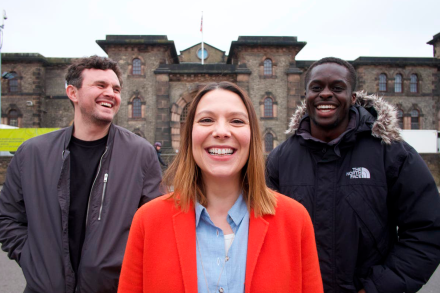
Prison-based podcast Banged Up, now in its second series, is far more uplifting — and less soapy — than its name suggests. It begins with the tacit assumption that, if you haven’t personally been incarcerated, you probably have at least a dozen questions you’d want to ask someone who had. Is the food really awful? How likely are you to be beaten up? Is there a lending library? (I’d start with the last.) Banged Up has the answers to plenty more besides. The podcast is hosted by a prison lawyer named Claire Salama and two ex-inmates, a former footballer, Mike Boateng, known as ‘Boats’, and university-educated Rob Morrison, who describes himself as ‘probably not their [prisons’] target market’.

This is the golden age of the grifter – and there’s a podcast for every con

Truly we are living in the golden age of the grifter. From Fyre Fest to the WeWork empire to Theranos to the personal development cult NXIVM, we see a charismatic person promising us endless growth, pleasure or wealth and we give them all our money. The con-man economy doesn’t just stop at the men and women leading these frauds and profiting wildly from them. (Some of them go to jail, yes, but WeWork leader/charlatan Adam Neumann was paid many millions of dollars just to go away.) There is also now a podcast, usually sponsored by a security system, for every con.

Comfortably numb: Sam Harris on meditation

From our US edition

Sam Harris has been in several tangles in his busy career. This is to be expected from a leader of the New Atheist movement, a vocal critic of Islam (he called the term ‘Islamophobia’ a ‘pernicious meme’), a member of the Men’s Movement (shocker: some non-men found it anti-woman), and a gleeful saboteur of the notion of free will. But for years now, Harris has been using his background in neuroscience and meditation to help people untangle their minds through his podcast Making Sense. It’s hard to find a podcast about meditation that is not made by or for quasi-spiritual, anti-vaxxer yoga moms. Making Sense is for the more serious inquiring mind. Harris, dry and wry, discusses not only meditation but philosophy, science, politics and ethics.

sam harris

Refreshingly unfettered: LRB Podcast’s Close Readings on Patricia Highsmith

I’d forgotten what a rich and deep and characterful voice John le Carré had. Listening to author and lawyer Philippe Sands’s Archive on 4 programme on him last week, I was struck by how much more engaging it was than almost every other male voice on the radio these days. Le Carré’s weren’t simply the measured tones of a mid--century public schoolboy. There was a real spirit in his voice, something melodic, which, in a world of Nick Grimshaws and Greg Jameses, stopped me in my tracks. Le Carré’s voice was undoubtedly part of the armoury that enabled him to win people over, even ‘to manipulate crowds’.

The Springsteen-Obama podcast is rambling and sloppily edited

From our US edition

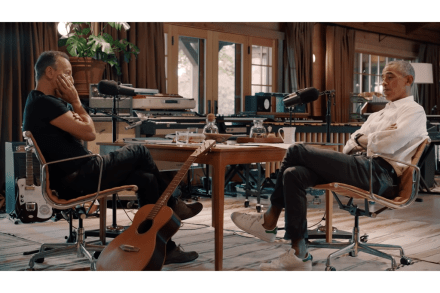
I was not born in the USA. But I am, technically, American — or at least, one half of me is. My mother hails from Ohio, where some of my family still live today. As a kid, I’d jet into the States on my American passport and back out again on my British one. This strange part-tourist part-citizen relationship ended up making me doubly nostalgic for the mirage of America. So for all my English cynicism, when I heard about Renegades, the new podcast by Barack Obama and Bruce Springsteen, I actually thought it sounded quite appealing. I’m a sucker for what you might call Obamaganda or Springspeak — that kind of folksy, wistful, idealistic American rhetoric, the vocabulary of which consists largely of better angels, bridges, and melting pots.

bruce springsteen barack obama

Claudia Winkleman’s new Radio 2 show gets off to a brainless start

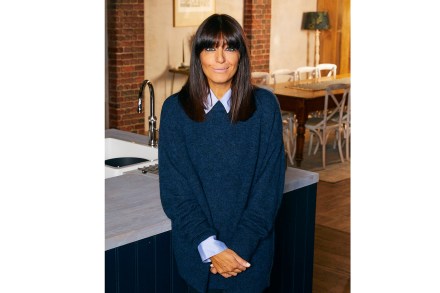
Last Saturday on Radio 2 Claudia Winkleman was inaugurated as the host of what was formerly Graham Norton’s mid-morning spot. She announced her arrival by playing ‘Help!’ by the Beatles and offering a line-up comprised solely of fellow Saturday-night TV presenters. Here was Sir Tom Jones, calling in from ‘a terrace overlooking the Thames’ and repeating more or less the same interview he had delivered on Graham Norton’s TV show last month. Half an hour later came David Walliams, and to round things off Ant & Dec were prevailed upon to talk about their ‘jampacked’ ITV show later on that day. ‘How do you not unravel doing it?

The funniest current affairs show since Brass Eye: Into the Grey Zone reviewed

It was something a friend said to me about The Revenant, Leonardo diCaprio’s bloody-minded and brutal Oscar vehicle: ‘The problem with the film is once you start laughing, you can’t stop. And for me, that moment was the second time he fell off a cliff.’ I thought about this a lot listening to Into the Grey Zone, a new podcast hoping to educate its audience about the new forms of constant pseudo-warfare that modern states engage in. This is the world of nerve poisoning in Salisbury, airspace incursions over Taiwan, cyberattacks, mass disinformation and remote interference. None of these things can be considered open warfare but taken together, the podcast implies, they do not suggest we are in a state of perfect peace.

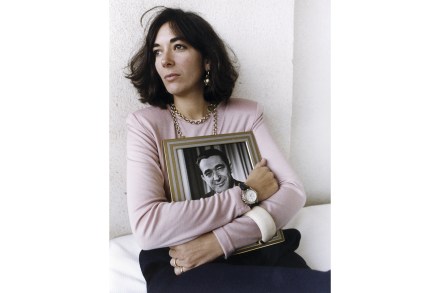
Enjoyably tasteless: Power – The Maxwells reviewed

This year marks three decades since Robert Maxwell fell naked to his death from the deck of his yacht, The Lady Ghislaine. Power: The Maxwells is the latest contribution to the never-ending autopsy of Maxwell’s character and the circumstances of his death. It follows a now well-established formula, juxtaposing the lives of Ghislaine and her father, marvelling at how against seemingly unbeatable odds she can have managed to disgrace the good name of Maxwell, and throwing in the occasional Trump soundbite as a garnish of relevance.

Is the hottest new podcast, The Apology Line, worth sticking with?

With the arts world still largely in hibernation, the launch of a big podcast is as close as we get to a big cultural event these days. Such is the case with The Apology Line, the latest serial podcast from Amazon-owned Wondery, which shot to the top of the ‘most downloaded’ charts last week and has sat there comfortably since. The Apology Line tells the story of a 1980s experimental art project in which a Manhattan-based provocateur, Allan Bridge, issued an open invitation to the city’s criminals (‘amateurs, professionals, white collar, blue collar’) to record their anonymised confessions to an unmanned phone line.

No more echo chambers: the internet’s best left-wing thinkers

As culture and politics become ever more polarised, it's tempting to retreat into the reassuring hum of our own echo chambers and positive feedback loops. But this reluctance to engage with 'the other side' can only corrode civil discourse. As regular readers of The Spectator will know, listening to opposing views in good faith allows us to test our convictions, or as Bertrand Russell put it, 'those who feel certainty are stupid, and those with any imagination and understanding are filled with doubt and indecision.'  In these hyper-partisan times, it's not surprising perhaps that there are so few platforms where opposing intellectual heavyweights can go head to head — who wouldn’t want to see Douglas Murray and Paul Mason debate identity politics for instance?

Pleasant, cheerful and a little exhausting: Graham Norton on Virgin Radio reviewed

In my parents’ house, the radio is always tuned to one of two stations: Magic FM and LBC. When Magic is playing, it wafts through the kitchen like an over-scented camomile candle. LBC, by contrast, hits you like a strong gust of Novichok: it is undiluted poison, carefully synthesised from the DNA of hysterical US shock jocks. At times, they feel like the two paths for modern radio: a draught of herbal tea or a fit of apoplexy; James O’Brien having kittens or ‘Broken Strings’ playing constantly, for ever. Where does that leave the chatty host, the one who natters cheerfully while you potter aimlessly, who rabbits on while you faff about doing nothing?

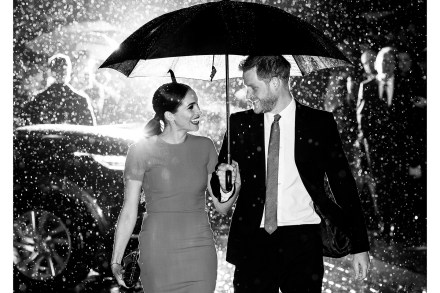
Englishness vs California dreaming: Meghan and Harry’s Archewell Audio reviewed

On Archewell Audio, Harry and Meghan’s new podcast, ‘love wins’, ‘change really is possible’, and ‘the courage and the creativity and the power and the possibility that’s been resting in our bones shakes loose and emerges as our new skin’. There’s no room for Christmas — the first episode dropped as a ‘Holiday Special’ — but there is for kindness, compassion and more than a few bromidic interjections of ‘So true!’ The podcast purports to ‘spotlight diverse perspectives and voices’ and ‘build community through shared experiences, powerful narratives, and universal values’.

It’s good for your elf

From our US edition

Ever since I found out Santa Claus wasn’t real a year ago, the idea of him began to give me the creeps. Who is this immortal jolly elf, and what does his business of breaking and entering once a year even have to do with Jesus’s birthday, or even St Nicholas? Christmas is a season of traditions, both personal and religious. Each year, its celebrants decorate their gingerbread houses, wrap their presents, decorate their fir trees, drink their eggnog and see Santa Claus at the mall. Some people even go to church.

christmas past

The world’s greatest podcast: Dan Carlin’s Hardcore History reviewed

It’s well known that you should never meet your heroes because they will only disappoint you. Less commonly said, but equally true, is that you should never google your favourite podcast hosts, because their face will not match their voice. I have just finished looking at photos of Dan Carlin, the host and sole narrator of Hardcore History — the world’s greatest podcast — and I find myself disappointed. He’s a perfectly nice-looking man: bald, medium build, squarish of face. But he doesn’t look like I want him to. Why do we think we can imagine someone’s face just from the sound of their voice? It’s a mysterious but enduring illusion, like the image you have of a place before you visit, which you never quite forget.

A salmagundi of tedium: The White Pube podcast reviewed

The White Pube started life as an influential art blog, written by Zarina Muhammad and Gabrielle de la Puente. The name announced iconoclastic intent, playing on the White Cube gallery — which certainly deserves mockery (like a city law firm, it has outposts in Hong Kong and Manhattan). But The White Pube podcast is as inanely conventional as the gallery it makes fun of. Each episode is an hour-long salvo by the hosts, or ‘art critic baby gods’, and as with their exhibition reviews — rated with emojis, not stars — conversation is appealingly informal and spontaneous. But they have little of interest to say, especially about their ostensible subject. Three episodes into this art criticism podcast, hardly an artwork has featured.

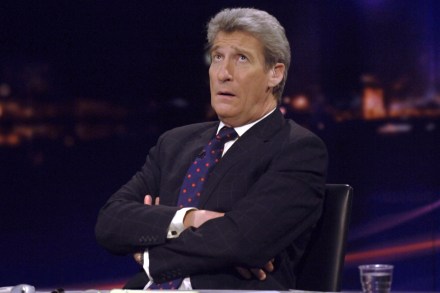
Enjoyably bad-tempered: The Lock In with Jeremy Paxman reviewed

‘I used to be Mr Nasty! That was good! Mr Nasty was easy!’ Jeremy Paxman bellows at Michael Palin on his new podcast. Now Paxman wants to know: ‘Have you got any recommendations as to how you become the nicest man in Britain?’ ‘I’m a very angry, cross person half the time!’ Michael Palin protests, pleasantly. The Lock In with Jeremy Paxman is Paxman’s attempt at a more convivial register — ‘just interesting people, over a pint, with me’ — in contrast to the tone he deployed famously on Newsnight for 25 years: that of the professional curmudgeon. Luckily Paxman is still a hopeless grouch and cannot easily sustain common standards of politeness even over the course of a half-hour interview.

Boldly going where hundreds have gone before: Brave New Planet podcast reviewed

Since technology is developing at such light-speed pace, why does it feel so strangely slow? There is a sense that driverless cars, green energy and of course certain vaccines are, for all their breakneck pace, still taking for ever to arrive. Watching the future emerge is like watching slow-motion footage of a high-speed train. We know it’s going quickly — but can we not just fast-forward? Perhaps it’s merely our heightened expectations, our diminished boredom thresholds. Some of our most distinguished thinkers and entrepreneurs have warned that an all-powerful artificial intelligence, badly calibrated, might represent the greatest threat to the long-term survival of humanity.

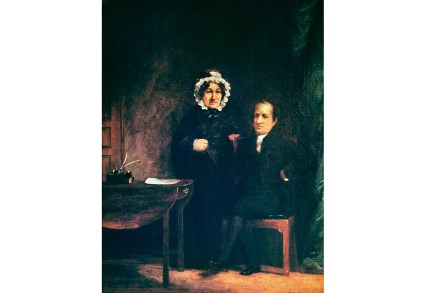
The shocking story of Charles and Mary Lamb: Slightly Foxed podcast reviewed

The Slightly Foxed podcast, like the quarterly and old bookshop of the same name, is almost muskily lovely. It’s the sort of thing you can imagine listening to with a dog at your feet and whisky by your side in a draughty Mitfordesque folly. Ordinarily, you might attribute its homeliness to the fact that it is recorded around a kitchen table. But with the hosts now socially distanced across the country, and it feeling just as cosy, you realise that the atmosphere must derive from something else. In the latest episode, Philippa, Hazel and Gail were joined down the line by biographer Felicity James to discuss the early 19th-century writers Charles and Mary Lamb.